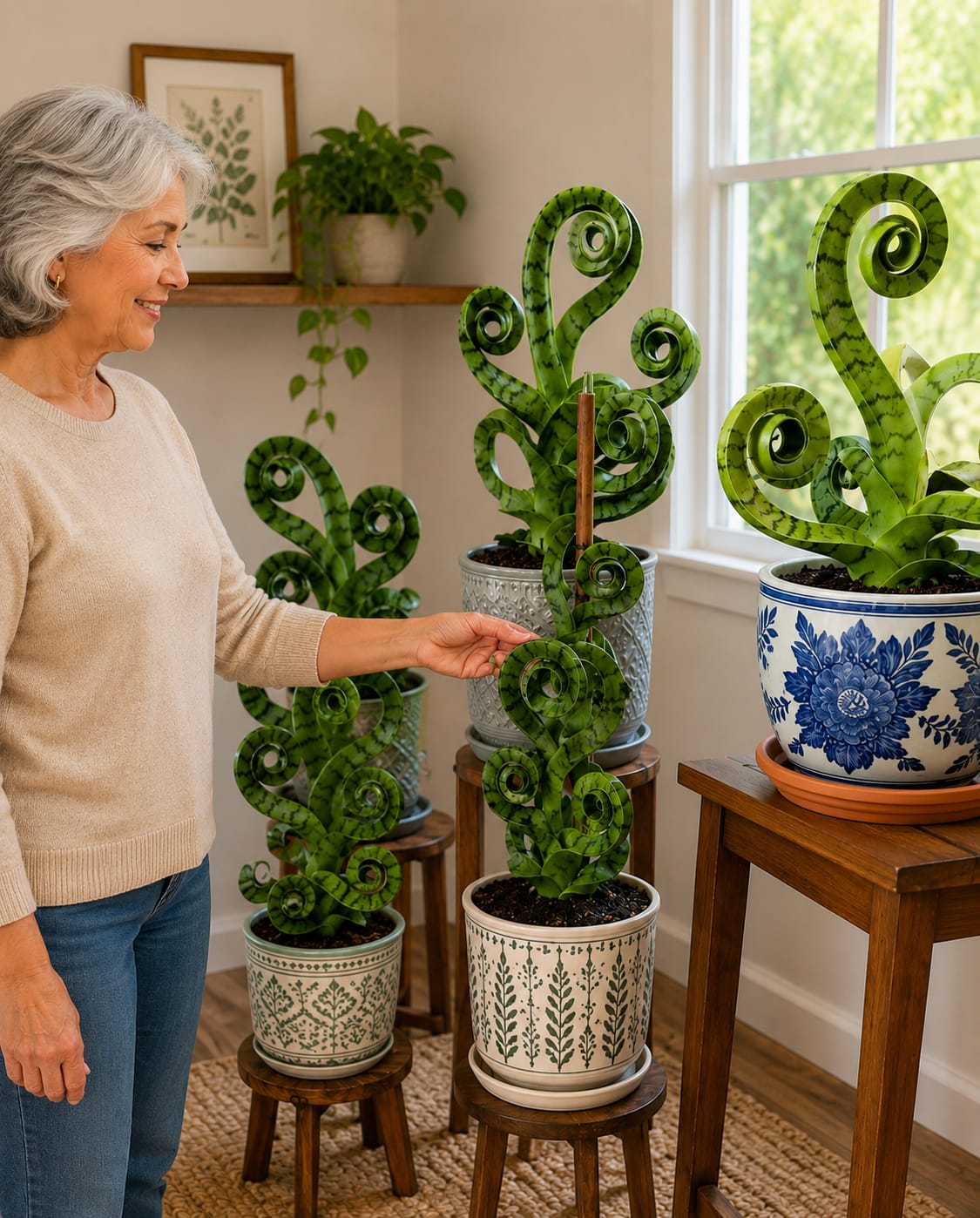
A snake plant is already one of the most powerful plants in indoor decor. Its upright leaves, bold green pattern, and architectural shape can make a room feel cleaner, sharper, and more intentional. But when the leaves are trained or styled into spiral shapes, the plant becomes something completely different. It no longer looks like a normal houseplant sitting quietly in the corner. It becomes a sculptural indoor display.
This kind of twisted snake plant arrangement gets attention because it combines plant care with design. Instead of letting every leaf grow straight upward in the usual form, the leaves appear curled, rolled, or guided into rounded spiral shapes. The result looks dramatic, artistic, and almost handmade. It gives the plant a rare collector-style appearance that can make a simple shelf, plant stand, or living room corner feel more premium.
The most important detail is that this method is not about feeding the plant, spraying the leaves, or changing the soil. It is about shaping and styling. The grower is focusing on the form of the leaves, the direction of growth, the visual balance of the pot, and the way the plant fits into the room. That makes this a decorative plant-training method rather than a root-zone rescue method.
A spiral snake plant display can look beautiful, but it must be approached carefully. Snake plant leaves are thick, firm, and slow-growing. They do not bend like soft vines. If someone tries to force a mature leaf into a tight curl, the leaf can crack, split, bruise, or rot at the damaged area. The safest version of this style depends on patience, gentle shaping, young flexible growth, and support rather than force.
The exact technique used to create a twisted snake plant can vary. Some growers may guide young leaves slowly while they are still flexible. Others may use support stakes, soft ties, or controlled positioning. Some displays may also involve selected curved leaves from specific varieties or carefully arranged divisions. What matters most is understanding the principle: the plant is being styled into a spiral form for a decorative indoor plant display.
What Plant This Appears to Be
This appears to be a snake plant, often known as Sansevieria or Dracaena trifasciata. Snake plants are famous for their stiff upright leaves, patterned green surfaces, and ability to tolerate indoor conditions.
Snake plants are recognized by:
- Thick sword-shaped leaves
- Dark and light green banding
- Strong vertical structure
- Slow, steady growth
- Drought tolerance
- Modern architectural style
- Excellent decorative value in homes and offices
In a spiral version, the same bold leaf pattern remains visible, but the shape changes dramatically. Instead of straight leaves rising upward, the leaves curl into circular or spiral forms. This gives the plant a rare, sculptural look.
Why Spiral Snake Plants Get So Much Attention
Most people are used to seeing snake plants as tall, upright, sword-like houseplants. They are clean and modern, but they usually follow a simple shape. A spiral snake plant breaks that expectation. It looks unusual, artistic, and almost like living decor.
This style attracts attention because it feels:
- Rare
- Sculptural
- Modern
- Hand-shaped
- Decorative
- Collector-worthy
- More expensive-looking than a normal pot
In interior design, unusual plant shapes often become focal points. A twisted snake plant can sit on a plant stand, shelf, side table, or console and immediately become the object people notice first.
What the Spiral Shape Is Trying to Achieve
The spiral shape is mainly decorative. It changes the visual personality of the plant. A regular snake plant feels sharp, upright, and structured. A spiral snake plant feels playful, artistic, and sculptural.
The twisted shape can help create:
- A stronger focal point
- A more artistic indoor plant display
- A unique conversation piece
- A premium plant styling effect
- A softer but still structured silhouette
- A rare botanical design feature
This is not a method that makes every snake plant healthier by itself. It is a styling method. The plant still needs proper light, soil, watering, and root health to stay strong.
Can Snake Plant Leaves Really Be Shaped?
Snake plant leaves are not naturally soft like pothos vines or philodendron stems. They are thick, upright, and somewhat rigid. This means shaping them is possible only under certain conditions and must be done gently.
The best chance of shaping comes when:
- The leaf is young
- The tissue is still slightly flexible
- The curve is gradual
- The plant is healthy
- The support is soft
- The process is slow
Trying to bend older leaves sharply can damage them. A cracked snake plant leaf will not fully heal back into a perfect surface. It may stay scarred, weaken, or begin to rot if moisture enters the wound.
Why Young Leaves Are Easier to Train
Young snake plant leaves are usually more flexible than older leaves. As the leaf matures, it becomes thicker and firmer. This is why any shaping method should begin early and progress slowly.
Young leaves are better for training because they:
- Bend more easily
- Respond better to gentle guidance
- Are less likely to crack under slight pressure
- Can adapt their growth direction over time
- Look cleaner when shaped gradually
Even then, the shaping must be subtle. The goal is to guide the leaf, not force it.
Why Forcing the Spiral Can Damage the Plant
A snake plant leaf is not a wire. It cannot be twisted aggressively without consequences. If it is forced into a tight spiral, the leaf may break internally even if the outside does not split right away.
Forced bending can cause:
- Cracked leaf tissue
- Bruising
- Split edges
- Permanent scars
- Soft rotten areas
- Leaf collapse
- Reduced decorative value
This is why the safest version of the style depends on slow shaping and soft support. The plant should never be bent sharply in one session.
How a Spiral Snake Plant May Be Created More Safely
A safer shaping method is gradual. It treats the plant as living tissue rather than a craft material.
A careful approach may include:
- Choose a healthy snake plant with firm new growth.
- Select younger leaves that are still slightly flexible.
- Use soft plant ties, flexible supports, or gentle guides.
- Curve the leaf only slightly at first.
- Allow time for the plant to adjust.
- Continue shaping slowly over weeks or months.
- Avoid sharp bends or tight pressure points.
- Keep the plant in bright indirect light.
- Inspect leaves regularly for cracks or soft spots.
- Stop shaping if the leaf shows stress.
This kind of process requires patience. A dramatic spiral display is not something that should be rushed.
Why Support Stakes May Be Used
Support stakes can help guide the shape without forcing the leaf all at once. A vertical or curved support allows the grower to position leaves more carefully.
Support can help:
- Hold the leaf in a gentle curve
- Prevent sudden bending
- Keep the plant balanced
- Create a cleaner spiral layout
- Reduce stress on the leaf base
The support should be smooth and plant-safe. Sharp wire, tight string, or rough materials can cut into the leaf surface.
Why Soft Ties Matter
If ties are used, they should be soft. Snake plant leaves can be damaged by narrow pressure points. A tight tie can create marks, dents, or weak areas.
Better tying materials include:
- Soft plant tape
- Flexible garden ties
- Wide fabric strips
- Soft coated plant wire used loosely
The tie should guide the leaf without squeezing it. It should be checked regularly as the plant grows.
Why the Plant Must Be Healthy Before Styling
A weak snake plant should not be shaped aggressively. If the plant is already dehydrated, rotting, yellowing, or stressed, bending the leaves adds more stress.
A plant is better suited for styling when it has:
- Firm leaves
- Healthy roots
- No soft crown
- No major rot
- Stable growth
- Good leaf color
- A firm base in the soil
Decorative shaping should happen after the plant is healthy, not as a rescue method.
Why Root Health Still Matters
Even though the spiral method focuses on leaves, root health still controls the plant’s long-term success. A snake plant with weak roots will not maintain strong shaped foliage.
Healthy roots help the plant:
- Hold firm leaves
- Recover from styling stress
- Produce new growth
- Resist rot
- Maintain leaf color
- Stay upright in the pot
If the roots are damaged, the plant may become soft, loose, or yellow even if the spiral shape looks attractive at first.
Best Soil for a Styled Snake Plant
A shaped snake plant still needs the same careful soil routine as a normal snake plant. Heavy wet soil can cause root rot and weaken the entire plant.
A good soil mix should be:
- Fast-draining
- Light and airy
- Suitable for succulents or drought-tolerant plants
- Not compacted
- Not constantly wet
A cactus or succulent-style mix with added perlite, pumice, or coarse material is usually safer than dense indoor potting soil.
Why Drainage Is Essential
Snake plants are sensitive to sitting in wet soil. A decorative spiral plant may be placed in a beautiful ceramic pot, but the pot still needs drainage.
A good pot should:
- Have drainage holes
- Let excess water escape
- Not be too large
- Support the plant firmly
- Dry at a reasonable pace
If the plant is placed in a decorative outer pot, the inner nursery pot should still drain properly. Beauty should not come at the cost of root health.
How to Water a Spiral Snake Plant
A spiral snake plant should be watered like a normal snake plant. The decorative shape does not make it need more water. In fact, overwatering is still one of the biggest risks.
Water only when the soil has dried well. The exact timing depends on light, pot size, soil type, room temperature, and season.
Good watering habits include:
- Letting the soil dry between waterings
- Watering deeply but not frequently
- Emptying excess water from saucers
- Reducing watering in winter or low light
- Avoiding water trapped in the crown
If the leaf bases stay wet too long, the plant can develop rot.
Why Light Helps Maintain Strong Shape
Snake plants tolerate low light, but they grow better in bright indirect light. A styled plant needs strong enough light to maintain healthy leaves and produce stable new growth.
Bright indirect light helps:
- Keep leaves firm
- Maintain color pattern
- Support slow healthy growth
- Reduce weak stretching
- Help the plant recover from shaping stress
Direct harsh sun can burn leaves, especially if the plant was previously kept indoors in lower light. A bright filtered location is usually best.
Why Spiral Snake Plants Look Premium in Ceramic Pots
The pot is a major part of the display. A spiral snake plant already has a dramatic shape, so the container should support that look without distracting from it.
Good pot choices include:
- Neutral ceramic planters
- White or cream pots
- Blue-and-white decorative pots
- Textured clay pots
- Minimalist matte planters
- Patterned pots with simple colors
The best pot depends on the room style. A bold patterned pot can make the arrangement feel artistic, while a plain pot makes the spiral leaves stand out more clearly.
Why a Spiral Snake Plant Works as a Focal Point
A normal snake plant is already structural, but a spiral snake plant is more expressive. It has movement, curves, and unusual form. This makes it perfect as a focal point.
It can work well on:
- Plant stands
- Entryway tables
- Living room corners
- Office shelves
- Bedroom dressers
- Console tables
- Styled plant collections
The plant should be placed where people can see the spiral form clearly. Hiding it behind other plants reduces its design impact.
Why Grouping Several Spiral Plants Looks Dramatic
Several spiral snake plants placed together can create a gallery-like plant corner. Different heights, pot styles, and leaf curl patterns make the display look collected and curated.
A grouped display can feel:
- Artistic
- Botanical
- Rare
- Bold
- Modern
- Luxury-inspired
However, spacing still matters. If the plants are crowded too tightly, the spiral shapes become visually confusing. Each plant needs enough room to show its form.
Common Mistakes to Avoid
The biggest mistakes with this style come from trying to rush the shape or treating the plant like artificial decor.
Avoid these mistakes:
- Forcing mature leaves into tight spirals
- Using hard wire directly on leaves
- Tying leaves too tightly
- Styling a weak or rotting plant
- Overwatering after shaping
- Placing the plant in harsh sun immediately
- Ignoring cracks or soft spots
- Using a pot with no drainage
- Expecting damaged leaves to heal perfectly
A spiral snake plant should still be treated as a living plant first and a decor object second.
Continue to Page 2
Continue to page 2 for more details about this article and the key points many readers miss on the first page.