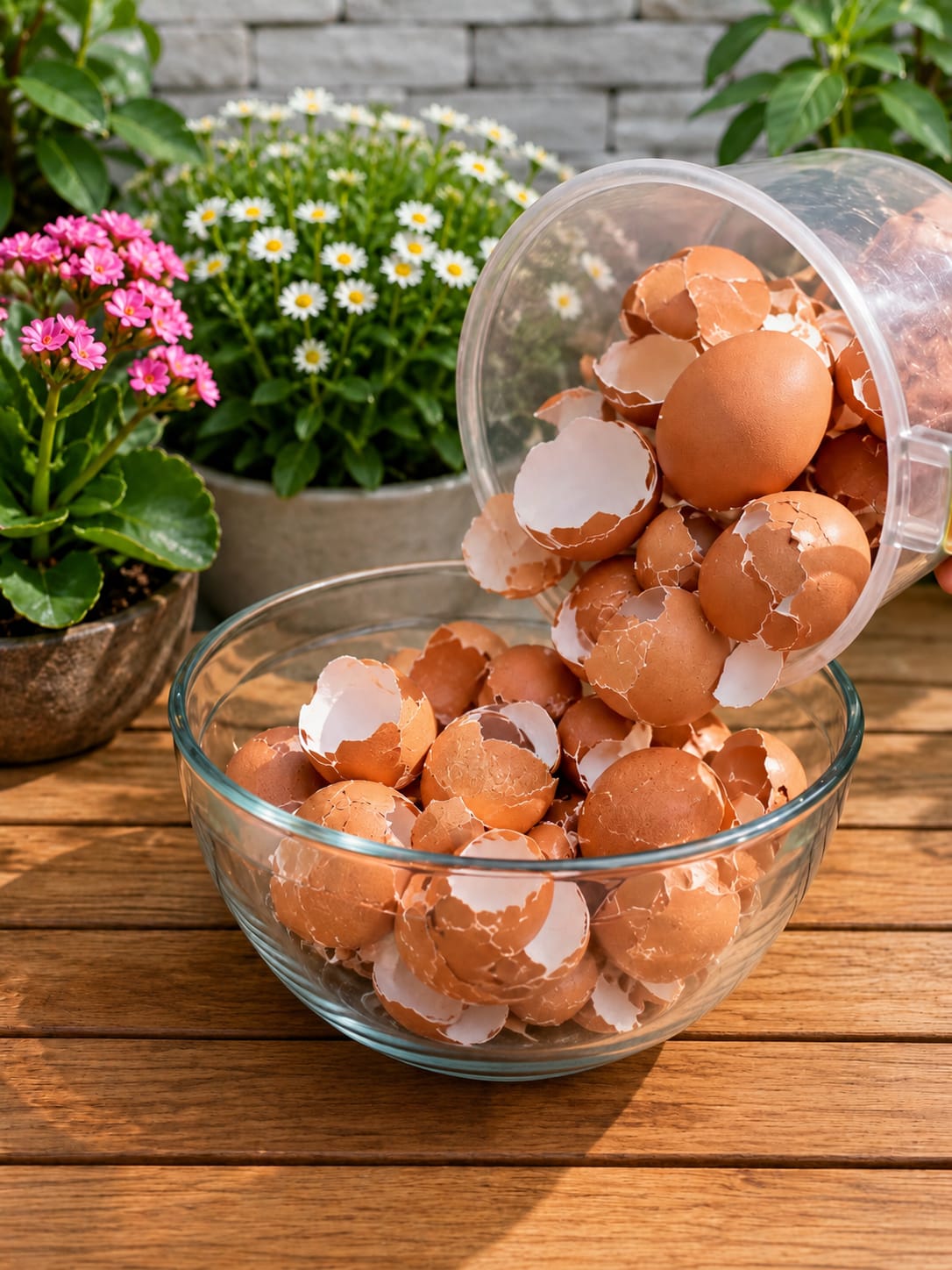
Eggshells are one of the simplest kitchen leftovers that many gardeners like to reuse. Instead of throwing them away, they can be turned into a homemade calcium-style plant support when prepared carefully. The idea is very simple: crushed eggshells are mixed with white vinegar, left to react, then diluted with water before being used around plants or as a light spray for tired, yellowing, or weak-looking growth.
This trick is popular because eggshells contain calcium, and calcium is an important nutrient for plant structure. It helps support cell walls, new growth, root development, and overall plant strength. However, plain eggshells break down very slowly in soil. When mixed with vinegar, the shells react and become easier to use in liquid form. That is why many home gardeners use this method as a homemade calcium water instead of simply burying dry shells in the pot.
The goal is not to create a miracle cure. Eggshell and vinegar water will not instantly revive a dead plant, and it will not replace good soil, sunlight, watering, and drainage. But when used correctly and diluted well, it can be a useful support trick for flowering plants, container gardens, balcony plants, and houseplants that need a gentle mineral boost.
What This Plant Trick Is About
This trick uses leftover eggshells and white vinegar to make a calcium-rich liquid that can be diluted with water. The eggshells are crushed first so they react more easily. Then vinegar is poured over them. After a few days, the mixture can be diluted and used carefully around plants.
The basic idea is:
- Collect clean eggshells.
- Crush them into small pieces.
- Add white vinegar.
- Let the mixture sit for about three days.
- Dilute the liquid with water.
- Use it gently on plants that need support.
This method is often described as a calcium fertilizer, but it is better to think of it as a homemade calcium water. It can support plants when used correctly, but too much can disturb the soil. The secret is dilution and moderation.
Why Eggshells Are Useful for Plants
Eggshells are mainly made of calcium carbonate. Calcium is important for plants because it helps build strong cell walls. When plants have enough calcium, new growth is usually firmer and healthier. Calcium also helps reduce certain growth problems in some plants, especially those that are sensitive to calcium imbalance.
Calcium can help support:
- Stronger stems
- Healthier new leaves
- Better root development
- Improved flower support
- Firmer plant tissue
- More stable growth
However, dry eggshells do not release calcium quickly. If you crush eggshells and place them directly on soil, they may take a long time to break down. That is why mixing them with vinegar is used as a faster homemade method.
Why Vinegar Is Added
White vinegar reacts with eggshells because the acid helps break down the calcium carbonate. This reaction can create bubbles and fizzing. That fizzing is normal. It means the vinegar is reacting with the shell material.
The reason vinegar is used is to help make the calcium more available in liquid form. Instead of waiting months for eggshell pieces to decompose in soil, this method creates a liquid that can be diluted and used more quickly.
But vinegar must be handled carefully. Undiluted vinegar is acidic and can damage plants. It should never be poured directly onto delicate roots or leaves at full strength. The finished mixture should always be diluted before use.
How to Make Eggshell Calcium Water
To make this trick safely, use clean eggshells and plain white vinegar. Avoid shells with raw egg residue, because they can smell bad or attract pests.
Here is a simple method:
- Wash the eggshells and let them dry.
- Crush the shells into small pieces.
- Place the crushed shells in a clean jar or cup.
- Add about 200 ml of white vinegar.
- Leave space at the top because the mixture may bubble.
- Cover loosely, not tightly, while it reacts.
- Let it sit for about three days.
- Strain the liquid if needed.
- Dilute before using on plants.
Do not seal the jar tightly while it is actively bubbling. The reaction can create pressure. A loose cover is safer.
How to Dilute It Before Use
Dilution is the most important safety step. The mixture should not be used straight from the jar. It should be mixed with clean water first.
A gentle beginner dilution is:
- 1 tablespoon of eggshell-vinegar liquid
- 1 liter of water
For sensitive houseplants, use an even weaker mix. It is better to start mild than to burn roots or stress leaves. Plants respond better to gentle care over time than to strong homemade solutions used too often.
How to Use It as Irrigation Water
The safest way to use this trick is as diluted irrigation water. That means applying it to the soil, not soaking the leaves. Pour the diluted mixture around the base of the plant after the soil has slightly dried.
Use it like this:
- Check that the plant actually needs water.
- Dilute the calcium mixture well.
- Water the soil lightly around the plant.
- Avoid flooding the pot.
- Let extra water drain away.
- Repeat only occasionally.
For container plants, once every three to four weeks during active growth is enough. Do not use it every day. Too much mineral water can create buildup in the soil.
Can You Spray It on Leaves?
Some gardeners like to spray diluted calcium water on weak or yellowing plants. This should be done carefully. Leaves can be sensitive, especially if the mixture is too strong or if the plant is sitting in direct sun.
If you want to try it as a spray:
- Dilute it very well.
- Test on one or two leaves first.
- Spray in the morning or evening.
- Do not spray under harsh sunlight.
- Avoid flowers if they are delicate.
- Stop using it if leaves show marks or burns.
For many plants, soil application is safer than leaf spraying. If the plant has soft, thin, or sensitive leaves, use the mixture on the soil instead.
Best Plants for This Trick
This trick is most useful for plants that appreciate calcium support or plants growing in containers where nutrients are slowly depleted. It may be helpful for flowering plants, balcony plants, garden vegetables, and some leafy ornamentals.
Plants that may benefit include:
- Geraniums
- Petunias
- Roses
- Tomatoes
- Peppers
- Hydrangeas, used carefully
- Balcony flowering plants
- Outdoor container plants
- Some leafy houseplants
Always use a weak dilution first. Not every plant needs extra calcium, and not every yellow leaf means calcium deficiency.
Plants That Need Extra Caution
Some plants are sensitive to changes in soil chemistry. Acid-loving plants, delicate tropicals, and plants in small pots should be treated carefully. Even diluted vinegar-based mixtures can affect the growing medium if used too often.
Use caution with:
- Orchids
- African violets
- Ferns
- Calatheas
- Prayer plants
- Seedlings
- Very young cuttings
- Plants with root rot
- Plants in tiny pots
If a plant is already stressed, rotting, or overwatered, do not add homemade fertilizer. Fix the root problem first.
Why Yellow Leaves Need Careful Diagnosis
Many plant tricks are promoted for yellow leaves, but yellowing can happen for many reasons. It is not always a calcium problem. Before using any homemade fertilizer, check the plant’s basic conditions.
Yellow leaves may be caused by:
- Overwatering
- Underwatering
- Poor drainage
- Low light
- Too much direct sun
- Old leaves aging naturally
- Root damage
- Lack of nitrogen
- Pest problems
- Cold stress
If the soil is wet and the leaves are yellow, the plant may be overwatered. Adding calcium water will not solve that. If the plant is dry and drooping, water management may be the main issue. A homemade trick works best only after the basics are correct.
How Often to Use Eggshell Vinegar Water
This mixture should be used occasionally, not constantly. Plants need balance. Too much of one mineral can interfere with others. Even natural homemade solutions can create problems if repeated too often.
A safe schedule is:
- Outdoor flowering plants: once every 3 to 4 weeks during active growth
- Houseplants: once every 4 to 6 weeks, very diluted
- Vegetables: once monthly if calcium support is needed
- Weak plants: only after checking roots and watering routine
Do not use it in winter on plants that are not actively growing. During slow growth, plants need less feeding.
What Not to Do
This trick can be helpful, but only when used with care. The biggest mistake is using the mixture too strong or too often.
Avoid these mistakes:
- Do not pour pure vinegar on plants.
- Do not use the mixture without dilution.
- Do not seal the jar tightly while it is reacting.
- Do not spray leaves in direct sun.
- Do not use it on rotting plants.
- Do not use it every day.
- Do not mix it with strong chemical fertilizers.
- Do not assume it fixes every yellow leaf.
- Do not use dirty eggshells with egg residue.
Plant care is about balance. A small amount can support growth, while too much can create stress.
How This Trick Helps Flowering Plants
Flowering plants need steady nutrition to keep producing healthy blooms. Calcium supports firm plant tissue, while good watering and light help flowers last longer. Eggshell calcium water can be part of a simple care routine for potted flowers.
For flowering plants, it may help support:
- Stronger stems
- Healthier flower production
- Better new growth
- Reduced weakness in soft stems
- Improved container soil support
However, flowering plants also need other nutrients, especially phosphorus and potassium, depending on the plant. Eggshell water is not a complete fertilizer. It should be used as support, not as the only food source.
Eggshell Water for Balcony Gardens
Balcony plants are grown in containers, so their soil can lose nutrients faster than garden soil. Watering also washes minerals away over time. A gentle homemade calcium water can be useful for balcony flowers, herbs, and decorative plants when used occasionally.
For balcony gardening, use this routine:
- Water normally when the soil is dry.
- Use eggshell calcium water once a month.
- Keep pots draining well.
- Remove dead leaves and spent flowers.
- Refresh the top layer of soil when needed.
- Rotate pots so all sides receive light.
This keeps the plants healthy and the balcony looking fresh.
Decor Tip: Turn Plant Feeding Into a Pretty Garden Ritual
Homemade plant care can also look beautiful. Instead of storing the mixture in a random bottle, use a simple glass jar with a label. Keep your plant-care tools arranged neatly on a small tray with a mini watering can, pruning scissors, and a soft cloth for wiping leaves.
This makes your plant corner feel intentional and stylish. A clean gardening station can become part of the decor, especially on a balcony, kitchen windowsill, or indoor plant shelf.
Good styling ideas include:
- Use clear jars for homemade plant liquids.
- Add handwritten labels.
- Keep shells, soil, and tools in matching containers.
- Place a small wooden tray near your plants.
- Use a neutral watering can for a clean look.
- Group flowering plants by color for a bright display.
Plant care feels easier when the tools are organized and beautiful.
Continue to Page 2
Continue to page 2 for more details about this article and the key points many readers miss on the first page.