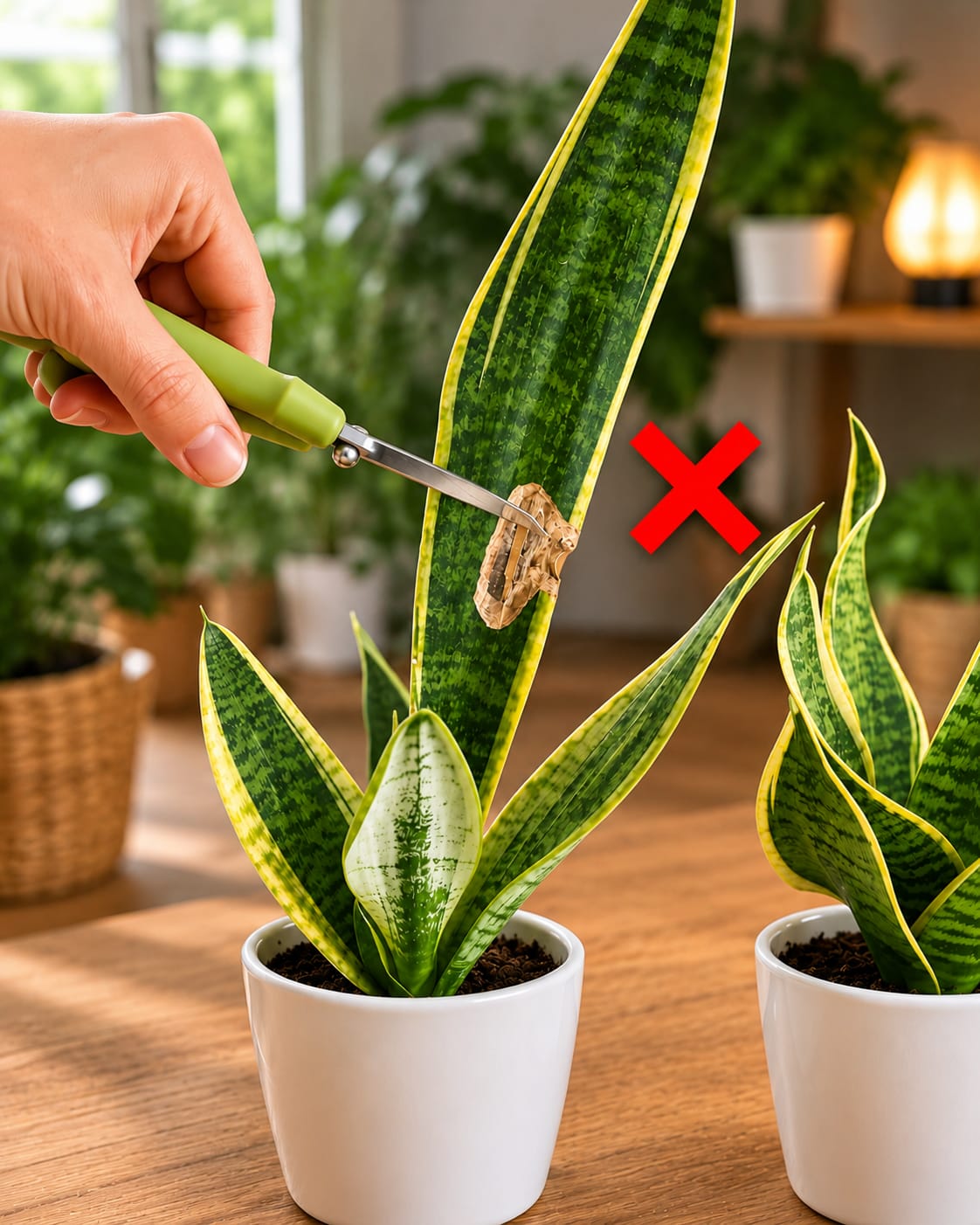
A snake plant is one of the most forgiving houseplants, but even this strong plant can develop damaged, scarred, bent, or dry-looking leaves. Many people see one injured leaf and immediately reach for scissors. Cutting can be useful in some cases, especially when a leaf is rotten, mushy, infected, or completely dead. But when the base of the plant is still firm and the damage is limited to one area, cutting too quickly can remove healthy green tissue that the plant still uses for energy.
This is where the “don’t cut first” idea becomes useful. Instead of removing the leaf immediately, the goal is to support the plant from the base and root zone with a gentle white liquid treatment. The white liquid is not meant to repair a scar like glue, and it should not be poured over the leaf wound. The real focus is the soil area, where the roots absorb moisture and where the plant can begin to recover from stress.
Snake plants are slow growers, so recovery is never instant. A damaged leaf may not become perfect again, but the plant can still stay healthy, produce new shoots, and keep its upright decorative look when the roots are strong. The trick is to stop treating every mark as a reason to cut and instead check the plant carefully: Is the leaf firm? Is the base healthy? Is the soil draining well? Are the roots still strong? If the answer is yes, gentle recovery care may be better than aggressive pruning.
This article explains how to use a white liquid recovery method safely, when to avoid cutting, when cutting is actually necessary, how to protect snake plant roots, and how to style a recovering snake plant so it still looks elegant indoors.
Why You Should Not Cut Every Damaged Snake Plant Leaf Immediately
Snake plant leaves are thick, upright, and full of stored moisture. A small brown scar, dry patch, crease, or old injury does not always mean the whole leaf is useless. If the leaf is still green and firm, it may still be helping the plant produce energy. Cutting too early can reduce the plant’s ability to recover, especially if the plant is already small or stressed.
There are several reasons not to cut immediately:
- The leaf may still be alive and active.
- The damage may be cosmetic rather than dangerous.
- Cutting creates a fresh wound that must dry and seal.
- Removing too many leaves weakens the plant’s appearance.
- A stressed plant may need its remaining green tissue for recovery.
- The real problem may be in the soil, not in the leaf.
For snake plants, the base and roots matter more than a single damaged mark. If the base is firm and the leaf is not spreading rot, it is often better to support the plant first and prune later only if needed.
What the White Liquid Trick Is Supposed to Do
The white liquid treatment is best understood as a gentle root-zone support step. It is usually poured around the soil near the base of the snake plant, not directly onto the damaged leaf. The idea is to refresh the growing area, support the roots, and help the plant continue producing healthy new growth.
A mild white liquid may be used to:
- Support weak or tired roots
- Help the plant recover from stress
- Moisten the soil evenly when used correctly
- Encourage new growth from the base
- Improve the look of a dry, neglected plant
- Support the plant after minor leaf damage
- Keep the routine focused on recovery instead of cutting
The exact liquid can vary depending on the plant-care method. It may be a diluted plant-safe homemade mixture, a mild rice-water-style solution, a calcium-style liquid, or another gentle plant-support liquid. The safest rule is simple: the liquid must be very diluted, plant-safe, and used occasionally. A snake plant does not need heavy feeding or repeated soaking.
Why the Liquid Goes Into the Soil, Not on the Leaf Scar
A damaged snake plant leaf does not heal like human skin. A brown scar or dry patch will usually remain visible. Pouring liquid onto the damaged area will not make the mark disappear. In fact, wetting damaged tissue repeatedly can make the problem worse if moisture sits on the leaf.
The better approach is to support the soil and root system. Roots are responsible for taking in water and nutrients. When roots are strong, the plant can grow new leaves and new pups. The old damaged area may stay, but the plant’s overall condition improves.
Apply the liquid around the soil surface because:
- The roots can absorb moisture gradually.
- The damaged leaf stays dry.
- The crown is less likely to rot.
- The plant receives support from below.
- The visible foliage stays cleaner.
Never pour liquid into the center of the leaves or let it collect between the leaf bases. Snake plants can rot when moisture stays trapped in the crown.
When This Recovery Trick Makes Sense
This method is most useful when the snake plant has a damaged leaf but the plant is still structurally healthy. A dry scar, small scrape, old cut mark, or brown patch does not always require full removal. If the leaf is firm and the rest of the plant looks stable, gentle recovery care is a good first step.
The method makes sense when:
- The leaf is damaged but still firm.
- The base of the leaf is not mushy.
- The plant is not smelling bad.
- The soil is not constantly wet.
- The roots are not rotting.
- The plant still has healthy green leaves.
- The damage looks dry, not wet and spreading.
It is also useful when the plant looks tired because of inconsistent watering, weak light, or stress after moving. In those cases, root-zone care can help the plant stabilize before deciding whether pruning is needed.
When You Should Cut the Leaf Instead
Not every leaf should be saved. Sometimes cutting is the correct choice. If the damage is soft, wet, black, smelly, or spreading, the leaf may be rotting. A rotten leaf can affect the base of the plant and should be removed before the problem spreads.
Cut the leaf if you notice:
- Mushy texture
- Black wet patches
- Bad smell
- Rot near the soil line
- Leaf collapsing from the base
- Spreading brown or black infection
- Severe damage covering most of the leaf
When cutting is needed, use clean sharp scissors or a sterilized knife. Cut close to the soil line if the entire leaf is unhealthy. After cutting, keep the area dry and avoid watering immediately into the cut wound.
How to Use the White Liquid Recovery Trick Safely
The safest way to use this trick is to keep it light. Snake plants are drought-tolerant and do not like soggy soil. A white liquid should never turn the pot into a wet, heavy, sour-smelling mess. Use a small amount and let the soil dry properly afterward.
A safe routine looks like this:
- Check the damaged leaf. Make sure it is firm, not mushy.
- Check the soil. It should not be soaked before treatment.
- Use a very diluted plant-safe white liquid.
- Pour a small amount around the soil near the base.
- Do not pour liquid directly on the leaf wound.
- Do not fill the pot with liquid.
- Let the plant sit in bright indirect light.
- Wait until the soil dries before watering again.
This is a support step, not a daily routine. Using it once in a while is much safer than repeating it constantly.
How Much White Liquid Should You Use?
Less is better. A snake plant does not want its roots sitting in a rich liquid. The amount depends on pot size, but the soil should only become lightly moistened, not flooded.
For a small pot, a few tablespoons may be enough. For a medium pot, use a small controlled pour around the base. For a large pot, apply around the root zone but still avoid soaking the entire container if the soil is already moist.
Use less when:
- The pot has no drainage hole.
- The room is cold.
- The plant is in low light.
- The soil stays wet for many days.
- The plant is already stressed.
If the pot has no drainage, be extremely careful. Snake plants are much safer in pots with drainage holes.
Why Drainage Is More Important Than the Trick
No plant-care trick can replace proper drainage. Snake plants store water in their leaves and rhizomes. They can survive dry periods, but they struggle when their roots stay wet. If the pot does not drain, even a good liquid treatment can become harmful.
A healthy snake plant setup should include:
- A pot with drainage holes
- Fast-draining soil
- Perlite or pumice for airflow
- A watering routine that allows drying
- No standing water in the saucer
If water cannot escape, the roots may suffocate. Once root rot starts, the plant can decline quickly even if the leaves still look firm for a while.
Best Soil for a Recovering Snake Plant
A recovering snake plant needs airy soil. Heavy potting mix stays wet too long and can make damaged plants weaker. If the plant is already stressed, improving the soil is often more effective than adding treatments.
A good snake plant soil mix may include:
- Cactus or succulent mix
- Perlite
- Pumice
- Coarse sand
- Small bark pieces
- A little regular potting mix for balance
The soil should feel loose, not dense. When watered, excess moisture should pass through easily. If the soil remains wet for a week or more, it is too heavy for a snake plant.
Why Snake Plants Get Damaged Leaves
Snake plant leaves may look tough, but they can still be injured. Once damaged, the mark usually stays. The goal is to stop the problem from spreading and encourage healthy new growth.
Common causes of damaged leaves include:
- Physical scratches
- Pets or children bending leaves
- Sunburn
- Cold damage
- Overwatering
- Fungal or bacterial issues
- Low humidity combined with stress
- Rough handling during repotting
- Old age
A dry scar from physical injury is usually not dangerous. A wet, soft, expanding mark is more concerning.
How to Tell Cosmetic Damage From Real Disease
Cosmetic damage stays mostly the same. It may look brown, beige, dry, or papery, but it does not spread quickly. Disease or rot often spreads, softens, darkens, or smells bad.
| Damage Type | What It Looks Like | What to Do |
|---|---|---|
| Dry scar | Brown, beige, firm, not spreading | Leave it and support the plant |
| Sunburn | Pale, tan, dry patch | Move to filtered light |
| Rot | Soft, wet, black or brown | Cut damaged tissue and check roots |
| Cold damage | Soft patches after cold exposure | Remove damaged parts if they worsen |
| Old leaf decline | Yellowing lower older leaf | Cut only if fully declining |
Before cutting, touch the area gently. Firm and dry is usually safer. Soft and wet needs action.
How Light Helps a Damaged Snake Plant Recover
After applying any gentle recovery treatment, light becomes very important. Snake plants tolerate low light, but they recover better in bright indirect light. Light helps the plant use water properly and produce energy for new growth.
Good lighting options include:
- Near an east-facing window
- Beside a bright window with filtered curtains
- A few feet away from a sunny window
- A bright living room corner
- A balcony area protected from harsh direct sun
Avoid sudden harsh sun on a weak plant. If the plant was in low light, move it gradually. Strong afternoon sun can burn leaves and create more brown patches.
Watering After the White Liquid Treatment
After using the white liquid, do not water again too quickly. Let the soil dry. The plant needs time to absorb moisture and breathe. Repeated watering is one of the fastest ways to cause root rot.
Before watering again, check:
- The top soil is dry
- The deeper soil is not wet
- The pot feels lighter
- There is no sour smell
- The base of the plant remains firm
If you are unsure, wait a few more days. Snake plants handle dryness better than excess water.
Continue to Page 2
Continue to page 2 for more details about this article and the key points many readers miss on the first page.