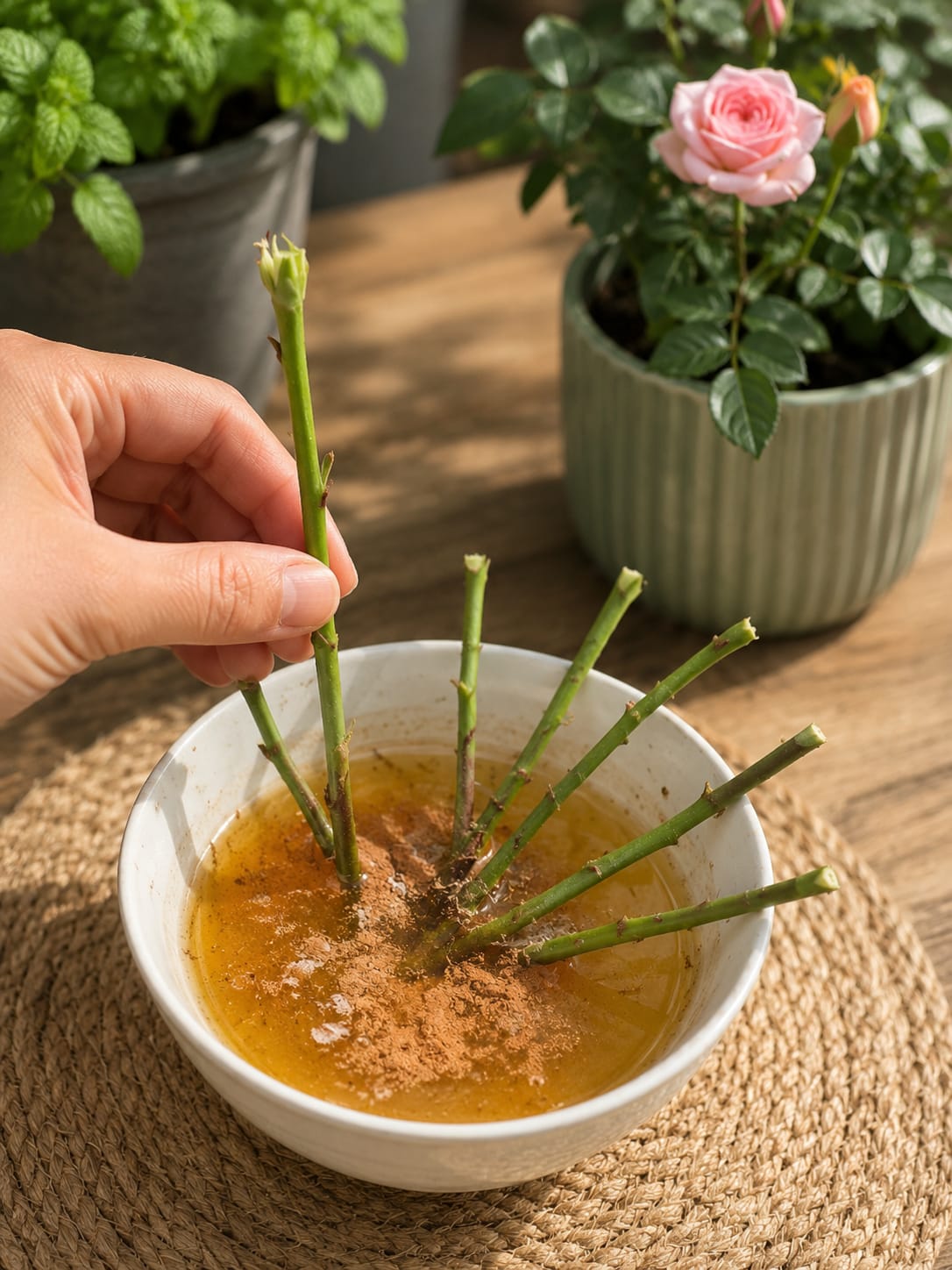
Growing roses from cuttings is one of those garden tricks that feels almost magical when it works. A small green stem that looks simple at first can slowly turn into a fresh rose plant with new leaves, a stronger base, and eventually soft blooms that make a balcony, patio, or garden corner look more elegant. For many homeowners, roses feel expensive and delicate, but propagation makes them feel more personal, affordable, and rewarding.
One interesting method uses rose cuttings, banana pieces, and a light cinnamon-style coating before planting the stems into soil. The idea is simple: the rose cutting receives a gentle natural support step before going into the growing medium. Banana is often used in gardening content because it is soft, moist, and associated with potassium-rich organic matter. Cinnamon is often used by home gardeners as a dry surface powder around cuttings because it helps keep the cut area cleaner and drier while the stem settles into its new environment.
This trick should be understood as a propagation support method, not a guaranteed miracle. Rose cuttings still need the right stem, clean tools, bright indirect light, balanced moisture, fresh soil, and patience. But when used carefully, this banana-and-cinnamon idea can be a creative way to help rose cuttings stay stable while they begin the slow process of forming roots.
Why Rose Propagation Is So Popular at Home
Roses are not just plants. They are garden decoration, balcony color, romantic outdoor styling, and a sign of care. A healthy rose bush can make a small space look more expensive because roses add height, texture, fragrance, and softness. Pink roses, red roses, white roses, yellow roses, and climbing roses can all create a different mood in the garden.
Propagation is popular because it allows plant lovers to multiply roses without buying a new plant every time. Instead of throwing away healthy stems after pruning, those stems can be used to start new plants. This is especially useful for homeowners who want a fuller balcony garden, a rose border, a patio flower corner, or a romantic container display.
Rose propagation also feels personal. A cutting can come from a favorite rose bush, a family garden, or a plant that already grows well in the local climate. When that cutting becomes a new plant, it carries the same look and emotional value as the parent rose.
What This Banana and Cinnamon Rose Trick Is Meant to Do
The banana and cinnamon method is designed to support the base of rose cuttings before planting. The rose stems are dipped or pressed into a soft banana piece, then touched with a brown powder such as cinnamon, and then planted into soil. The banana gives the stem a moist organic contact point, while the cinnamon-style powder helps create a dry protective layer around the cut area.
The purpose is not to feed the rose instantly. A cutting without roots cannot absorb nutrients like a mature plant. The first goal is survival. The cutting needs to stay hydrated long enough to produce roots. Once roots begin to form, the plant can start taking up water and nutrients from the soil.
This method may help with:
- Keeping the cutting base slightly moist during the first stage
- Giving the cutting a stable planting point
- Reducing direct drying around the cut end
- Creating a simple natural propagation routine
- Encouraging cleaner handling before planting
- Making rose propagation easier for beginners
Choosing the Best Rose Cutting
The quality of the cutting matters more than the trick itself. A weak cutting will struggle even with banana, cinnamon, or any other rooting support. The best rose cuttings usually come from healthy semi-hardwood stems. These are stems that are not too soft and not too old. They should feel firm, green, and alive.
Choose a rose stem that has a healthy color and no signs of disease. Avoid stems with black spots, mushy areas, dry wrinkles, pest damage, or weak yellowing growth. A strong cutting should have several nodes, because nodes are the points where leaves and roots are more likely to develop.
A good rose cutting usually has:
- A firm green stem
- Several leaf nodes
- No flowers left attached
- No black or soft sections
- No signs of fungal disease
- A clean fresh lower cut
- A length of about 6 to 8 inches
Why Flowers and Buds Should Be Removed
When propagating roses, flowers and buds look beautiful, but they use too much energy. A cutting that is trying to root should not spend its energy supporting a flower. It needs to focus on survival and root development.
If the cutting has a rosebud, remove it before planting. This may feel disappointing at first, but it improves the chance that the stem will put energy into roots instead of trying to open the flower. The same rule applies to extra leaves. Too many leaves cause moisture loss, especially because the cutting does not yet have roots to replace that lost water.
For better results, keep only one or two small leaves near the top, or remove most of the leaves if the cutting is stressed. The goal is to reduce pressure on the stem while still allowing a little green tissue to remain active.
How Banana Supports the Rose Cutting
Banana is soft and moist, which makes it easy to use as a contact base for rose stems. Some gardeners like using banana because it breaks down naturally and is associated with plant-friendly organic matter. Bananas contain potassium, and potassium is important for plant health in general, especially flowering plants. However, a fresh rose cutting cannot immediately use banana like a complete fertilizer.
The more practical benefit is moisture support. When the rose stem is pushed into a banana piece, the cut end gets contact with a soft, damp material. This may help reduce drying before the cutting is placed into soil.
Banana may help by:
- Keeping the cut end from drying too quickly
- Providing a soft base around the stem
- Adding organic matter as it breaks down
- Making the cutting easier to position in soil
- Creating a simple home propagation step
The important warning is that banana can rot if the soil is too wet. This is why the method must be used carefully. A small piece is better than burying too much banana around the cutting.
Why Cinnamon Is Often Used Around Cuttings
Cinnamon is popular in home gardening because many plant lovers use it as a dry powder on cut surfaces. It is often chosen because it is easy to find, smells pleasant, and helps keep the cutting area dry and cleaner. In propagation routines, cinnamon is usually applied lightly, not heavily.
The goal is not to bury the cutting in powder. Too much powder can block moisture movement or create a messy surface. A light touch around the base is enough. If the cutting is coated too heavily, it may not settle naturally into the soil.
Cinnamon-style powder may help with:
- Keeping the cut surface drier
- Reducing messy moisture around the wound
- Creating a cleaner planting step
- Helping the stem feel less exposed before planting
- Supporting a simple natural propagation routine
Step-by-Step Rose Cutting Method With Banana and Cinnamon
This method is best done slowly and carefully. The cutting should be handled gently, the materials should be clean, and the soil should not be too heavy.
- Choose a healthy rose stem from a strong rose plant.
- Cut a 6 to 8 inch section using clean pruning shears.
- Remove the flower, buds, and most lower leaves.
- Make a clean angled cut at the bottom of the stem.
- Prepare a small piece of fresh banana.
- Dip or press the bottom of the rose cutting into the banana.
- Touch the base lightly with cinnamon powder.
- Make a small hole in loose soil.
- Place the cutting into the soil without scraping off the coating.
- Firm the soil gently around the stem.
- Water lightly.
- Keep the pot in bright indirect light.
The cutting should not be planted in a soggy pot. Moisture is helpful, but too much water is one of the fastest ways to cause rot.
Best Soil for Rose Cuttings
Rose cuttings need soil that holds some moisture but still drains well. Heavy garden soil can become compacted and wet, which increases the risk of rot. A lighter mix gives the cutting better air around the stem base.
A good propagation mix may include:
- Light potting mix
- Perlite
- Coarse sand
- Coco coir
- A small amount of compost
The soil should feel airy, not muddy. When watered, it should become moist but not turn into a thick wet paste. Rose cuttings need oxygen around the buried stem, and compacted soil makes rooting harder.
Watering Rose Cuttings the Right Way
Watering is the part that decides whether many cuttings survive or fail. Rose cuttings need consistent moisture, but they do not like being drowned. If banana is used, careful watering becomes even more important because banana can decompose quickly in wet soil.
A good watering routine is:
- Water lightly after planting
- Keep the soil slightly moist
- Do not leave water sitting under the pot
- Check the soil before watering again
- Avoid daily heavy watering
- Use a pot with drainage holes
If the soil smells sour or the cutting base turns black, the setup is probably too wet. Reduce watering and improve airflow immediately.
Best Light for Rose Cuttings
Rose plants love sunlight when they are mature, but fresh cuttings are more delicate. A cutting without roots can dry out quickly in hot direct sun. During the rooting stage, bright indirect light is safer.
Good places include:
- A bright balcony corner with filtered light
- A patio with morning sun
- A windowsill with soft daylight
- A greenhouse shelf with shade cloth
- A garden corner protected from harsh afternoon sun
Once the cutting has rooted and produced stronger growth, it can gradually be introduced to more sunlight. Do not move it from shade to full sun suddenly.
Should You Cover the Cutting With a Plastic Bag?
Some gardeners cover rose cuttings with a clear plastic bag or bottle to hold humidity. This can help prevent drying, but it must be done carefully. Too much trapped humidity can cause fungus and rot.
If using a humidity cover:
- Keep it loose, not airtight
- Open it daily for fresh air
- Do not let plastic touch the leaves
- Keep the cutting out of hot direct sun
- Remove the cover if mold appears
A humidity cover is useful only when airflow and moisture are balanced. If the inside looks constantly wet and foggy, the cutting may rot.
How Long Rose Cuttings Take to Root
Rose cuttings are slow compared with many easy houseplants. Some may show new leaves in a few weeks, but that does not always mean roots are strong. A cutting can push new growth using stored energy before it has a complete root system.
In many cases, rooting may take several weeks or longer. The timing depends on temperature, rose variety, cutting quality, and growing conditions.
Signs of progress include:
- The stem stays green
- New leaves appear slowly
- The cutting remains firm
- No black rot appears at the base
- The cutting resists very gentle movement after some time
Do not pull the cutting out to check roots. New roots are fragile and can break easily.
What to Do After New Growth Appears
New growth is exciting, but the cutting still needs gentle care. Continue giving bright indirect light and balanced moisture. Avoid strong fertilizer at this stage because young roots can burn easily.
Once the cutting looks stronger, slowly increase light exposure. If the plant begins to grow several leaves and feels stable in the soil, it may be ready for a slightly larger pot later.
Early care after growth appears:
- Keep watering controlled
- Avoid disturbing the roots
- Do not fertilize heavily
- Protect from strong wind
- Move gradually into brighter light
- Remove any dead leaves quickly
Common Problems With Banana Rose Propagation
The banana method is simple, but it can fail if the environment is too wet or the cutting is weak. The most common problem is rot. Since banana is organic and moist, it can break down quickly inside soil.
Common problems include:
- Black stem base
- Soft mushy cutting
- Bad soil smell
- Mold on the soil surface
- Cutting drying before rooting
- Leaves wilting quickly
- Banana attracting pests
To reduce these risks, use only a small banana piece, plant in well-draining soil, and avoid overwatering.
Continue to Page 2
Continue to page 2 for more details about this article and the key points many readers miss on the first page.