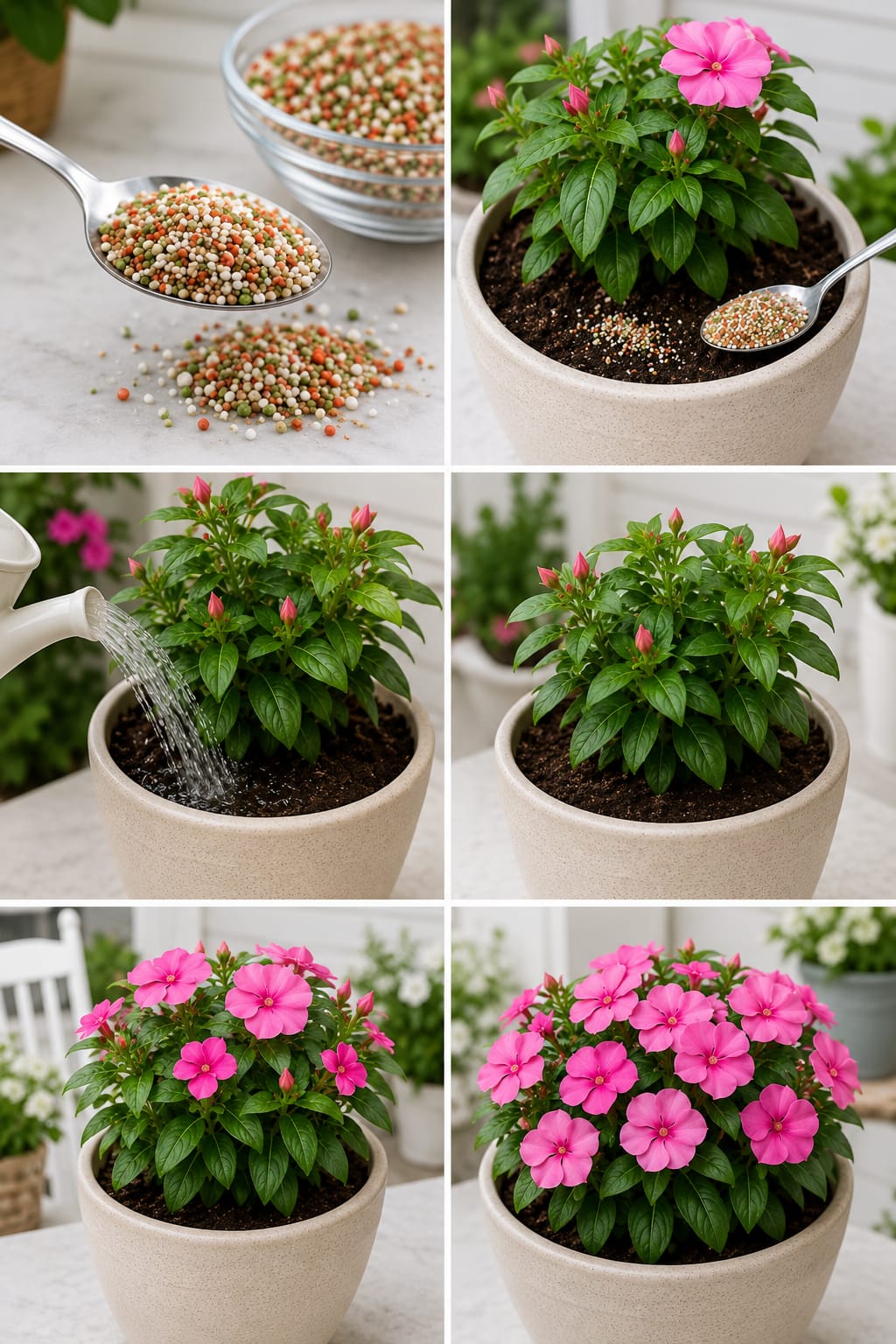
Vinca flowers, also known as Madagascar periwinkle, are among the most rewarding plants for anyone who wants a colorful, polished, and low-maintenance flower display. Their glossy green leaves, tidy rounded growth, and bright pink, white, red, or purple blooms make them perfect for balcony pots, patio containers, window boxes, garden borders, and sunny outdoor corners. When cared for correctly, vinca can bloom for months, giving the space a cheerful and expensive-looking finish without needing complicated daily attention.
One simple care method that many gardeners use to keep vinca looking fuller and more productive is applying a small amount of slow-release fertilizer granules around the soil surface. These small colored pellets are designed to feed the plant gradually over time. Instead of giving the plant one strong liquid feeding that quickly washes away, slow-release granules break down little by little with moisture and warmth. This gives the roots a steady supply of nutrients, helping the plant maintain healthy leaves, strong stems, fresh buds, and continuous flowers.
The key is moderation. Vinca is not a plant that likes heavy, wet, overfed soil. It prefers warmth, sun, airflow, and well-draining potting mix. A small sprinkle of slow-release fertilizer can help support flowering, but too much can burn roots, create weak leafy growth, or reduce the plant’s natural balance. This guide explains how to use fertilizer granules correctly, how often to apply them, how to water after feeding, and how to style vinca pots for a cleaner and more elegant outdoor display.
Why Vinca Flowers Respond Well to Balanced Feeding
Vinca is naturally a strong flowering plant, but container-grown vinca depends on the soil in its pot. Over time, watering can wash nutrients out of the potting mix. If the plant keeps producing leaves, stems, and flowers without fresh nutrients, growth may slow down. The leaves may lose their deep green color, the plant may produce fewer buds, and the overall shape may become less full.
A balanced fertilizer helps replace what the plant uses. Nitrogen supports leafy growth and overall green color. Phosphorus supports root strength and flower development. Potassium helps with plant resilience, stem strength, and long-lasting blooms. Many slow-release fertilizers contain these major nutrients, plus small amounts of trace minerals that support healthy growth.
For vinca, the goal is not to push the plant aggressively. The goal is to keep it steadily nourished. When the plant receives enough light, proper drainage, and a gentle feeding schedule, it can continue producing flower buds through warm seasons while keeping its compact, attractive shape.
What Slow-Release Fertilizer Granules Do
Slow-release fertilizer granules are small pellets that release nutrients gradually. Many are coated so water can slowly dissolve the nutrients inside. Each time you water the plant, a tiny amount becomes available to the roots. This makes them useful for busy gardeners because they reduce the need for frequent liquid feeding.
In a flowering container, granules can help maintain a steady nutrient level. This is especially useful for vinca grown in pots because container soil dries and drains faster than garden soil. Outdoor pots are exposed to sun, heat, and repeated watering, which can cause nutrients to disappear more quickly.
When used correctly, slow-release fertilizer can help vinca plants look fuller, greener, and more consistent. It can support more flower buds, healthier leaves, and stronger stems. It also keeps care simple because one careful application can feed the plant for several weeks or months, depending on the product.
Choosing the Right Fertilizer for Vinca
Choose a balanced slow-release fertilizer made for flowering plants or general container plants. A formula such as 10-10-10, 14-14-14, or a bloom-supporting balanced blend can work well. Avoid very high-nitrogen lawn fertilizers because they may encourage too many leaves and fewer flowers.
For vinca, a controlled-release fertilizer is often better than a strong quick-release fertilizer. Quick-release products can be too intense if applied carelessly, especially in pots. Slow-release granules are easier to manage because they feed gradually.
Always read the product label before applying. Different brands have different strengths and release periods. Some feed for one month, while others feed for three to six months. The correct amount depends on pot size, fertilizer strength, and whether the plant is newly planted or already established.
How Much Fertilizer to Use
For a medium container, a light sprinkle is usually enough. Do not cover the soil heavily with granules. Vinca roots are sensitive to overfeeding, especially when the weather is hot and the pot dries quickly. A small amount spread evenly around the outer soil area is safer than placing a large pile near the stem.
For a small pot, use only a pinch or follow the smallest recommended amount on the package. For a large planter, distribute the granules evenly across the soil surface, keeping them away from the main stem. If the plant is newly planted, wait one to two weeks before feeding unless the potting mix already contains fertilizer.
More fertilizer does not mean more flowers. Too much can damage roots, cause yellow leaf edges, or make the plant grow soft and weak. With vinca, gentle and consistent feeding works better than heavy feeding.
Where to Place the Granules
Sprinkle the granules around the soil surface, not directly on the leaves or flowers. Keep the fertilizer slightly away from the central stem. Place it around the root zone, where water can carry nutrients down into the potting mix.
After sprinkling, you can lightly scratch the granules into the top layer of soil with your fingers or a small hand tool. Do not dig deeply because vinca roots can be close to the surface. A shallow mix is enough. If the granules remain on top, they can still work, but gently mixing them into the upper soil helps keep the surface tidy and prevents them from rolling away during watering.
Watering After Fertilizing
After applying slow-release granules, water the pot gently. The goal is to moisten the soil and begin activating the fertilizer, not to flood the container. Vinca likes soil that drains well. Water should move through the pot and out the drainage holes.
Never leave vinca sitting in a saucer full of water. Wet roots can lead to disease, especially in warm weather. Let the soil dry slightly between waterings. Vinca is more tolerant of short dry periods than soggy soil.
When watering, aim for the soil rather than the leaves. Wet foliage can increase disease problems if airflow is poor. Morning watering is best because it gives the plant time to dry during the day.
How Often to Apply Slow-Release Fertilizer
The feeding schedule depends on the fertilizer label. If the product feeds for three months, one application at the beginning of the warm growing season may be enough. If it feeds for one month, you may need to reapply lightly every four to six weeks.
For vinca in containers, a practical routine is to feed lightly when planting, then refresh only according to the product’s instructions. Avoid adding more granules every week. Slow-release fertilizer is already designed to last.
If your vinca is flowering well, leaves are healthy, and growth is compact, do not rush to add more fertilizer. The plant is already telling you that conditions are good.
Best Light Conditions for Strong Vinca Blooms
Fertilizer works best when light is correct. Vinca needs bright light and usually performs best in full sun or strong morning sun. Without enough light, the plant may become stretched, produce fewer flowers, and look thin even if it receives fertilizer.
For balcony and patio pots, choose a place that receives several hours of sun each day. In very hot climates, afternoon shade can protect the plant from extreme stress. Morning sun with bright afternoon light is often ideal.
If vinca has dark green leaves but very few flowers, the issue may be low light. Move the pot gradually to a brighter spot. Do not move a shaded plant directly into harsh hot sun in one day. Let it adjust over several days.
Best Soil for Vinca in Containers
Vinca grows best in a light, well-draining potting mix. Heavy garden soil can stay too wet in containers and may suffocate roots. A good potting mix should feel loose, airy, and able to drain quickly after watering.
You can improve container soil by adding perlite, coarse sand, or fine bark to increase drainage. The pot must have drainage holes. A beautiful planter without drainage may look elegant at first, but it can quickly damage vinca roots.
If you want to use a decorative pot without holes, place the vinca in a plastic nursery pot with drainage, then set that pot inside the decorative container. After watering, remove extra water from the outer pot.
How to Keep Vinca Full and Rounded
Vinca naturally forms a neat mound, but light trimming can keep it looking fuller. If stems become long or uneven, pinch or trim the tips lightly. This encourages branching and helps the plant maintain a compact shape.
Remove faded flowers and yellow leaves regularly. This keeps the plant clean and reduces disease risk. Vinca does not always need heavy deadheading, but cleaning the plant improves the display and makes the pot look more cared for.
Rotate the pot once a week if it sits near a wall or railing. Plants often lean toward light. Turning the container helps all sides receive light and keeps the shape balanced.
Signs Your Vinca Needs Feeding
A vinca plant that needs nutrients may show slower growth, fewer flowers, pale leaves, or smaller leaves than usual. The plant may still survive, but it may not look lush. In containers, this often happens after weeks of watering without nutrient replacement.
Before feeding, check other conditions too. Yellow leaves can also be caused by overwatering, poor drainage, cold stress, or root problems. If the soil is soggy, fertilizer is not the solution. Let the plant recover in better-draining conditions first.
Healthy feeding works only when roots can breathe. Fertilizer should support good care, not cover up poor watering habits.
Signs of Too Much Fertilizer
Too much fertilizer can cause leaf tips to brown, edges to yellow, roots to burn, or growth to become weak and soft. The plant may look stressed even though it was meant to be helped. In severe cases, flower production may drop.
If you suspect overfertilizing, remove visible granules from the soil surface. Water the pot thoroughly so excess salts drain out. Make sure the container drains completely. Do not add more fertilizer until the plant shows steady healthy growth again.
Overfeeding is one of the easiest mistakes to make with slow-release granules because the pellets look small and harmless. Always respect the dosage.
Using Fertilizer Granules for Garden Beds
Slow-release fertilizer can also be used for vinca planted in garden beds. Sprinkle lightly around each plant and water well. Keep the granules away from the stem. In garden soil, nutrients spread more naturally than in small pots, but moderation is still important.
Before feeding a whole garden bed, improve the soil with compost if needed. Vinca prefers drainage, so avoid heavy wet areas. Raised beds or slightly elevated borders can help if your garden soil holds too much water.
How to Water Vinca Correctly
Vinca does not like constant wet soil. Water deeply, then allow the top layer of soil to dry slightly before watering again. In hot weather, containers may need more frequent watering. In cooler weather, they need less.
Do not judge watering only by the surface. Push your finger into the soil about two centimeters deep. If it feels dry at that depth, water. If it still feels wet, wait.
Good watering is one of the biggest secrets to long-lasting vinca blooms. Fertilizer helps, but watering controls root health.
Continue to Page 2
Continue to page 2 for more details about this article and the key points many readers miss on the first page.