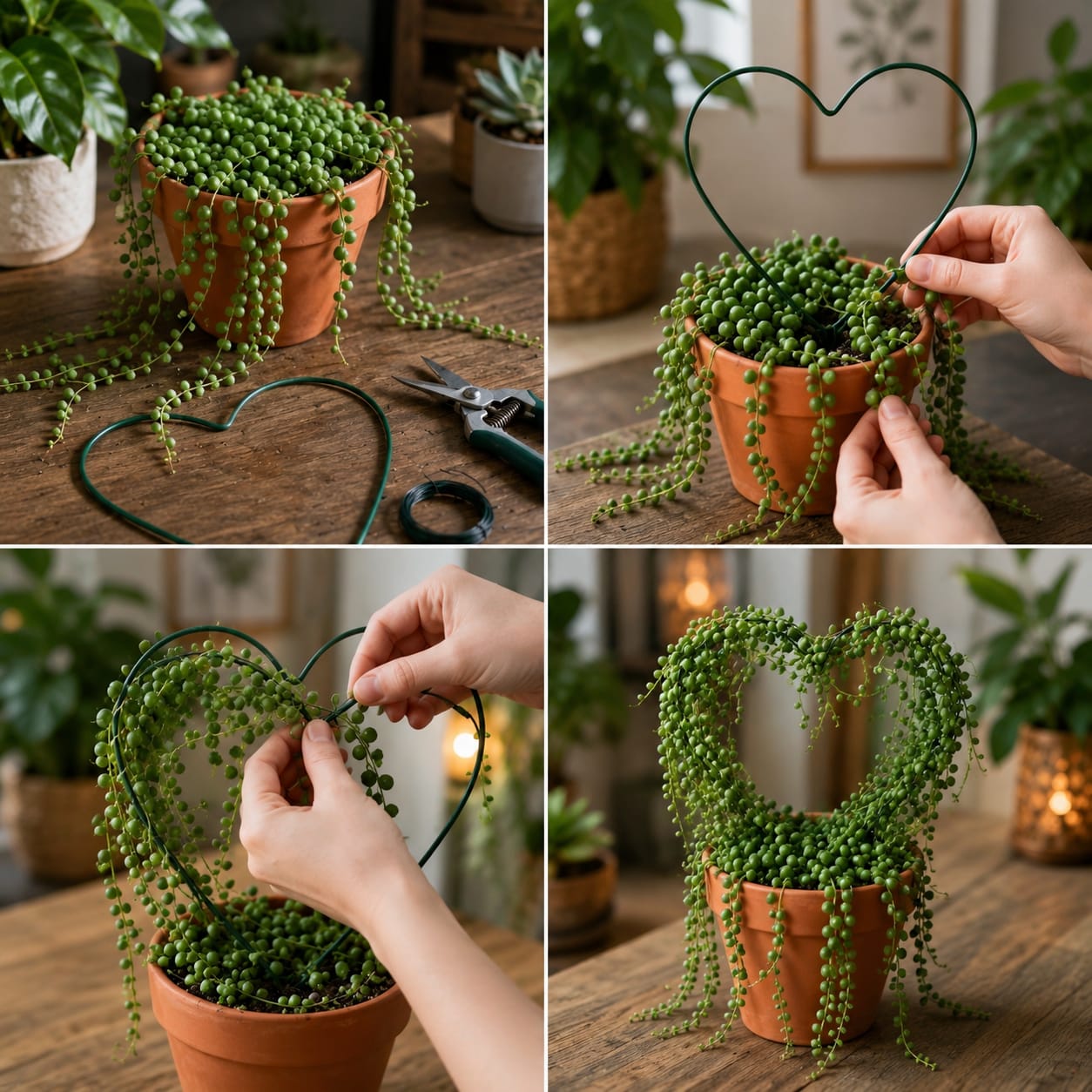
String of pearls is already one of the most eye-catching trailing houseplants, but when its long bead-like vines are guided around a heart-shaped support, the entire plant becomes a living decoration. Instead of letting every strand fall randomly over the pot, this simple styling trick turns the plant into a soft green heart that looks charming on a windowsill, shelf, vanity table, plant stand, or sunny reading corner.
This idea is especially beautiful for small indoor spaces because it gives a trailing succulent more shape without needing a large planter. The round pearls create a delicate texture, the terracotta pot adds warmth, and the green heart trellis gives the plant a romantic handmade look. It is a lovely project for plant lovers who enjoy creative decor, cottage-style windowsills, soft botanical styling, or giftable houseplant arrangements.
The most important thing is to do it gently. String of pearls vines can snap if pulled too hard, and the pearls can bruise if handled roughly. This project works best when the plant already has several long healthy strands and when the trellis is placed carefully into dry or lightly moist soil. The goal is not to force the plant into a tight shape overnight. The goal is to guide the vines gradually so they rest naturally around the heart frame.
Why String of Pearls Looks So Beautiful on a Heart Trellis
String of pearls has a unique growth habit. Its stems trail downward in long strands, and each strand is covered with small round leaves that look like green beads. When grown in a hanging basket, the plant creates a waterfall effect. When grown in a small pot, the vines spill over the edges and soften the container.
A heart trellis changes the look completely. Instead of only falling downward, the vines are lifted and shaped upward. This creates height, movement, and a sculptural silhouette. The plant still trails beautifully, but now the top portion becomes decorative too.
The heart shape also works well because string of pearls vines are flexible when healthy. They can be arranged around a curved frame more easily than thick upright plants. The pearls naturally fill the outline, making the heart look lush over time.
Best Plant for This Project
This project works best with a healthy string of pearls plant that has multiple vines at least 20 to 30 centimeters long. Longer strands are even better because they can wrap around the frame with less tension.
The plant should have firm green pearls, not shriveled or mushy ones. The stems should feel flexible, not brittle. If the plant is very dry and the pearls are wrinkled, water it properly and wait a few days before styling. If the plant is overwatered and mushy, do not attempt this project until it recovers.
You can also use similar trailing plants, such as string of tears, string of bananas, or small trailing hoya vines, but string of pearls gives the most classic beaded heart effect.
What You Need
- A healthy string of pearls plant
- Green garden wire or coated plant wire
- Thin floral wire or soft plant ties
- Small scissors or wire cutters
- A terracotta or ceramic pot with drainage
- Fast-draining succulent soil
- Optional small stake or extra support wire
Use coated wire if possible because it looks cleaner and is softer against the stems. Avoid sharp metal wire directly touching the vines. If you must use thin wire, wrap loosely and never tighten it around the plant.
Step 1: Shape the Heart Frame
Start by bending a piece of coated garden wire into a heart shape. The size should match your pot. A small pot needs a smaller heart, while a wide pot can support a larger frame. Make sure the bottom ends of the wire are long enough to insert into the soil like stakes.
The heart does not need to be perfect. A slightly handmade shape looks charming and natural. Try to create a soft curve on both sides and a gentle dip in the center. Avoid sharp bends because the vines will sit more naturally on rounded curves.
Before placing it into the pot, hold the frame behind the plant to check the scale. The heart should rise above the pot but not look too heavy. If the frame is too tall, it may wobble. If it is too small, the vines may crowd together.
Step 2: Insert the Trellis Carefully
Insert the two ends of the heart frame into the soil near the back or center of the pot. Push gently so you do not damage the roots. If the soil is very compacted, use a pencil or chopstick to make small holes first, then slide the wire ends into place.
Do not force the trellis directly through the root ball. String of pearls roots are shallow and delicate. If the pot is very crowded, place the wire closer to the inside edge of the pot where there may be less root density.
Once inserted, check whether the frame stands firmly. If it leans, push the ends deeper or add a small hidden support stake.
Step 3: Choose the Longest Vines
Look for the longest and healthiest vines. These will become the main strands that shape the heart. Do not use weak, dry, or damaged strands because they may break during styling.
Lift each vine slowly from the pot edge. If it is tangled with other vines, separate it gently with your fingers. Take your time. Pulling quickly can snap the stem or knock pearls off.
If some vines are too short, leave them trailing naturally over the pot. They will add softness at the base of the heart.
Step 4: Drape the Vines Around the Frame
Begin guiding the selected vines around the heart frame. Lay the stem along the wire rather than wrapping it tightly. String of pearls looks best when it drapes loosely, like a garland.
Start from one side of the pot, guide the vine up one curve of the heart, across the top, and down the other side if the strand is long enough. If one strand is not long enough, use several vines to cover different sections of the frame.
Do not stretch the stems. If a vine does not reach a section naturally, leave it and use another strand. Over time, new growth can fill the gaps.
Step 5: Secure With Soft Ties
Use tiny pieces of soft plant tie or floral wire to hold the vines in place. Tie loosely. The tie should support the stem, not squeeze it. Leave space for the vine to move and grow.
Place ties only where needed: near the lower sides, around the curves, and at the top dip if the vine slips. Too many ties can make the arrangement look stiff. The best result looks natural, with vines resting gracefully on the frame.
Check every few weeks and loosen ties if the stems thicken or shift.
Step 6: Let Some Strands Trail
The most beautiful heart trellis designs usually combine structure with softness. Do not attach every vine to the frame. Let some strands spill over the pot edge. This creates movement and keeps the plant looking lush.
The trailing strands also hide the pot rim and make the display feel fuller. A heart frame with a few loose vines hanging down looks more natural than a tightly wrapped shape.
As new vines grow, you can decide whether to add them to the heart or let them trail.
Best Pot for a String of Pearls Heart Display
Terracotta is an excellent choice for string of pearls because it helps the soil dry faster. This plant does not like sitting in wet soil. A warm terracotta pot also pairs beautifully with the fresh green pearls and gives the arrangement a rustic, handmade look.
A white ceramic pot creates a cleaner modern style. A dark green pot can blend with the trellis and make the pearls stand out. A shallow bowl pot can also work well because string of pearls has a shallow root system.
Whatever pot you choose, drainage holes are essential. Decorative pots without drainage can trap water and cause root rot.
Best Soil for String of Pearls
String of pearls needs a fast-draining succulent mix. Regular potting soil often holds too much moisture. A good mix may include cactus soil, perlite, pumice, coarse sand, or small bark pieces.
A simple mix is two parts cactus soil, one part perlite, and one part pumice. This allows water to pass through quickly while keeping enough moisture for the roots.
If your plant is in heavy soil, consider repotting before creating the heart trellis. Styling a plant in poor soil may look nice temporarily, but the roots will struggle.
Light Requirements
String of pearls needs bright light to stay compact and healthy. A bright window with morning sun is ideal. Too little light causes weak, stretched vines with smaller pearls. Too much harsh afternoon sun can scorch the pearls, especially behind hot glass.
For indoor styling, place the plant near an east-facing window or a bright filtered south or west-facing window. If the pearls begin to look pale or sunburned, move the plant slightly away from direct light.
Rotate the pot every week so all sides receive light. This helps the heart shape stay even and prevents one side from growing faster than the other.
Watering After Styling
After arranging the plant, wait until the soil is dry before watering. String of pearls stores water in its round leaves, so it does not need frequent watering. Overwatering is the most common reason this plant fails.
Water deeply, then let the pot drain completely. Do not leave water in the saucer. Wait until the soil dries again before watering.
If the pearls look slightly wrinkled and the soil is dry, the plant may need water. If the pearls are mushy or translucent, the plant may be overwatered.
Continue to Page 2
Continue to page 2 for more details about this article and the key points many readers miss on the first page.