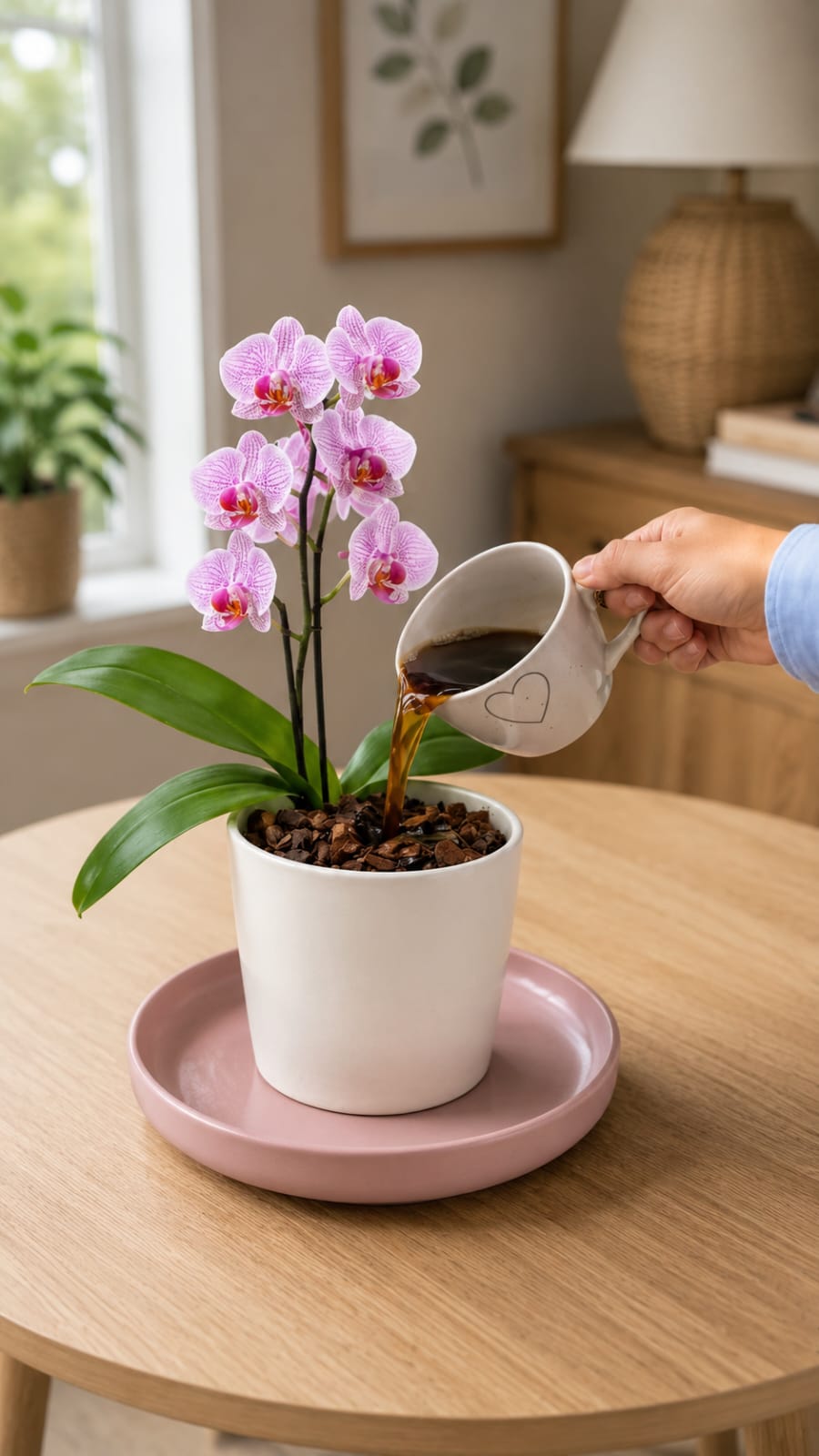
Orchids have earned a reputation as one of the most beautiful and elegant houseplants in the world. Their graceful blooms, glossy leaves, and sculptural roots can instantly elevate the appearance of a kitchen counter, dining table, office desk, or bright windowsill. While many people believe orchids are difficult to care for, the truth is that these stunning plants can thrive indoors when their natural growing conditions are understood and respected.
From time to time, plant enthusiasts experiment with gentle homemade plant-care routines designed to support healthy growth. One popular topic involves using diluted organic rinses around orchid bark. While these methods can be part of a plant-care routine when used carefully, they should never replace the fundamentals that orchids truly need: bright indirect light, proper drainage, healthy roots, and consistent watering habits.
The real secret to beautiful orchids isn’t a miracle ingredient. It’s creating an environment where the plant can grow naturally and comfortably. When orchids receive the right care, they reward their owners with vibrant flowers, healthy foliage, and blooming cycles that can last for months.
Understanding How Orchids Grow in Nature
One reason orchids confuse many indoor gardeners is that they don’t grow like traditional houseplants. Most common Phalaenopsis orchids are epiphytes, meaning they naturally grow attached to trees rather than rooted in ordinary soil.
In tropical forests, orchid roots cling to bark, branches, and tree trunks. Their roots absorb moisture from rain, humidity, and organic debris that accumulates around them. At the same time, those roots remain exposed to plenty of airflow.
This explains why orchids struggle when treated like ordinary potted plants. They do not want dense, waterlogged soil. Instead, they thrive in chunky bark mixes that allow water to flow through quickly while providing excellent aeration.
Understanding this natural growth habit is the foundation of successful orchid care. Every care decision should support healthy root airflow and prevent excessive moisture accumulation.
Why Healthy Roots Matter More Than Flowers
Many orchid owners focus entirely on blooms, but the real health of the plant starts below the surface. Strong roots support everything the plant does, including leaf production, flower development, and overall growth.
Healthy orchid roots are usually firm and plump. When dry, they often appear silvery or gray. After watering, they turn bright green as they absorb moisture.
Roots that appear brown, mushy, hollow, or soft may indicate root rot. In such cases, the plant’s energy is compromised, and blooming often suffers.
Before thinking about fertilizers, organic rinses, or blooming tricks, always focus on maintaining healthy roots. A strong root system naturally supports stronger growth above the bark.
The Appeal of Gentle Organic Orchid Rinses
Many plant enthusiasts enjoy experimenting with natural gardening approaches. Gentle organic rinses are sometimes used because they provide mild nutrients and organic compounds that may support microbial activity around plant roots.
These rinses are usually highly diluted and used only occasionally. The goal is not to flood the orchid with nutrients but rather to provide a gentle supplement alongside regular watering and proper orchid fertilizer.
It’s important to remember that orchids are sensitive plants. Anything applied to the root zone should be weak, clean, and used sparingly.
Heavy organic mixtures, sugary solutions, milk-based products, or strong household liquids can create problems rather than benefits. Such substances may encourage mold growth, attract pests, or contribute to root issues.
Why Strong Coffee Is Usually Not Recommended
Many viral plant tips suggest pouring coffee directly into orchid pots. While coffee contains trace nutrients, strong coffee can create several challenges for orchids.
Undiluted coffee may increase acidity, leave residue within the bark, attract fungus gnats, and encourage unwanted microbial growth. In some situations, it may also interfere with proper moisture balance around the roots.
If plant owners choose to experiment with coffee-based solutions, they should always be extremely diluted and used very infrequently. Even then, caution is important.
Professional orchid growers generally achieve the best results through proper watering, quality orchid fertilizers, and excellent environmental conditions rather than relying on coffee treatments.
A Safer Alternative: Weak Organic Tea
A much gentler approach involves creating a weak organic plant tea using compost or worm castings. These solutions contain mild nutrients and beneficial organic compounds while remaining relatively safe when properly diluted.
The liquid should resemble weak tea rather than concentrated fertilizer. A light-colored solution is usually sufficient.
The goal is to provide only a subtle supplement while allowing the orchid’s normal care routine to remain the primary focus.
Creating a Gentle Orchid Root Rinse
If you wish to try a mild organic rinse, keep the recipe extremely simple.
- 2 cups room-temperature water
- 1 tablespoon well-filtered compost tea or worm-casting tea
- Mix thoroughly before use
The final solution should be very diluted. If it appears dark or concentrated, dilute it further.
Never add sugar, milk, citrus juice, oils, or food scraps. Orchids benefit far more from cleanliness than complexity.
How to Apply a Gentle Organic Rinse
Application should always be conservative. Wait until the orchid is ready for its normal watering cycle.
Slowly pour the diluted rinse around the bark surface while avoiding the crown of the plant. The crown is the central area where the leaves emerge. Water trapped in the crown can sometimes lead to rot.
Allow the liquid to drain completely through the pot. Never leave the orchid sitting in standing water.
After drainage is complete, empty any decorative saucer beneath the container.
This type of rinse should only be used occasionally, perhaps once every four to six weeks during active growth.
The Importance of Proper Watering
Watering remains the single most important aspect of orchid care. Many orchid problems occur because plants receive either too much water or too little.
Rather than watering on a strict schedule, monitor the condition of the roots and bark.
If the roots appear silvery and the bark feels dry, the orchid may be ready for water. If the roots remain green and the bark is still moist, wait longer.
Orchids generally prefer thorough watering followed by a drying period. This pattern closely resembles their natural environment.
Choosing the Right Pot
Pot selection plays a significant role in orchid success. Clear plastic orchid pots have become popular because they allow growers to monitor root health easily.
With a transparent pot, it becomes easy to see whether roots are green, silvery, healthy, or declining. You can also observe how quickly the bark dries.
Regardless of material, drainage holes are essential. Water should move freely through the container rather than remaining trapped around the roots.
Decorative outer pots can be used for appearance, but the orchid should always have proper drainage inside.
Choosing the Best Orchid Bark
Fresh orchid bark is another important factor. Over time, bark breaks down into smaller particles that retain excessive moisture.
As bark decomposes, airflow decreases and root problems become more likely. Most orchids benefit from repotting every one to three years depending on bark condition.
Fresh bark provides better drainage, improved airflow, and healthier growing conditions overall.
If your orchid seems unhappy despite proper watering, aging bark may be part of the problem.
Providing the Right Light
Light is one of the biggest factors influencing orchid blooming. Orchids generally prefer bright indirect light rather than harsh direct sunlight.
An east-facing window often provides excellent conditions. South-facing windows may work well if filtered through sheer curtains.
Too little light often leads to weak growth and poor blooming. Too much direct sun may scorch leaves and damage flowers.
The leaves themselves can provide clues. Healthy leaves are usually medium green. Extremely dark leaves may suggest insufficient light, while yellowish leaves can indicate excessive sun exposure.
Temperature Considerations
Most common indoor orchids enjoy temperatures similar to those preferred by humans.
Daytime temperatures between 65°F and 80°F (18°C to 27°C) are generally suitable. Slightly cooler nighttime temperatures can help encourage flowering in many orchid varieties.
Avoid exposing orchids to sudden drafts, heating vents, air conditioners, or freezing temperatures.
Stable conditions help reduce stress and support long-term health.
Humidity and Airflow
Orchids appreciate moderate humidity, especially during active growth periods.
Many indoor environments become dry due to heating or air conditioning systems. In these situations, increasing humidity can help improve plant comfort.
Humidity trays, room humidifiers, and grouping plants together can all contribute to a more orchid-friendly environment.
At the same time, airflow remains important. Stagnant air combined with excessive moisture can encourage fungal issues.
Fertilizing Orchids Properly
While organic rinses may occasionally be used, orchids generally respond best to balanced orchid fertilizers designed specifically for their needs.
Many growers follow the principle of “weakly, weekly,” meaning they apply a highly diluted fertilizer more frequently rather than using strong concentrations occasionally.
This approach provides a steady supply of nutrients without overwhelming sensitive roots.
Always follow label directions and consider using even weaker concentrations if your orchid appears sensitive.
Continue to Page 2
Continue to page 2 for more details about this article and the key points many readers miss on the first page.