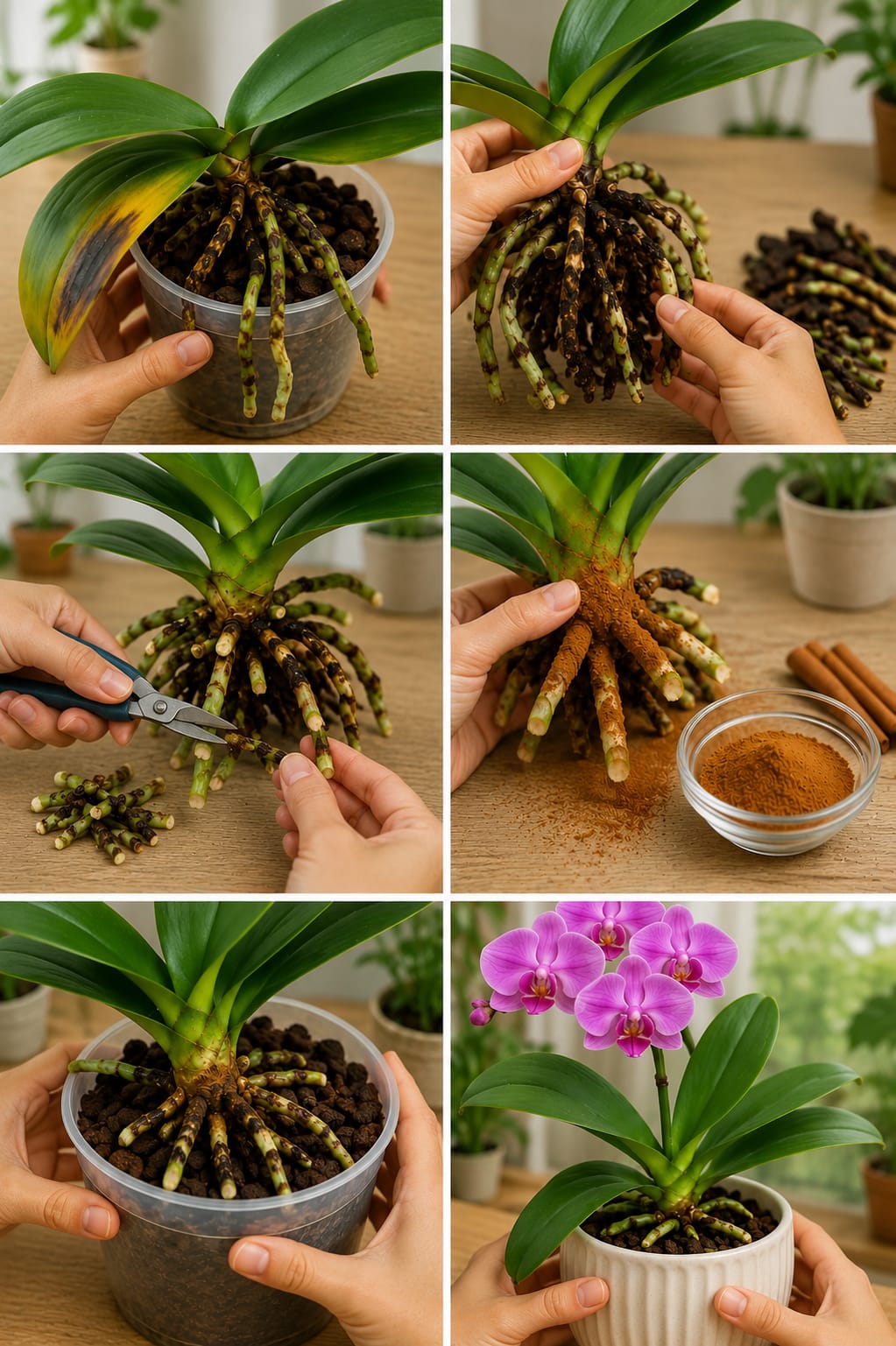
Orchids are among the most elegant and rewarding houseplants a gardener can grow. Their graceful flowers, glossy leaves, and unique root systems make them a favorite in homes around the world. However, despite their beauty, orchids can sometimes develop problems that leave growers worried and frustrated. Yellowing leaves, weak growth, shriveled roots, and declining blooms are often signs that something is happening below the surface.
One of the most common challenges orchid owners face is root damage. Because orchids rely heavily on their roots for moisture absorption, nutrient uptake, and overall plant stability, even minor root issues can affect the entire plant. Fortunately, many orchid enthusiasts have discovered that combining proper pruning, repotting, airflow, and natural care practices can help create conditions that encourage healthier root development.
A popular natural ingredient often discussed among gardeners is cinnamon. Long valued in household and gardening circles, cinnamon is commonly used as a dry protective treatment after pruning damaged plant tissue. When paired with good orchid-growing practices, it can become part of a comprehensive care routine aimed at maintaining healthier plants.
Understanding Orchid Roots
Unlike many traditional houseplants, orchids possess a specialized root system designed for life in tropical environments. Most popular orchids grown indoors are epiphytic, meaning they naturally grow attached to tree branches rather than directly in soil.
Because of this adaptation, orchid roots are different from typical plant roots. They are covered with a spongy layer called velamen, which allows them to absorb moisture and nutrients quickly from the surrounding environment.
Healthy orchid roots are usually:
- Firm to the touch.
- Silvery-gray when dry.
- Green when hydrated.
- Actively growing at the tips.
- Free from soft or mushy areas.
When roots remain healthy, orchids are better able to support vigorous leaves and long-lasting flowers.
Why Root Health Matters So Much
Every part of an orchid depends on a healthy root system. The roots act as the plant’s lifeline, supplying essential moisture and nutrients needed for growth and flowering.
When roots become damaged, the orchid may struggle to perform basic functions. Leaves may begin losing firmness, flowers may fade more quickly, and overall growth can slow dramatically.
This is why experienced orchid growers often say that healthy blooms begin with healthy roots.
Common Causes of Root Problems
Many root issues can be traced back to environmental conditions rather than diseases. Understanding these causes can help prevent future problems.
Overwatering
Excess moisture is one of the leading causes of orchid root decline. Orchid roots need oxygen as much as they need water. Constantly wet growing media can deprive roots of airflow and create stressful conditions.
Old Potting Mix
Over time, orchid bark gradually breaks down. As it decomposes, it retains more water and provides less airflow. This can contribute to unhealthy root conditions.
Poor Drainage
Containers without proper drainage may allow water to accumulate around the roots. Stagnant moisture can quickly lead to root stress.
Insufficient Air Circulation
Orchids naturally experience moving air in tropical environments. Poor ventilation can create excessively damp conditions that negatively affect root health.
Improper Pot Size
Using containers that are too large may cause the growing medium to remain wet for extended periods. Orchids generally prefer containers that fit their root systems appropriately.
Recognizing Early Warning Signs
The sooner root issues are detected, the easier they are to address.
Warning signs may include:
- Yellowing lower leaves.
- Wrinkled foliage.
- Weak flower spikes.
- Poor blooming performance.
- Dark or mushy roots.
- Unpleasant odors from the pot.
- Slow growth.
Regular inspections help identify problems before they become severe.
The Importance of Root Inspection
Transparent orchid pots have become popular because they allow growers to observe root health without disturbing the plant.
Healthy roots are generally easy to identify through clear containers. Monitoring root color and condition provides valuable information about overall plant health.
Periodic inspections also help determine when repotting may be necessary.
When Repotting Becomes Necessary
Repotting is one of the most effective ways to improve growing conditions for orchids experiencing root stress.
Common reasons for repotting include:
- Decomposed bark.
- Overcrowded roots.
- Poor drainage.
- Visible root decline.
- Salt accumulation.
Fresh growing media often provides immediate improvements in airflow and moisture management.
Preparing for Root Maintenance
Before handling orchid roots, gather clean tools and prepare a suitable work area.
Useful supplies may include:
- Sharp pruning scissors.
- Fresh orchid bark.
- Clean containers.
- Disinfecting solution.
- Protective gloves.
- A new orchid pot if needed.
Clean equipment helps minimize unnecessary stress during the process.
Removing the Orchid from Its Pot
Carefully remove the orchid from its container while protecting the roots from excessive damage.
Gently loosen the growing medium and inspect the root system thoroughly. This provides an opportunity to evaluate root condition and identify any areas requiring attention.
Identifying Healthy and Unhealthy Roots
During inspection, it becomes easier to distinguish between healthy and damaged roots.
Healthy roots are typically:
- Firm.
- Green or silvery.
- Flexible.
- Intact.
Damaged roots may appear:
- Brown.
- Black.
- Mushy.
- Collapsed.
- Hollow.
Removing severely damaged tissue can help improve overall root system quality.
Pruning Damaged Roots
Many orchid growers remove roots that are clearly dead or deteriorated.
Pruning helps eliminate tissue that no longer contributes to plant health and allows growers to focus on preserving viable roots.
Only damaged roots should be removed. Healthy roots should remain intact whenever possible.
Why Some Gardeners Use Cinnamon
Cinnamon has long been used by home gardeners as a dry treatment applied to freshly cut plant surfaces.
After pruning damaged orchid roots, some growers lightly dust the cut areas with cinnamon powder before repotting.
This practice has become popular because cinnamon is readily available, inexpensive, and easy to apply.
However, cinnamon should be used sparingly and only on cut surfaces rather than throughout the entire root system.
Choosing Fresh Orchid Bark
Fresh bark is one of the most valuable tools for orchid recovery.
High-quality orchid bark helps provide:
- Excellent drainage.
- Improved airflow.
- Root stability.
- Better moisture management.
Repotting into fresh media often gives orchids a healthier environment for future growth.
Proper Repotting Techniques
Place the orchid into its container carefully, allowing roots to settle naturally.
Avoid packing bark too tightly. Roots require air spaces throughout the growing medium.
Good airflow around the roots supports healthier development over time.
The Recovery Period
After repotting, orchids often require a period of adjustment.
It is normal for plants to focus on root establishment before producing significant new top growth.
Patience is essential during this stage.
Consistent care usually produces the best long-term results.
Watering After Repotting
Proper watering remains one of the most important aspects of orchid recovery.
Many growers allow newly repotted orchids time to settle before returning to a regular watering schedule.
Water should flow freely through the container without remaining trapped around the roots.
Well-drained roots are healthier roots.
The Role of Light in Recovery
Light fuels photosynthesis, which supplies energy needed for root regeneration and plant growth.
Most orchids prefer bright, indirect sunlight.
Providing appropriate lighting encourages stronger leaves, healthier roots, and future flower production.
Direct intense sunlight should generally be avoided.
Continue to Page 2
Continue to page 2 for more details about this article and the key points many readers miss on the first page.