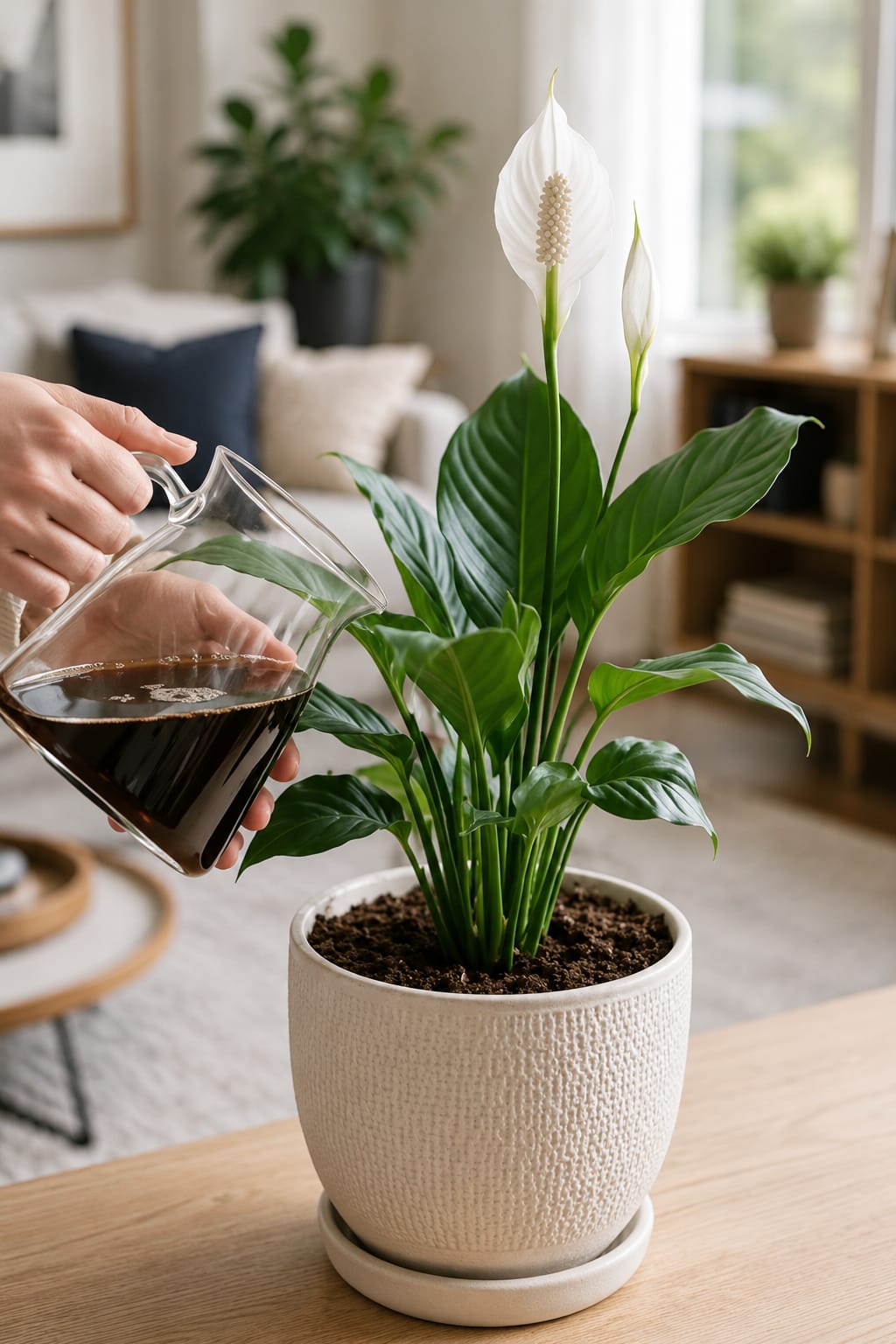
Peace lilies are some of the most graceful indoor plants you can grow. Their deep green leaves, upright stems, and clean white blooms create a calm, polished look that fits beautifully into modern homes, cozy apartments, office corners, bedrooms, and bright living rooms. A healthy peace lily can make a room feel fresher and more expensive-looking without needing complicated styling.
Many plant lovers notice that peace lilies look stunning when first brought home, but after a few months the leaves may become dull, flowering may slow down, and the plant may lose its full, fresh appearance. This usually happens because the plant’s basic needs are not staying balanced. Peace lilies need bright indirect light, steady moisture, clean roots, good drainage, and gentle nutrition to keep their leaves glossy and their flowers elegant.
One natural care idea often used by indoor gardeners is a mild dark plant tonic made from compost tea, worm casting tea, or a very diluted organic liquid fertilizer. These dark liquids are usually rich in organic compounds and can support the soil environment when used carefully. The key is moderation. Peace lilies do not need heavy feeding, and too much organic liquid can sour the soil or stress the roots. A light, diluted routine works best.
Why Peace Lilies Respond So Well to Gentle Care
Peace lilies are tropical plants. In nature, they grow under the filtered shade of taller plants, where the soil stays lightly moist and organic matter slowly breaks down around the roots. This explains why they prefer soft light, moderate humidity, and a growing medium that holds moisture without becoming soggy.
Indoors, a peace lily can remain beautiful for years if its routine stays consistent. The plant does not need dramatic tricks. It needs a stable rhythm: water when the top soil begins to dry, keep it away from harsh direct sun, remove old leaves, and feed lightly during active growth.
What a Dark Plant Tonic Can Do
A dark plant tonic is not a miracle solution. It is simply a gentle supplement that may support the soil and provide mild nutrition. Compost tea, worm casting tea, or diluted organic fertilizer can add small amounts of nutrients and beneficial organic matter to the potting mix.
This type of tonic may help support:
- Healthier green leaves
- Cleaner root activity
- Steadier new growth
- Better soil biology
- More balanced plant vigor
- A fuller decorative appearance
The best results come when the tonic is used alongside proper light, watering, drainage, and humidity.
A Gentle Peace Lily Tonic Recipe
For a simple mild routine, use one of these options:
- 1 part compost tea mixed with 4 parts water
- 1 part worm casting tea mixed with 5 parts water
- A balanced organic liquid fertilizer diluted to half or quarter strength
The mixture should look like weak tea, not thick syrup. If it smells rotten, sour, or unpleasant, do not use it. Healthy organic plant tonics should have an earthy smell, not a spoiled smell.
How Often to Use It
Use a mild tonic only once every 4 to 6 weeks during spring and summer, when the peace lily is actively growing. During cooler months or low-light seasons, reduce feeding or stop completely.
Peace lilies are not heavy feeders. Applying too much liquid fertilizer or organic tea can lead to mineral buildup, root stress, or overly wet soil. A small amount used occasionally is safer than frequent heavy feeding.
How to Apply It Correctly
Always apply the diluted tonic to moist soil. If the soil is bone dry, water lightly with plain water first and wait a little before feeding. Pour slowly around the base of the plant, avoiding the leaves and flowers.
Do not flood the pot. Use only enough liquid to lightly moisten the root zone. If water drains into the saucer, empty the saucer after a few minutes so the plant does not sit in standing liquid.
Why Drainage Is Essential
Peace lilies like moisture, but they do not like swampy roots. The pot must have drainage holes. Without drainage, water collects at the bottom and can suffocate the roots.
A peace lily with poor drainage may show yellow leaves, drooping stems, brown tips, or slow growth. Many people mistake these symptoms for lack of fertilizer, but the real problem is often excess water around the roots.
The Best Light for Peace Lily Blooms
Light is one of the biggest secrets to peace lily flowering. A peace lily can survive in low light, but it usually blooms better in bright indirect light.
Place the plant near a bright window where sunlight is filtered through curtains, blinds, or distance from the glass. Avoid strong direct afternoon sun because it can burn the leaves.
If your peace lily grows many leaves but no flowers, the plant may need a brighter location.
Watering for Glossy Leaves
Peace lilies are known for drooping when thirsty. This makes them easy to read, but it is better not to let them collapse too often. Repeated severe wilting can stress the plant over time.
Check the soil with your finger. When the top inch feels slightly dry, water thoroughly until excess drains out. Then allow the soil to dry slightly again before the next watering.
Consistent moisture supports glossy leaves and stronger stems.
Why Leaves Turn Brown
Brown tips are common on peace lilies. They may happen because of dry air, inconsistent watering, mineral buildup, too much fertilizer, or sensitivity to water quality.
If brown tips appear, do not immediately add more plant food. First check:
- Is the soil staying too wet?
- Is the plant near a heater or air conditioner?
- Is the water very hard?
- Has too much fertilizer been used?
- Is the plant receiving harsh sun?
Fixing the root cause is more effective than adding extra treatments.
Cleaning the Leaves
Peace lily leaves look best when they are clean. Dust blocks light and makes the plant appear dull. Wipe the leaves gently with a soft damp cloth every few weeks.
Clean leaves capture light better and instantly improve the plant’s decorative appearance. This small step can make the plant look healthier and more luxurious.
Removing Old Flowers and Leaves
Peace lily blooms eventually fade from white to green or brown. Remove old flowers by cutting the flower stem near the base with clean scissors.
Also remove yellow or damaged leaves. This keeps the plant tidy and helps it focus energy on fresh growth.
Soil Care for Peace Lilies
A good peace lily mix should hold moisture while still allowing air to reach the roots. A useful blend may include potting soil, perlite, coco coir, and a little orchid bark.
If the soil becomes compacted, water may sit too long around the roots. Repotting into a fresher, lighter mix can improve growth dramatically.
When to Repot
Repot a peace lily when roots circle tightly around the pot, water runs straight through without soaking, or growth has slowed despite good care. Choose a pot only slightly larger than the current one.
A pot that is too large holds too much wet soil, which can increase the risk of root problems.
Continue to Page 2
Continue to page 2 for more details about this article and the key points many readers miss on the first page.