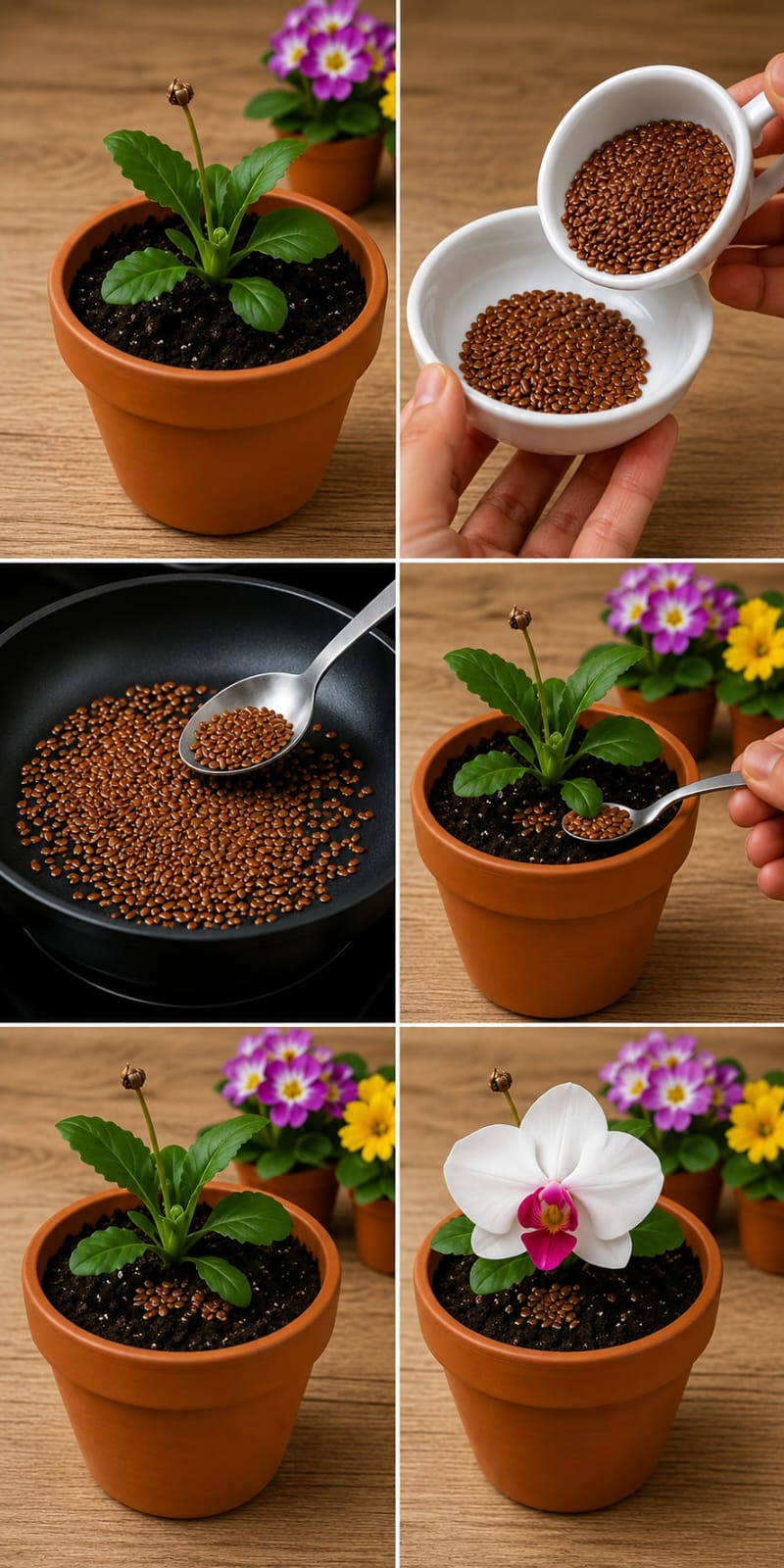
Flowering houseplants can completely change the feeling of a room. A small pot with glossy leaves and bright blooms can make a windowsill, shelf, balcony table, or indoor garden corner feel alive, fresh, and beautifully cared for. But keeping flowering plants healthy is not always as simple as watering them and waiting. Many plants bloom strongly for a short time, then begin to slow down, produce fewer flowers, or look tired even when they are still alive.
That is why many plant lovers enjoy gentle natural routines that support the plant slowly instead of forcing quick results. One simple method often discussed among home gardeners is using toasted flaxseed as a mild soil-supporting ingredient for potted flowering plants. Flaxseed is rich in natural oils and organic matter, and when used in very small amounts, it can become part of a slow, natural container-care routine.
This method is not a miracle fertilizer, and it should not replace good potting soil, enough light, proper watering, drainage, or a complete plant food when needed. But as a careful supplemental practice, toasted flaxseed can help create a richer-looking plant-care ritual that feels simple, natural, and budget-friendly.
Why Flowering Plants Need Balanced Care
Flowering plants use a lot of energy. Producing leaves is one thing, but producing buds and blooms requires extra resources. A plant must have healthy roots, enough light, adequate moisture, and access to nutrients before it can support strong flowering.
When a plant is grown in a pot, its roots are limited to a small amount of soil. Over time, watering can wash nutrients out of the container, and the potting mix may become compacted or depleted. This is why many container flowers need more attention than plants growing directly in garden soil.
A beautiful flowering plant usually depends on several things working together: healthy roots, clean soil, steady moisture, bright indirect light, gentle feeding, and regular grooming.
What Makes Flaxseed Interesting for Plant Lovers?
Flaxseed is commonly known as a kitchen ingredient, but gardeners often become curious about seeds because they contain organic matter. When organic materials break down gradually in soil, they can contribute to the natural life of the growing medium.
Toasted flaxseed is sometimes used because light roasting helps dry the seeds and makes them easier to sprinkle in small amounts. It also reduces the chance of the seeds sprouting in the pot.
The goal is not to cover the soil heavily. The idea is to use a tiny amount as a gentle organic soil addition while maintaining a normal care routine.
Why Toast the Seeds First?
Raw seeds may sprout if placed in moist soil. That can create unwanted seedlings around your houseplant. Light toasting helps reduce that possibility and makes the seeds more suitable as a soil-topper ingredient.
To toast flaxseed, place a small amount in a dry pan on low heat for a few minutes. Stir constantly and remove them as soon as they smell lightly nutty. They should not burn. Burned seeds are not useful and may create an unpleasant smell.
Allow the seeds to cool completely before using them around plants.
How to Use Toasted Flaxseed Around Potted Flowers
The safest method is to use only a small pinch around the soil surface. A little goes a long way.
For a small pot, use about half a teaspoon or less. For a medium pot, one teaspoon is usually enough. Sprinkle the toasted seeds lightly around the outer soil area, away from the crown or main stem of the plant.
After applying, gently scratch them into the top layer of soil using a small spoon, fork, or plant tool. Do not bury them deeply. Keep the material close to the surface where it can break down slowly.
How Often to Repeat This Routine
This is not something to do every week. For most potted flowers, once every 6 to 8 weeks during active growth is enough.
During colder months, low-light seasons, or when the plant is not growing actively, avoid adding extra organic material. Plants use fewer resources during slower growth periods, and excess material may sit in the soil without breaking down properly.
Moderation is the most important rule.
Which Flowering Plants Can Use This Routine?
This gentle soil-care idea may suit many small potted flowering plants when used carefully. It can be considered for plants such as:
- African violets
- Impatiens
- Begonias
- Geraniums
- Small daisies
- Primroses
- Kalanchoe
- Compact flowering houseplants
- Balcony flower pots
Always begin with a very small amount and watch the plant’s response. Sensitive plants should receive less rather than more.
Can This Make Flowers Bloom Immediately?
No natural soil addition should be expected to create instant blooms. Flowering depends on plant maturity, light levels, temperature, nutrition, watering, and overall health.
If a plant blooms after using a natural routine, the improvement usually comes from better overall care rather than one single ingredient. The toasted flaxseed method should be seen as a supporting step, not a guaranteed bloom trigger.
Healthy plants bloom better because their entire care routine is balanced.
The Real Secret: Light
If your flowering plant refuses to bloom, the first thing to check is light. Many flowering plants need brighter conditions than foliage plants. They may survive in low light, but survival is not the same as blooming.
Place flowering plants near a bright window with indirect or filtered sunlight. Morning sun is often gentle and helpful. Harsh afternoon sun may burn delicate leaves or flowers, especially indoors behind glass.
A plant that receives enough light usually grows stronger, produces better leaves, and has more energy for buds.
Watering Correctly
Watering mistakes are one of the biggest reasons potted flowers decline. Too much water can damage roots. Too little water can cause wilting and bud drop.
Check the soil before watering. If the top layer feels dry, water thoroughly until excess drains out. If the soil still feels moist, wait. Never leave the pot sitting in a full saucer of water for long periods.
Healthy watering supports healthy roots, and healthy roots support flowering.
Why Drainage Matters
Every flowering pot should have drainage holes. Without drainage, water collects at the bottom and creates soggy conditions around the roots.
Soggy roots cannot breathe properly. Over time, this can lead to yellow leaves, weak stems, root rot, and fewer blooms.
If you love decorative pots without holes, use them as cover pots. Keep the plant in a nursery pot with drainage, then place it inside the decorative container.
Soil Quality Makes a Big Difference
A good potting mix should hold enough moisture to support the plant while still allowing air to reach the roots. Flowering plants often perform better in a fresh, loose, nutrient-rich mix than in old compacted soil.
If the soil looks hard, crusty, sour-smelling, or overly dense, consider refreshing the top layer or repotting into a better mix.
Toasted flaxseed works best only when the base soil is already healthy.
Why Organic Material Must Be Used Carefully
Natural ingredients can support soil life, but too much organic material in a small indoor pot can cause problems. If the soil stays wet, added organic matter may mold, sour, or attract small insects.
That is why this routine must remain light. A tiny sprinkle is better than a thick layer.
If you notice mold, unpleasant odor, or fungus gnats, remove the material from the soil surface and improve airflow and drainage.
Should You Grind the Flaxseed?
Some gardeners prefer to lightly crush toasted flaxseed before using it. Crushed seeds break down faster than whole seeds. However, they may also become sticky or moldy if used too heavily.
If you grind them, use an even smaller amount. A tiny pinch mixed into the top soil layer is enough for small pots.
Whole toasted seeds are slower and usually easier to manage.
Combining With Complete Fertilizer
Toasted flaxseed is not a complete fertilizer. Flowering plants need nitrogen, phosphorus, potassium, calcium, magnesium, sulfur, and trace minerals. Flaxseed alone cannot provide a complete balanced feeding program.
For reliable growth and blooms, use a proper flowering plant fertilizer according to label directions. If using a natural soil addition too, keep both routines light and spaced apart.
Never overload the plant with multiple treatments at the same time.
Deadheading for More Blooms
Removing faded flowers is one of the simplest ways to keep potted flowering plants attractive. This process is called deadheading.
When old blooms remain on the plant, the plant may begin using energy to produce seeds. Removing faded blooms encourages many plants to redirect energy toward fresh buds and new growth.
Use clean scissors or pinch off old flowers gently. This instantly improves the plant’s appearance and can encourage a fuller blooming habit.
Continue to Page 2
Continue to page 2 for more details about this article and the key points many readers miss on the first page.