Pruning for a Fuller Shape
Many flowering plants become leggy over time. Light pruning can help them branch and look fuller.
Trim long weak stems just above a leaf node. Avoid cutting too much at once. Small regular trims are safer than severe pruning.
A compact, bushy plant usually looks more elegant and often produces flowers more evenly.
Cleaning the Leaves
Dusty leaves cannot capture light efficiently. Clean leaves also make the entire plant look healthier and more expensive.
Use a soft damp cloth to wipe large leaves gently. For fuzzy-leaved plants such as African violets, avoid wet wiping and use a soft brush instead.
Clean foliage improves both plant function and visual appeal.
How to Style Small Flower Pots Indoors
A small flowering plant can look luxurious with the right styling. Choose a simple pot that complements the bloom color. Terracotta gives a warm natural look. White ceramic feels clean and modern. Soft beige or stone-textured pots create a calm neutral style.
Place the plant near natural light and pair it with a tray, small books, candles, or other greenery. Keep the surrounding surface clean so the flowers become the focal point.
Balcony Styling With Flower Pots
On balconies, small flowering pots can be grouped for a lush garden effect. Use different heights to create depth. Place taller plants behind shorter ones and trailing plants near the edge.
Color coordination makes the display look intentional. Pink and white flowers feel soft and romantic. Yellow and purple combinations feel cheerful. Red flowers create a bold focal point.
A few well-maintained pots can make even a small balcony feel like a garden retreat.
Signs the Routine Is Working
With consistent care, you may notice gradual improvements such as:
- Greener leaves
- Stronger stems
- Fresh new growth
- More compact plant shape
- Improved soil texture at the surface
- Better flowering over time
These changes happen slowly. Give the plant several weeks to respond to improved care.
Signs You Should Stop
Stop using toasted flaxseed if you notice:
- Mold on the soil
- Fungus gnats
- Sour smell
- Sticky soil surface
- Yellowing after application
- Soil staying wet too long
In that case, remove the seeds, allow the soil to dry slightly, and focus on airflow, light, and drainage.
A Simple Monthly Flower-Care Routine
For healthy potted blooms, follow a simple routine:
- Check light levels weekly.
- Water only when the soil begins to dry.
- Deadhead faded blooms.
- Remove yellow leaves.
- Rotate the pot for even growth.
- Use complete fertilizer during active growth.
- Add toasted flaxseed only occasionally and lightly.
This balanced approach is safer and more effective than relying on one ingredient.
Why Patience Matters
Plants do not transform overnight. A weak flowering plant needs time to rebuild roots, produce fresh leaves, and prepare new buds. The best care routines create steady improvements, not instant results.
Patience is especially important with natural methods. Organic materials break down gradually and support the soil slowly.
Give the plant time, observe carefully, and adjust only when needed.
Final Thoughts
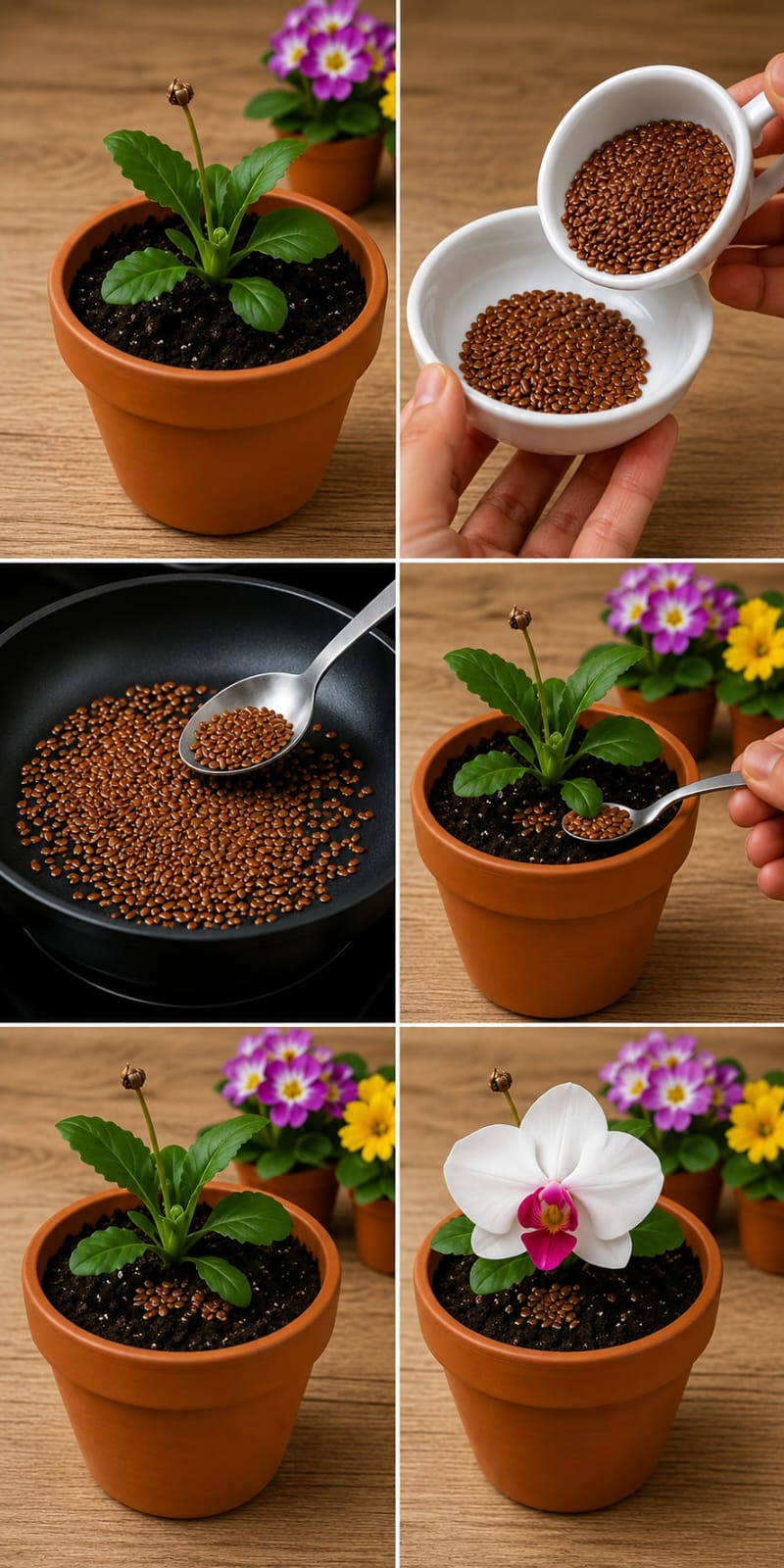
The toasted flaxseed flower trick is a simple natural routine that can fit into a gentle plant-care program for potted flowering plants. By lightly toasting the seeds and using only a small sprinkle on the soil surface, gardeners can add a slow organic element without overwhelming the pot.
However, this method works best when the basics are already correct. Give your flowering plant enough bright light, water properly, maintain drainage, use healthy soil, remove faded blooms, and feed with a complete fertilizer when needed. The flaxseed routine should support those steps, not replace them.
With careful use, patience, and consistent care, a small potted flower can become greener, fuller, and more elegant. The result is a fresh blooming display that looks beautiful on a windowsill, balcony, coffee table, plant shelf, or indoor garden corner.