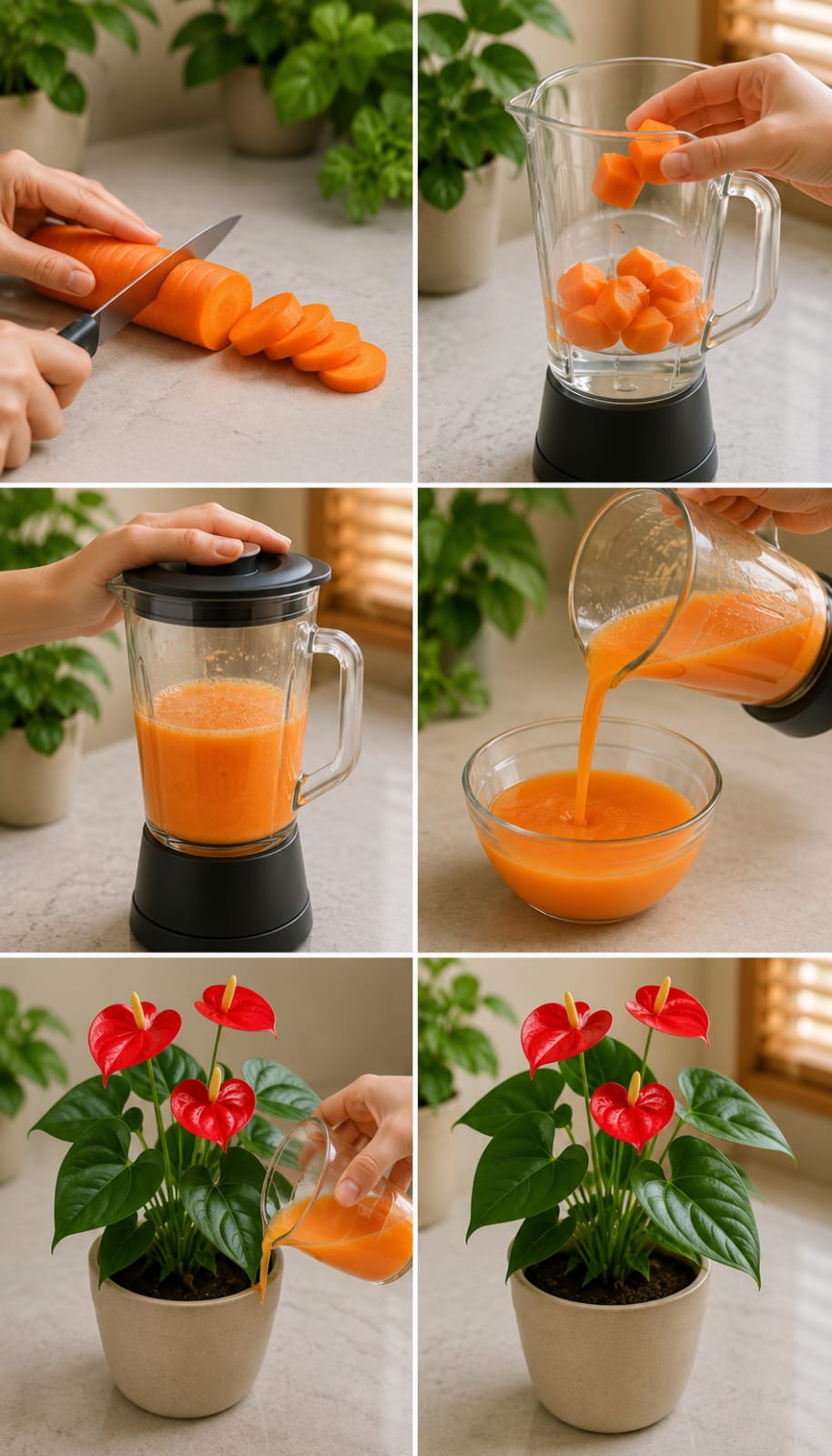
Anthuriums are some of the most eye-catching indoor plants you can grow. Their shiny heart-shaped leaves, bold red flowers, and tropical elegance make them perfect for bright windowsills, plant shelves, coffee tables, offices, and refined indoor garden corners. A healthy Anthurium can look almost like a living luxury decoration, especially when the leaves are glossy and the colorful spathes stand tall above the foliage.
Many plant lovers search for simple natural ways to keep Anthuriums looking fresh, full, and vibrant. One gentle idea often used in home plant care is a diluted carrot water routine. Carrots contain natural plant compounds, moisture, and small amounts of nutrients, and when blended with water and strained well, they can create a light orange plant tonic that some gardeners use occasionally around flowering houseplants.
This routine should be used carefully. Carrot water is not a miracle fertilizer, and it should never replace proper Anthurium care. The real secret to a thriving Anthurium is bright indirect light, airy soil, balanced moisture, healthy roots, humidity, and occasional complete feeding. But when used sparingly and diluted properly, carrot water can become a simple natural supplement that fits into a thoughtful plant-care routine.
Why Anthuriums Need Balanced Care
Anthuriums are tropical plants. In their natural environment, they often grow in warm, humid areas with filtered sunlight and loose organic material around their roots. They do not enjoy heavy compacted soil or constantly soggy conditions. Their roots need both moisture and air.
Indoors, Anthuriums perform best when their care routine mimics those natural conditions. They need steady warmth, gentle light, and a potting mix that drains well but does not dry out too quickly.
When the basics are correct, Anthuriums can produce glossy leaves and repeat blooms for much of the year.
What Is Carrot Water for Plants?
Carrot water is a simple homemade plant tonic made by blending small carrot pieces with water, then straining the liquid before use. The goal is to create a very light, diluted plant-care liquid that can be poured around the soil occasionally.
Carrots contain organic matter and natural pigments such as beta-carotene. They also contain small amounts of minerals. However, this does not mean carrot water is a complete fertilizer. It is only a mild supplement.
The safest way to think of carrot water is as a gentle natural addition, not a replacement for real plant food.
A Gentle Carrot Water Recipe for Anthuriums
To make a mild carrot water tonic, use a simple and diluted recipe:
- 1 small carrot or half a medium carrot
- 2 cups clean water
- Blend until smooth
- Strain very well through a fine sieve or cloth
- Dilute again with another 2 cups of water before applying
The final liquid should be thin and watery, not thick like juice. Thick vegetable pulp should never be poured into a houseplant pot because it can rot, smell bad, attract fungus gnats, or create mold on the soil surface.
Why Straining Is Very Important
Straining is the most important step in this routine. Carrot pulp left in the soil can break down too quickly, especially indoors where airflow may be limited. This can create sour smells or encourage small insects.
Use only the strained liquid. If the mixture still looks thick, dilute it more. A safe plant tonic should move through the soil like water.
Clean, thin liquid is much safer for potted Anthuriums than heavy homemade mixtures.
How Often to Use Carrot Water
Carrot water should not be used often. For Anthuriums, once every 6 to 8 weeks during active growth is enough.
Use it only when the plant is healthy and growing. Avoid using it when the plant is stressed, recently repotted, overwatered, root-damaged, or sitting in low light.
During winter or low-light months, stop using homemade tonics and focus on careful watering and good light.
How to Apply It Safely
Apply carrot water to slightly moist soil. Do not pour it onto bone-dry soil, because dry roots can be sensitive to sudden changes.
Pour slowly around the outer edge of the pot, not directly into the crown of the plant. Avoid wetting the leaves and flowers heavily. Use only enough to lightly moisten the root zone.
If extra liquid drains into the saucer, empty it after a few minutes. Anthuriums should never sit in standing water.
Why This Routine Must Stay Light
Natural plant-care routines can be helpful only when they are mild. Too much homemade liquid can cause more harm than good.
Overuse may lead to:
- Sour soil
- Fungus gnats
- Mold on the soil surface
- Root stress
- Unpleasant smell
- Yellowing leaves
If any of these problems appear, stop using carrot water immediately and return to plain water until the plant stabilizes.
Carrot Water Is Not a Complete Fertilizer
Anthuriums need a balanced supply of nutrients to grow and bloom well. Carrot water cannot provide everything the plant needs.
A complete fertilizer contains key nutrients such as nitrogen, phosphorus, potassium, and trace minerals. These nutrients support leaf growth, root strength, and flower development.
Use a proper houseplant or flowering plant fertilizer during the growing season according to label directions. If you use carrot water, apply it separately and lightly, not at the same time as strong fertilizer.
The Real Bloom Secret: Bright Indirect Light
If an Anthurium has healthy leaves but does not bloom, the problem is often light. Anthuriums need bright indirect light to produce strong flowers.
Place the plant near a bright window where it receives plenty of filtered light. East-facing windows are often excellent. A south or west window can work if the light is softened by a curtain.
Too much direct sun may burn the leaves, while too little light may reduce blooming.
Watering Anthuriums Correctly
Anthuriums prefer evenly moist soil, but they do not like soggy roots. The top layer of soil should begin to dry slightly before watering again.
Check the soil with your finger. If the top inch feels dry, water thoroughly. If it still feels damp, wait a little longer.
Watering on a strict calendar can lead to problems because soil dries at different speeds depending on light, temperature, pot size, and humidity.
Choosing the Right Soil Mix
Anthuriums grow best in an airy, chunky potting mix. Regular dense soil may hold too much water and reduce oxygen around the roots.
A good Anthurium mix may include:
- High-quality potting mix
- Orchid bark
- Perlite
- Coco coir
- Small amount of compost
- Pumice if available
This type of mix gives roots moisture and airflow at the same time.
Why Drainage Matters
Every Anthurium pot should have drainage holes. Without drainage, water collects at the bottom and can cause root rot.
If your decorative pot has no holes, use it as a cover pot. Keep the Anthurium in a plastic nursery pot with drainage, then place that inside the decorative container.
After watering, make sure excess water is removed from the bottom.
Humidity for Glossy Leaves
Anthuriums love humidity. Dry indoor air can cause brown leaf edges, dull leaves, and slower growth.
To increase humidity naturally, group plants together, use a pebble tray, or place the Anthurium in a naturally humid room with good light.
A humidifier can also help if your indoor air is very dry.
Cleaning the Leaves for a Luxury Look
Glossy leaves are one of the main reasons Anthuriums look so expensive. Dust can make the plant look dull and reduce light absorption.
Wipe the leaves gently with a soft damp cloth every few weeks. Support each leaf with one hand while wiping with the other.
This simple habit instantly improves the plant’s appearance.
Removing Old Flowers
Anthurium flowers last a long time, but they eventually fade. Old blooms may turn dull, brown, or greenish.
Cut faded flower stems near the base using clean scissors. Removing old flowers keeps the plant tidy and may help it focus energy on new growth.
A clean plant always looks more elegant.
Continue to Page 2
Continue to page 2 for more details about this article and the key points many readers miss on the first page.