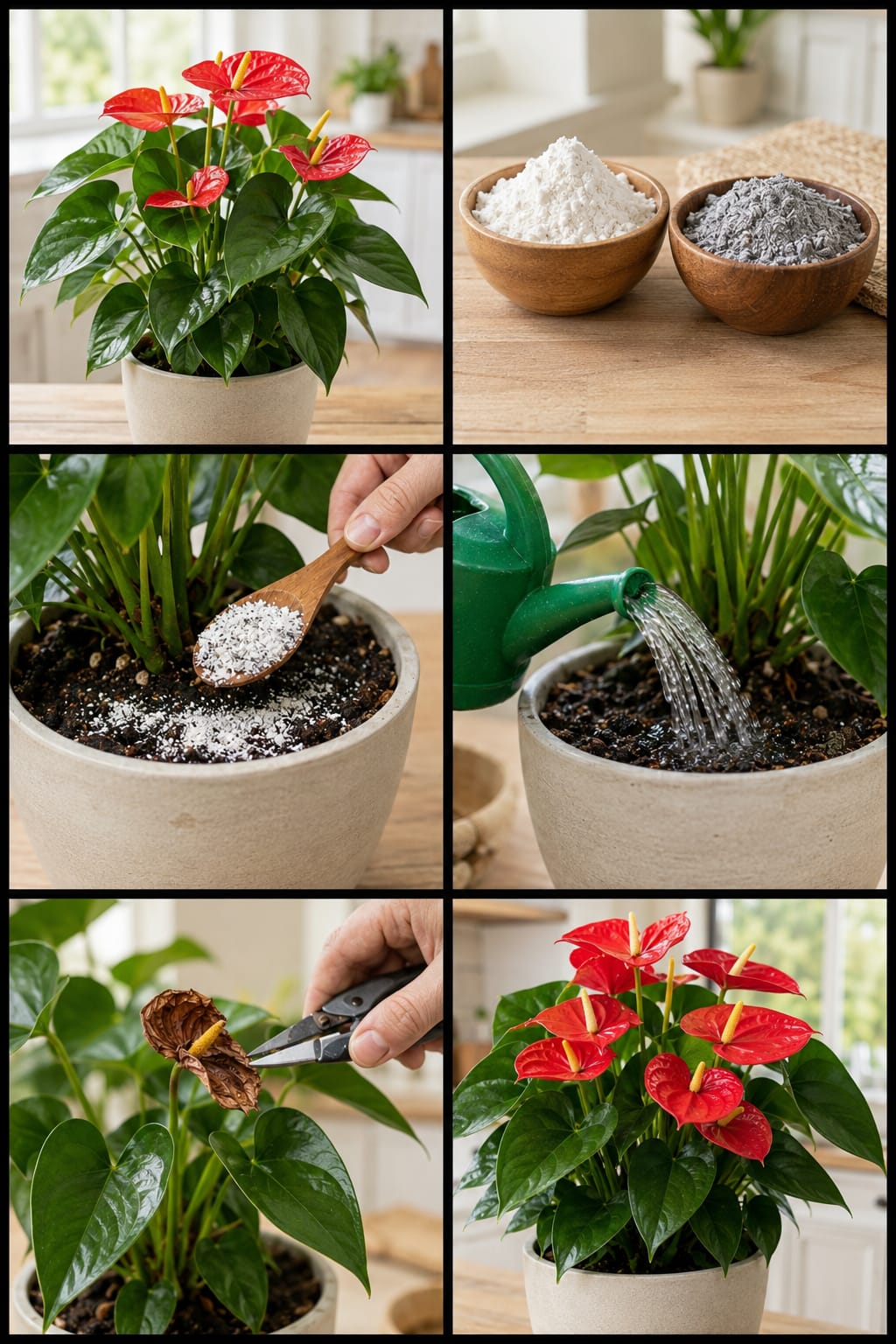
Anthuriums are among the most elegant flowering houseplants you can grow indoors. Their glossy heart-shaped leaves, upright stems, and bright red blooms bring a tropical, luxurious feeling to any room. A healthy Anthurium can look like a professional floral arrangement even when it is simply sitting in a ceramic pot near a bright window.
Many plant lovers want the same thing from their Anthurium: stronger leaves, more flowers, cleaner soil, and a fuller plant that keeps blooming instead of fading after a few weeks. One simple plant-care idea that attracts attention is the use of a light white powder mixture on the soil surface. This routine is often inspired by natural gardening practices that use small amounts of mineral-rich powders, crushed eggshell powder, rice powder, or fine organic soil amendments to support container plants.
The important thing to understand is that no white powder is a magic bloom booster by itself. Anthuriums bloom best when their full care routine is balanced. They need bright indirect light, airy soil, careful watering, humidity, clean leaves, and gentle feeding. A white powder soil-care step can be useful only when it is mild, clean, and used correctly.
Why Anthuriums Need Careful Feeding
Anthuriums are tropical plants that naturally grow in warm, humid environments with filtered light. Their roots prefer loose, airy material rather than dense garden soil. In nature, organic matter breaks down slowly around the roots, giving the plant a steady but gentle nutrient supply.
In a pot, the plant has access only to the nutrients available in the container. Over time, watering washes some nutrients away, and the soil may become tired. This is why Anthuriums often benefit from light, consistent feeding rather than heavy doses of fertilizer.
Balanced feeding helps support:
- Glossy green leaves
- Stronger stems
- Healthy root growth
- More consistent flower production
- Longer-lasting red blooms
- A fuller decorative shape
What the White Powder Routine Means
A white powder routine usually refers to adding a small amount of a fine plant-safe powder to the soil surface. Some gardeners use crushed eggshell powder for calcium, rice powder as a mild organic addition, or a very small amount of mineral amendment depending on the plant’s needs.
For indoor Anthuriums, the safest approach is to use only very gentle materials and apply them sparingly. A light sprinkle is enough. Thick layers of powder can compact the soil, block airflow, encourage mold, or create mineral buildup.
The goal is not to cover the soil in white powder. The goal is to add a tiny, controlled amount as part of a wider care routine.
A Safe Gentle Powder Option
For a simple Anthurium-friendly routine, finely crushed clean eggshell powder is one of the safest natural options when used in moderation. Eggshell powder contains calcium carbonate, which breaks down slowly. It does not act like an instant fertilizer, but it can become part of long-term soil support.
To prepare it:
- Wash eggshells thoroughly.
- Allow them to dry completely.
- Bake briefly at low heat to remove moisture.
- Grind into a very fine powder.
- Store in a clean dry jar.
Use only a small pinch around the soil surface, away from the plant crown.
How to Apply the Powder
For a small Anthurium pot, use about one-quarter teaspoon. For a medium pot, use no more than half a teaspoon. Sprinkle lightly over the soil surface, then gently mix it into the top layer with a small spoon or plant tool.
Do not pile powder against the stems. Anthurium crowns should stay clean and airy. After applying, water lightly only if the soil is already close to needing water.
This routine can be repeated once every 2 to 3 months during active growth, but it should not be used weekly.
Why Watering After Application Matters
After adding any powder to the soil, watering should be controlled. Too much water can push material into soggy pockets and create poor conditions around the roots.
Water slowly and evenly. Allow excess water to drain fully from the bottom of the pot. Empty the saucer afterward so the roots do not sit in standing water.
Anthuriums like moisture, but they do not like swampy soil.
The Real Secret to Red Anthurium Blooms
If an Anthurium is not blooming, the first thing to check is light. These plants need bright indirect light to produce flowers consistently. Low light may keep the plant alive, but it often reduces blooming.
A good location is near an east-facing window or a bright window with filtered light. Avoid harsh direct afternoon sun because it can burn the leaves.
Strong filtered light gives the plant the energy it needs for new leaves and flower stalks.
Use Airy Soil for Healthy Roots
Anthuriums dislike dense, heavy soil. Their roots need oxygen. A good potting mix should be chunky and well-draining.
A strong Anthurium mix may include:
- Indoor potting mix
- Orchid bark
- Perlite
- Coco coir
- Pumice
- A small amount of compost
This type of mix holds some moisture while still allowing air to move around the roots.
Do Not Overfeed
Too much fertilizer can damage Anthuriums. Overfeeding may cause brown leaf tips, weak roots, yellow leaves, or salt buildup on the soil surface.
Use a balanced liquid houseplant fertilizer at half strength during the growing season. Apply it once a month or according to the product instructions. If using a natural powder routine, keep it separate from fertilizer days.
Gentle feeding is better than heavy feeding.
Remove Faded Flowers
Old Anthurium flowers eventually fade, dry, or lose their bright color. Removing them keeps the plant neat and allows it to focus energy on new growth.
Use clean scissors and cut the old flower stem near the base. Do not pull strongly, because this can damage the crown.
A clean plant looks healthier and more elegant.
Keep Leaves Glossy
The leaves are one of the most beautiful parts of an Anthurium. Dust makes them look dull and blocks light absorption.
Wipe leaves gently with a soft damp cloth every few weeks. Support each leaf from underneath while wiping. Avoid leaf-shine sprays, because they may clog leaf surfaces or leave residue.
Clean leaves instantly make the plant look more expensive and well cared for.
Humidity Helps the Plant Look Fresh
Anthuriums enjoy humidity. Dry indoor air can cause brown tips and slower growth.
To increase humidity, group plants together, place the pot near other tropical plants, or use a pebble tray. A small humidifier can also help in dry rooms.
Good humidity supports softer, cleaner, healthier foliage.
Continue to Page 2
Continue to page 2 for more details about this article and the key points many readers miss on the first page.