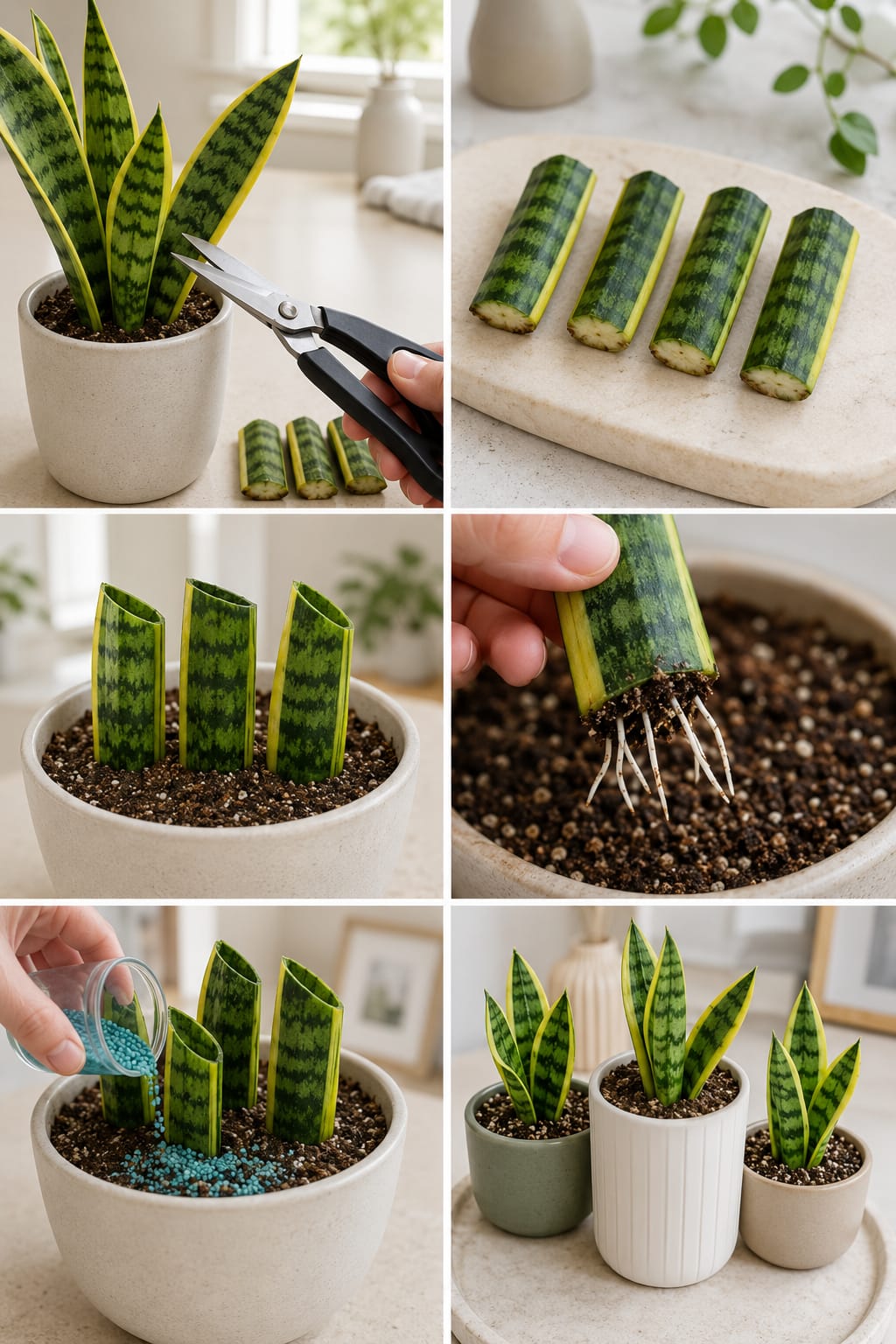
Snake plants are among the easiest and most rewarding houseplants to propagate at home. Their upright sword-shaped leaves, bold green patterns, and yellow-edged varieties make them perfect for modern interiors, bright windowsills, office corners, and minimalist plant shelves. A single mature snake plant can become the beginning of many new plants when leaf cuttings are prepared correctly and given the right rooting conditions.
Many plant lovers are surprised to learn that snake plants can grow from simple leaf sections. You do not always need a full plant division or a large root system to create new growth. With a clean cut, a drying period, a well-draining propagation mix, gentle moisture, and patience, each healthy leaf section can develop roots and eventually produce new pups from the base.
This method is practical, budget-friendly, and ideal for anyone who wants to multiply their indoor plant collection without buying more plants. It is also a wonderful way to save healthy pieces from an older plant, refresh your decor, or create small gifts for friends and family.
Why Snake Plants Are Perfect for Propagation
Snake plants are naturally tough. They store water in their thick leaves and can tolerate periods of dryness better than many common houseplants. This makes them excellent candidates for leaf cutting propagation because the cut sections can survive long enough to form roots when conditions are right.
They are also slow but reliable growers. While they do not root as quickly as pothos or tradescantia, they often reward patient growers with strong root systems and sturdy new shoots.
Propagation is especially useful when a mature snake plant becomes crowded, too tall, or uneven. Instead of throwing away trimmed leaves, you can turn them into new plants.
Choosing the Right Leaf
The success of snake plant propagation begins with choosing a healthy leaf. Select a firm, mature leaf that is free from rot, deep damage, pests, or severe yellowing. The leaf should feel solid and upright rather than soft or mushy.
A healthy cutting has more stored energy, which improves its chance of forming roots. Avoid using leaves that are already collapsing or affected by disease. Weak leaves may rot before they root.
If possible, choose a leaf from the outer part of the plant so the main plant keeps its balanced shape.
Use Clean Cutting Tools
Clean tools are essential. Use sharp scissors, pruning shears, or a clean knife. Dull tools can crush the leaf tissue and make the cutting more vulnerable to rot.
Before cutting, wipe the tool with rubbing alcohol or wash it with hot soapy water and dry it well. This reduces the chance of transferring bacteria or fungal problems to the fresh cut.
A clean cut heals better and gives the cutting a stronger start.
How to Cut Snake Plant Leaves
Cut the selected leaf into sections about 3 to 5 inches long. Each section should be large enough to hold moisture and energy while roots develop.
Keep track of which end was closest to the base of the plant. Snake plant cuttings must be planted in the correct direction. The bottom end should go into the soil. If planted upside down, the cutting may fail to root properly.
A helpful trick is to cut the bottom edge at a slight angle or make a small notch so you can identify it later.
Let the Cuttings Dry First
One of the most important steps is allowing the cut ends to dry and callus before planting. Place the cuttings on a paper towel in a dry, shaded area for 2 to 5 days.
This drying period helps seal the wound and reduces the risk of rot after planting. Snake plants are succulents, so they do not need to be planted immediately after cutting.
Skipping this step is one of the most common reasons cuttings fail.
Choosing the Best Propagation Mix
Snake plant cuttings need a loose, well-draining medium. Heavy wet soil can cause the leaf sections to rot before roots form.
A good propagation mix may include:
- Cactus or succulent soil
- Perlite
- Pumice
- Coarse sand
- A small amount of regular potting mix
The mix should hold slight moisture while allowing plenty of air around the base of the cuttings.
Why Drainage Matters
Drainage is critical for snake plants. The container must have drainage holes so excess water can escape. A shallow pot or tray works well for starting several cuttings together.
If water collects around the cut ends, rot can develop quickly. Good drainage keeps the rooting zone lightly moist but never soggy.
For best results, avoid decorative containers without holes during propagation.
Planting the Cuttings
After the cuttings have callused, insert the bottom end into the propagation mix. Plant each piece about 1 inch deep. Press the soil gently around the base so the cutting stands upright.
Do not bury the sections too deeply. Deep planting can hold too much moisture around the leaf and increase the risk of rot.
Space the cuttings apart so air can move between them. Crowded cuttings may stay damp longer.
Watering After Planting
After planting, water lightly. The goal is to settle the soil, not soak it heavily. Allow excess water to drain completely.
After the first watering, wait until the soil is mostly dry before watering again. Snake plant cuttings do not have roots at first, so they cannot absorb much water. Too much moisture is more dangerous than slight dryness.
When in doubt, wait a few more days before watering.
Should You Use Blue Fertilizer Water?
Some plant-care routines show colorful liquid fertilizer being added to newly planted cuttings. While it may look interesting, fresh snake plant cuttings usually do not need fertilizer right away.
Cuttings should focus on forming roots first. Fertilizer is more useful after roots have developed and new growth begins.
If you use any liquid fertilizer later, dilute it heavily. A weak solution is safer than a strong one. Never pour concentrated fertilizer directly onto fresh cuttings.
When to Feed New Snake Plants
Wait until the cutting has rooted and shows signs of new growth before feeding. This may take several weeks or even months.
Once new pups appear, you can use a balanced houseplant or succulent fertilizer at half strength during the growing season.
Feed lightly and occasionally. Snake plants are not heavy feeders, and too much fertilizer can damage roots.
Light Conditions for Rooting
Snake plant cuttings root best in bright indirect light. Place the container near a bright window but away from harsh direct sun.
Too much direct sunlight can dry or scorch the cuttings. Too little light can slow rooting and increase the chance of rot because the soil stays wet longer.
A bright windowsill with filtered light is ideal.
Temperature for Best Results
Warm temperatures encourage rooting. Snake plant cuttings usually root better in a warm room than in a cold space.
A temperature range between 65°F and 80°F is generally suitable. Avoid placing cuttings near cold drafts, air conditioners, heaters, or open windows during chilly weather.
Stable warmth helps the cuttings conserve energy and begin root development.
How Long Rooting Takes
Snake plant propagation requires patience. Roots may begin forming within several weeks, but visible pups often take much longer.
In many cases, leaf cuttings take 2 to 4 months or more before new shoots appear. Some may take even longer depending on light, temperature, season, and plant variety.
Do not pull cuttings out repeatedly to check them. This can damage delicate new roots.
How to Check for Roots
After several weeks, gently tug the cutting. If you feel resistance, roots may be forming. If the cutting moves easily, it may need more time.
Only check occasionally. Constant disturbance slows progress.
When roots are established, the cutting will feel more secure in the soil.
Why New Growth Looks Different
One important detail about snake plant leaf propagation is that variegated varieties may not always produce pups with the same yellow edges. Many yellow-edged snake plants propagated from leaf cuttings can revert to green forms.
If you want to preserve the exact variegation, division is usually a better method. Leaf cuttings are still useful, but the new pups may look slightly different from the parent plant.
This can be part of the fun of propagation because each new plant may have its own appearance.
Division Versus Leaf Cuttings
Snake plants can be propagated in two main ways: division and leaf cuttings.
Division involves separating pups or rhizomes from the mother plant. This method is faster and keeps variegation more reliably.
Leaf cuttings are slower but allow one leaf to produce several new plants. This method is excellent when you want many small plants from one mature leaf.
Common Propagation Mistakes
Several mistakes can cause snake plant cuttings to fail:
- Planting cuttings upside down
- Skipping the callus drying period
- Using heavy wet soil
- Watering too often
- Keeping cuttings in low light
- Using fertilizer too soon
- Planting in containers without drainage
- Pulling cuttings out repeatedly
A simple, dry, bright, and patient approach works best.
How to Prevent Rot
Rot is the biggest threat during snake plant propagation. To prevent it, keep the soil lightly dry, use a gritty mix, and avoid overwatering.
If a cutting becomes soft, black, or mushy at the base, remove it immediately. Healthy cuttings should remain firm.
You can sometimes save a rotting cutting by trimming away the soft part, letting the new cut callus again, and replanting in dry mix.
Continue to Page 2
Continue to page 2 for more details about this article and the key points many readers miss on the first page.