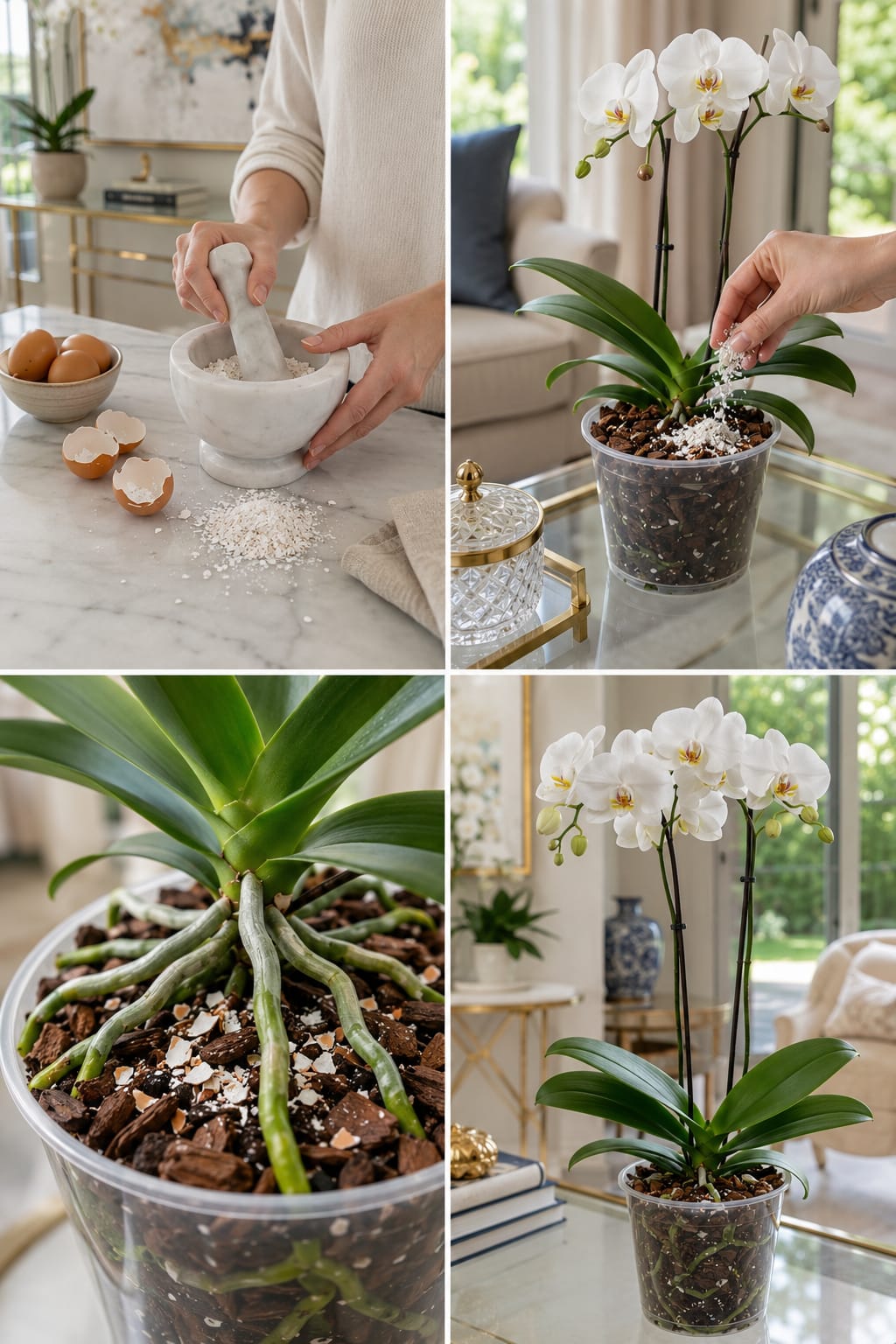
Orchids are some of the most elegant flowering plants you can grow indoors. Their smooth green leaves, arching flower stems, and delicate blooms bring a refined, peaceful feeling to kitchens, bedrooms, living rooms, plant shelves, and bright windowsills. A healthy orchid can look like a luxury floral arrangement for weeks or even months, especially when the leaves are firm, the roots are clean, and the flowers stand beautifully above the plant.
Many orchid lovers look for simple natural ways to keep their plants blooming longer and growing stronger. One gentle plant-care idea is using finely crushed eggshell powder as a slow, natural soil-supporting amendment. Eggshells contain calcium carbonate, which breaks down slowly over time. When used carefully and sparingly, eggshell powder can become part of a balanced orchid-care routine that supports cleaner root conditions and long-term plant strength.
This routine should be used with care. Eggshell powder is not a miracle fertilizer, and it will not force an orchid to bloom overnight. Orchids still need bright indirect light, fresh airy bark, correct watering, humidity, good airflow, and balanced feeding. But when the basics are already correct, a tiny amount of clean eggshell powder can be a useful natural addition for growers who enjoy gentle, sustainable plant care.
Why Orchids Need Special Root Care
Orchids are different from many common houseplants. Most popular indoor orchids, especially Phalaenopsis orchids, are epiphytes. In nature, they grow attached to trees rather than buried in heavy soil. Their roots are exposed to air, moisture, and bits of organic matter that collect around them.
This means orchid roots need airflow. They should never be packed into dense soil like ordinary houseplants. When orchid roots are trapped in heavy, wet material, they can suffocate and rot.
Healthy orchid roots are usually firm, silvery when dry, green when wet, and plump at the tips. Strong roots are the foundation for new leaves, new flower spikes, and long-lasting blooms.
What Eggshell Powder Can Offer
Eggshells are mostly calcium carbonate. Calcium is an important plant nutrient that supports cell structure and overall plant development. However, eggshells break down very slowly, especially in orchid bark. This means they are not an instant fertilizer.
The value of eggshell powder comes from its slow-release nature. When prepared properly and used lightly, it can become a gentle long-term amendment rather than a quick plant food.
For orchids, the key is using a very small amount. Too much powder can collect in the bark, reduce airflow, or create buildup around sensitive roots.
How to Prepare Eggshell Powder Safely
Clean preparation is very important. Eggshells should not be added directly to orchid pots while wet or dirty.
To prepare eggshell powder:
- Rinse eggshells well after use.
- Remove any remaining egg residue.
- Let the shells dry completely.
- Bake them at low heat for a short time to remove moisture.
- Crush them with a mortar, grinder, or rolling pin.
- Make the texture as fine as possible.
- Store the powder in a clean, dry jar.
The finer the powder, the easier it is to apply in tiny amounts. Large shell pieces break down very slowly and may simply sit on top of the bark for months.
How Much Eggshell Powder to Use
For orchids, less is always better. Use only a small pinch around the bark surface. A mature orchid in a medium pot may need no more than one-quarter teaspoon.
Do not cover the entire pot with powder. Do not bury the crown. Do not pack powder around the roots. The goal is a light sprinkle, not a thick layer.
After applying, gently tap the pot or lightly mix the powder into the top bark layer. Keep the plant crown dry and clear.
How Often to Apply It
Eggshell powder should not be used often. Once every 3 to 4 months is enough for most orchids, and many orchids may not need it at all.
Because eggshell powder breaks down slowly, repeated applications can build up in the pot. Too much buildup can interfere with drainage and airflow.
Use it as an occasional natural amendment, not a weekly treatment.
Why Fresh Bark Matters More Than Eggshells
Orchid bark gradually breaks down over time. When bark becomes old, soft, and compacted, it holds too much moisture and reduces airflow. This can harm orchid roots.
Fresh bark is one of the most important parts of orchid health. If the bark is old or sour-smelling, eggshell powder will not fix the problem. Repotting into fresh orchid bark is usually the better solution.
A healthy orchid mix may include bark, perlite, charcoal, and sphagnum moss in small amounts depending on your watering habits and climate.
The Best Time to Use Eggshell Powder
The best time to apply a tiny amount of eggshell powder is during active growth, when the orchid is producing new roots or leaves. This is usually after blooming or during the warmer growing months.
Avoid applying it when the orchid is stressed, recently damaged, suffering from root rot, or sitting in old soggy bark. Fix root and bark problems first.
Natural amendments work best on stable plants, not emergency plants.
Watering After Application
After applying eggshell powder, water normally when the orchid needs it. Do not overwater just to push the powder into the bark.
Water should flow freely through the pot and drain completely. Orchids should never sit in standing water for long periods.
If powder collects in one spot, gently spread it with a clean stick or spoon.
Why Orchids Need Airflow
Airflow is essential for orchid roots. In nature, orchid roots receive moving air around them constantly. Indoors, airflow is more limited, especially when plants are crowded or placed in decorative cover pots.
Good airflow helps prevent excessive moisture and keeps roots healthier. Use orchid pots with side holes or clear plastic pots with drainage. Avoid packing bark too tightly.
Healthy airflow often matters more than any natural supplement.
Light: The Real Blooming Secret
If an orchid is not blooming, the first thing to check is light. Orchids need bright indirect light to produce flower spikes. Too little light often leads to healthy leaves but no flowers.
Place orchids near a bright window with filtered sunlight. East-facing windows are excellent. South or west windows can work if the sunlight is softened with a curtain.
Leaves should look medium green. Very dark green leaves may indicate low light, while yellow or scorched leaves may mean too much direct sun.
Watering Orchids Correctly
Orchids should be watered based on root and bark condition, not a strict calendar. When the bark is nearly dry and roots look silvery, it is usually time to water.
Water thoroughly so the bark becomes evenly moist, then allow all excess water to drain out. Never leave the pot sitting in a saucer full of water.
Overwatering is one of the most common causes of orchid decline.
Feeding Orchids the Right Way
Eggshell powder is not a complete fertilizer. Orchids need balanced nutrition that includes nitrogen, phosphorus, potassium, and trace minerals.
Use a balanced orchid fertilizer at a weak dilution during active growth. Many growers prefer the “weakly, weekly” approach, using very diluted fertilizer more often, but this should always be adjusted to the plant’s needs.
Flush the pot with plain water occasionally to prevent fertilizer salt buildup.
Cleaning Orchid Leaves
Clean leaves help orchids absorb light more efficiently. Dust can make leaves look dull and reduce their ability to photosynthesize.
Wipe leaves gently with a soft damp cloth. Avoid letting water sit in the crown of the plant, because trapped moisture can cause crown rot.
Clean leaves also make orchids look more polished and decorative.
Removing Old Flower Spikes
After blooms fade, the flower spike may remain green or turn brown. If it turns brown and dry, cut it near the base with clean scissors.
If it stays green, some growers trim it above a node to encourage a secondary bloom. Others remove the spike completely so the plant can focus on roots and leaves.
Both methods can work depending on the plant’s strength and your preference.
How to Recognize Healthy Orchid Roots
Healthy roots are firm and plump. When dry, they often appear silvery-gray. When watered, they turn green. Active root tips are usually bright green or light-colored.
Unhealthy roots may be mushy, hollow, black, or brown. If roots are rotting, the plant may need repotting and root trimming.
Always inspect roots carefully before adding any amendment.
When to Repot an Orchid
Repotting is usually needed when bark breaks down, roots outgrow the pot, or the plant shows signs of root stress.
Signs that repotting may be needed include:
- Sour smell from the pot
- Bark that looks soft or compacted
- Roots turning mushy
- Water staying in the pot too long
- Plant wobbling badly
- Poor growth despite good light
Fresh bark can dramatically improve root health.
Can Eggshell Powder Help Blooming?
Eggshell powder does not directly force blooms. Flowering depends mostly on plant maturity, light, root health, temperature changes, and overall care.
However, a healthy orchid with strong roots and balanced nutrition is more likely to bloom well. Eggshell powder may support long-term soil mineral balance in a very small way, but it is only one small part of the bigger routine.
Think of it as support, not a bloom command.
Common Mistakes With Eggshell Powder
Avoid these mistakes:
- Using too much powder
- Adding wet or dirty eggshells
- Applying it weekly
- Covering roots with a thick layer
- Using it instead of fresh bark
- Using it instead of complete fertilizer
- Applying it to rotting roots
Orchids prefer clean, airy conditions. Any amendment must respect that.
Continue to Page 2
Continue to page 2 for more details about this article and the key points many readers miss on the first page.