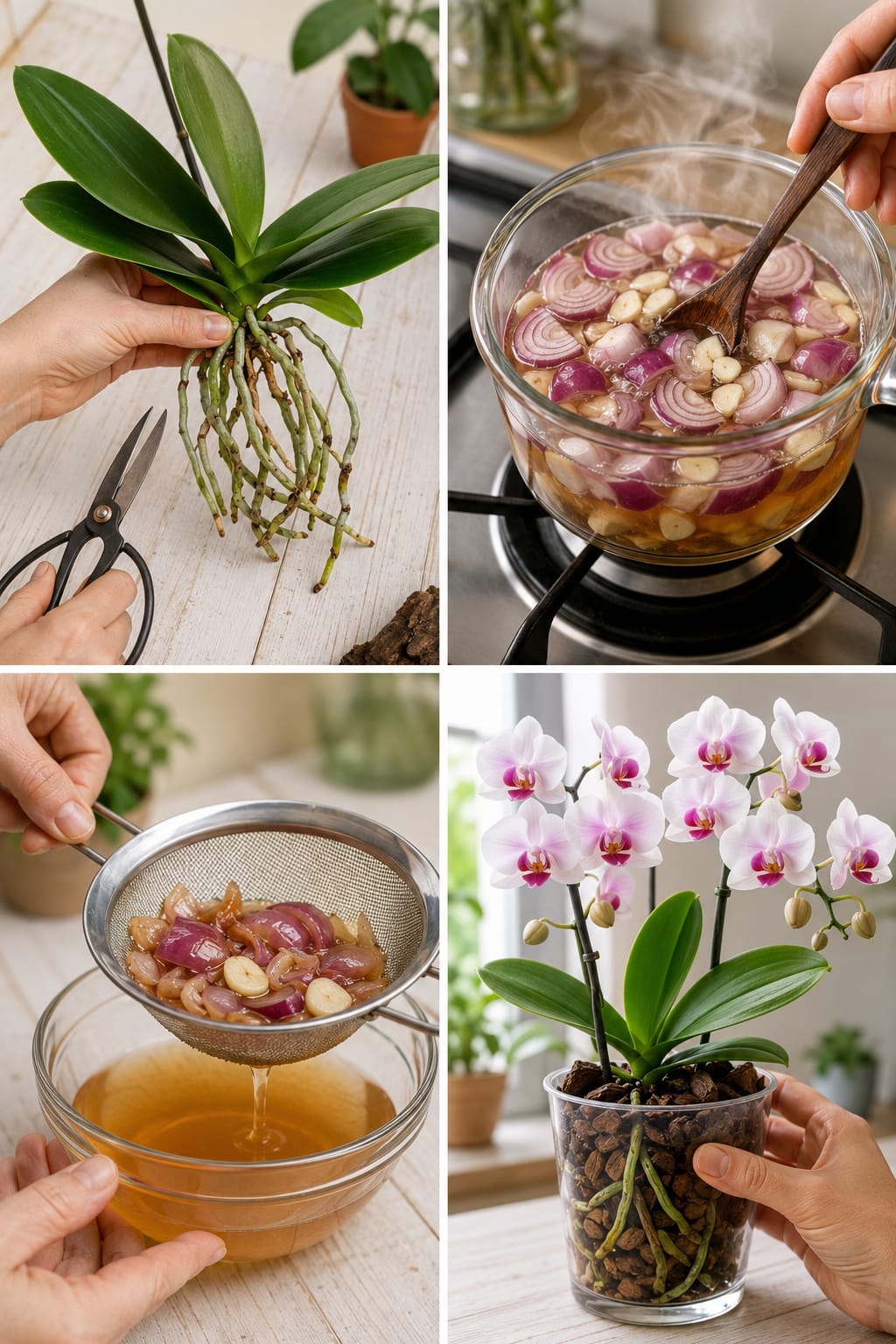
Orchids are some of the most admired indoor plants because they bring elegance, softness, and long-lasting beauty into the home. Their thick green leaves, graceful flower stems, and delicate blooms can make a simple windowsill or tabletop look refined and peaceful. A healthy orchid does not only decorate a room; it creates a calm tropical feeling that looks fresh, clean, and expensive without needing complicated styling.
Many orchid lovers enjoy trying gentle natural routines to support their plants. One method that attracts attention is an onion and garlic water tonic. This homemade liquid is usually prepared by soaking or lightly simmering onion and garlic pieces in water, then straining and diluting the liquid before using it around orchid roots. The idea behind this routine is not to force instant blooms, but to create a mild natural rinse that supports cleaner root conditions and encourages careful plant maintenance.
This routine must be used with caution. Orchids are sensitive plants, especially around their roots. Onion and garlic water can be too strong if it is concentrated, used too often, or poured into old soggy bark. The safest approach is to make the mixture very weak, strain it well, use it rarely, and combine it with proper orchid care: bright indirect light, fresh bark, good airflow, careful watering, and balanced feeding.
Why Orchid Roots Need Special Attention
Orchid roots are very different from the roots of many common houseplants. Most popular indoor orchids, especially Phalaenopsis orchids, naturally grow attached to trees in tropical environments. Their roots are not designed to sit in dense, wet soil. Instead, they like air, light moisture, and space around them.
Healthy orchid roots are usually firm and plump. When dry, they may look silvery or pale gray. When watered, they often turn green. This color change is normal and useful because it helps growers know when the orchid needs water.
If orchid roots are healthy, the entire plant is stronger. The leaves remain firm, flower spikes develop more easily, and blooms last longer. If roots decline, the plant may look weak even if the leaves still appear green at first.
What Onion and Garlic Water Is Used For
Onion and garlic water is a homemade plant-care liquid made by extracting mild compounds from onion and garlic into water. Gardeners often discuss these ingredients because they are strong-smelling, natural, and commonly used in traditional plant-care ideas.
For orchids, the goal is not to feed the plant heavily. Onion and garlic water should be viewed as a gentle occasional rinse or tonic, not a fertilizer. It may help some growers feel they are supporting a cleaner root environment, but it cannot replace proper orchid nutrition or healthy growing conditions.
The most important rule is dilution. A strong onion or garlic mixture can irritate roots, create odor, or affect the bark. A weak solution is safer.
A Gentle Onion and Garlic Orchid Tonic Recipe
For a mild orchid routine, use a very diluted recipe:
- 1 small slice of onion
- 1 small garlic clove, lightly crushed
- 2 cups of clean water
- Optional: warm the mixture gently, but do not boil strongly
- Let it cool completely
- Strain very well
- Dilute the strained liquid with 4 to 6 more cups of water
The final liquid should be very light in color and only mildly scented. If it smells extremely strong, dilute it more. If it smells sour, rotten, or fermented, discard it immediately.
Why Straining Matters
Never pour onion pieces, garlic pieces, or pulp into an orchid pot. Organic chunks can become trapped in the bark, rot, smell bad, and attract fungus gnats.
Only the strained liquid should be used. Use a fine sieve, coffee filter, or clean cloth to remove all solids. The liquid should pass through the orchid bark easily like water.
Orchid bark must stay airy and clean. Anything that clogs the spaces between bark pieces can create problems for the roots.
How Often to Use This Tonic
This routine should be rare. For most orchids, once every 2 to 3 months during active growth is more than enough. Some orchids may not need it at all.
Do not use onion and garlic water every week. Frequent use may cause odor, buildup, root irritation, or changes in the bark environment.
During winter, low-light periods, or when the orchid is resting after blooming, it is usually better to avoid homemade tonics and focus on correct watering and light.
How to Apply It Safely
Apply the diluted tonic only when the orchid is due for watering. Pour it slowly through the bark so it reaches the roots and drains out completely.
Do not let the orchid sit in the liquid. After watering, empty any saucer or decorative cover pot. Standing liquid can suffocate orchid roots and lead to rot.
Keep the crown of the orchid dry. Water sitting in the crown can cause serious problems, especially in cool rooms with poor airflow.
When Not to Use Onion and Garlic Water
Do not use this tonic if the orchid is already stressed from root rot, severe dehydration, pest infestation, fresh repotting shock, or old decomposed bark. In those cases, the plant needs basic correction first.
A homemade tonic will not fix rotten roots. If roots are mushy, black, hollow, or foul-smelling, the orchid should be removed from the pot, inspected, cleaned, trimmed, and repotted into fresh bark.
Natural routines work best on stable plants, not emergency plants.
The Real Secret: Fresh Orchid Bark
Fresh bark is one of the most important parts of orchid care. Orchid bark breaks down over time. When it becomes soft and compacted, it holds too much water and reduces airflow.
Old bark can make even a healthy orchid decline. If the bark smells sour, stays wet too long, or looks broken down, repotting is usually more helpful than adding any tonic.
A good orchid mix may include bark, perlite, charcoal, and sometimes a small amount of sphagnum moss depending on your climate and watering habits.
Light Helps Orchids Bloom
If an orchid has healthy leaves but refuses to bloom, the first thing to check is light. Orchids need bright indirect light to produce flower spikes.
Place the orchid near a bright window with filtered sunlight. East-facing windows are often excellent. South or west windows can also work if the light is softened by a sheer curtain.
Very dark green leaves may mean the orchid is not receiving enough light. Yellow or scorched patches may mean too much direct sun.
Watering Correctly
Orchids should not be watered on a strict calendar. Instead, water when the bark is nearly dry and the roots appear silvery.
When watering, soak the bark thoroughly and allow all excess water to drain away. The roots should receive moisture, but they should not remain trapped in water.
Overwatering is one of the most common reasons orchids fail indoors.
Why Airflow Is Essential
Orchid roots need oxygen. Good airflow helps prevent the bark from staying wet too long and keeps the root zone healthier.
Clear orchid pots with drainage holes are useful because they allow you to see the roots and monitor moisture. Pots with side ventilation are even better for growers who tend to overwater.
Do not pack bark too tightly around the roots. Air spaces are important.
Feeding Orchids Properly
Onion and garlic water is not a complete fertilizer. Orchids need balanced nutrients during active growth.
Use a proper orchid fertilizer at a weak dilution. Many growers prefer light feeding rather than strong feeding. Too much fertilizer can burn roots or create mineral buildup in the bark.
Flush the pot occasionally with plain water to remove excess salts.
Root Inspection Routine
Inspect orchid roots regularly. If the orchid is in a clear pot, look for firm green or silvery roots. If many roots are brown, mushy, or hollow, the plant may need attention.
Healthy roots are the best sign that your care routine is working. Strong roots usually lead to better leaves and better flowering over time.
How to Support New Root Growth
New root growth usually appears as bright green or pale tips. To encourage roots, provide bright indirect light, warm temperatures, fresh bark, and proper watering.
Avoid disturbing the plant too often. Orchids need time to settle. Constant repotting, overfeeding, and frequent experimental treatments can slow recovery.
Simple consistent care is usually better than complicated routines.
Cleaning Orchid Leaves
Dusty orchid leaves look dull and absorb less light. Wipe leaves gently with a soft damp cloth every few weeks.
Support the leaf with one hand while wiping with the other. Avoid getting water trapped between leaves at the crown.
Clean leaves instantly improve the orchid’s decorative appearance.
Removing Faded Blooms
Orchid flowers eventually fade. Once blooms are finished, you can decide whether to trim the flower spike or leave it if it remains green.
If the spike turns brown and dry, cut it near the base with clean scissors. If it remains green, some growers trim above a node to encourage a secondary bloom.
For weak orchids, removing the spike completely may help the plant focus on roots and leaves.
Using Natural Tonics Without Overdoing It
Natural plant-care routines can be enjoyable, but orchids are sensitive. Too many homemade liquids can create more problems than benefits.
Avoid mixing onion water, garlic water, banana water, rice water, coffee, lemon, and other ingredients all at once. Each ingredient changes the growing environment. Too many changes can stress the roots.
Use only one gentle routine at a time and observe the plant carefully.
Continue to Page 2
Continue to page 2 for more details about this article and the key points many readers miss on the first page.