Signs the Tonic Is Too Strong
Stop using onion and garlic water if you notice:
- Strong odor from the pot
- Yellowing leaves after application
- Mushy roots
- Fungus gnats
- Sour-smelling bark
- White or sticky buildup
- Wilting despite moist bark
If these signs appear, flush the pot with plain water and allow it to drain fully. If the bark smells bad, repot into fresh orchid mix.
Decorating With Orchids
Orchids are perfect for elegant indoor styling. Their blooms create height, color, and softness without taking up much space.
Place orchids on windowsills, kitchen counters, side tables, entryway consoles, or bedroom dressers. White, pink, and purple orchids pair beautifully with neutral decor, natural wood, ceramic pots, and soft curtains.
A clear pot inside a decorative cover pot gives both beauty and practicality. You can enjoy the polished look while still checking root health.
Best Containers for Orchids
Orchid containers should support root health first. Clear plastic orchid pots are practical because they show moisture and root color. Decorative outer pots can be used as long as water is never allowed to collect inside.
Choose a container that fits the root system snugly. Oversized pots hold too much wet bark and may increase the risk of rot.
Creating a Calm Orchid Corner
To create a beautiful orchid display, group one blooming orchid with a few leafy plants such as pothos, peace lily, fern, or small philodendron. The orchid provides flowers, while the green plants create softness around it.
Use matching pot colors for a cohesive look. White, beige, terracotta, gray, and soft stone finishes work especially well with orchids.
A Simple Monthly Orchid Care Routine
A steady monthly routine can keep orchids healthier:
- Check root color and firmness
- Water only when bark is nearly dry
- Provide bright indirect light
- Wipe leaves gently
- Remove dead flowers
- Inspect for pests
- Feed lightly during growth
- Check bark condition
- Use homemade tonics only rarely
This routine supports long-term health better than one dramatic trick.
Patience Is Essential
Orchids grow slowly. Roots, leaves, and flower spikes take time to develop. A plant may need months of steady care before it blooms again.
Do not add more tonic just because results are not immediate. Overuse can harm the plant.
With orchids, patience and consistency are more powerful than strong treatments.
Final Thoughts
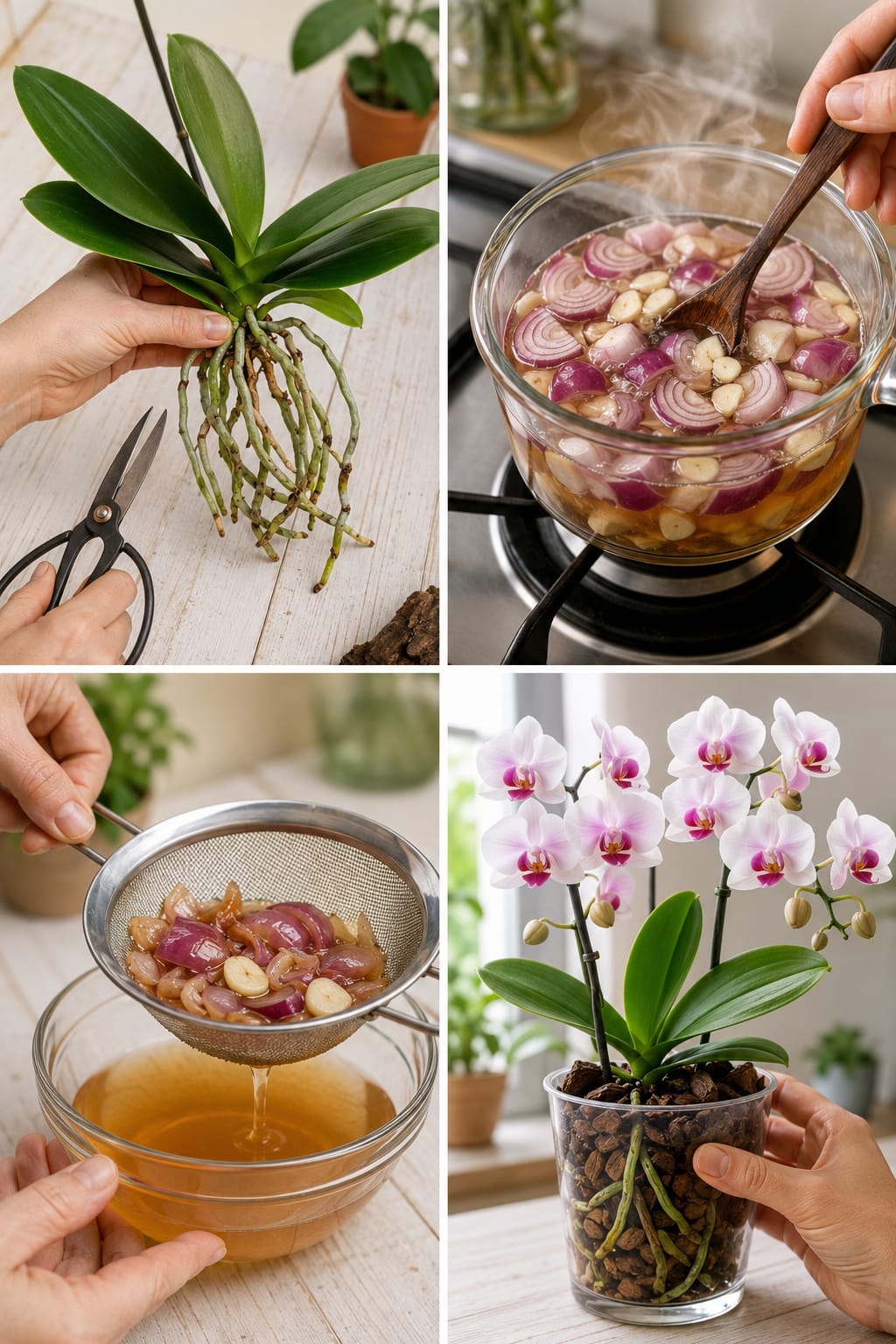
A mild onion and garlic orchid tonic can be used as an occasional natural root-care rinse when it is prepared carefully, strained completely, diluted heavily, and applied only to healthy orchids in fresh airy bark. It should never be used as a strong solution, a frequent treatment, or a replacement for proper orchid fertilizer.
The true secret to beautiful orchids is not one kitchen ingredient. It is the combination of healthy roots, bright indirect light, fresh bark, careful watering, good airflow, humidity, and gentle balanced feeding. When those basics are in place, an occasional natural routine can become a small supportive step.
With patience, moderation, and consistent care, orchids can reward you with firm green leaves, clean roots, and elegant blooms that make any indoor space feel fresh, refined, and beautifully styled.