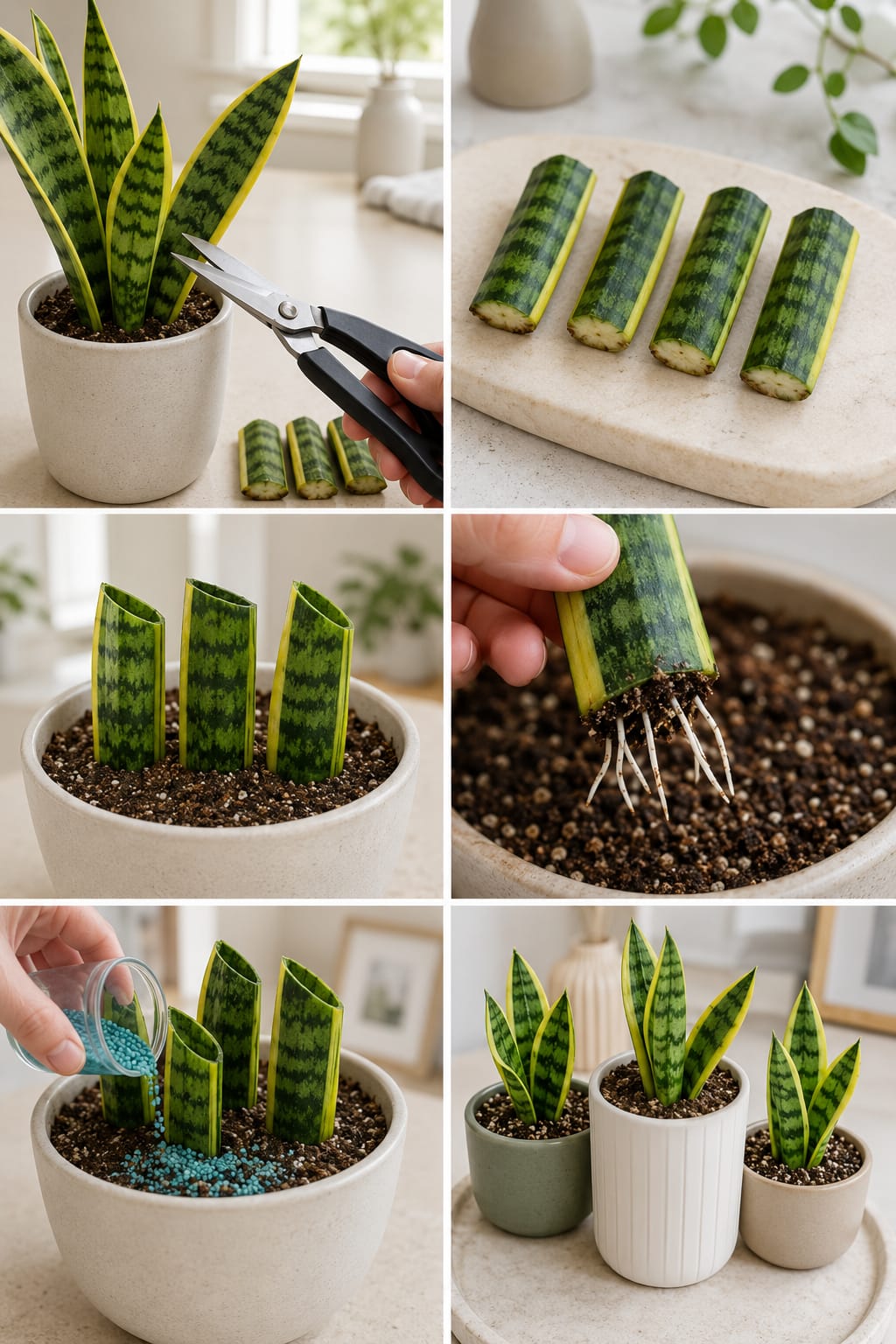
When to Move Cuttings Into Individual Pots
Once cuttings have developed roots and produced pups, they can eventually be moved into individual pots. Wait until the new pup is strong enough to handle and has its own root system.
Choose a small pot. Snake plants prefer snug containers, and oversized pots hold too much moisture.
A small pot also makes the young plant look neat and balanced.
Best Pot Size for Young Snake Plants
Young snake plants do not need large containers. A pot that is only slightly bigger than the root system is ideal.
Too much soil around small roots can stay wet too long. This increases the risk of root rot.
Start small and repot gradually as the plant grows.
Creating a Clean Indoor Display
New snake plants look beautiful when styled in small matching pots. Use white ceramic pots for a clean modern look, terracotta for warmth, black pots for contrast, or concrete-style planters for a minimalist feel.
Group three small snake plants together on a shelf or windowsill for a polished display. The upright leaves create structure and make the space feel organized.
Because snake plants grow vertically, they are excellent for small rooms and narrow surfaces.
Using Snake Plants in Home Decor
Snake plants pair well with many decorating styles. They look especially good in:
- Modern apartments
- Minimalist bedrooms
- Office desks
- Entryway tables
- Living room corners
- Bathroom shelves with bright light
- Balcony plant stands
Their strong shape adds height without taking up much floor space.
How to Care for Young Snake Plants
After propagation, young snake plants need simple care:
- Bright indirect light
- Well-draining soil
- Small pots with drainage
- Water only when soil dries
- Light feeding during active growth
- Warm stable temperatures
Avoid overhandling young plants. Let them settle and grow slowly.
Watering Young Snake Plants
Young snake plants should be watered carefully. Their roots are still developing and do not use water as quickly as mature plants.
Let the soil dry well between waterings. Check the soil with your finger or a wooden stick before adding water.
If the pot feels heavy and the soil is damp, wait. If it feels light and dry, water lightly.
Encouraging More Pups
Once a propagated snake plant matures, it may produce pups from underground rhizomes. Good light, a snug pot, healthy roots, and balanced care can encourage this process.
Do not force pup production with heavy fertilizer. Strong growth comes from steady care.
Patience is essential because snake plants naturally grow slowly.
Should You Mist Snake Plants?
Snake plants do not need misting. Their thick leaves are adapted to store moisture, and frequent misting can leave water sitting between leaves.
Instead of misting, focus on proper watering at the soil level and good airflow around the plant.
Clean leaves with a dry or slightly damp cloth when needed.
Keeping Leaves Clean and Healthy
Dust can make snake plants look dull. Wipe leaves gently with a soft cloth every few weeks.
Clean leaves reflect light beautifully and improve the plant’s decorative value. This small habit makes snake plants look fresher, healthier, and more expensive.
Do not use heavy leaf shine products. A simple cloth is enough.
Propagation as a Budget-Friendly Plant Habit
Propagating snake plants is one of the easiest ways to expand a plant collection without spending money. One mature plant can produce several new plants over time.
You can use propagated plants to decorate different rooms, fill empty shelves, create gifts, or build a cohesive indoor garden theme.
This makes propagation both practical and satisfying.
Final Thoughts
Snake plant leaf propagation is simple, but it requires patience and correct technique. Choose a healthy leaf, cut it into sections, remember the bottom direction, let the pieces callus, plant them in a well-draining mix, water lightly, and place them in bright indirect light.
Avoid overwatering and do not rush fertilizer. The cutting must form roots first. Once new pups appear and the plant becomes established, light feeding during active growth can support continued development.
With time, each cutting can become a strong young snake plant. Whether you want to fill your home with greenery, create gifts, or build a cleaner indoor plant display, this propagation method is a beautiful and affordable way to grow more plants from one healthy leaf.