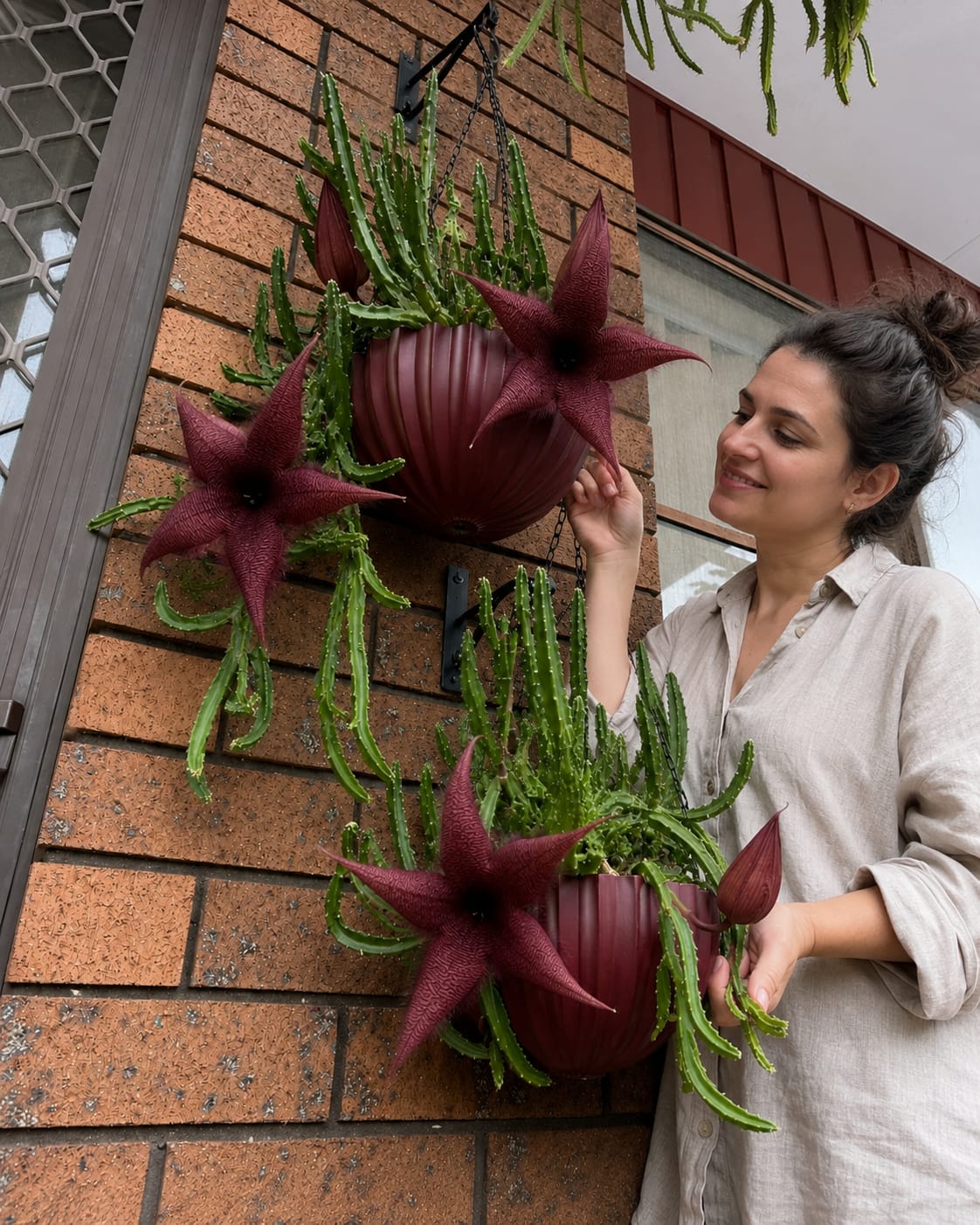
Starfish flower succulents are some of the most unusual and dramatic plants you can grow in containers. Their thick green trailing stems look like a cactus at first glance, but when the plant blooms, it becomes unforgettable. Large star-shaped flowers open in deep burgundy, purple-red, maroon, or spotted tones, creating a bold tropical look that instantly turns a balcony, patio, porch, or sunny wall into a living statement piece.
This plant is often called starfish flower, carrion flower, Stapelia, or Huernia, depending on the exact variety. It belongs to a group of succulent plants known for thick fleshy stems and spectacular star-shaped blooms. These plants are excellent for hanging baskets because their stems trail beautifully over the edge of the pot, while the flowers appear like dramatic ornaments among the green growth.
Despite their exotic appearance, starfish flower succulents are not difficult to grow when their basic needs are understood. They prefer bright light, excellent drainage, careful watering, warmth, and a potting mix that dries between waterings. The biggest mistake is treating them like ordinary leafy houseplants. They are succulents, so they need air around the roots and protection from soggy soil.
What Makes Starfish Flower Succulents So Special?
The main attraction is the flower. Starfish flower succulents produce large, five-pointed blooms that can look almost sculptural. Some varieties have velvety petals, raised patterns, fine hairs, or dark centers that create a dramatic contrast against the green stems.
The flowers can look exotic, artistic, and almost unreal. This makes the plant perfect for people who love rare-looking houseplants, unusual succulents, and outdoor container displays with personality.
The stems are also decorative. They grow in long, segmented, green columns with small soft teeth along the edges. In hanging baskets, these stems spill downward and create a wild, full, natural look.
Is Starfish Flower a Cactus?
Starfish flower plants are often mistaken for cactus because they have thick ribbed stems and tolerate dry conditions. However, they are not true cactus plants. They are succulents from the milkweed family.
This matters because their care is similar to cactus care in some ways, but not identical. They like fast-draining soil and careful watering, but they may appreciate slightly more organic matter than many desert cactus plants.
The safest approach is to grow them like warm-climate succulents: bright light, airy soil, and no standing water.
Best Light for Starfish Flower Plants
Bright light is essential for strong growth and blooming. Starfish flower succulents need plenty of light to produce thick stems and flower buds.
Outdoors, they usually do well in bright filtered light, morning sun, or gentle afternoon shade. In very hot climates, harsh direct afternoon sun may scorch the stems, especially in summer.
Indoors, place the plant near a bright window. East-facing or south-facing windows can work well if the light is not too intense. If the plant becomes stretched, thin, or weak, it probably needs more light.
Why Hanging Pots Work So Well
Starfish flower succulents are ideal for hanging planters because their stems naturally trail and spread. A hanging pot allows the plant to show its full shape instead of crowding on a flat surface.
The flowers also become more visible when the plant is displayed at eye level or slightly above. A hanging basket on a balcony wall, porch hook, patio beam, or sunny interior window can turn the plant into a dramatic focal point.
Choose a strong hanging pot because mature plants can become heavy, especially after watering.
Choosing the Right Pot
The best pot for this plant must have drainage holes. This is not optional. Without drainage, water collects at the bottom and can quickly rot the roots.
Terracotta pots are excellent because they allow moisture to evaporate faster. Plastic pots can work too, but watering must be more careful. Decorative hanging bowls are beautiful, but they should still drain properly.
If using a decorative outer pot, keep the plant in a nursery pot with holes and remove excess water after watering.
The Best Soil Mix
Starfish flower succulents need a loose, gritty, fast-draining soil mix. Heavy garden soil is not suitable because it holds too much water.
A good mix can include:
- Cactus or succulent soil
- Perlite
- Pumice
- Coarse sand
- Small bark chips
- A small amount of compost or potting mix
The mix should drain quickly but still hold a little moisture long enough for the roots to drink. If water sits in the soil for several days, the mix is too heavy.
Watering the Right Way
Watering is the most important part of starfish flower care. These plants are drought-tolerant, but they still need water during active growth. The key is to water deeply, then let the soil dry before watering again.
When watering, soak the soil until water drains from the bottom. Then allow the pot to dry well. Do not give small daily splashes. Frequent shallow watering keeps the surface damp and can encourage rot.
In warm growing seasons, the plant may need water more often. In winter or cooler months, water much less.
Signs of Overwatering
Overwatering can damage this plant quickly. Watch for these warning signs:
- Soft mushy stems
- Black or brown stem bases
- Bad smell from the soil
- Stems collapsing
- Yellowing growth
- Soil staying wet too long
If these signs appear, stop watering immediately. Remove damaged stems, check the roots, and repot into dry, fresh succulent mix if needed.
Signs the Plant Needs Water
A thirsty starfish flower plant may show slightly wrinkled or thinner stems. The pot may feel light, and the soil will be dry.
Do not panic if the plant becomes slightly wrinkled between waterings. This is normal for many succulents. Water thoroughly, then let it drain.
Avoid watering again until the soil has dried.
How to Encourage Blooms
To encourage flowering, focus on light, maturity, and seasonal rhythm. Starfish flower succulents usually bloom best when they receive bright light and are not overwatered.
A slightly snug pot may also help. If the pot is too large, the plant may focus on root growth rather than flowers, and the extra soil may stay wet too long.
Use light feeding during the growing season, but do not overfertilize. Too much nitrogen may encourage green growth without many blooms.
Feeding Starfish Flower Succulents
Use a diluted cactus or succulent fertilizer during spring and summer. Feed lightly once a month or less during active growth.
Avoid feeding during winter if the plant is resting. Fertilizer is not useful when growth is slow, and it can build up in the soil.
Always water carefully when feeding, and never apply strong fertilizer to dry roots.
Temperature and Climate
Starfish flower succulents prefer warmth. They usually grow best in mild to warm temperatures and should be protected from frost.
If you grow them outdoors in a cooler climate, bring them indoors before temperatures drop too low. Cold, wet soil is especially dangerous because it can lead to rot.
In warm climates, they can often stay outdoors year-round if protected from heavy rain and extreme sun.
Humidity and Airflow
Good airflow helps keep the stems and soil healthy. Hanging pots naturally receive more air movement than pots crowded on shelves, which is one reason this plant performs well in baskets.
High humidity is not always a problem if the soil drains well, but stagnant damp conditions can increase the chance of fungal issues.
Place the plant where air can move freely around the stems.
Understanding the Flower Scent
Some starfish flower varieties produce blooms with a strong odor. This scent is part of the plant’s natural pollination strategy. It may attract flies rather than bees.
Not every variety smells equally strong, and the scent may be more noticeable up close. If you are sensitive to smells, grow the plant outdoors on a balcony, patio, or porch rather than in a small indoor room.
The flowers are still highly decorative and fascinating, even if their scent is unusual.
Pruning and Shaping
Pruning helps keep the plant full and tidy. Remove damaged, shriveled, or rotting stems with clean scissors.
You can also trim long stems if the plant becomes too large for its basket. Healthy cuttings can be used for propagation.
Always allow cut stems to dry and callus before planting them in soil.
Continue to Page 2
Continue to page 2 for more details about this article and the key points many readers miss on the first page.