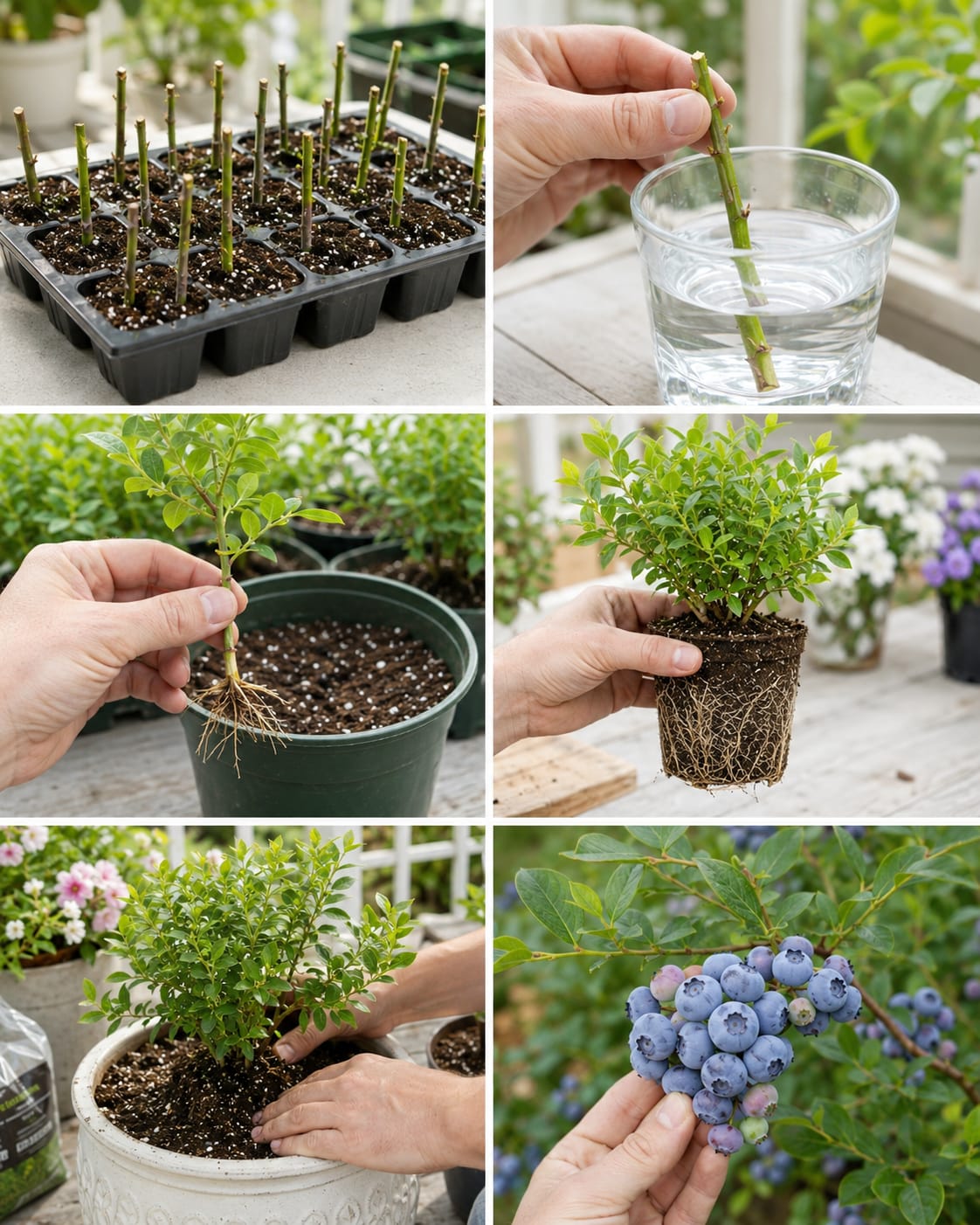
Blueberry bushes are one of the most rewarding fruit plants to grow at home. Their small glossy leaves, delicate spring flowers, bright green summer growth, and clusters of blue berries make them beautiful as both edible plants and decorative shrubs. A healthy blueberry plant can look charming in a garden bed, patio container, balcony corner, or sunny backyard, and the reward of picking fresh berries from your own plant makes the process even more satisfying.
One of the most practical ways to grow more blueberry plants is propagation from stem cuttings. Instead of buying several new bushes, you can take healthy stems from an established blueberry plant, root them in a light growing medium, and grow them into young shrubs. With patience, clean tools, the correct moisture level, and the right acidic soil, each cutting can become a strong new blueberry plant over time.
Blueberry propagation is not instant. Unlike fast-rooting herbs or pothos vines, blueberry cuttings take time. Some cuttings may root in several weeks, while others may take months depending on the variety, season, temperature, humidity, and cutting type. The secret is to create steady conditions and avoid disturbing the cuttings too often.
Why Grow Blueberries from Cuttings?
Growing blueberries from cuttings is useful because it allows you to create new plants that are genetically identical to the parent plant. If you already have a blueberry bush that produces sweet fruit, grows well in your climate, or has a compact shape you like, cuttings are a smart way to multiply it.
Propagation also saves money. Blueberry plants can be expensive, especially if you want several bushes for better pollination and larger harvests. By rooting cuttings, you can slowly build a productive berry garden without buying every plant.
It is also a satisfying gardening project. Watching a bare stem grow roots, produce new leaves, and eventually become a fruiting shrub is one of the most rewarding parts of plant care.
Understanding Blueberry Cutting Types
Blueberries can be propagated from softwood cuttings or hardwood cuttings. Both methods can work, but they are taken at different times of year.
Softwood cuttings are taken from fresh, flexible growth during late spring or early summer. These cuttings root faster but need more humidity and careful handling.
Hardwood cuttings are taken from mature dormant stems during late winter or early spring. These cuttings are firmer and slower to root, but they are often easier to store and handle.
For beginners, softwood cuttings can be exciting because they show growth sooner, while hardwood cuttings are useful if you prune blueberry bushes during dormancy.
Choosing the Best Parent Plant
The quality of the parent plant matters. Choose a healthy blueberry bush with strong stems, good leaf color, and no signs of disease. Avoid taking cuttings from weak, yellowing, pest-infested, or stressed plants.
The best parent plant should have:
- Healthy green leaves
- Strong stems
- No visible pests
- No fungal spots
- Good fruit production
- Growth suited to your climate
A strong parent plant gives the cuttings a better chance of rooting and developing into healthy young bushes.
Best Time to Take Blueberry Cuttings
Timing is very important. Softwood cuttings are usually taken when new growth is still flexible but not extremely tender. The stem should bend slightly without snapping immediately.
Hardwood cuttings are taken when the plant is dormant, before active spring growth begins. These cuttings are made from mature stems that grew during the previous season.
If you are unsure, look for healthy stems that are not flowering or fruiting heavily. Stems that are focused on leaves and growth usually root better than stems carrying fruit.
Tools You Need
Before starting, prepare clean tools and materials. Cleanliness reduces the risk of rot and disease.
- Sharp pruning shears or scissors
- Small pots or propagation trays
- Acidic propagation mix
- Clear humidity cover or plastic dome
- Plant labels
- Watering bottle or mister
- Optional rooting hormone
Always clean cutting tools before use. Wipe blades with rubbing alcohol or wash them with hot soapy water and dry them well.
How to Take Blueberry Cuttings
Choose stems that are healthy and free from flowers or fruit. Cut sections about 4 to 6 inches long. Each cutting should have several nodes, which are the small points where leaves or buds grow.
Make the bottom cut just below a node. This is where roots are most likely to develop. Remove the lower leaves, leaving only a few leaves at the top.
If the remaining leaves are large, you can trim them slightly to reduce moisture loss. The cutting has no roots yet, so it cannot replace water quickly.
Should You Root Blueberry Cuttings in Water?
Some gardeners test cuttings in water, but blueberries usually root better in a moist, acidic growing medium rather than plain water. Water rooting can sometimes lead to weak roots that struggle after planting.
A light acidic medium gives the cutting oxygen, moisture, and support. It also helps the roots adapt to soil conditions from the beginning.
If you place cuttings in water temporarily while preparing pots, that is fine. But for serious propagation, plant them into a proper rooting mix as soon as possible.
The Best Rooting Mix for Blueberry Cuttings
Blueberries love acidic conditions. Regular potting soil may be too alkaline or too heavy for young cuttings. A good propagation mix should be light, moisture-retentive, and acidic.
A useful mix may include:
- Peat moss or coco coir
- Perlite
- Pine bark fines
- Acid-loving plant mix
- A small amount of sand for drainage
The mix should stay lightly moist but not waterlogged. Roots need oxygen as well as moisture.
Why Acidic Soil Matters
Blueberries are acid-loving plants. They grow best in soil with a low pH. If the soil is too alkaline, the plant may struggle to absorb nutrients, especially iron. This can cause yellow leaves with green veins, poor growth, and weak fruiting later.
Using an acidic mix from the beginning helps young blueberry cuttings establish properly. It also reduces transplant shock when they are moved into larger containers or garden beds.
Using Rooting Hormone
Rooting hormone is optional, but it can improve success, especially with hardwood cuttings. Dip the bottom inch of the cutting into rooting hormone powder or gel, then gently tap off the excess.
Do not use too much. A light coating is enough. Too much powder can clump around the stem and cause problems.
If you prefer a natural method, you can skip rooting hormone and rely on good moisture, warmth, and patience.
Planting the Cuttings
Use a pencil, stick, or dibber to make a hole in the propagation mix. Insert the cutting so at least one or two nodes are below the surface. Firm the mix gently around the stem.
Do not push the cutting directly into the soil without making a hole, especially if you used rooting hormone. Pushing can scrape off the hormone and damage the stem.
Space cuttings apart so air can move between them and leaves do not crowd each other.
Watering After Planting
After planting, water gently until the mix is evenly moist. It should feel damp but not soggy. Excess water should drain away.
During rooting, keep the mix consistently moist. Do not let it dry completely, but do not keep it swampy either.
A spray bottle or gentle watering can helps prevent disturbing the cuttings.
Humidity Helps Cuttings Root
Blueberry cuttings lose moisture through their leaves before they have roots. Humidity helps reduce this stress.
You can cover the tray with a clear plastic dome, a plastic bag supported by sticks, or a propagation lid. Make sure the cover does not press heavily on the leaves.
Open the cover briefly each day for airflow. Too much trapped moisture without ventilation can cause mold.
Best Light for Blueberry Cuttings
Place cuttings in bright indirect light. Avoid harsh direct sun, especially when they are under a plastic humidity cover. Direct sun can overheat the cuttings and dry them quickly.
A bright shaded outdoor spot, greenhouse bench, or sunny windowsill with filtered light can work well.
Light is important, but gentle conditions are better than intense heat.
Temperature for Rooting
Warmth encourages rooting. Blueberry cuttings usually root better in mild to warm temperatures. A stable environment is better than extreme heat or cold.
If nights are cold, rooting may slow down. If temperatures are too hot, cuttings may wilt.
A warm sheltered location with bright indirect light is ideal.
How Long Blueberry Cuttings Take to Root
Blueberry cuttings take patience. Softwood cuttings may begin rooting in 6 to 10 weeks, while hardwood cuttings can take longer. Some may take several months before they are ready to transplant.
Do not pull the cuttings out often to check. This can break delicate new roots.
Instead, watch for signs of new growth and gentle resistance when the cutting is lightly tugged.
How to Check for Roots
After several weeks, gently tug the cutting. If it resists slightly, roots may be forming. If it slides out easily, it needs more time.
Only check occasionally. Constant disturbance can slow rooting.
When the cutting produces new leaves and feels secure, it is likely developing roots.
Transplanting Rooted Cuttings
Once cuttings have a good root system, move them into small individual pots filled with acidic blueberry mix. Do not jump immediately into a very large pot.
A small pot helps the soil dry evenly and reduces the risk of overwatering. Young roots grow better when the container matches their size.
Water after transplanting and keep the plant in bright indirect light while it adjusts.
Hardening Off Young Blueberry Plants
If the rooted cuttings were grown indoors or under cover, they need to adjust gradually to outdoor conditions. This process is called hardening off.
Place the young plants outside in a sheltered shady spot for a few hours each day. Gradually increase their outdoor time and light exposure over 1 to 2 weeks.
This prevents sunburn, wind stress, and sudden shock.
Growing Blueberries in Pots
Blueberries grow very well in containers when the soil is acidic and drainage is good. Containers also make it easier to control soil pH.
Choose a pot with drainage holes. Start young plants in small pots, then move them up gradually as they grow.
Use an acid-loving plant mix and avoid garden soil in containers because it can compact and drain poorly.
Watering Young Blueberry Plants
Blueberries like steady moisture, especially when young. Their roots are shallow and can dry out quickly.
Water when the top layer of soil begins to dry. Do not let the pot become bone dry, but also avoid soggy conditions.
Rainwater is excellent if available because it is often softer than tap water. If your tap water is very alkaline, it may affect blueberry growth over time.
Feeding Blueberry Plants
Use fertilizer made for acid-loving plants. Blueberries do not like strong feeding, especially when young.
Feed lightly during active growth. Avoid heavy fertilizer on fresh cuttings or newly rooted plants because young roots can burn easily.
Once established, a gentle feeding routine supports leafy growth, flowers, and future fruit.
Pruning Young Blueberry Plants
Young blueberry plants should focus on root and branch development. If a very young plant produces flowers too early, it is often better to remove them so the plant can direct energy into growth.
Prune lightly to shape the plant and remove weak or damaged stems.
As the plant matures, pruning helps maintain airflow and encourages productive new growth.
When Will Propagated Blueberries Produce Fruit?
Blueberries grown from cuttings take time to mature. A rooted cutting may need 2 to 3 years before producing a good harvest.
This patience is worth it. Once established, blueberry bushes can produce fruit for many years with proper care.
Do not rush the plant. Strong roots and healthy structure come first.
Pollination and Better Harvests
Many blueberry varieties produce better harvests when grown with another compatible variety nearby. Even self-fertile types can fruit more heavily with cross-pollination.
If you want a strong berry harvest, grow at least two blueberry plants with overlapping bloom times.
More flowers and better pollination usually mean more berries.
Common Blueberry Propagation Mistakes
Avoid these common mistakes:
- Using unhealthy stems
- Planting in alkaline soil
- Letting cuttings dry out
- Keeping cuttings too wet
- Using heavy garden soil
- Placing cuttings in harsh sun
- Checking roots too often
- Transplanting too early
Good propagation is about steady moisture, clean cuts, acidic soil, humidity, and patience.
Continue to Page 2
Continue to page 2 for more details about this article and the key points many readers miss on the first page.