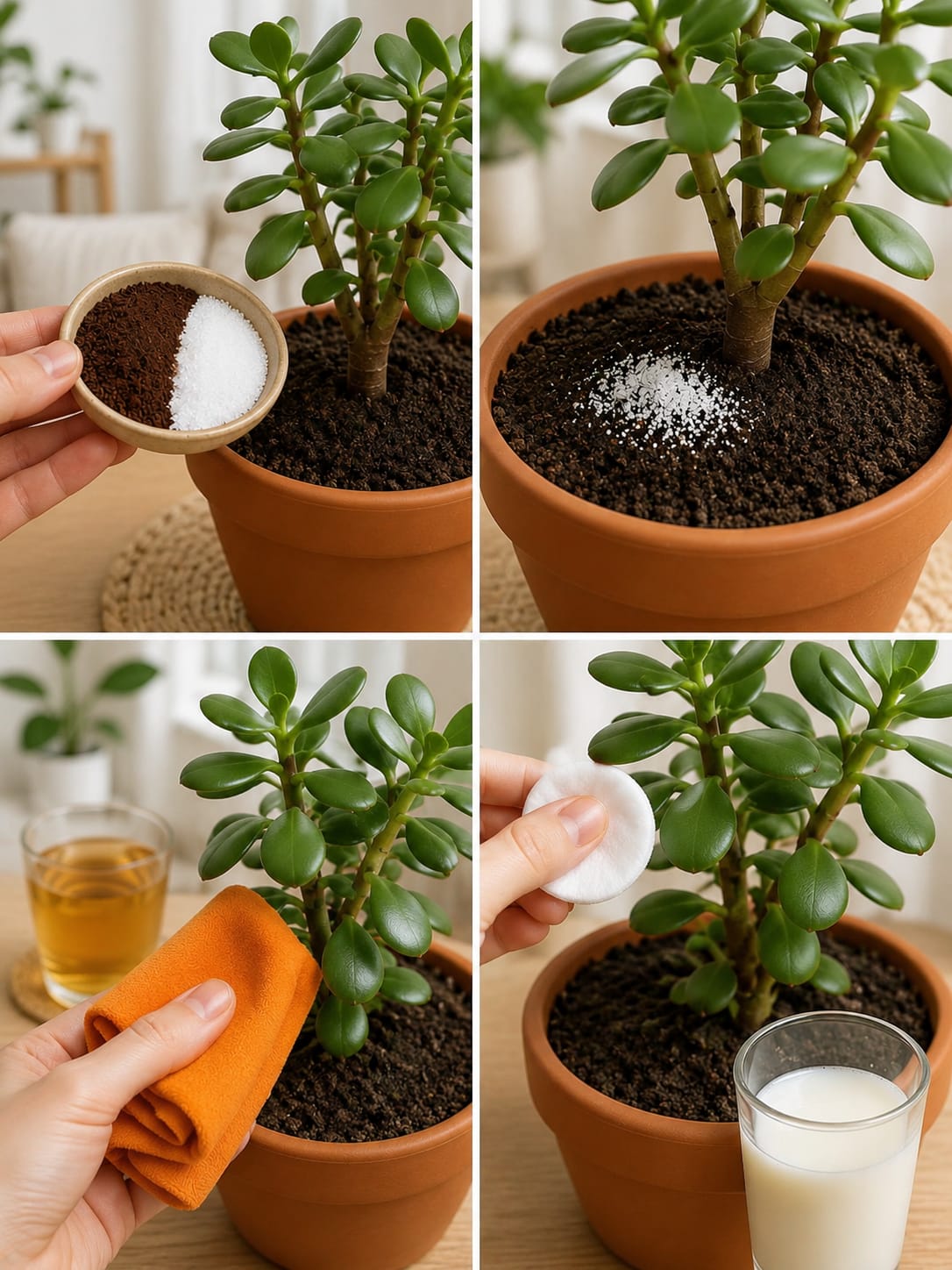
Jade plants are classic indoor succulents with thick woody stems, rounded glossy leaves, and a calm sculptural shape that fits beautifully into almost any home. A healthy jade plant can look like a small indoor tree, adding structure, greenery, and a peaceful natural touch to windowsills, desks, shelves, side tables, and sunny corners.
Many plant lovers enjoy using simple household ingredients as part of a natural plant-care routine. One idea often shared for jade plants is a combination of coffee grounds, a tiny amount of white powder such as sugar or eggshell powder, gentle leaf cleaning, and a diluted milk wipe or soil tonic. These ingredients can look simple and harmless, but jade plants are succulents, so they must be treated carefully. Too much organic material, sugar, milk, or coffee can damage the soil, attract insects, and cause root problems.
The safest approach is to use this routine very lightly and only as an occasional support step. Jade plants do not need rich, wet soil. They need bright light, excellent drainage, dry periods between watering, and minimal feeding. Natural tricks can only help when the basic care routine is already correct.
Why Jade Plants Need Gentle Care
Jade plants store water inside their thick leaves and stems. This is what makes them drought-tolerant and easy to grow, but it also means they can suffer quickly if the soil stays wet for too long. Their roots prefer air, drainage, and a light touch.
Unlike tropical houseplants, jade plants do not enjoy constant moisture. They are not plants that need frequent watering or heavy feeding. A strong jade plant grows slowly and steadily, producing firm leaves and thick stems over time.
Because of this, any homemade routine must be mild. A jade plant will usually respond better to less attention than too much attention.
Understanding the Coffee and White Powder Idea
Coffee grounds are sometimes used in plant care because they contain organic matter and small amounts of nutrients. However, fresh coffee grounds can be too dense for succulent soil if used heavily. They may hold moisture, compact the surface, and encourage fungus gnats.
The white powder in natural routines may be sugar, eggshell powder, or another household ingredient. For jade plants, sugar is not recommended as a regular soil additive because it can attract pests and feed unwanted microbes. Finely crushed eggshell powder is a safer option, but even that should be used sparingly.
If you want to use a coffee-and-powder routine, keep it dry, tiny, and occasional. Never pile ingredients around the stem.
A Safer Version of This Routine
For jade plants, the safest natural version is:
- 1 small pinch of fully dried used coffee grounds
- 1 tiny pinch of finely crushed eggshell powder
- Mix both into the top layer of soil
- Keep the mixture away from the stem
- Use only once every 2 to 3 months during active growth
This is much safer than using large amounts of coffee, sugar, or milk directly in the soil. The goal is not to feed heavily. The goal is simply to add a very small soil-supporting amendment without changing the pot environment too much.
Why Sugar Should Be Used With Caution
Sugar is often promoted in quick plant tricks, but it is risky for indoor pots. Sugar does not work like a complete fertilizer. Plants make their own sugars through photosynthesis when they receive light. Adding sugar to the soil can encourage mold, bacteria, ants, and fungus gnats.
If sugar is used at all, it should be extremely rare and extremely diluted, but for jade plants, it is usually better to avoid it. A bright window and proper watering will support the plant much more safely.
Can Milk Help Jade Plants?
Diluted milk is sometimes used to wipe leaves or as a weak soil supplement. Milk contains calcium and organic compounds, but it can also sour quickly. On jade plants, milk should never be poured thickly into the soil.
If used on leaves, dilute it heavily with water and wipe gently, then wipe again with plain water. Do not leave sticky residue on the leaves.
A safer leaf-cleaning option is simply a soft damp cloth. Jade leaves naturally shine when they are clean and healthy.
How to Clean Jade Plant Leaves
Jade leaves collect dust, especially indoors. Dust can make the plant look dull and reduce the light reaching the leaf surface.
Use a soft damp cloth to wipe each leaf gently. Support the branch with one hand while cleaning with the other. Do not bend the stems too much, because older jade stems can snap.
Clean leaves instantly make the plant look fresher, glossier, and more decorative.
Best Light for Jade Plants
Light is the most important factor for a strong jade plant. Jade plants need bright light to keep their leaves firm and their stems compact.
A sunny window is ideal. Morning sun is excellent, and several hours of bright indirect light can also work. If the plant does not receive enough light, it may stretch, lean, or produce weak pale growth.
When moving a jade plant into stronger sun, do it gradually. Sudden intense sun can scorch leaves that were previously grown in low light.
Watering Jade Plants Correctly
Water jade plants only when the soil has dried well. Check the soil with your finger or a wooden stick. If moisture remains below the surface, wait.
When it is time to water, water thoroughly until excess drains from the bottom. Then empty the saucer. Do not let the plant sit in water.
Small frequent splashes are not ideal. Deep watering followed by a dry period is better for succulent roots.
Signs Your Jade Plant Needs Water
A thirsty jade plant may show slightly wrinkled or softer leaves. The soil will be dry, and the pot may feel lighter.
After watering, the leaves should gradually firm up. Do not water again immediately. Give the soil time to dry before the next watering.
Jade plants are more tolerant of underwatering than overwatering.
Signs of Overwatering
Overwatering is one of the biggest dangers for jade plants. Watch for:
- Soft mushy leaves
- Yellow leaves dropping
- Black spots near the stem
- Soft base
- Sour soil smell
- Soil staying wet for many days
- Fungus gnats
If these signs appear, stop watering and check the roots. The plant may need dry fresh soil and a pot with better drainage.
The Best Soil for Jade Plants
Jade plants need fast-draining soil. Regular heavy potting mix often holds too much water.
A good jade plant mix may include:
- Cactus or succulent soil
- Perlite
- Pumice
- Coarse sand
- Small bark chips
- A little regular potting mix
The soil should drain quickly and dry within a reasonable time. If it stays wet for a week or more, it is too heavy.
Drainage Is Non-Negotiable
Every jade plant pot should have drainage holes. A decorative pot without holes can trap water and cause root rot.
If you love decorative containers, keep the jade plant in a nursery pot with holes and place it inside the decorative pot. Remove excess water after watering.
Healthy drainage is more important than any homemade booster.
How Often to Feed Jade Plants
Jade plants do not need frequent fertilizer. During spring and summer, feed lightly once every 6 to 8 weeks with a diluted cactus or succulent fertilizer.
Do not fertilize heavily. Too much fertilizer can cause weak growth, salt buildup, and root stress.
During winter or low-light periods, stop feeding because the plant is growing slowly.
Can Coffee Grounds Replace Fertilizer?
No. Coffee grounds are not a complete fertilizer. They may add organic matter, but they do not provide balanced nutrition in a controlled way.
For jade plants, too many coffee grounds can hold moisture and compact the soil. If used, they should be fully dried and used only in tiny amounts.
A proper diluted succulent fertilizer is more reliable.
Using Eggshell Powder Safely
Eggshell powder can be used as a very slow calcium source, but it breaks down slowly. It should not be treated as instant food.
To prepare it safely, rinse eggshells, dry them fully, crush them into a fine powder, and store them in a dry jar.
For a jade plant, use only a tiny pinch mixed into the top layer of soil once every few months.
Why Thick Mixtures Are Dangerous
Thick homemade mixtures can suffocate succulent roots. Milk, sugar water, wet coffee, or sticky liquids can sit in the soil and encourage rot.
Jade plants prefer a clean, airy root zone. If a mixture smells sour or feels sticky, do not use it.
When in doubt, plain water and proper light are safer.
Pruning Jade Plants
Pruning helps jade plants become fuller and more tree-like. Trim long, weak, or leggy stems with clean scissors or pruning shears.
Prune during active growth for the best recovery. After pruning, avoid watering immediately if the soil is already moist. Let cut areas dry naturally.
Pruning encourages branching and creates a more balanced shape.
Propagating Jade Plants
Jade plants are easy to propagate from stem cuttings or leaves. Cut a healthy stem, let the cut end dry and callus for a few days, then place it in dry succulent soil.
Wait before watering. Too much moisture before roots form can cause rot.
Once roots develop, water lightly and place the cutting in bright indirect light.
Continue to Page 2
Continue to page 2 for more details about this article and the key points many readers miss on the first page.