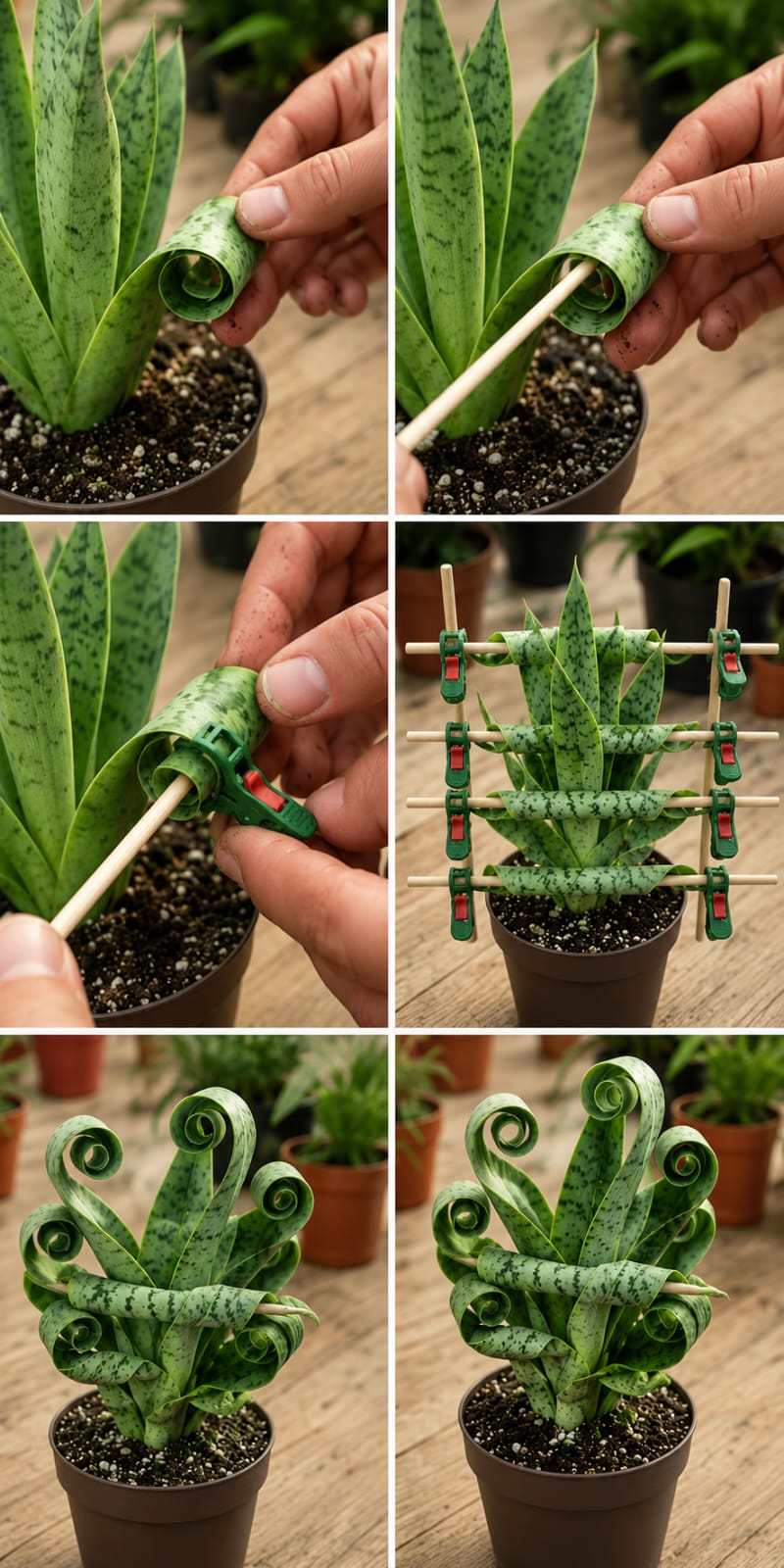
Snake plants are already famous for their strong upright leaves, sharp architectural shape, and easy-care nature. They bring clean lines, fresh green color, and modern structure into any room. But with a little patience and gentle shaping, a snake plant can also become a living decorative sculpture. One of the most creative ideas is the leaf curling method, where flexible young leaves are carefully guided into soft spiral shapes using a support stick and small clips.
This technique is not about forcing the plant harshly. It is about gentle training. When done slowly and carefully, the leaves can form elegant curls, loops, and scroll-like shapes that make the plant look artistic and unusual. The result is a snake plant that keeps its bold beauty but adds a playful, handmade, botanical design element.
This guide explains how to shape snake plant leaves safely, which leaves are best for curling, what tools to use, how to avoid damage, and how to keep the plant healthy while creating a decorative indoor display.
Why Snake Plants Work Well for Leaf Styling
Snake plants have thick, upright, slightly flexible leaves. Young leaves are easier to train because they have not fully hardened yet. Mature leaves are stronger and more rigid, so they can crack if bent too quickly.
The natural shape of a snake plant already looks sculptural. Its leaves grow in upright clusters, often with green patterns, silver tones, or yellow edges. When some leaves are gently curled, the plant gains a softer, more artistic look. The contrast between straight leaves and curled leaves creates movement and visual interest.
This makes the plant perfect for decorative styling in living rooms, studios, plant shelves, offices, and modern indoor gardens.
Is Leaf Curling Safe for Snake Plants?
Leaf curling can be safe only if it is done gently. The goal is not to crush, fold, or sharply bend the leaf. A snake plant leaf can be damaged if it is forced into a tight curl too quickly. Once a leaf cracks, tears, or creases deeply, it will not heal back into a perfect smooth surface.
The safest method uses soft gradual shaping. The leaf is rolled loosely around a smooth support, then held lightly with a small clip. Over time, the leaf may keep part of the curled shape. This works best with newer, flexible leaves.
If a leaf feels stiff, do not force it. Choose a younger leaf or leave the plant natural.
Best Snake Plant Types for This Trick
Compact snake plant varieties work especially well because their leaves are shorter and easier to manage. Dwarf varieties and rosette-shaped types can create a beautiful spiral display.
Good choices include:
- Compact snake plant varieties
- Bird’s nest snake plant types
- Young Sansevieria leaves
- Soft new growth on established plants
- Shorter upright varieties
Very tall, rigid snake plant leaves are harder to curl safely. They are better left upright, or only shaped very slightly.
Best Time to Shape Snake Plant Leaves
The best time is during active growth, usually spring or summer. During this period, the plant is warmer, stronger, and more flexible. New leaves are also more likely to be soft enough for gentle shaping.
Avoid doing this during cold winter months when the plant is resting. In winter, snake plants grow more slowly and leaves may be less flexible. The plant also recovers more slowly from stress.
Choose a warm day and work slowly.
Tools You Need
This project does not require expensive tools. Use simple items that are smooth and gentle on the leaves.
- Thin bamboo sticks or wooden skewers
- Small soft plant clips
- Soft twist ties
- Clean hands
- Optional soft cloth
- Optional plant support frame
Avoid sharp wire, tight rubber bands, rough string, or clips with strong pressure. These can cut into the leaf surface.
Choose the Right Leaf
Pick a leaf that is healthy, flexible, and free from cracks. It should feel firm but not stiff like old mature leaves. Young leaves are usually lighter in color and easier to guide.
Do not curl a leaf that is yellowing, soft, damaged, wrinkled, or diseased. Styling a weak leaf can make the problem worse.
The best leaf is strong, fresh, and slightly bendable.
Step 1: Check Plant Health First
Before shaping, make sure the snake plant is healthy. The leaves should be firm, the soil should not smell bad, and the pot should have drainage holes.
A stressed snake plant should not be trained. If the plant is dealing with root rot, overwatering, pests, or weak growth, fix those issues first.
A healthy plant can handle light styling much better than a struggling one.
Step 2: Roll the Leaf Gently
Take the selected leaf and slowly guide the tip inward. Roll it loosely around a smooth bamboo stick or wooden skewer. Do not make the curl too tight at first.
The first curl should be wide and soft. If the leaf resists, stop. Never force a stiff leaf into a tight spiral.
It is better to create a loose curl safely than to damage the leaf trying to make a perfect shape.
Step 3: Secure With a Soft Clip
Once the leaf is rolled around the stick, use a small soft plant clip to hold it in place. The clip should be firm enough to keep the leaf from unrolling, but not so tight that it leaves a mark.
Check the clip after a few hours. If the leaf looks pinched or bruised, loosen the clip or remove it.
Soft support is the secret to this method.
Step 4: Repeat Slowly on Other Leaves
If the first leaf responds well, you can shape a few more leaves. Do not curl every leaf at once. Leave some leaves upright so the plant can still photosynthesize well and keep its natural shape.
A mix of upright and curled leaves often looks more beautiful than a fully curled plant. The straight leaves add height, while the spirals add decorative movement.
Work gradually over several days or weeks.
Step 5: Remove Supports Carefully
After some time, remove the clips and sticks gently. Some leaves may hold a curl, while others may relax back slightly. This is normal.
If you want a stronger curl, repeat the shaping process gently. Do not leave tight clips on the plant for too long because they can mark the leaves.
Inspect the leaves often to make sure they remain healthy.
How Long Does the Curl Stay?
The curl may stay for a long time if the leaf accepted the shape while it was still flexible. However, some leaves naturally relax over time. Snake plant leaves are thick and strong, so they may not hold a perfect spiral forever.
This is part of the charm. The plant remains alive and continues changing. The goal is a natural artistic shape, not a frozen artificial design.
If needed, the curls can be refreshed gently.
What to Avoid
Several mistakes can damage the plant. Avoid:
- Forcing stiff leaves
- Using tight clips
- Leaving clips on too long
- Folding leaves sharply
- Curling weak or yellow leaves
- Styling during cold stress
- Using metal wire directly on leaves
- Overwatering after styling
Leaf styling should be gentle, slow, and optional.
Will Curling Hurt Growth?
Light curling should not seriously harm the plant if the leaves remain unbroken and healthy. However, the leaf surface still needs light. If many leaves are rolled too tightly, the plant may receive less light and grow more slowly.
For this reason, style only some leaves and keep the plant in bright indirect light. The plant should still be able to function normally.
Beauty and plant health should work together.
Best Light After Styling
Place the snake plant in bright indirect light after shaping. Good light helps the leaves stay strong and supports new growth.
Snake plants can tolerate low light, but they grow better in brighter conditions. If the plant is styled as a decorative display, bright light also makes the leaf patterns stand out more clearly.
A bright windowsill, plant shelf, or room with filtered sunlight works well.
Watering After Leaf Curling
Do not overwater after styling. Snake plants are succulents and prefer the soil to dry between waterings.
Water only when the soil is dry. When watering, soak the soil thoroughly, then let excess water drain away. Empty the saucer afterward.
Leaf curling does not mean the plant needs extra water. In fact, overwatering is more dangerous than underwatering for snake plants.
Best Soil for Styled Snake Plants
A styled snake plant still needs fast-draining soil. Use a cactus or succulent mix with extra perlite, pumice, coarse sand, or small bark chips.
The soil should not stay wet for many days. Wet soil can cause root rot, especially in decorative indoor pots.
Healthy roots support firm leaves, and firm leaves hold their shape better.
Pot Choice for Decorative Snake Plants
Choose a pot that matches the sculptural look of the curled leaves. Terracotta, matte black, white ceramic, concrete-style, and textured neutral pots all work beautifully.
A simple pot often looks best because the curled leaves are already visually interesting. Too much decoration on the pot can make the display feel busy.
Always choose a pot with drainage holes.
How to Create a Spiral Display
For a dramatic spiral display, shape the outer leaves into soft curls while leaving the center leaves upright. This creates a flower-like form, almost like a green rosette.
Use small sticks horizontally across the pot to support curled leaves while they settle. Keep the supports neat and temporary.
Once the leaves hold their shape, remove the supports for a cleaner natural look.
Indoor Decor Ideas
A curled snake plant can become a unique decor piece. It looks beautiful on a coffee table, plant stand, desk, shelf, or sunny windowsill.
Try styling it in:
- A modern black pot for contrast
- A terracotta pot for a natural look
- A white ceramic pot for a clean style
- A stone planter for a sculptural effect
- A wooden stand for extra height
The spiral shape adds movement and makes the plant look like living art.
Where to Place It
Place the plant where the curled leaves can be seen clearly. A low table, shelf edge, or bright plant stand is ideal.
Avoid tight corners where the curled leaves may bump against walls or furniture. Once a shaped leaf is damaged, the mark will remain.
Give the plant room to show off its form.
How to Keep Leaves Clean
Dust can dull the beautiful pattern of snake plant leaves. Wipe the leaves gently with a soft damp cloth every few weeks.
Be extra careful around curled leaves. Support the curl with one hand while cleaning with the other. Do not pull or flatten the spiral.
Clean leaves look brighter and help the plant absorb light.
Should You Fertilize a Styled Snake Plant?
Snake plants do not need heavy feeding. During spring and summer, use a diluted cactus or succulent fertilizer once every 6 to 8 weeks.
Do not fertilize immediately after stressful shaping if any leaves were bent or damaged. Wait until the plant looks stable.
Too much fertilizer can cause weak growth. Slow, firm growth is better for decorative shaping.
What If a Leaf Cracks?
If a leaf cracks during curling, stop shaping that leaf. A cracked leaf will not fully repair itself. You can leave it if the damage is minor, or trim it if it becomes unattractive.
Use clean scissors if trimming. Cut at an angle near the base if removing the whole leaf.
Next time, choose a younger leaf and curl more loosely.
Can You Shape New Pups?
New snake plant pups are often more flexible than older leaves. They can be shaped gently once they are tall enough to handle.
However, very tiny pups should not be disturbed. Let them grow and strengthen first. Once the leaves are long enough, you can guide them softly.
Patience gives better results.
How to Encourage More Pups
A fuller plant makes a better decorative display. To encourage pups, give the snake plant bright indirect light, fast-draining soil, a snug pot, and careful watering.
Snake plants often produce pups when they are healthy and slightly root-bound. Do not move them into oversized pots too quickly.
More pups mean more leaves to style later.
Continue to Page 2
Continue to page 2 for more details about this article and the key points many readers miss on the first page.