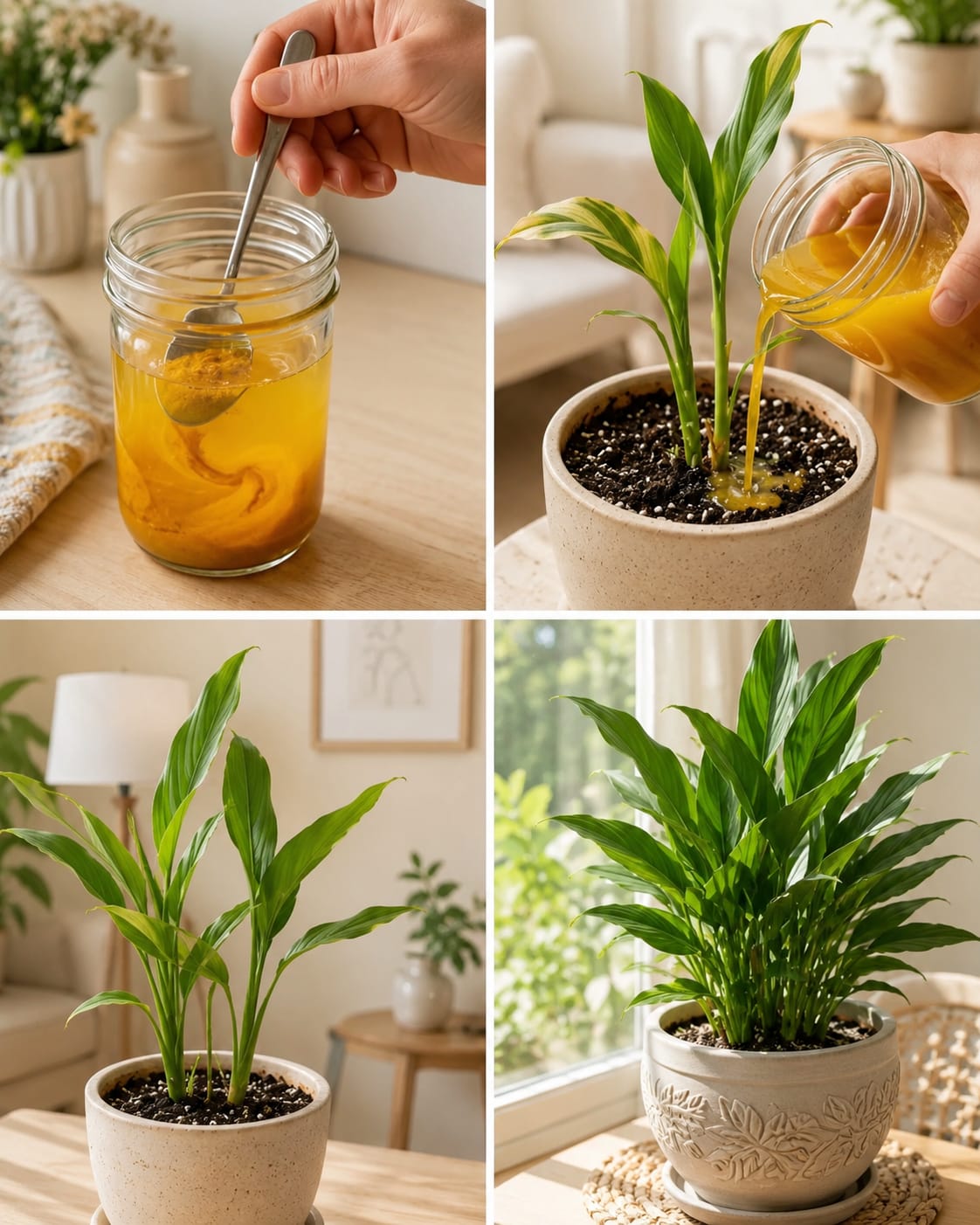
Peace lilies are some of the most elegant indoor plants you can grow. Their glossy green leaves, upright shape, and soft white blooms make them perfect for living rooms, bedrooms, offices, entryways, kitchens, and bright indoor corners. A healthy peace lily brings a calm tropical feeling into the home without needing complicated care. It looks clean, fresh, and decorative, especially when placed near a window with soft filtered light.
One natural plant-care idea that often gets attention is using a gentle turmeric water mixture around indoor plants. Turmeric has a strong golden color, and many people like it because it feels natural, simple, and easy to prepare. For peace lilies, this kind of mixture must be used carefully. Peace lilies have sensitive roots, and they do not like heavy, oily, thick, or overly strong homemade liquids. A turmeric solution can only be considered safe when it is very weak, well mixed, and used occasionally.
The real secret to a healthy peace lily is not one golden liquid. It is a balanced routine: bright indirect light, moist but not soggy soil, drainage, humidity, clean leaves, and gentle feeding. Turmeric water may be used as a very mild occasional soil drench, but it should never replace proper watering, good soil, or a balanced houseplant fertilizer.
What Is the Turmeric Water Trick?
The turmeric water trick usually means mixing a tiny amount of turmeric powder into water and pouring it around the plant’s soil. Some plant owners use it because turmeric is known as a natural kitchen ingredient with a strong color and earthy smell. In plant care, people often connect it with root support, soil freshness, or general plant health.
For peace lilies, the mixture should be extremely diluted. A strong turmeric mixture can stain surfaces, sit on top of the soil, create residue, or make the potting mix unpleasant. Peace lilies prefer clean, breathable soil. Any homemade mixture should support that environment, not overload it.
The safest approach is to treat turmeric water as an occasional mild tonic, not a regular fertilizer and not a cure for a sick plant.
Why Peace Lilies Need Gentle Treatments
Peace lilies are tropical plants that enjoy consistent moisture, warmth, and humidity. Their roots are not built for dry cactus-style soil, but they also do not like being waterlogged. They need soil that stays lightly moist while still allowing oxygen to reach the root system.
This balance is important. If the soil stays too wet, peace lilies can develop root rot. If the soil dries too much, the leaves droop dramatically. If the plant receives too much fertilizer or too many homemade mixtures, the roots can become stressed.
That is why any turmeric water routine must be gentle. The plant should already be healthy, the pot should have drainage holes, and the soil should not be soggy before applying anything.
How to Make a Safe Turmeric Water Mix
The safest turmeric water mix for peace lilies should be very weak. You do not need a strong golden paste. You need a light, watery mixture.
A gentle recipe:
- Add 1 small pinch of turmeric powder to 2 cups of clean water.
- Stir well until the powder spreads through the water.
- Let heavy particles settle for a few minutes.
- Use only the lighter liquid from the top if the mixture looks gritty.
- Apply only a small amount to the soil.
Do not make a thick turmeric paste. Do not add oil, milk, sugar, salt, lemon, vinegar, or spices. The mixture should contain only turmeric and water.
How Often to Use Turmeric Water
Use turmeric water rarely. Once every 6 to 8 weeks is enough if you choose to use it at all. Many healthy peace lilies do not need it. Plain water and proper fertilizer are usually better for regular care.
Do not use turmeric water every week. Do not use it every time you water. Too much powder can build up in the soil and create a layer that affects drainage and airflow.
During winter, avoid using it if the plant is growing slowly. Peace lilies use less water and fewer nutrients in cooler, darker months.
When Not to Use Turmeric Water
Do not use turmeric water if the peace lily is already struggling from wet soil or root rot. Adding more liquid to a stressed root system can make the issue worse.
Avoid turmeric water if you notice:
- Soil staying wet for many days
- Yellow leaves from overwatering
- Soft mushy stems
- A sour smell from the pot
- Fungus gnats
- Mold on the soil
- Brown mushy roots
- A pot without drainage holes
In these cases, fix the soil and watering routine first. A homemade tonic cannot rescue roots that are sitting in soggy soil.
Why Drainage Matters So Much
Peace lilies need moisture, but they need drainage too. A pot without drainage holes can trap water at the bottom. This creates an oxygen-poor area where roots begin to rot.
If you use turmeric water in a pot without drainage, the mixture may sit in the soil longer than it should. This can create residue, smell, or root stress.
Always use a pot with drainage holes. If you love decorative pots, keep the peace lily inside a nursery pot with holes, then place that pot inside the decorative container. After watering, empty any water that collects inside the cover pot.
The Best Soil for Peace Lilies
Peace lilies grow best in a light, rich, well-draining potting mix. The soil should hold moisture but still allow air to reach the roots.
A good peace lily mix can include:
- Quality indoor potting mix
- Perlite for drainage
- Coco coir for moisture
- Fine orchid bark for airflow
- A small amount of compost or worm castings
If the soil feels heavy, muddy, or compacted, add more perlite or bark. If the soil dries too quickly, add a little coco coir. The goal is balance.
How Soil Affects Any Natural Tonic
Natural liquids work safely only when the soil is healthy. If the potting mix is compacted, wet, or old, adding turmeric water can make things worse. The roots need oxygen more than they need homemade additives.
If your peace lily has not been repotted for years and the soil looks dense, refresh the mix first. Fresh airy soil helps the plant respond better to watering, feeding, and any occasional tonic.
Good soil is the foundation of peace lily care.
Watering Peace Lilies Correctly
Peace lilies like soil that stays lightly moist, but not soaked. Water when the top inch of soil feels dry. If the plant droops slightly and the soil is dry, it is likely thirsty. After watering, the leaves often lift again.
When watering, pour slowly until water drains from the bottom. Then empty the saucer. This keeps the root zone evenly moist without leaving the roots sitting in water.
Do not water only by schedule. Check the soil first.
Signs Your Peace Lily Needs Water
Peace lilies are famous for drooping when thirsty. This can be helpful because the plant clearly shows when it needs moisture. However, waiting until the plant collapses every time can stress it.
Signs of thirst include:
- Drooping leaves
- Dry top soil
- Lightweight pot
- Slightly curled leaves
- Dull leaf surface
If the soil is dry, water thoroughly. If the soil is wet and the plant is drooping, do not add more water. Check the roots instead.
Signs of Overwatering
Overwatering can look similar to underwatering because the plant may droop in both cases. The difference is the soil. If the soil is wet and the leaves droop, roots may be struggling.
Signs of overwatering include:
- Yellow leaves
- Soft stems near the base
- Wet soil for too long
- Brown mushy roots
- Bad smell from the pot
- Fungus gnats
- Leaf tips turning brown and soft
If these signs appear, stop all tonics and fertilizers. Let the soil dry slightly and inspect the root system if needed.
Light for Greener Peace Lily Leaves
Peace lilies grow best in bright indirect light. They can tolerate lower light than many flowering plants, but they bloom better and grow fuller when they receive enough brightness.
Place the plant near a window with filtered light. Avoid harsh direct afternoon sun because it can scorch the leaves.
If the plant has dark green leaves but no flowers, it may need brighter indirect light. If leaves become pale or burned, the light may be too strong.
How to Encourage Peace Lily Blooms
Peace lily blooms depend on maturity, light, root health, and overall care. A turmeric water mixture will not force blooms by itself.
To encourage flowers:
- Give bright indirect light
- Keep soil evenly moist
- Use a pot with drainage
- Feed lightly during active growth
- Keep humidity moderate
- Remove old faded blooms
- Avoid cold drafts
A healthy peace lily with enough light is much more likely to produce blooms.
Does Turmeric Water Act Like Fertilizer?
Turmeric water is not a complete fertilizer. It does not provide balanced nutrition in the way a houseplant fertilizer does. Peace lilies need nutrients such as nitrogen, phosphorus, potassium, and trace minerals in balanced amounts.
If you want reliable growth, use a diluted balanced houseplant fertilizer during spring and summer. Turmeric water, if used, should be occasional and mild.
Do not replace fertilizer with turmeric water and expect the same results.
How to Feed Peace Lilies Properly
Peace lilies are not heavy feeders. Too much fertilizer can cause brown tips and root stress. Use a balanced liquid houseplant fertilizer at half strength once every 4 to 6 weeks during active growth.
Do not fertilize in winter if the plant is not growing much. Do not fertilize a plant with root rot or wet soil.
Use plain water between feeding days to prevent buildup.
Combining Fertilizer and Turmeric Water
Do not use fertilizer and turmeric water on the same day. Space them apart by several weeks. The plant does not need many treatments at once.
A simple routine could be:
- Plain water as needed
- Diluted fertilizer once every 4 to 6 weeks in spring and summer
- Optional weak turmeric water once every 6 to 8 weeks
- No extra tonic if the plant is stressed
Less is safer. Peace lilies prefer steady care over constant experiments.
Cleaning Peace Lily Leaves
Peace lily leaves are broad and glossy, so they collect dust. Dust blocks light and makes the plant look dull. Cleaning the leaves helps the plant look healthier and absorb light better.
Use a soft damp cloth and wipe each leaf gently. Support the leaf with one hand while cleaning with the other.
Avoid heavy leaf shine products. Plain water is usually enough.
Removing Yellow Leaves
Older leaves naturally yellow over time. Remove yellow leaves with clean scissors by cutting near the base. This keeps the plant tidy and helps reduce wasted energy.
If many leaves turn yellow at once, check watering, light, roots, and soil. One yellow leaf is normal. Several yellow leaves may signal a care issue.
Do not rely on turmeric water to fix yellowing. Find the cause first.
Brown Leaf Tips on Peace Lilies
Brown tips are common on peace lilies. They can be caused by inconsistent watering, dry air, fertilizer buildup, mineral-heavy tap water, direct sun, or root stress.
Once a tip turns brown, it will not turn green again. You can trim the brown part with clean scissors if desired.
To prevent more brown tips, water consistently, avoid overfeeding, improve humidity, and use filtered water if your tap water is harsh.
Humidity for Peace Lilies
Peace lilies enjoy moderate humidity. Dry indoor air can cause crispy tips, dull leaves, and slower growth.
To improve humidity:
- Group plants together
- Use a humidifier
- Place the plant in a bright bathroom
- Use a pebble tray carefully
- Keep away from heaters
Humidity helps the plant look lush, especially during dry seasons.
Temperature Needs
Peace lilies like warm stable rooms. Keep them away from cold drafts, air conditioners, open winter windows, and heaters.
Cold stress can cause drooping, yellowing, and slow growth. Hot dry air can brown the leaf tips.
A stable indoor temperature helps the plant stay healthy and attractive.
Repotting Peace Lilies
Repot a peace lily when it becomes root-bound, dries too quickly, or the soil breaks down. Spring is usually the best time.
Choose a pot only one size larger. A very large pot can hold too much wet soil. Use fresh airy potting mix and water lightly after repotting.
Wait a few weeks before using fertilizer or any turmeric water after repotting. Let the roots settle first.
Dividing a Peace Lily
A large peace lily can be divided into smaller plants. Remove it from the pot and gently separate clumps with roots attached. Plant each section in fresh soil and water lightly.
Dividing is useful when the plant is crowded or when you want more plants for other rooms.
After division, keep the plants in bright indirect light and avoid extra tonics until they recover.
Common Pests
Peace lilies may attract pests such as spider mites, aphids, scale, mealybugs, and fungus gnats. Fungus gnats often appear when soil stays too wet.
Check leaves, stems, and soil regularly. Look for sticky residue, tiny insects, white cottony spots, webbing, or small flies around the pot.
If pests appear, isolate the plant and treat early. Stop homemade liquids until the soil is clean and stable.
Decor Ideas for Peace Lilies
Peace lilies are excellent decor plants because they look elegant without being too busy. Their green leaves and white flowers fit many interior styles.
Good decor ideas include:
- A white ceramic pot for a clean modern look
- A terracotta pot for a warm natural style
- A woven basket cover for cozy decor
- A stone-textured pot for a calm luxury feel
- A plant stand near a bright window
- A bedroom corner with soft filtered light
- A bathroom shelf if there is a window
The plant works beautifully with wood, linen, stone, and neutral colors.
Best Places to Display Peace Lilies
Place peace lilies where they receive bright indirect light and stable warmth. Good locations include living rooms, bedrooms, offices, kitchens, and bright bathrooms.
Avoid dark corners if you want blooms. Avoid harsh direct sun if you want clean leaves. Avoid cold windows and heaters.
When placed correctly, peace lilies can become long-lasting indoor focal plants.
Continue to Page 2
Continue to page 2 for more details about this article and the key points many readers miss on the first page.