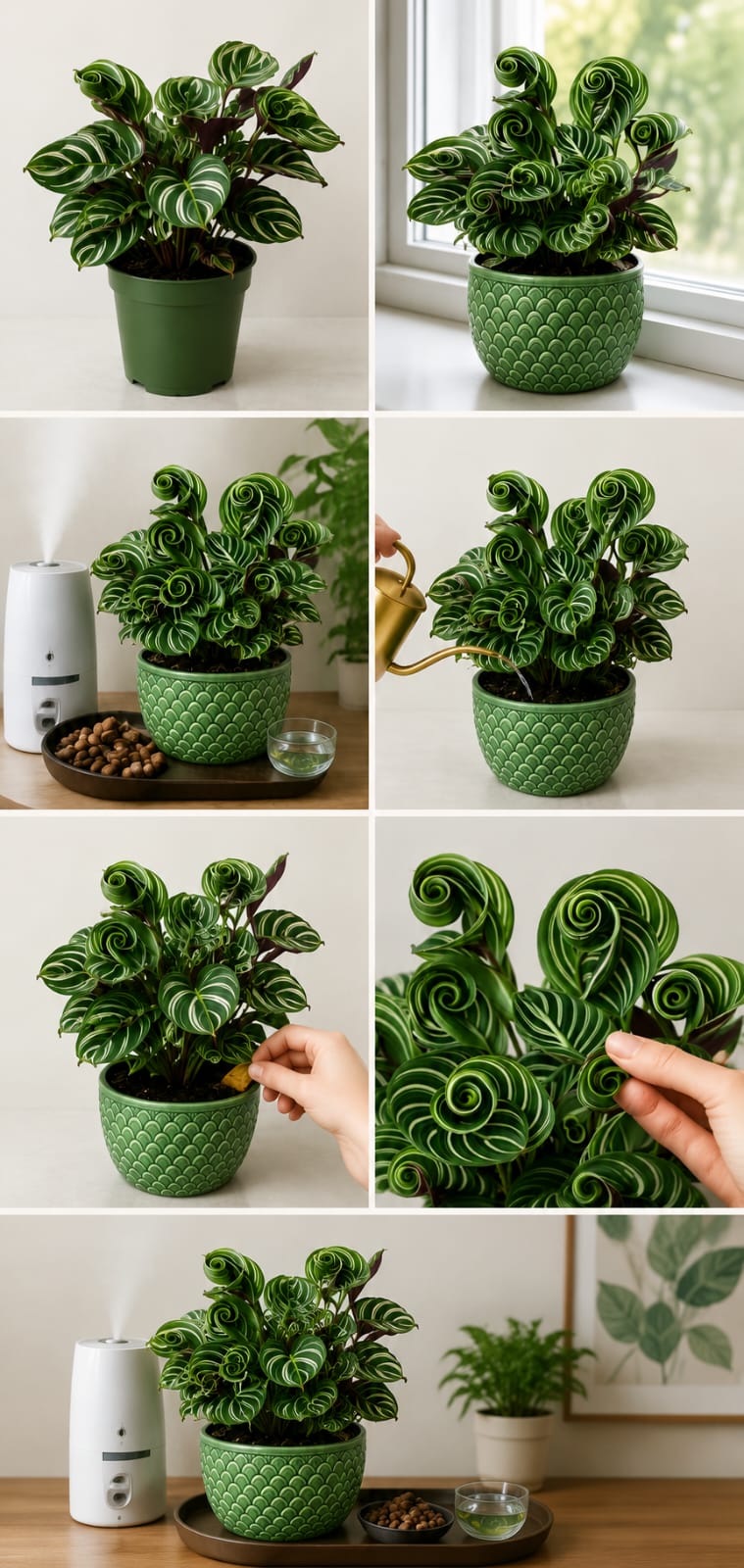
Calathea plants are famous for their dramatic patterned leaves, soft tropical look, and elegant movement throughout the day. Their leaves can look painted by hand, with stripes, waves, deep green markings, silver tones, purple undersides, and graceful shapes that instantly make any room feel more alive. A full Calathea in a decorative pot can become the centerpiece of a windowsill, shelf, desk, coffee table, or plant corner.
One of the most attractive looks for a Calathea is a compact, bushy plant with fresh leaves that curl and unfurl in a beautiful spiral-like way. New Calathea leaves often appear rolled before they open. This natural unfurling stage gives the plant a sculptural look, almost like green ribbons. When the plant is healthy, the leaves open cleanly, keep strong color, and continue producing new growth from the base.
To grow a fuller Calathea with healthy curled new leaves, the secret is not one single trick. It is a combination of humidity, soft light, careful watering, warm temperatures, rich but airy soil, and gentle feeding. Calathea plants are not difficult once you understand what they want, but they are sensitive to dry air, harsh sun, cold drafts, and poor water quality.
Why Calathea Leaves Curl
Calathea leaves can curl for two different reasons. Sometimes curling is normal. New leaves often grow rolled like tubes before they open. This is a healthy sign when the leaf is fresh, firm, and green.
But leaf curling can also be a stress signal. Older leaves may curl when the plant is thirsty, too dry, too cold, exposed to direct sun, or sitting in poor soil. The first step is learning the difference between healthy new leaf curling and stress curling.
Healthy new curls look smooth and firm. Stress curls often look dry, crispy, faded, limp, or tightly folded for too long.
Healthy Curling vs Stress Curling
Healthy curled growth usually appears from the center of the plant. The leaf is fresh, green, and slowly unfurls over several days. It may look like a rolled tube or spiral before opening fully.
Stress curling often affects older leaves too. The leaf edges may fold inward, tips may brown, and the plant may look droopy. This usually means the plant needs a care adjustment.
If many leaves curl at once, check humidity, watering, light, and temperature.
Best Light for Calathea
Calathea plants love bright indirect light. They grow under filtered light in tropical environments, so they do not like harsh direct sun on their leaves.
A bright room near a window is ideal. Morning light can work well if it is gentle. Avoid strong afternoon sun, especially through hot glass, because it can scorch the leaves and fade the pattern.
If the plant receives too little light, growth slows and new leaves may be smaller. If it receives too much direct sun, leaves may curl, brown, or lose color.
Where to Place Calathea Indoors
Good locations include:
- Near an east-facing window
- A few feet from a south-facing window with sheer curtains
- A bright bathroom with a window
- A bright kitchen corner
- A plant shelf with filtered light
- A desk near soft daylight
- A living room corner with indirect brightness
Do not place Calathea in a dark corner. It may survive for a while, but it will not grow full and fresh. Also avoid direct hot sun that can burn the leaves.
Humidity Is the Real Secret
Calathea plants love humidity. Dry indoor air is one of the most common reasons leaves curl, crisp, and brown at the edges. If you want a lush, full plant with beautiful new leaves, humidity matters a lot.
A humidity level around 50 percent or higher is helpful. Some Calathea varieties prefer even more. If the air is very dry, the leaves may struggle to open properly and may develop crispy tips.
Humidity is especially important during winter when heating systems dry the air.
Easy Ways to Increase Humidity
- Place a small humidifier near the plant.
- Group several plants together.
- Use a pebble tray with water below the pot.
- Place the plant in a bright bathroom.
- Keep it away from heaters and dry vents.
- Use a humidity tray on a plant shelf.
- Avoid placing it near open drafts.
A humidifier is usually the most reliable method. Misting can help for a short moment, but it does not raise humidity for long.
How to Use a Pebble Tray
A pebble tray is simple. Fill a shallow tray with pebbles and add water below the top of the stones. Place the pot on top of the pebbles, not directly in the water.
As the water evaporates, it creates a slightly more humid area around the plant. This is not as strong as a humidifier, but it can help in a dry room.
Make sure the pot is not sitting in water. Calathea roots need moisture, but they do not like soggy soil.
Watering Calathea Correctly
Calathea likes evenly moist soil, but not wet, heavy soil. The plant does not want to dry out completely like a cactus. It also does not want to sit in water like a swamp plant.
Water when the top inch of soil begins to feel dry. Use room-temperature water and pour slowly until the soil is evenly moist. Let extra water drain from the bottom of the pot.
Never leave water sitting in the saucer for long.
Why Water Quality Matters
Calathea plants can be sensitive to minerals, chlorine, and salts in tap water. Hard water may cause brown leaf tips or crispy edges over time.
If your Calathea develops brown tips even when humidity and watering are good, try using filtered water, rainwater, distilled water, or water that has been left out overnight.
Good water quality helps keep leaves cleaner, softer, and healthier.
Signs Your Calathea Needs Water
- Leaves curl inward
- Soil feels dry
- Leaves droop during the day
- Pot feels lighter
- Leaf edges begin to crisp
- New leaves open slowly
If the soil is dry, water gently and evenly. The plant may perk up after a few hours, but badly dry soil can take longer to recover.
Signs of Overwatering
- Yellow leaves
- Soft stems near the soil
- Soil stays wet for many days
- Bad smell from the pot
- Fungus gnats
- Brown mushy roots
- Leaves droop even though soil is wet
If the soil is wet and the leaves are still curling or drooping, do not add more water. Check the roots and drainage.
Best Soil for Calathea
Calathea grows best in soil that holds light moisture but still allows air to reach the roots. Dense soil can stay too wet and cause root problems. Very gritty soil may dry too fast.
A good Calathea soil mix can include:
- 2 parts indoor potting mix
- 1 part perlite
- 1 part coco coir or peat moss
- Small amount of orchid bark
- Small amount of worm castings, optional
The soil should feel soft and airy. It should not become hard, muddy, or compacted.
Choosing the Right Pot
Use a pot with drainage holes. This is important because Calathea likes moisture, but trapped water can rot the roots.
A ceramic or plastic pot can work well because it holds moisture longer than terracotta. Terracotta dries faster, which may be useful in humid climates but can be too drying in dry homes.
Choose a pot that fits the root ball. Do not use a pot that is much too large because extra soil holds extra water.
Repotting Calathea
Repot Calathea when the roots become crowded, the soil becomes compacted, or the plant dries out too quickly. Spring is usually the best time to repot.
Choose a pot only one size larger. Remove old soil gently and avoid damaging too many roots. Calathea can be sensitive after repotting, so keep conditions stable afterward.
After repotting, place the plant in bright indirect light and keep the soil lightly moist.
Feeding for Fuller Growth
Feed Calathea lightly during spring and summer. Use a balanced liquid houseplant fertilizer at half strength once every 4 to 6 weeks.
Do not overfeed. Too much fertilizer can burn roots and cause brown tips. Calathea prefers gentle nutrition.
Do not fertilize during winter if growth slows. Also avoid feeding a stressed or freshly repotted plant until it recovers.
How to Encourage More New Leaves
To encourage fuller growth, focus on steady care. Calathea produces new leaves when it has enough light, humidity, moisture, warmth, and nutrients.
Helpful habits include:
- Keep humidity moderate to high.
- Use bright indirect light.
- Water before the soil dries completely.
- Use filtered water if needed.
- Feed lightly in active growth.
- Remove dead or damaged leaves.
- Keep the plant warm and away from drafts.
Fullness comes from healthy roots and consistent conditions.
Temperature Needs
Calathea likes warm indoor temperatures. Keep it away from cold drafts, open winter windows, air conditioners, and heaters. Sudden temperature changes can cause curling and leaf stress.
A comfortable room temperature is usually good. Avoid temperatures that feel cold at night near windows.
Warmth and humidity together help new leaves unfurl smoothly.
Why New Leaves Sometimes Get Stuck
New Calathea leaves may stay rolled or become stuck when humidity is too low. Dry air makes the leaf surface less flexible, so it may not open properly.
Increase humidity and keep the plant evenly watered. Avoid pulling the leaf open by hand. This can tear the delicate new growth.
If needed, place the plant near a humidifier and let the leaf open naturally.
Should You Mist Calathea?
Misting gives a short burst of moisture, but it does not replace humidity. If you mist, use clean water and avoid soaking the leaves heavily. Wet leaves in low airflow can encourage fungal problems.
A humidifier is better for long-term results. Misting is optional and should be gentle.
Never mist if the plant is in a cold room or dark corner.
Cleaning Calathea Leaves
Calathea leaves collect dust, especially because the patterns are broad and textured. Dust blocks light and makes the plant look dull.
Clean the leaves gently with a soft damp cloth. Support each leaf while wiping. Do not rub hard because the leaves can bruise or tear.
Clean leaves look brighter and help the plant absorb more light.
Pruning Calathea
Pruning keeps the plant tidy. Remove yellow, crispy, or damaged leaves by cutting the stem near the base. Use clean scissors.
Do not cut healthy leaves just because they curl at night. Calathea leaves move naturally, and some folding is normal.
Removing old leaves allows the plant to focus energy on fresh growth.
Natural Leaf Movement
Calathea belongs to a group often called prayer plants. Many varieties move their leaves in response to light. Leaves may lift, lower, fold, or change position between day and night.
This movement is normal. It does not mean the plant is sick.
If leaves move daily and remain healthy, firm, and colorful, the plant is behaving naturally.
Common Calathea Problems
Calathea problems often come from dry air, poor water quality, inconsistent watering, or strong sun.
- Brown tips: Dry air, hard water, fertilizer buildup, or underwatering.
- Curled leaves: Dry soil, low humidity, cold, or too much sun.
- Yellow leaves: Overwatering, old leaves, or poor drainage.
- Faded leaves: Too much direct sun or not enough nutrients.
- Drooping: Water stress, root stress, or temperature shock.
- Slow growth: Low light, cold conditions, or lack of nutrients.
Look at the whole plant and the soil before choosing a fix.
How to Fix Crispy Edges
Crispy edges are common on Calathea plants in dry homes. Start by increasing humidity. Then check water quality and watering consistency.
Trim brown edges if they bother you, but do not cut into healthy green tissue too much. Use clean scissors and follow the natural shape of the leaf.
New leaves will look better when the growing conditions improve.
How to Rescue a Dry Calathea
If the plant is very dry and curled, water slowly. Dry soil can sometimes push water away, so water in stages. Pour a little, wait a few minutes, then pour again.
Let the pot drain completely. Move the plant to bright indirect light and increase humidity.
Do not fertilize a stressed dry plant right away. Let it recover first.
How to Rescue an Overwatered Calathea
If the soil is wet and the plant is drooping, remove it from the pot and inspect the roots. Trim any mushy or rotten roots. Repot in fresh airy soil and a pot with drainage holes.
After repotting, keep the plant warm and in bright indirect light. Water lightly until you see recovery.
Overwatered Calathea needs oxygen around the roots more than extra fertilizer.
Best Companion Plants
Calathea looks beautiful with other humidity-loving plants. Grouping plants can also help create a slightly more humid microclimate.
Good companions include:
- Maranta prayer plant
- Peace lily
- Ferns
- Fittonia
- Peperomia
- Philodendron
- Pothos
- Alocasia
Choose plants with similar light and moisture needs.
Indoor Decor Ideas
Calathea is a perfect decor plant because its leaves look artistic. A full plant in a patterned green pot can become a soft focal point in the room.
- Place it on a wooden shelf near filtered light.
- Style it beside a white humidifier for a fresh plant-care corner.
- Use a green ceramic pot to match the leaf patterns.
- Place it on a tray with pebbles for humidity and decor.
- Pair it with neutral walls and natural wood furniture.
- Use it as a centerpiece on a bright table.
- Place it near framed botanical art for a calm indoor garden look.
The curled new leaves add movement and shape, making the plant feel alive and sculptural.
Continue to Page 2
Continue to page 2 for more details about this article and the key points many readers miss on the first page.