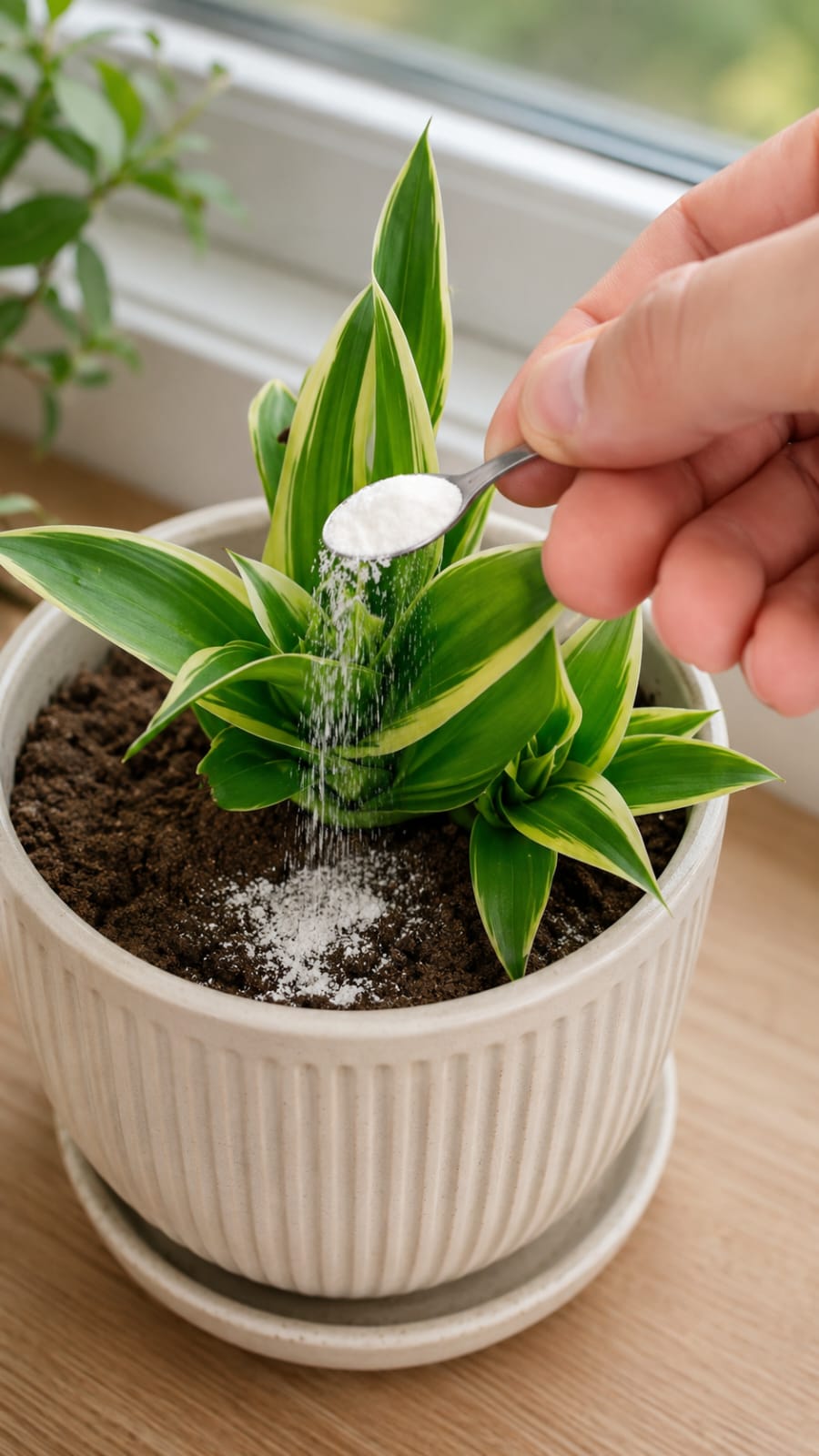
Dracaena plants are among the most popular indoor plants because they look clean, elegant, and tropical without demanding constant attention. Their upright leaves, striped green patterns, and compact growth make them perfect for windowsills, desks, side tables, shelves, bedrooms, offices, and living room corners. Many Dracaena varieties can tolerate average indoor conditions, but they still need the right balance of light, watering, soil, and nutrition to stay beautiful.
One plant-care idea that often gets attention is sprinkling a white powder around the base of a Dracaena. This can look like a quick miracle trick, but the truth is more careful. Some white powders can help plants when used correctly. Others can damage roots, burn leaves, compact the soil, or create harmful buildup. The difference depends on what the powder is, how much is used, how often it is applied, and whether the plant already has good soil and drainage.
For Dracaena plants, the safest white powder-style soil boosters are gentle, plant-safe amendments. These may include finely crushed eggshell powder, worm casting powder, a mild slow-release houseplant fertilizer, or a very tiny amount of dolomite lime when the soil truly needs it. The goal is not to cover the soil in a thick white layer. The goal is to add a light, measured amount that supports the root zone without overwhelming the plant.
Dracaenas are not heavy feeders. They do not need aggressive fertilizing. They grow best with steady care, bright indirect light, a pot with drainage holes, and soil that does not stay soggy. A soil booster can support growth, but it cannot fix poor watering habits, dark corners, or compacted soil. This guide explains how to use a white powder soil booster safely, what to avoid, how to protect the roots, and how to keep your Dracaena looking fresh indoors.
Understanding Dracaena Plants
Dracaena is a large group of houseplants with many different shapes and leaf colors. Some have long sword-like leaves. Others grow as compact rosettes. Many have beautiful green, lime, cream, or yellow stripes. They are often chosen because they look stylish and can survive indoors better than many tropical plants.
Common Dracaena types include Dracaena fragrans, Dracaena marginata, Dracaena deremensis, Dracaena compacta, and Dracaena sanderiana. Even though their shapes vary, their care needs are similar. They prefer bright indirect light, moderate watering, and well-draining soil.
Dracaenas can tolerate lower light, but they grow more slowly in dim rooms. They can also tolerate some dryness, but they do not like being completely neglected for long periods. Their roots need oxygen, and their leaves can react quickly to water quality or fertilizer buildup. Brown tips, yellow leaves, and weak growth often come from watering problems, mineral buildup, or poor soil conditions.
Why Soil Health Matters So Much
The soil is the foundation of Dracaena health. A plant can only grow well if the roots are healthy. Roots absorb water, oxygen, and nutrients. When the soil is fresh and airy, roots can breathe and function properly. When soil becomes dense, salty, compacted, or soggy, the roots struggle.
Old potting mix can break down over time. It may become heavy and hold too much moisture. The surface can become crusty from minerals in water or fertilizer. The top layer can also harden, making it harder for water to soak evenly into the pot.
A light soil booster can refresh the top layer and add mild nutrients, but it must be used in moderation. Dracaena roots do not enjoy strong fertilizer or wet organic layers. A small amount can support growth. A heavy amount can create stress.
What the White Powder Can Be
The phrase “white powder” can mean many things. In safe plant care, it should only refer to plant-safe amendments. It should never mean random kitchen powders, cleaning products, or unknown substances.
Safe white powder options may include finely crushed eggshells, powdered worm castings, a measured indoor plant fertilizer, or dolomite lime used only when needed. Each one works differently. Eggshells provide slow calcium. Worm castings provide gentle organic nutrients. Slow-release fertilizer provides balanced nutrition over time. Dolomite lime can affect soil acidity, so it should be used carefully and rarely.
The most important rule is simple: never add a powder to a plant unless you know exactly what it is and why you are using it.
Best Safe White Powder Options for Dracaena
1. Finely Crushed Eggshell Powder
Eggshell powder is a common natural plant-care ingredient. It contains calcium carbonate, which breaks down slowly in soil. Calcium can support plant cell structure, but eggshells do not act like fast fertilizer. They are a slow, mild amendment.
To use eggshells safely, rinse them well, dry them completely, and grind them into a fine powder. Large shell pieces can sit in the soil for a long time and may look messy. Fine powder mixes more easily into the top layer.
Use only a small pinch to half a teaspoon for a small pot, or up to one teaspoon for a medium pot. Do not use eggshell powder every week. Once every few months is enough.
2. Worm Casting Powder
Worm castings are one of the gentlest organic amendments for indoor plants. They improve soil quality, add mild nutrients, and support steady root health. They are usually safer than strong fertilizers because they release nutrients slowly.
For Dracaena plants, a thin sprinkle of worm castings mixed into the top layer of soil can be helpful during active growth. Use a small amount and avoid creating a thick wet layer. Worm castings are excellent when the plant looks healthy but needs a light soil refresh.
3. Slow-Release Houseplant Fertilizer
A mild slow-release fertilizer can be useful when the plant is actively growing. It should be labeled for indoor plants and measured carefully. Strong garden fertilizer can be too much for Dracaena roots.
Always follow the label and use less rather than more. Dracaenas do not need heavy feeding. Overfertilizing can cause brown tips, yellowing, and salt buildup on the soil.
4. Dolomite Lime
Dolomite lime is sometimes used to raise soil pH and add calcium and magnesium. But it should not be used casually. If your potting mix is already balanced, adding lime may not help and can create problems.
Only use a very tiny amount if you know your soil is too acidic or your mix needs pH adjustment. For most indoor Dracaena owners, worm castings or a mild fertilizer are safer choices.
White Powders You Should Never Use
Some white powders are dangerous for plants. They may look harmless, but they can damage roots quickly. Dracaena plants are especially sensitive to salt buildup and chemical residues.
- Table salt
- Sugar
- Baking soda
- Flour
- Powdered milk
- Laundry detergent
- Cleaning powder
- Bleach powder
- Unknown garden chemicals
- Strong fertilizer used without measuring
- Pest powders not labeled for houseplant soil
Salt can dehydrate roots. Sugar can attract pests and encourage mold. Baking soda can change soil chemistry too strongly. Flour can become sticky and moldy. Cleaning powders can kill roots. Unknown powders are never worth the risk.
How to Prepare a Safe White Powder Booster
A simple gentle booster mix can be made with safe ingredients. For a medium Dracaena pot, you can use:
- Half a teaspoon finely crushed eggshell powder
- One teaspoon worm castings
- Optional tiny pinch of slow-release houseplant fertilizer
Mix these together in a small bowl. The texture should be dry and crumbly, not wet or sticky. Sprinkle lightly around the outer soil area, away from the central crown of the plant. Then gently mix it into the top half inch of soil.
This creates a mild top-dressing that supports the soil without overwhelming it.
How to Apply the Powder Correctly
Start by checking the soil moisture. If the soil is wet, wait. Do not add powder to wet soil. Damp soil plus organic powder can increase the chance of mold or gnats.
When the top layer is slightly dry, loosen the surface gently with your fingers or a small spoon. Sprinkle the powder lightly. Keep it away from the crown where the leaves meet the soil. Mix it into the top half inch of soil so it does not sit as a thick surface layer.
After applying, water only if the plant actually needs water. If the soil is still moist below the surface, wait a few days.
How Much Powder to Use
The right amount depends on pot size. A small pot needs only a pinch. A medium pot may need half a teaspoon to one teaspoon. A large pot may handle one to two teaspoons, depending on the ingredient.
For Dracaena plants, less is safer. You can always add a little more later, but it is harder to fix root burn or salty buildup after too much is applied.
Never create a thick white pile over the soil. This can block airflow, trap moisture, and make the plant look messy.
How Often to Use a Soil Booster
Use a safe soil booster every 6 to 8 weeks during spring and summer. This is when Dracaena plants are usually more active and can use nutrients better.
During fall and winter, growth slows. The plant uses less water and fewer nutrients. Feeding too often during this time can cause buildup. It is better to pause or reduce soil boosters in the cooler months.
Healthy Dracaena care should feel light and steady, not intense.
Why More Powder Can Hurt the Plant
Many plant owners think that if a small amount helps, a large amount will help more. With indoor plants, this is often wrong. Too much powder can create chemical imbalance, root burn, crusty soil, mold, or blocked airflow.
Dracaenas are sensitive to overfeeding. Brown tips are one of the most common signs that something is too strong, too salty, or too dry around the roots.
A small measured sprinkle is useful. A heavy coating is risky.
Best Soil Mix for Dracaena
A soil booster works best when the main potting mix is already good. If the soil is dense, soggy, or compacted, a powder will not solve the real problem.
A good Dracaena soil mix can include:
- 2 parts indoor potting mix
- 1 part perlite
- 1 part coco coir
- A small amount of orchid bark
- A small amount of pumice, optional
- A small amount of worm castings
This mix holds some moisture but still allows air to reach the roots. Dracaenas dislike soil that stays wet for many days.
Why Drainage Is More Important Than Fertilizer
Drainage is one of the biggest factors in Dracaena health. A plant in a pot without drainage holes can develop root problems even if the leaves look fine at first. Water collects at the bottom, roots stay wet, and rot can develop quietly.
Always use a pot with drainage holes. If you use a decorative outer pot, make sure the inner pot can drain and that water is emptied after watering.
No soil booster can make a poorly draining pot safe.
How to Water Dracaena Correctly
Water Dracaena when the top 1 to 2 inches of soil feel dry. Use room-temperature water and pour slowly around the soil surface. Water until a little drains from the bottom, then empty the saucer.
Do not water on a strict schedule without checking the soil. A plant in bright light may dry faster. A plant in low light may stay wet much longer.
Overwatering is one of the most common causes of yellow leaves and soft stems.
Water Quality and Brown Tips
Dracaenas can be sensitive to minerals, chlorine, and fluoride in tap water. If your plant gets brown tips even when watering seems correct, water quality may be part of the problem.
Filtered water, rainwater, distilled water, or tap water left out overnight may help. Also avoid overfertilizing, because fertilizer salts can create similar brown-tip symptoms.
When using any powder or fertilizer, remember that Dracaena leaves often show stress at the tips first.
Best Light for Dracaena
Dracaena plants grow best in bright indirect light. They can survive in lower light, but they may become slower, weaker, or less colorful. Variegated varieties need more brightness to keep their leaf patterns strong.
Place the plant near a window with filtered light. A north or east-facing window can work well. If the light is strong from a south or west window, use a sheer curtain or place the plant slightly away from the glass.
Direct hot sun can scorch leaves. Too little light can slow growth and keep the plant from using nutrients properly.
Humidity and Airflow
Dracaenas adapt to normal indoor humidity, but very dry air can contribute to brown tips. If your home is dry, group plants together or use a small humidifier nearby.
Good airflow is also important. Stale damp air around the soil can encourage mold, especially after adding organic amendments. Keep the plant in a room with gentle air movement.
Avoid placing Dracaena directly beside heaters, air conditioners, or cold drafts.
Signs Your Soil Booster Is Working
A safe soil booster will not create instant dramatic growth. Instead, you may notice slow improvements over several weeks.
- New leaves appear firm
- Leaf color looks fresh
- Growth becomes steadier during warm months
- Soil surface looks refreshed
- No mold or crust appears
- The plant stays upright and healthy
Healthy plant care is usually gradual. A Dracaena that grows slowly but steadily is often doing well.
Signs You Used Too Much
If the plant reacts badly after adding powder, remove the top layer of soil and stop feeding for a while.
- Brown leaf tips appear quickly
- Leaves turn yellow
- White crust appears on soil
- Soil smells sour
- Mold grows on the surface
- Fungus gnats appear
- The plant wilts even though soil is moist
These signs mean the soil may be stressed, too wet, or overloaded. Fresh soil may be needed if the problem continues.
How to Refresh Old Soil Without Repotting
If your Dracaena is healthy but the topsoil looks old, you can refresh it without a full repot. Remove the top half inch of soil carefully. Replace it with fresh light potting mix and a very small amount of worm castings.
This improves the surface layer without disturbing the roots too much. It also removes mineral crust and stale organic matter.
Do this during spring or summer when the plant is actively growing.
When Repotting Is Better
Sometimes top dressing is not enough. Repotting is better if the soil is compacted, smells bad, stays wet too long, or has heavy white crust. Repotting is also needed if the roots are crowded and circling the pot.
Choose a pot only slightly larger than the root ball. A huge pot holds too much soil and moisture. Use a fresh airy mix and make sure the new pot has drainage holes.
After repotting, wait a few weeks before adding fertilizer or powder. Let the roots settle first.
How to Clean Dracaena Leaves
Dust can collect on Dracaena leaves and make them look dull. Wipe leaves gently with a damp cloth every few weeks. Clean leaves absorb light better and look more attractive.
Do not use oily leaf shine products. They can clog leaf surfaces and attract dust. Plain water is usually enough.
Support the leaves while wiping so they do not bend or tear.
Common Dracaena Problems and Fixes
Brown Leaf Tips
Brown tips can come from dry air, mineral-heavy water, underwatering, fertilizer buildup, or inconsistent care. Try filtered water, reduce fertilizer, and keep watering even.
Yellow Leaves
Yellow leaves are often caused by overwatering or poor drainage. Check the soil moisture and roots. If only one old lower leaf yellows, it may be natural aging.
Soft Stems
Soft stems are serious. They may indicate rot. Stop watering and inspect the roots and stem base.
Pale Leaves
Pale leaves often mean low light or nutrient weakness. Move the plant to brighter indirect light first before feeding heavily.
Slow Growth
Slow growth is normal in low light or winter. During spring and summer, slow growth may mean the plant needs more light, fresh soil, or mild feeding.
Indoor Decor Ideas With Dracaena
Dracaenas are excellent decor plants because they have strong leaf shapes and a tidy growth habit. A small Dracaena in a ribbed ceramic pot can brighten a windowsill. A taller Dracaena can add height beside a sofa, cabinet, or office desk.
For a clean modern look, use white, beige, or stone-colored planters. For a natural style, use terracotta, woven baskets, or wood plant stands. Variegated Dracaena leaves look especially beautiful against neutral walls and warm wooden furniture.
Dracaenas also pair well with pothos, ZZ plants, snake plants, peace lilies, and philodendrons. Grouping different leaf shapes creates a fuller indoor garden effect.
Best Rooms for Dracaena
Dracaena plants can work in many rooms. The best place is bright but not harsh. A living room near a filtered window, a bedroom with soft daylight, or an office with bright indirect light can be ideal.
A kitchen windowsill can work for compact varieties if the sun is not too hot. Bathrooms are possible if they have enough light and airflow. Dark hallways can keep the plant alive, but growth may be slow.
Choose a place where the plant receives steady light and is easy to check for watering.
Continue to Page 2
Continue to page 2 for more details about this article and the key points many readers miss on the first page.