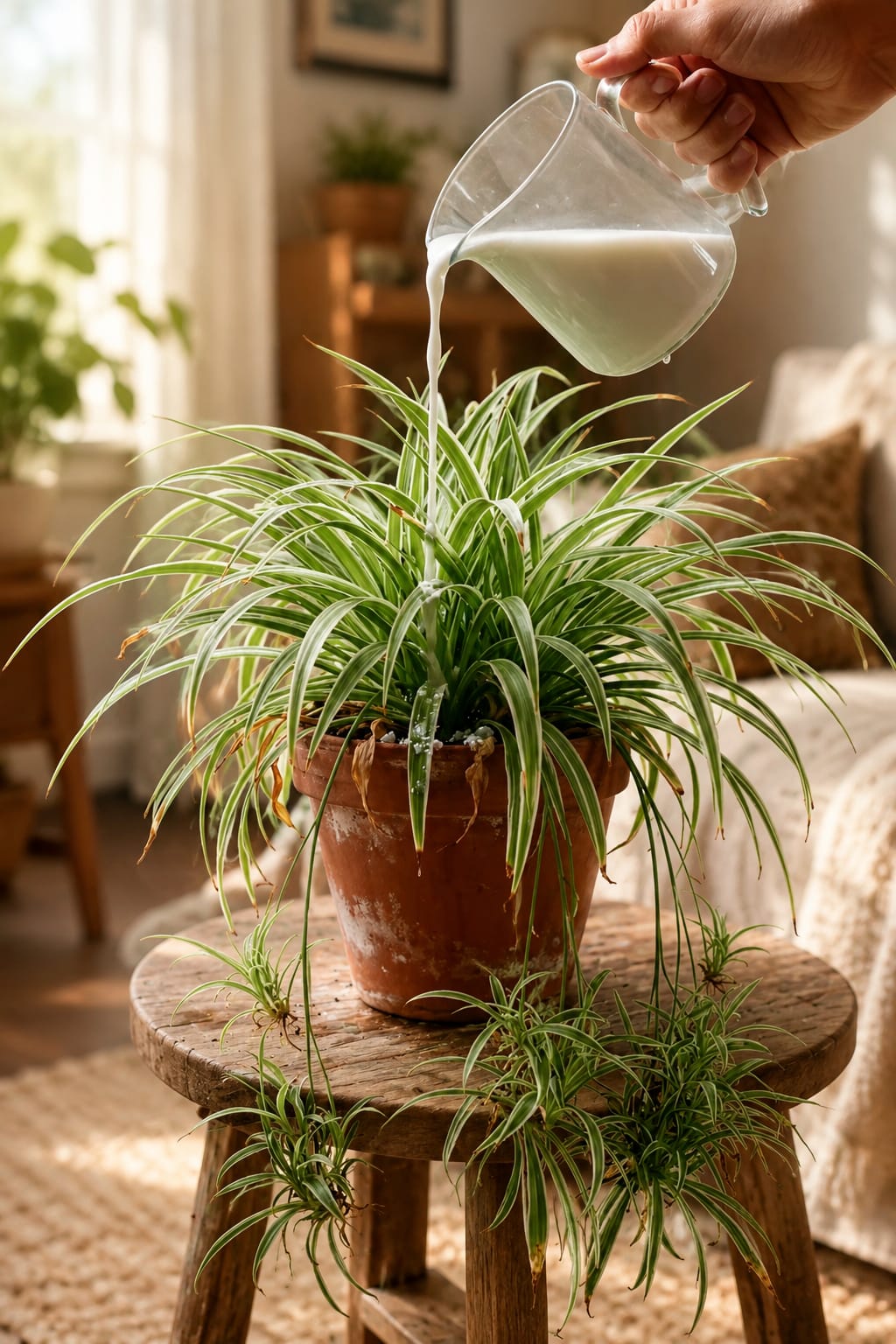
Spider plants are classic indoor favorites because they are graceful, forgiving, and full of movement. Their long striped leaves arch beautifully from the center, and mature plants often produce hanging baby plants that look like tiny green stars floating from thin stems. A healthy spider plant can soften a sunny windowsill, brighten a kitchen shelf, decorate a bathroom corner, or add a fresh natural touch to a cozy living room.
One plant-care idea that often gets attention is pouring a pale white liquid, usually milk water, onto a spider plant. Many people believe milk water can help leaves look greener, reduce brown tips, or give the plant a simple calcium boost. The idea sounds easy, but spider plants are sensitive to soggy soil, mineral buildup, and stale organic residue. Milk can spoil in potting soil, attract fungus gnats, create odor, and encourage mold if it is used too strongly or too often.
This guide explains how to understand the spider plant milk water trick safely. It shows when a very diluted milk rinse may be used, why plain water is usually better, what causes brown leaf tips, how to grow more spider plant babies, how to water correctly, how to repot, how to style the plant indoors, and how to avoid the common mistakes that make spider plants look tired.
The safest rule is simple: milk water is not a miracle cure. It should never replace proper watering, bright indirect light, good drainage, clean soil, and balanced plant care. If you use it, use it rarely, dilute it heavily, and watch the plant closely.
What Is the Spider Plant Milk Water Trick?
The spider plant milk water trick usually means mixing a small amount of milk with water and applying it to the soil or sometimes wiping leaves with it. The idea comes from the fact that milk contains calcium and other compounds. Some gardeners use diluted milk outdoors for certain plant issues, but indoor pots are different. Indoor soil does not flush and breathe like garden soil.
In a small indoor pot, milk can turn sour. It can sit around roots, feed unwanted microbes, attract gnats, and leave a sticky residue. Spider plants like moisture, but they do not like stale wet soil. That is why this trick must be handled carefully.
If your spider plant already has brown tips, yellow leaves, or weak growth, milk water should not be your first solution. First check watering, light, soil, pot drainage, and water quality.
Is Milk Water Safe for Spider Plants?
Milk water can be risky if used incorrectly. A very weak dilution used rarely may not harm a healthy spider plant, but strong milk water can cause problems. Whole milk, sweetened milk, flavored milk, condensed milk, evaporated milk, cream, or leftover cereal milk should never be used on plants.
If you decide to try it, use only plain milk diluted heavily with clean water. Even then, it should be an occasional experiment, not a weekly care routine.
Safe Milk Water Ratio
The safest milk water mixture for a spider plant should be very weak.
- 1 teaspoon plain milk
- 1 liter clean water
- Mix well
- Use only on soil that is ready for watering
- Use no more than once every 6 to 8 weeks
- Stop immediately if odor, mold, or gnats appear
This mixture is much lighter than many online tricks suggest. That is intentional. Indoor plants need gentle care. More milk does not mean more benefit.
What Type of Milk Should Be Avoided?
- Do not use sweetened milk.
- Do not use chocolate milk.
- Do not use condensed milk.
- Do not use evaporated milk.
- Do not use cream.
- Do not use spoiled milk.
- Do not use milk with sugar or flavoring.
- Do not use plant milk with oils, gums, or sweeteners.
These liquids can create sticky soil and pest problems. They are not safe plant tonics.
When Not to Use Milk Water
There are many times when milk water should be avoided completely.
- Do not use it if the soil is already wet.
- Do not use it if the pot has no drainage.
- Do not use it if fungus gnats are present.
- Do not use it if the soil smells sour.
- Do not use it on a recently repotted plant.
- Do not use it on a plant with root rot.
- Do not use it during cold winter dormancy.
- Do not use it if the room has poor airflow.
A weak or struggling spider plant needs basic care first. Milk water can make poor soil conditions worse.
Why Spider Plants Get Brown Tips
Brown tips are one of the most common spider plant problems. Many people think brown tips mean the plant needs fertilizer or a special tonic. In reality, brown tips usually come from water quality, inconsistent watering, dry air, fertilizer buildup, or too much direct sun.
Spider plants can be sensitive to minerals and chemicals in tap water. If your water is high in salts, fluoride, or chlorine, the leaf tips may turn brown over time. Dry indoor air can also make the tips crispy. Overfertilizing can create brown tips because salts build up in the soil.
Milk water will not fix these root causes. Better watering habits and cleaner water usually help more.
Best Water for Spider Plants
Spider plants usually do well with clean room-temperature water. If your tap water causes brown tips, try filtered water, rainwater, or water left out overnight. This can reduce some issues, depending on your local water.
Water should not be ice cold. Cold water can shock roots, especially in winter. Room-temperature water is safer.
If brown tips continue, flush the soil with plain water occasionally to remove buildup.
How to Water Spider Plants Correctly
Spider plants like evenly moist soil, but they do not like sitting in water. Water when the top inch of soil feels dry. Pour water slowly over the soil until it drains from the bottom. Let the pot drain fully, then empty the saucer.
Do not keep the soil constantly wet. Do not water just because the leaves look pretty. Check the soil first.
During spring and summer, spider plants may need water more often. During winter, they usually need less.
Signs Your Spider Plant Needs Water
- The top inch of soil feels dry.
- The pot feels lighter than usual.
- Leaves look slightly dull.
- Some leaves begin to fold inward.
- Baby plant stems look limp.
Water thoroughly when the plant needs it. Do not give tiny sips every day.
Signs of Overwatering
- Yellow leaves
- Soft leaf bases
- Wet soil that does not dry
- Sour smell from the pot
- Fungus gnats
- Brown mushy roots
- Plant looks wilted even though soil is wet
If you see these signs, stop watering. Check the roots if the problem is serious. Repot into fresh soil if the mix smells bad or stays wet too long.
Best Soil for Spider Plants
Spider plants like light, well-draining soil. Standard potting mix can work if it is not too heavy. Adding perlite helps drainage and keeps roots healthier.
Simple Spider Plant Soil Mix
- 2 parts indoor potting mix
- 1 part perlite
- 1 part coco coir or peat moss
- A small amount of compost, optional
The soil should hold some moisture but not stay soggy. If the plant sits in heavy compacted soil, brown tips, yellow leaves, and root problems may appear.
Best Pot for Spider Plants
Use a pot with drainage holes. This is essential. Terracotta pots dry faster and can help if you tend to overwater. Plastic pots hold moisture longer and may work better in very dry homes.
Spider plants can become root-bound, but they often tolerate a snug pot well. If the roots are extremely crowded or pushing the plant out of the pot, repot into a slightly larger container.
Do not move from a small pot into a huge pot. Extra soil can stay wet too long.
How to Flush Soil Buildup
If brown tips are caused by mineral or fertilizer buildup, flushing can help. Take the plant to a sink. Run room-temperature water through the soil for a minute or two. Let it drain fully.
Only flush if the pot has drainage holes. Do not flush a pot that traps water. After flushing, let the soil dry normally before watering again.
Flushing is safer than using milk water to solve brown tips.
Feeding Spider Plants
Spider plants do not need heavy fertilizer. Too much fertilizer can create brown tips and weak growth. During spring and summer, feed with a balanced houseplant fertilizer diluted to half strength once every 4 to 6 weeks.
Do not fertilize during winter if the plant is not actively growing. Do not combine fertilizer and milk water at the same time. Too many additives can stress the roots.
Simple feeding is best.
How to Grow More Spider Plant Babies
Spider plant babies, also called plantlets or spiderettes, grow from long arching stems. A mature plant usually produces them when it is healthy, slightly snug in its pot, and receiving enough light.
To encourage baby plants, give your spider plant bright indirect light, steady watering, and light feeding during the growing season. Avoid overpotting. A slightly root-bound spider plant often produces more plantlets than one in a huge pot.
Do not cut baby stems too early if you want a cascading look.
How to Propagate Spider Plant Babies
Propagation is easy. Choose a baby plant with small roots or root bumps. You can root it in water or soil.
Water Method
- Cut a baby plant from the stem.
- Place the base in a small jar of water.
- Keep leaves above the water.
- Place in bright indirect light.
- Change water every few days.
- Plant in soil when roots are a few inches long.
Soil Method
- Place the baby plant on moist soil.
- Pin it lightly so the base touches the soil.
- Keep the soil lightly moist.
- Wait for roots to form.
- Cut from the mother plant once established.
Should You Cut Brown Tips?
You can trim brown tips for a cleaner look. Use clean scissors and follow the natural shape of the leaf. Leave a tiny brown edge instead of cutting into healthy green tissue. Cutting deep into green tissue can create a new brown edge.
Trimming improves appearance, but it does not fix the cause. Adjust watering, light, and water quality to prevent more brown tips.
Best Light for Spider Plants
Spider plants prefer bright indirect light. They can tolerate lower light, but growth will slow and variegation may fade. Too much harsh direct sun can burn the leaves and create crispy tips.
A spot near an east-facing window is often ideal. A north-facing window can work if bright. South or west windows may need a sheer curtain.
Good light helps the plant grow stronger leaves and more babies.
Humidity and Spider Plants
Spider plants enjoy moderate humidity. Dry indoor air can make tips crisp. A humidifier, pebble tray, or grouping plants together can help. Misting gives only short-term moisture and may not solve dry air.
If you use a humidifier, keep airflow gentle. Do not keep the plant in a damp, dark corner.
Balanced humidity helps leaves stay fresh.
Temperature Needs
Spider plants like normal indoor temperatures. Keep them away from cold drafts, hot radiators, and air-conditioning vents. Sudden temperature stress can cause leaf damage.
A warm bright room with steady conditions is best. Avoid placing the plant against a cold window during winter.
Can Milk Water Make Spider Plants Grow Faster?
Milk water is not a reliable growth booster. A spider plant grows faster when it has bright indirect light, healthy roots, good soil, correct watering, and light fertilizer during active growth.
If the plant is not growing, check light first. A dark room slows growth. Also check if the plant is root-bound, overwatered, or underfed.
Do not keep adding milk water to force growth. This can create soil problems.
Can Milk Water Stop Brown Tips?
Milk water is unlikely to stop brown tips if the cause is tap water minerals, dry air, fertilizer burn, or inconsistent watering. To reduce brown tips, use cleaner water, flush the soil, avoid overfertilizing, and keep humidity moderate.
Brown tips are usually a care-balance issue, not a calcium deficiency.
What to Do if Milk Water Causes Odor
If the pot smells sour after using milk water, stop immediately. Take the plant to a sink and flush the soil with plain water if the pot drains well. Let it drain completely and improve airflow.
If the odor remains, repot the plant. Remove old soil, rinse the pot, check the roots, trim rotten roots, and replant in fresh mix.
Sour smell means the soil environment is unhealthy.
What to Do if Fungus Gnats Appear
Fungus gnats love damp organic soil. Milk water can attract them if it makes the soil too rich or wet. Stop using all homemade tonics. Let the top layer of soil dry more between waterings. Use yellow sticky traps to catch adults.
If the infestation is heavy, replace the top layer of soil or repot. Avoid overwatering.
Clean, lightly dry soil is the best prevention.
How to Repot a Spider Plant
Repot when the plant is extremely root-bound, dries out too quickly, or roots are circling tightly around the pot. Choose a pot only 1 to 2 inches wider than the old one.
- Water the plant lightly the day before repotting.
- Remove it from the pot.
- Loosen crowded roots gently.
- Trim dead or mushy roots.
- Add fresh soil to the new pot.
- Place the plant at the same depth.
- Fill around roots with soil.
- Water lightly and let drain.
Do not use milk water right after repotting. Let the plant settle first.
Decor Styling With Spider Plants
Spider plants are beautiful for home decor because they add movement. Their arching leaves and hanging babies soften hard furniture lines and make rooms feel alive.
- Place a mature spider plant on a high shelf so babies trail down.
- Use a hanging basket near a bright window.
- Style it in a terracotta pot for a natural look.
- Use a white ceramic pot for clean modern decor.
- Place it in a bathroom with good light.
- Use it on a plant stand beside a sofa.
- Group it with pothos, snake plant, and peace lily.
- Place baby plants in small jars for a propagation display.
A spider plant near a window can become a soft living curtain when its babies hang beautifully.
Continue to Page 2
Continue to page 2 for more details about this article and the key points many readers miss on the first page.