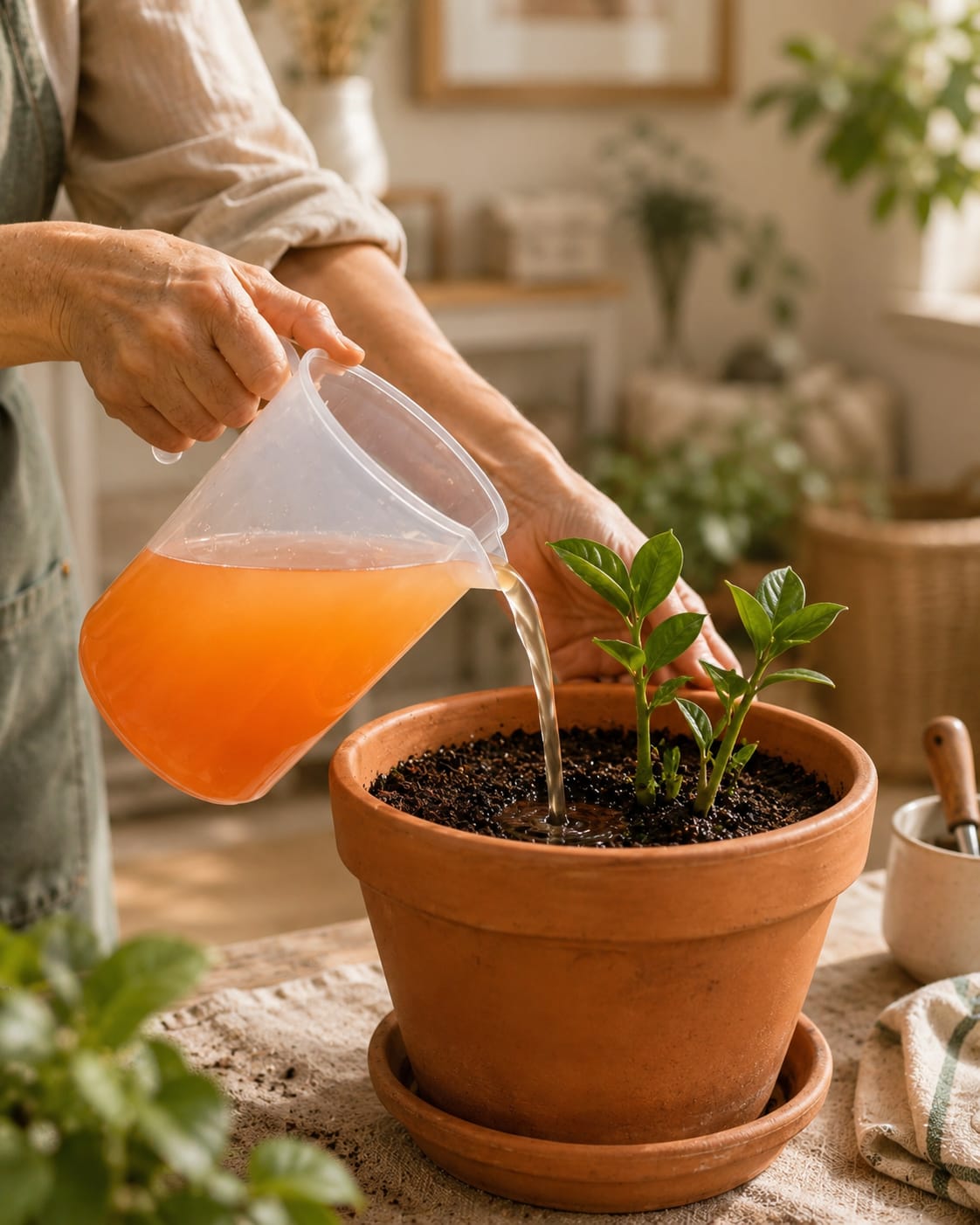
The ZZ plant is one of the strongest and most elegant houseplants you can grow indoors. Its thick upright stems, shiny green leaves, and calm sculptural shape make it perfect for living rooms, bedrooms, offices, hallways, plant corners, and cozy home decor. It looks polished without needing constant attention, which is why many people call it one of the best low-maintenance indoor plants.
One simple natural care idea many plant lovers enjoy is using orange peel water as a gentle homemade tonic for ZZ plants. The orange-colored liquid is usually made by soaking or boiling citrus peels in water, cooling it completely, straining it, and using it in a very diluted way around the soil. The idea is to refresh the potting mix, give the plant a mild natural boost, and support healthy-looking leaves without using strong chemical feeding every week.
But ZZ plants are not thirsty tropical plants. They store water in thick underground rhizomes, which means they can survive dry periods easily. Their biggest enemy is overwatering. If orange peel water is used too often, too strong, or poured into soil that is already wet, it can cause sour soil, fungus gnats, mold, sticky residue, and root problems. The trick can be helpful only when it is gentle, diluted, and used rarely.
This full guide explains how to use orange peel water safely for ZZ plants, how to prepare it, how often to apply it, what mistakes to avoid, how to keep roots strong, how to water properly, how to prevent yellow leaves, and how to style ZZ plants beautifully indoors. The goal is simple: use the orange peel tonic as a small extra support, while letting proper light, drainage, soil, and watering do the real work.
What Is the ZZ Plant Orange Peel Water Trick?
The ZZ plant orange peel water trick is a gentle homemade plant-care method where orange peels are soaked in water to create a light citrus infusion. After the liquid cools and is diluted, it can be poured around the soil of a healthy ZZ plant during the active growing season.
This tonic is not a miracle fertilizer. It will not make a ZZ plant grow overnight. It will not fix root rot, low light, compacted soil, or poor drainage. It is only a mild natural supplement that may help freshen the soil and provide tiny amounts of organic compounds.
ZZ plants grow slowly by nature. Their growth depends mainly on bright indirect light, healthy roots, well-draining soil, warm temperatures, and careful watering. Orange peel water should be treated as an occasional gentle boost, not a regular watering replacement.
Why ZZ Plants Need Gentle Care
ZZ plants are famous for being tough, but tough does not mean they enjoy being soaked. The plant stores water in thick potato-like rhizomes under the soil. These rhizomes help the plant survive drought, but they can rot if the soil stays wet too long.
This is why any homemade liquid must be used carefully. A ZZ plant may look fine for weeks after overwatering, then suddenly yellow, soften, or collapse when the rhizomes begin to rot. Prevention is much easier than rescue.
The best care routine is simple: bright indirect light, a pot with drainage holes, airy soil, and watering only when the soil has dried well.
Benefits of a Very Diluted Orange Peel Water Tonic
When used correctly, orange peel water may offer a few gentle benefits for a healthy ZZ plant.
- It can refresh the top layer of soil.
- It may provide tiny amounts of natural nutrients.
- It can support a simple seasonal care routine.
- It may help plant owners avoid overusing strong fertilizer.
- It gives a natural homemade option during active growth.
- It can be part of a clean indoor plant-care ritual.
The key is dilution. Strong citrus water can be too acidic for indoor potting soil. A weak tonic is safer than a concentrated one.
What Orange Peel Water Cannot Do
- It cannot repair rotten roots.
- It cannot replace good drainage.
- It cannot force fast growth.
- It cannot fix a ZZ plant in deep shade.
- It cannot cure pests by itself.
- It cannot save a plant sitting in soggy soil.
- It cannot replace balanced fertilizer completely.
- It cannot reverse severe yellowing overnight.
If your ZZ plant is already struggling, diagnose the problem before adding any tonic. A weak plant usually needs better soil, less water, brighter light, or root inspection.
How to Make Safe Orange Peel Water for ZZ Plants
Ingredients
- Peels from 1 clean orange
- 1 liter clean water
- A small pot or jar
- Strainer
- Clean watering jug
Gentle Soaking Method
- Wash the orange peel well to remove dust or residue.
- Place the peel in a jar.
- Add 1 liter of clean water.
- Let it soak for 12 to 24 hours.
- Strain the liquid completely.
- Dilute 1 part orange peel water with 3 parts plain water.
- Use only when the ZZ plant soil is dry.
Boiled Method
- Place orange peels in 1 liter water.
- Simmer gently for 5 to 10 minutes.
- Turn off the heat.
- Let the liquid cool completely.
- Strain well.
- Dilute heavily before use.
Never pour hot liquid on plants. Always let the tonic cool to room temperature. Always strain the liquid so peel pieces do not rot in the soil.
Best Dilution Ratio
The safest ratio for ZZ plants is weak and gentle.
- 1 part orange peel water
- 3 to 5 parts plain water
If your ZZ plant is small, use an even weaker mix. A pale orange liquid is safer than a strong dark one. If the water smells fermented, sour, or spoiled, do not use it.
How Often to Use Orange Peel Water
Use orange peel water only once every 6 to 8 weeks during active growth. Spring and summer are the best seasons. In winter, skip the tonic because ZZ plants usually slow down and need less water.
Do not use orange peel water every week. Do not use it every time you water. Too much organic liquid can create buildup in the soil and attract fungus gnats.
Plain water should be used most of the time.
How to Apply Orange Peel Water Correctly
- Check that the soil is dry several inches deep.
- Make sure the pot has drainage holes.
- Use diluted orange peel water at room temperature.
- Pour slowly around the outer soil area.
- Avoid pouring directly on stems or rhizomes.
- Let excess liquid drain fully.
- Empty the saucer after watering.
- Do not water again until the soil dries well.
The most important step is checking the soil first. Never add orange peel water to wet soil.
When Not to Use Orange Peel Water
- Do not use it if the soil is already wet.
- Do not use it if the pot has no drainage.
- Do not use it on a ZZ plant with yellowing stems.
- Do not use it on soft or mushy rhizomes.
- Do not use it if fungus gnats are present.
- Do not use it if the soil smells sour.
- Do not use it during winter dormancy.
- Do not use it right after repotting.
A sick ZZ plant needs recovery care first. Homemade tonics should be used only on stable, healthy plants.
Signs the Tonic Is Too Strong
- Soil smells sour after use.
- White mold appears on the surface.
- Fungus gnats start flying around the pot.
- Leaves yellow soon after watering.
- Stems soften near the base.
- The soil stays wet too long.
- The plant looks weaker instead of fresher.
If these signs appear, stop using orange peel water immediately. Let the soil dry. If the smell continues, repot the plant into fresh airy soil.
Best Soil for ZZ Plants
ZZ plants need a loose, well-draining potting mix. Regular indoor soil can work if it is amended with drainage materials. Dense soil is dangerous because it holds water around the rhizomes.
Simple ZZ Plant Soil Mix
- 2 parts indoor potting mix
- 1 part perlite
- 1 part cactus or succulent mix
- A small amount of orchid bark, optional
This mix allows water to pass through while still holding enough moisture for the roots. The soil should never feel muddy or compacted.
Best Pot for ZZ Plants
The best pot has drainage holes. Terracotta is excellent because it dries faster and helps prevent overwatering. Ceramic pots are beautiful for decor, but they must drain. Plastic pots hold moisture longer, so water more carefully if using plastic.
Choose a pot only slightly larger than the root ball. A huge pot holds too much wet soil, which increases the risk of rhizome rot.
How to Water ZZ Plants Correctly
Water a ZZ plant only when the soil is dry. In many homes, this means every 2 to 4 weeks during warm months and every 4 to 8 weeks in cooler months. The exact timing depends on light, temperature, pot size, and soil type.
When watering, pour slowly until water drains from the bottom. Then empty the saucer. Do not give tiny sips every few days. Deep watering followed by drying is better.
ZZ plants prefer being slightly dry rather than constantly moist.
Signs Your ZZ Plant Needs Water
- The soil is dry several inches down.
- The pot feels light.
- Leaves look slightly less glossy.
- Stems may lean a little from dryness.
- The plant has gone several weeks without water.
Even when the plant needs water, do not flood it repeatedly. Water once, drain well, and wait again.
Signs of Overwatering
- Yellow leaves
- Soft stems
- Mushy rhizomes
- Sour soil smell
- Wet soil for many days
- Black or brown roots
- Sudden collapse
Overwatering is the most common ZZ plant problem. If you suspect it, remove the plant from the pot and inspect the rhizomes. Healthy rhizomes are firm. Rotten ones are soft, dark, or smelly.
How to Rescue an Overwatered ZZ Plant
- Remove the plant from the pot.
- Shake away wet soil gently.
- Inspect roots and rhizomes.
- Cut away mushy or rotten parts with clean tools.
- Let the healthy sections dry briefly.
- Repot in fresh dry well-draining soil.
- Use a pot with drainage.
- Wait before watering again.
Do not use orange peel water during recovery. Use plain careful watering only after the plant stabilizes.
Best Light for ZZ Plants
ZZ plants tolerate low light, but they grow better in bright indirect light. A spot near a window with filtered light is ideal. Avoid harsh direct sun, which can scorch leaves.
In low light, the plant will survive but grow slowly. In bright indirect light, it may produce new stems faster and look fuller.
Rotate the pot every few weeks so the plant grows evenly.
How to Keep ZZ Leaves Glossy
ZZ plants are loved for their naturally shiny leaves. Dust can make them look dull. Wipe leaves gently with a damp cloth every few weeks. Hold the stem with one hand and wipe each leaflet softly.
Do not use oily leaf shine products. These can clog leaf surfaces and collect dust. Clean water is enough.
Feeding ZZ Plants
ZZ plants are light feeders. During spring and summer, use a balanced houseplant fertilizer diluted to half strength once every 6 to 8 weeks. Do not fertilize in winter if the plant is not actively growing.
Do not use fertilizer and orange peel water at the same time. Alternate them if needed, or choose one simple routine.
Too much feeding can damage roots and cause weak growth.
Orange Peel Water vs Fertilizer
Orange peel water is a mild homemade tonic. Fertilizer provides measured nutrients. If your ZZ plant needs reliable feeding, diluted fertilizer is more predictable. If you want a natural refresh, orange peel water can be used occasionally.
Neither should be overused. ZZ plants do not need constant feeding to look good.
How to Repot a ZZ Plant
ZZ plants grow slowly and do not need frequent repotting. Repot every 2 to 3 years or when the rhizomes are crowded, the pot is cracking, or the soil has become compacted.
- Choose a pot slightly larger than the current one.
- Prepare fresh well-draining soil.
- Remove the plant gently.
- Inspect rhizomes and roots.
- Trim rotten parts if needed.
- Place the plant at the same depth.
- Fill around roots with fresh soil.
- Wait a few days before watering if roots were disturbed.
Do not use orange peel water immediately after repotting. Let the plant settle first.
How to Propagate ZZ Plants
ZZ plants can be propagated by division, stem cuttings, or leaf cuttings. Division is the fastest and easiest method. When repotting, separate a section that has roots and rhizomes, then plant it in its own pot.
Leaf cuttings can work, but they take a long time. ZZ plants are slow growers, so patience is required.
New cuttings should not receive orange peel water. They need plain light moisture and time.
Common ZZ Plant Problems
Yellow Leaves
Yellow leaves often mean overwatering, poor drainage, or old leaves naturally aging. Check the soil and rhizomes.
Soft Stems
Soft stems usually mean the plant is too wet or rotting at the base.
Brown Leaf Tips
Brown tips may come from underwatering, dry air, fertilizer burn, or stress.
No New Growth
ZZ plants grow slowly. Low light, cold rooms, or lack of nutrients can slow them even more.
Leaning Stems
Leaning can happen from low light, dryness, or uneven growth. Rotate the pot and check soil moisture.
Indoor Styling With ZZ Plants
ZZ plants are excellent for indoor decor because they look clean and architectural. Their glossy leaves fit modern, rustic, boho, farmhouse, and minimalist interiors.
- Use terracotta for warm natural styling.
- Use a white ceramic pot for a clean modern look.
- Place on a wooden table for cozy contrast.
- Set beside a sofa for vertical greenery.
- Use a black pot for dramatic contrast.
- Group with snake plants and pothos.
- Place in an office corner for a calm green accent.
- Use a woven basket cover for soft decor.
ZZ plants look especially beautiful in simple pots because their leaves already have a polished shine.
Best Rooms for ZZ Plants
- Living room
- Bedroom
- Home office
- Entryway
- Dining room
- Bright hallway
- Kitchen corner away from heat
- Bathroom with natural light and good airflow
Although ZZ plants tolerate low light, they still look better with bright indirect light.
Outdoor Styling in Warm Weather
ZZ plants can spend warm months outdoors in shade or bright indirect light. A covered patio, shaded balcony, or porch can work well. Avoid direct hot sun and heavy rain.
Bring the plant indoors before cold weather. ZZ plants do not like cold temperatures.
Seasonal ZZ Plant Care
Spring
Spring is a good time for repotting, light feeding, and using a very diluted orange peel tonic if the plant is healthy.
Summer
Growth is usually stronger in summer. Water when dry and keep the plant out of harsh sun.
Fall
Reduce watering as light decreases. Stop homemade tonics if growth slows.
Winter
Water sparingly. Avoid fertilizer and orange peel water unless the plant is actively growing in bright warm conditions.
Weekly ZZ Plant Care Routine
- Check soil dryness.
- Look for yellow leaves.
- Inspect stems for softness.
- Rotate the pot for even light.
- Empty the saucer if needed.
- Wipe dusty leaves.
- Check for gnats or mold.
Monthly ZZ Plant Care Routine
- Clean leaves with a damp cloth.
- Inspect the soil surface.
- Check if the pot is draining well.
- Review watering frequency.
- Feed lightly only during active growth.
- Use orange peel water only rarely if desired.
- Move closer to light if growth is weak.
Common Mistakes to Avoid
- Using orange peel water too often
- Pouring tonic into wet soil
- Using fermented citrus water
- Leaving peel pieces in the pot
- Using a pot without drainage
- Watering every few days
- Keeping the plant in dense soil
- Fertilizing during winter dormancy
- Ignoring yellow leaves and soft stems
- Repotting into a huge pot
Safe Orange Peel Water Routine Summary
- Wash orange peels well.
- Soak or simmer them in water.
- Cool the liquid completely.
- Strain out all peel pieces.
- Dilute 1 part tonic with 3 to 5 parts water.
- Use only on dry soil.
- Pour around the soil, not on stems.
- Let the pot drain fully.
- Use only once every 6 to 8 weeks during active growth.
Continue to Page 2
Continue to page 2 for more details about this article and the key points many readers miss on the first page.