Peace lilies are one of the most elegant indoor plants you can grow at home. Their glossy green leaves and clean white blooms make them perfect for living rooms, bedrooms, offices, bright bathrooms, plant shelves, and cozy indoor corners. A healthy peace lily can look full, fresh, and expensive, even when the care routine is very simple.
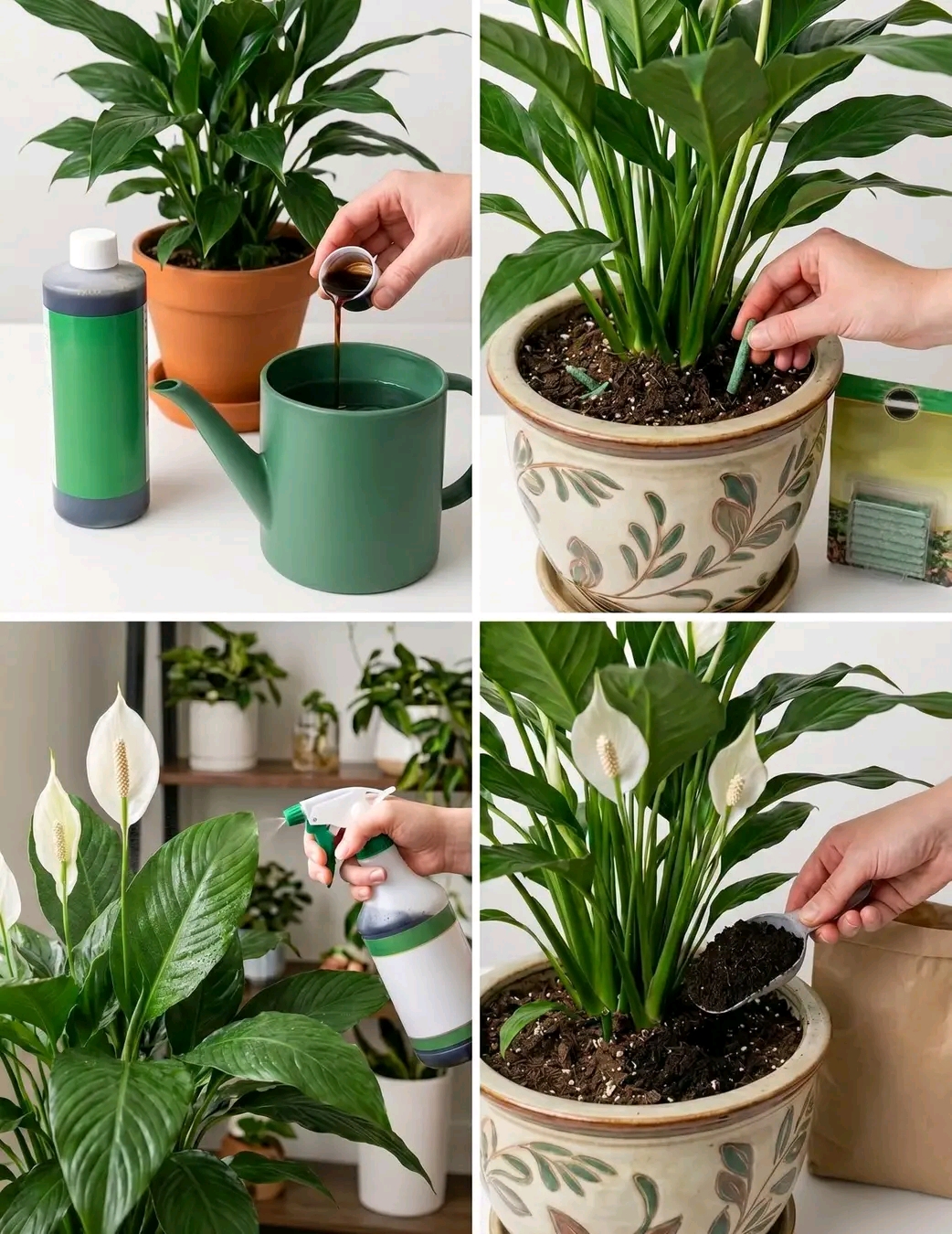
The image shows a complete peace lily care routine. It includes mixing liquid plant food into a watering can, adding fertilizer sticks into the soil, misting or spraying the leaves, and refreshing the top layer of soil with fresh potting mix. These steps can support stronger growth and more flowers, but they must be done gently. Peace lilies do not like heavy feeding, soggy soil, or strong fertilizer. They grow best when the care is balanced.
The real secret to a blooming peace lily is not one single product. It is the combination of bright indirect light, healthy roots, light feeding, correct watering, clean leaves, good humidity, and fresh breathable soil. Fertilizer helps only when the plant is already in the right growing conditions. If the plant is sitting in dark light or wet soil, fertilizer will not fix the problem. It may even make the plant worse.
This guide explains how to feed a peace lily safely, how to use liquid fertilizer, how to use fertilizer sticks, how to spray leaves correctly, how to refresh the soil, how to encourage white flowers, and how to avoid the most common mistakes that cause yellow leaves, brown tips, weak growth, and root rot.
Why Peace Lilies Need Gentle Feeding
Peace lilies are not heavy-feeding plants. They grow naturally in warm tropical environments where they receive steady moisture, filtered light, and mild organic nutrients. Indoors, they still need nutrients, but they do not need strong fertilizer every week.
A peace lily that receives too much fertilizer can develop brown leaf tips, burned roots, yellow leaves, salt buildup, and fewer flowers. A peace lily that receives no nutrients for a long time may grow slowly, produce small leaves, and stop blooming. The goal is balance.
Gentle feeding during the active growing season can help the plant produce stronger leaves and more white blooms. The key is to dilute fertilizer, apply it only when the plant needs water, and avoid feeding a stressed or overwatered plant.
What Makes Peace Lily Bloom?
Many people think fertilizer is the main bloom secret, but light is usually more important. Peace lilies can survive in low light, but they bloom much better in bright indirect light. If your peace lily has green leaves but no white flowers, it may need more light before it needs more fertilizer.
For more blooms, place the plant near a bright window where sunlight is filtered. An east-facing window is excellent. A bright north-facing window can also work. A south or west-facing window may be too strong unless you use a sheer curtain.
Once the light is right, gentle feeding can support the plant. Fertilizer provides nutrients, but light gives the plant energy.
Main Ingredients for Healthy Peace Lily Growth
- Bright indirect light
- Loose, well-draining soil
- A pot with drainage holes
- Careful watering
- Moderate humidity
- Light fertilizer during active growth
- Clean leaves
- Fresh topsoil when the mix becomes compacted
- Warm indoor temperatures
- No cold drafts
Step 1: Mix Liquid Fertilizer With Water
The first step in the image shows a small amount of liquid plant food being added to a watering can. This is one of the easiest ways to feed a peace lily. Liquid fertilizer spreads evenly through the soil when watered correctly.
Always read the fertilizer label first. For peace lilies, use only half strength or even quarter strength. Strong fertilizer can burn the roots. If the bottle says to use one capful per liter, use half a capful or less. It is better to feed weakly and safely than strongly and cause damage.
Safe Liquid Fertilizer Rule
- Use balanced houseplant fertilizer.
- Dilute to half strength or quarter strength.
- Apply only during spring and summer.
- Use only when the soil needs watering.
- Do not pour fertilizer into already wet soil.
- Do not fertilize a sick or stressed plant.
Liquid feeding should feel like normal watering, not like pouring a strong chemical treatment into the pot.
Best Liquid Fertilizer for Peace Lily
A balanced liquid houseplant fertilizer works well. Look for a general indoor plant food with balanced nutrients. You do not need a complicated formula. Peace lilies respond best to mild consistent care.
You can also use a fertilizer made for flowering indoor plants, but it should still be diluted. Too much bloom fertilizer can create salt buildup in the soil.
How Often to Use Liquid Fertilizer
Feed peace lilies every 6 to 8 weeks during spring and summer. If your plant is growing strongly in bright light, you can feed every 4 to 6 weeks with a very diluted solution. If your plant is in lower light, feed less often.
Do not fertilize heavily in winter. Peace lilies grow more slowly during cooler, darker months, and fertilizer can build up in the soil when the plant is not using it.
Step 2: Add Fertilizer Sticks Carefully
The second step in the image shows small green fertilizer sticks being pushed into the soil. Fertilizer sticks can be convenient because they release nutrients slowly over time. However, they must be used carefully with peace lilies.
Do not place fertilizer sticks too close to the crown or main stems. Strong fertilizer concentrated in one spot can burn roots. Push the sticks into the outer soil area, away from the center of the plant.
How to Use Fertilizer Sticks Safely
- Water the plant lightly the day before if soil is very dry.
- Read the package directions.
- Use fewer sticks than the maximum amount.
- Place sticks near the outer edge of the pot.
- Do not push them into the crown.
- Water gently after placing them.
- Do not combine with strong liquid fertilizer at the same time.
If you use fertilizer sticks, avoid using liquid fertilizer too often. Using both heavily can overfeed the plant.
Liquid Fertilizer vs Fertilizer Sticks
Liquid fertilizer gives faster control because you decide the strength each time. Fertilizer sticks release nutrients slowly but can create concentrated areas in the soil. Both can work, but beginners may find diluted liquid fertilizer easier to control.
If your peace lily is small or sensitive, use liquid fertilizer at weak strength. If your plant is large and actively growing, slow-release sticks can be helpful when used lightly.
Step 3: Spray the Leaves Correctly
The third step in the image shows the leaves being sprayed. Spraying can help clean dust and temporarily refresh the plant, but it is not the same as watering the roots. Peace lilies absorb most of their water through the roots, not through sprayed leaves.
Use a spray bottle with clean water. Spray lightly in the morning so the leaves can dry during the day. Do not soak the leaves at night because wet leaves in still air can encourage fungal spots.
Safe Leaf Spray Tips
- Use clean room-temperature water.
- Spray lightly, not heavily.
- Spray in the morning.
- Keep good airflow around the plant.
- Do not spray flowers heavily.
- Wipe dusty leaves with a soft cloth.
- Avoid oily leaf shine products.
Spraying is optional. If your home has normal humidity, your peace lily may not need misting. Cleaning the leaves with a damp cloth is often more useful.
Should You Spray Fertilizer on Peace Lily Leaves?
It is usually better not to spray fertilizer on peace lily leaves unless the product is clearly made for foliar feeding. Strong fertilizer spray can leave marks, burn leaves, or damage flowers. For most indoor gardeners, feeding through the soil is safer.
If you want glossy leaves, use water and a soft cloth. Do not use cooking oil, mayonnaise, or heavy shine products. These can clog leaf surfaces and attract dust.
Step 4: Refresh the Top Layer of Soil
The fourth step in the image shows fresh soil being added to the pot. This is called top-dressing. It is useful when the top layer becomes compacted, crusty, dusty, or old. Refreshing the top layer can improve appearance and add a little fresh organic material.
To do this safely, remove a small amount of old topsoil first. Do not dig too deeply around the roots. Add fresh airy potting mix and spread it gently around the base.
How to Refresh Soil Safely
- Remove loose old soil from the top.
- Avoid damaging surface roots.
- Add fresh indoor potting mix.
- Mix in a little perlite if the soil feels heavy.
- Keep soil away from the crown.
- Water lightly if the plant needs moisture.
Do not bury the peace lily crown deeply. The crown is where the stems meet the roots. If soil covers this area too much, it can hold moisture and cause rot.
Best Soil for Peace Lily
Peace lilies need soil that holds light moisture but drains well. Heavy soil stays wet too long and can suffocate the roots. A good mix should feel soft, airy, and slightly chunky.
Simple Peace Lily Soil Mix
- 2 parts indoor potting mix
- 1 part perlite
- 1 part coco coir or peat moss
- A small amount of orchid bark, optional
This mix gives the roots moisture and oxygen. It also helps prevent root rot.
Best Pot for Peace Lily
Use a pot with drainage holes. Peace lilies like moisture, but they cannot sit in standing water. A decorative outer pot is fine, but the inner pot must drain freely.
Choose a pot only slightly larger than the root ball. A huge pot holds too much soil and water, which increases the risk of overwatering.
How to Water Peace Lily Correctly
Water when the top inch of soil feels slightly dry. Pour water slowly until it drains from the bottom. Empty the saucer after watering. Do not let the pot sit in water.
Peace lilies are famous for drooping when thirsty. But drooping can also happen from root rot. Always check the soil before watering.
Signs Your Peace Lily Needs Water
- Leaves droop slightly.
- Top inch of soil feels dry.
- Pot feels lighter than usual.
- Leaves look less firm.
- Soil pulls slightly from pot edges.
Signs of Overwatering
- Yellow leaves
- Soft stems
- Sour soil smell
- Wet soil for many days
- Fungus gnats
- Mold on soil
- Drooping while soil is wet
If the soil is wet and the plant is drooping, do not water again. Check the roots and improve drainage.
How to Encourage More White Blooms
Peace lily blooms are encouraged by bright indirect light and steady care. Fertilizer can help, but it is not the main bloom trigger. A plant in low light may stay green but flower rarely.
Bloom-Boosting Routine
- Move the plant to bright indirect light.
- Water when the top inch dries.
- Use a pot with drainage holes.
- Feed lightly during spring and summer.
- Remove old flowers near the base.
- Clean leaves so they absorb more light.
- Keep humidity moderate.
- Avoid cold drafts.
How to Remove Old Peace Lily Flowers
Peace lily flowers start white and may turn green or brown as they age. When they fade, cut the flower stalk near the base with clean scissors. Removing old flowers helps the plant focus energy on new leaves and future blooms.
Do not pull old flowers by hand. Pulling can damage the crown.
How to Clean Peace Lily Leaves
Peace lily leaves are broad and collect dust. Dust blocks light and makes the plant look dull. Wipe each leaf gently with a soft damp cloth. Support the leaf with one hand and wipe with the other.
Clean leaves look glossy, fresh, and healthy. This simple step can help the plant use light better.
Humidity for Peace Lily
Peace lilies enjoy moderate humidity. Dry air can cause brown tips and crispy edges. If your home is very dry, raise humidity gently.
Easy Humidity Ideas
- Group plants together.
- Use a pebble tray.
- Place the plant in a bright bathroom.
- Use a small humidifier.
- Keep away from heaters.
- Avoid cold drafts.
Misting gives only temporary moisture. A humidifier or plant grouping gives better results.
Temperature for Peace Lily
Peace lilies prefer warm indoor temperatures. Keep them away from cold windows, air conditioners, heaters, and sudden drafts. Cold stress can cause drooping, yellowing, and poor flowering.
A stable warm room helps the plant grow and bloom more reliably.
Can You Use Coffee Grounds on Peace Lily?
Coffee grounds are often recommended online, but they can become compacted and moldy in indoor pots. Fresh coffee grounds can also attract gnats. It is safer to use a proper diluted fertilizer or composted material instead.
If you use coffee grounds, they should be composted first and used lightly, not dumped directly on top of the soil.
Can You Use Banana Peel Water?
Banana peel water can be used rarely and diluted, but it is not a complete fertilizer. It can also attract pests if it ferments or is used too often. If you try it, use fresh diluted liquid only and avoid pouring it into wet soil.
For reliable results, a balanced houseplant fertilizer is usually safer.
Can You Use Epsom Salt?
Epsom salt may be used rarely in a very weak solution, but it is not necessary for every peace lily. Too much can build up in soil. If you use it, dissolve 1/4 teaspoon in 1 liter of water and use only once every 6 to 8 weeks during active growth.
Never sprinkle large amounts of dry Epsom salt directly around the roots.
How to Flush Fertilizer Buildup
If leaf tips are browning and you have fertilized often, salts may have built up in the soil. Flush the soil with plain water. Let water run through the pot for a short time, then allow it to drain completely. Empty the saucer.
Do not flush if the plant is already overwatered or sitting in wet soil. Let it dry first.
Common Peace Lily Problems
Yellow Leaves
Yellow leaves can come from overwatering, low light, old leaves, poor drainage, or root stress. If many leaves turn yellow at once, check the soil and roots.
Brown Tips
Brown tips can be caused by dry air, fertilizer buildup, hard water, inconsistent watering, or too much direct sun.
No Flowers
No flowers usually means the plant needs more bright indirect light. Light feeding can help only after the light problem is fixed.
Drooping Leaves
Drooping can mean thirst or root trouble. Check the soil before watering. Dry soil means water. Wet soil means inspect for root issues.
Small Leaves
Small leaves can result from low light, weak roots, old soil, or lack of nutrients.
How to Rescue an Overfed Peace Lily
If you used too much fertilizer, your peace lily may show brown tips, yellowing, or drooping. Stop feeding immediately.
- Remove any fertilizer sticks if possible.
- Flush the soil with plain water if drainage is good.
- Let the plant drain completely.
- Place in bright indirect light.
- Do not fertilize again for at least 2 months.
- Trim damaged tips if needed.
Overfeeding is common. Peace lilies prefer gentle care.
Continue to Page 2
Continue to page 2 for more details about this article and the key points many readers miss on the first page.