Indoor ivy is one of the most charming plants you can grow at home. Its small green leaves, trailing stems, and natural climbing habit make it perfect for shelves, windowsills, hanging baskets, plant stands, and decorative pots. But ivy can also become messy if it is left to grow without direction. Long vines can spread across furniture, tangle with other plants, dry at the tips, or lose their neat shape.
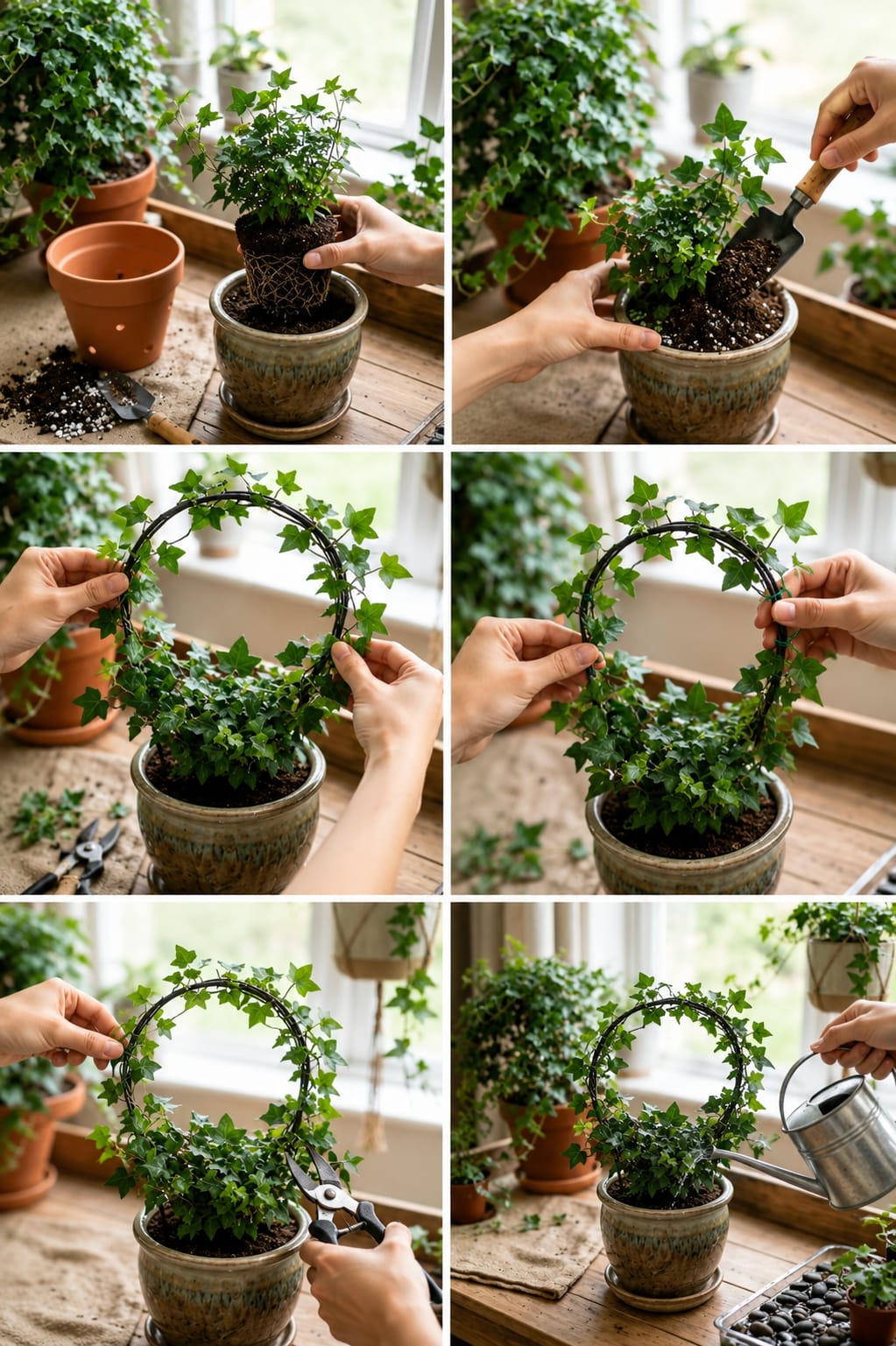
The image shows a beautiful indoor ivy project where the plant is repotted, supported with a circular hoop, trained around the frame, lightly pruned, and watered carefully. This is one of the best ways to grow ivy indoors because it turns a simple trailing plant into a controlled living decoration. Instead of letting the stems fall everywhere, you guide them around a round support. The result is clean, artistic, and easy to maintain.
This guide explains how to grow indoor ivy in pots, how to train it around a hoop, how to repot it safely, how to prune it for fullness, how to water it correctly, how to prevent pests, how to keep the leaves fresh, and how to style it beautifully inside your home.
Why Train Ivy Around a Hoop?
Ivy naturally wants to climb, trail, and spread. Indoors, that can be beautiful, but it can also become untidy. A hoop gives the plant a shape to follow. The vines can wrap around the circle and create a neat green wreath effect. This makes the plant look intentional and decorative instead of overgrown.
Hoop training is also helpful for small spaces. If you live in an apartment, have a small windowsill, or want a compact plant display, training ivy upward saves space. It keeps the plant vertical and controlled while still allowing it to grow naturally.
Best Ivy Types for Indoor Hoop Training
Many ivy varieties can be trained on a hoop. The best types have flexible stems and small leaves. English ivy is the most common option, but there are many beautiful varieties with different leaf shapes and colors.
- English ivy: Classic green leaves and strong trailing growth.
- Variegated ivy: Green and cream leaves for a brighter look.
- Needlepoint ivy: Small pointed leaves and delicate vines.
- Glacier ivy: Soft gray-green leaves with pale edges.
- Goldchild ivy: Green leaves with golden variegation.
- Miniature ivy: Best for small hoops and tabletop displays.
Choose a healthy plant with several flexible stems. Avoid a plant that is dry, crispy, heavily pest-damaged, or weak at the base.
What You Need
- Healthy indoor ivy plant
- Decorative pot with drainage holes
- Fresh indoor potting mix
- Perlite for drainage
- Small trowel or scoop
- Round plant hoop or wire frame
- Soft plant ties or clips
- Clean pruning scissors
- Watering can
- Small pebbles for styling, optional
- Bright indirect light
Step 1: Choose a Healthy Ivy Plant
Start with a plant that has several living vines and fresh green leaves. The stems should bend easily without snapping. The leaves should look firm, not dry or curled. If the plant is very dry, water it lightly one day before repotting so the roots are easier to handle.
Look under the leaves before bringing ivy indoors or before repotting it. Ivy can sometimes attract spider mites, aphids, or scale insects. A healthy plant gives you a much better result after training.
Step 2: Prepare the Pot
Use a pot with drainage holes. This is important because ivy likes evenly moist soil, but it does not like sitting in standing water. A decorative ceramic pot can work beautifully as long as it drains well.
If the pot has a saucer, empty it after watering. If the pot has no drainage holes, use it only as a cover pot. Keep the ivy in a nursery pot inside it so extra water can drain away.
Step 3: Use the Right Soil
Ivy grows best in light, well-draining soil that holds some moisture. Heavy garden soil is not ideal for indoor pots because it can become compacted. Compacted soil holds too much water and reduces oxygen around the roots.
Simple Indoor Ivy Soil Mix
- 2 parts indoor potting mix
- 1 part perlite
- 1 part coco coir or peat moss
- A small amount of compost, optional
This mix holds enough moisture for ivy while still allowing extra water to drain. The roots should feel supported, but not trapped in wet heavy soil.
Step 4: Repot the Ivy
Remove the ivy from its old pot gently. Hold the root ball, not the vines. If the plant is root-bound, loosen the outer roots slightly with your fingers. Do not tear the roots aggressively.
Place a little fresh soil in the bottom of the new pot. Set the ivy at the same depth it was growing before. Add soil around the root ball and press gently. Do not pack the soil too tightly. Roots need air.
Step 5: Insert the Hoop Support
After the ivy is stable in the pot, place the hoop support into the soil. Push the ends of the hoop deep enough so it stands firmly. Try to place the hoop near the back or center of the pot depending on the look you want.
Be careful not to damage the main root ball. If the hoop legs are thick, insert them near the outer edge of the pot rather than directly through the roots.
Step 6: Train the Ivy Around the Hoop
Choose the longest flexible vines and guide them gently around the hoop. Do not pull hard. Ivy stems can snap if forced. Wrap the vine loosely around the frame and secure it with soft plant ties or small clips.
The ties should be loose enough to allow growth. If they cut into the stem, they are too tight. As the ivy grows, you can keep guiding new stems around the hoop until the circle becomes fuller.
Step 7: Prune for Shape
Pruning is what keeps ivy neat and full. Without pruning, the vines may become long and thin. Use clean scissors to trim long uneven stems. Cut just above a leaf node. This encourages branching and helps the plant look bushier.
Do not remove too much at once. Light pruning is better than heavy cutting. If the plant is weak, allow it to recover before shaping it more.
Step 8: Water After Repotting
After repotting and training, water the plant gently. Pour water slowly around the soil until extra water drains out from the bottom. Empty the saucer. Keep the plant in bright indirect light while it settles.
The first week after repotting is important. Do not overwater. Let the top layer of soil begin to dry before watering again.
Best Light for Indoor Ivy
Ivy grows best in bright indirect light. It can tolerate some lower light, but growth may become slower and thinner. Variegated ivy needs more light to keep its pale markings. If the plant is too dark, variegated leaves may turn greener.
A bright window with filtered light is ideal. Morning light is usually safe. Harsh afternoon sun can scorch leaves, especially if the plant is close to the glass.
Signs Ivy Needs More Light
- Long weak vines
- Small leaves
- Slow growth
- Variegated leaves turning mostly green
- Vines leaning strongly toward the window
- Soil staying wet too long
How Often to Water Indoor Ivy
Water ivy when the top inch of soil feels slightly dry. Ivy likes consistent moisture, but it should not stay soggy. The pot size, soil mix, light level, and room temperature all affect watering frequency.
During warm bright months, ivy may need water more often. During winter, it may need less. Always check the soil before watering.
Signs Ivy Needs Water
- Top inch of soil feels dry
- Leaves look slightly limp
- Pot feels lighter
- Leaf edges begin to curl
- Soil pulls slightly from the pot edge
Signs of Overwatering
- Yellow leaves
- Soft stems
- Mold on soil
- Fungus gnats
- Sour soil smell
- Drooping while soil is wet
- Black or mushy roots
If the soil is wet and the plant looks weak, do not water again. Let the soil dry slightly and check drainage.
Humidity for Indoor Ivy
Ivy enjoys moderate humidity. Dry indoor air can cause crispy leaf edges, especially in winter when heaters are running. You can increase humidity by grouping plants together, using a pebble tray, or running a small humidifier nearby.
Good airflow is also important. Ivy does not like stale damp air. A bright room with gentle air movement helps reduce fungal problems.
Temperature for Ivy
Indoor ivy prefers cool to moderate room temperatures. It does not like hot dry air from heaters. Keep it away from radiators, fireplaces, heat vents, and cold drafts.
A stable room temperature helps the plant keep its leaves and grow steadily.
How to Keep the Hoop Shape Full
The hoop will look fuller over time as the vines grow. Keep wrapping new growth around the frame. Trim stems that grow too far away from the circle. Pinch growing tips to encourage branching.
Do not expect the hoop to fill overnight. Ivy grows gradually. With regular care, the circle will become greener and denser.
How to Prune Ivy Correctly
- Use clean sharp scissors.
- Cut above a leaf node.
- Remove dry or yellow leaves.
- Shorten long bare stems.
- Trim vines that break the shape.
- Use healthy cuttings for propagation.
Pruning keeps the plant compact and helps prevent a thin, tangled look.
How to Propagate Ivy Cuttings
Ivy is easy to propagate from stem cuttings. This is useful after pruning because you can turn trimmed vines into new plants.
- Cut a healthy stem with 3 to 5 leaves.
- Remove the lower leaves.
- Place the stem in water or moist soil.
- Keep in bright indirect light.
- Change water every few days if rooting in water.
- Plant in soil when roots are long enough.
You can also plant rooted cuttings back into the original pot to make the hoop display fuller.
Feeding Indoor Ivy
Ivy does not need heavy fertilizer. Feed lightly during spring and summer with a balanced houseplant fertilizer diluted to half strength. Too much fertilizer can cause weak growth or salt buildup.
Safe Feeding Schedule
- Spring: feed once every 4 to 6 weeks
- Summer: feed once every 4 to 6 weeks
- Fall: reduce feeding
- Winter: avoid feeding unless growth is active
Common Ivy Problems
Yellow Leaves
Yellow leaves can come from overwatering, poor drainage, low light, or old leaves. Check the soil first.
Crispy Leaves
Crispy leaves may come from underwatering, dry air, too much sun, or heat from vents.
Long Bare Vines
Long bare vines usually mean low light or lack of pruning. Move the plant to brighter indirect light and trim it back.
Leaf Drop
Leaf drop can happen after stress, sudden movement, low humidity, pests, or inconsistent watering.
Mold on Soil
Mold appears when soil stays too wet. Improve airflow, reduce watering, and remove the top moldy layer.
Pest Control for Indoor Ivy
Ivy can attract spider mites, aphids, mealybugs, and scale. Spider mites are especially common in dry indoor air. Check the undersides of leaves regularly.
Signs of Pests
- Tiny webbing
- Sticky leaves
- Small dots on leaves
- White cottony patches
- Yellow speckled leaves
- Weak new growth
Simple Pest Care
- Isolate the plant.
- Rinse leaves gently.
- Wipe stems and leaves with a damp cloth.
- Use insecticidal soap if needed.
- Repeat treatment weekly until pests are gone.
- Improve humidity and airflow.
Should You Mist Ivy?
Light misting can help temporarily, but it is not a complete humidity solution. If you mist, do it in the morning so leaves dry before night. Avoid keeping the plant wet all day.
A humidifier or grouping plants together works better than misting alone.
How to Clean Ivy Leaves
Ivy has many small leaves, so cleaning can take time. You can gently rinse the plant in a sink or shower with lukewarm water. Let it drain fully before returning it to its spot.
Clean leaves help the plant absorb light and reduce pest problems.
How to Style Ivy Indoors
Hoop-trained ivy has a soft romantic look. It can fit many home styles, from cottage to modern to rustic. The round shape adds structure while the leaves add natural movement.
- Place it on a windowsill with filtered light.
- Use a ceramic pot for a handmade look.
- Style it beside books and candles.
- Place it on a wooden plant bench.
- Use small pebbles on a tray for decoration.
- Pair it with ferns and pothos.
- Use a black hoop for modern contrast.
- Use a natural cane hoop for a softer look.
Continue to Page 2
Continue to page 2 for more details about this article and the key points many readers miss on the first page.