Zebra Haworthia is one of the most attractive small succulents you can grow indoors. Its dark green pointed leaves, white raised stripes, compact rosette shape, and tough architectural look make it perfect for windowsills, desks, shelves, coffee tables, small apartments, offices, and indoor plant collections. It looks dramatic, but it is usually easier to care for than many delicate houseplants.
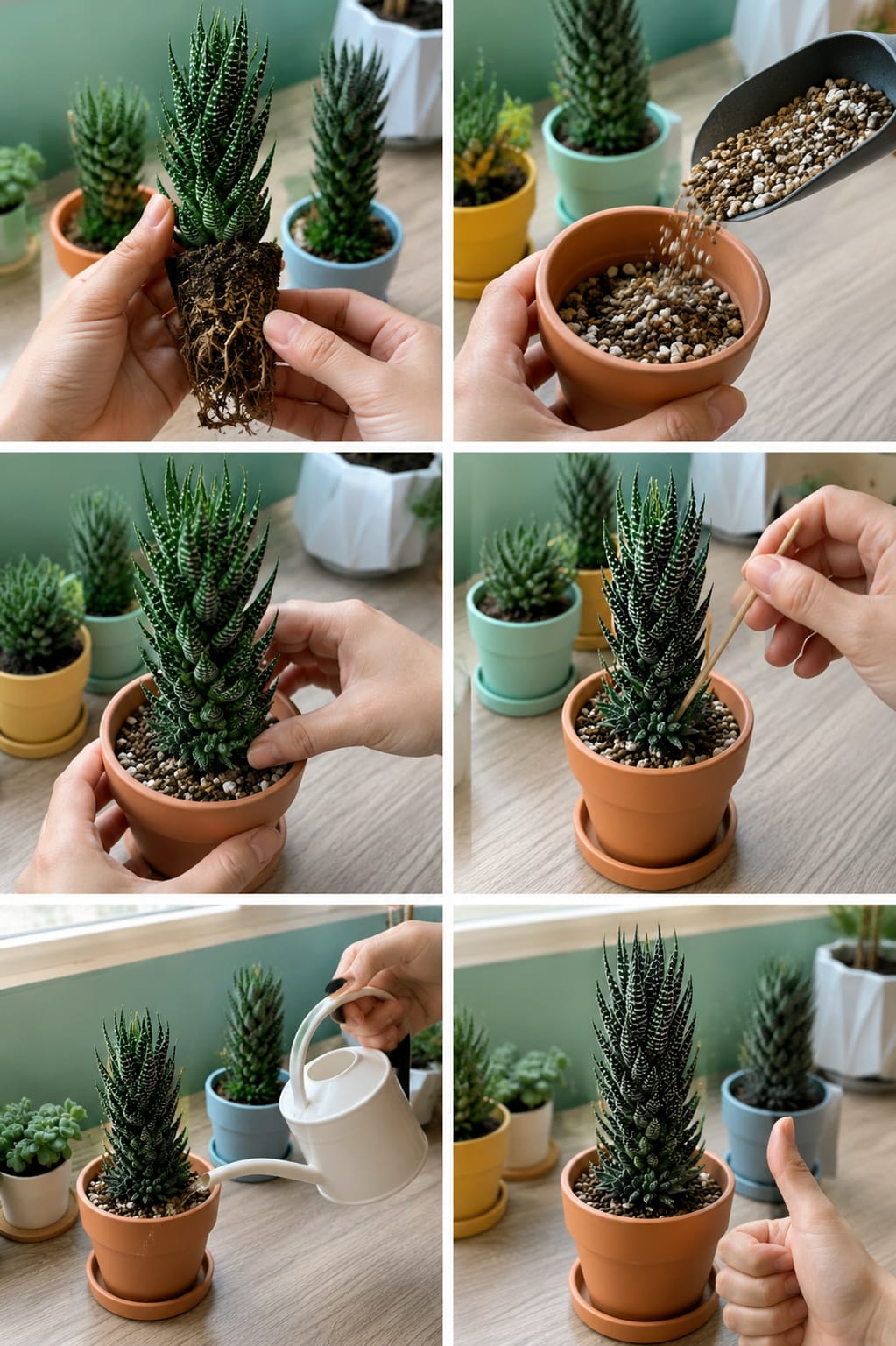
The image shows a simple step-by-step repotting routine for a Zebra Haworthia. The plant is removed from its old container, the root ball is checked, a terracotta pot is filled with gritty soil, the plant is placed in the center, the soil is settled around the roots, and the plant is watered lightly. The final result is a clean, healthy, upright succulent that looks fresh and ready to grow.
This kind of repotting is one of the best ways to keep Haworthia healthy. Many succulent problems come from the wrong soil, too much water, poor drainage, or pots that hold moisture too long. Zebra Haworthia does not need rich wet soil. It needs a gritty, airy, fast-draining mix that lets the roots breathe. When the roots are healthy, the leaves stay firm, upright, and beautifully striped.
This complete guide explains how to repot Zebra Haworthia, how to choose the right pot, what soil mix to use, how to water correctly, how much light it needs, how to fix common problems, how to grow offsets, and how to keep your Haworthia looking compact, strong, and beautiful indoors.
What Is Zebra Haworthia?
Zebra Haworthia is a small succulent often grown as a houseplant. It is commonly called Zebra Plant because of the white bands or raised markings across its leaves. These markings make the plant look like it has painted stripes. The leaves are thick, pointed, and arranged in a rosette shape.
Many people confuse Zebra Haworthia with Aloe because both plants have spiky succulent leaves. However, Haworthia usually stays smaller and is more suitable for small indoor pots. It grows slowly, which makes it perfect for people who want a neat plant that does not quickly outgrow its space.
Why Zebra Haworthia Is Great for Beginners
Zebra Haworthia is beginner-friendly because it does not need frequent watering. It stores water in its thick leaves and can handle short dry periods. It also does not need a huge pot or constant fertilizer. If you give it bright indirect light, fast-draining soil, and careful watering, it can stay healthy for years.
Main Benefits
- Compact and easy to display
- Beautiful striped leaves
- Low watering needs
- Good for small spaces
- Slow-growing and tidy
- Easy to repot
- Can produce baby offsets
- Works well in terracotta pots
When Should You Repot Zebra Haworthia?
Zebra Haworthia does not need repotting often. Since it grows slowly, repotting every 2 to 3 years is usually enough. However, there are times when repotting becomes important. If the soil stays wet for too long, if the plant becomes root-bound, if offsets crowd the pot, or if the old soil has broken down, repotting can refresh the plant.
Signs It Needs Repotting
- Roots are circling tightly around the soil ball
- Soil stays wet too long
- Plant becomes unstable in the pot
- Offsets crowd the mother plant
- Water does not drain well
- Soil smells old or sour
- Leaves are shrinking despite correct watering
- Plant has outgrown its container
The best time to repot is spring or early summer. This is when the plant is more active and can recover faster.
What You Need for Repotting
- Healthy Zebra Haworthia
- Terracotta pot with drainage hole
- Fast-draining succulent mix
- Pumice, perlite, or coarse grit
- Small spoon or scoop
- Wooden stick or chopstick
- Clean scissors, optional
- Watering can with narrow spout
- Clean saucer
Step 1: Remove the Plant From the Old Pot
Hold the Haworthia gently near the base and slide it out of the old pot. Do not pull hard by the leaves because they can snap or loosen from the crown. If the plant is stuck, squeeze the pot gently or tap the sides to loosen the root ball.
Once removed, check the roots. Healthy roots are usually light tan, cream, or pale brown and firm. Dry roots may look thin, but they should not be mushy. Remove old loose soil carefully with your fingers.
Step 2: Inspect the Roots
Root inspection is one of the most important parts of repotting. A plant may look fine above the soil, but the roots can reveal hidden problems. If roots are black, mushy, slimy, or smell bad, the plant may have root rot.
Healthy Roots
- Firm texture
- Light tan or pale color
- No bad smell
- Not slimy
- Attached strongly to the plant
Unhealthy Roots
- Black or dark brown
- Mushy or hollow
- Sour smell
- Soft wet tissue
- Breaks apart easily
Trim rotten roots with clean scissors. Let the plant dry for a day before potting if many roots were cut.
Step 3: Choose the Right Pot
The image shows a terracotta pot, which is a great choice for Zebra Haworthia. Terracotta breathes better than plastic and helps soil dry faster. This reduces the risk of root rot.
The pot must have at least one drainage hole. A pot without drainage is risky for succulents. Water needs a way to escape. If water sits at the bottom, the roots may rot.
Best Pot Features
- Drainage hole
- Only slightly larger than root ball
- Terracotta or breathable ceramic
- Stable base
- Not too deep
- Matching saucer for extra water
A pot that is too large can hold too much soil and moisture. Choose a pot just a little bigger than the root system.
Step 4: Use a Gritty Soil Mix
Soil is the key to success with Haworthia. Regular houseplant soil is often too heavy. It holds moisture for too long. Zebra Haworthia prefers a gritty succulent mix that drains quickly and contains air pockets.
Simple Haworthia Soil Mix
- 2 parts cactus or succulent soil
- 1 part pumice
- 1 part perlite
- 1 part coarse sand or small gravel
This mix keeps the roots supported while allowing water to pass through. The goal is not to keep the plant wet. The goal is to water thoroughly, then let the soil dry.
Step 5: Add Soil to the Pot
Add a layer of gritty mix to the bottom of the pot. The plant should sit at about the same depth as before. Do not bury the crown too deeply. The base of the leaves should stay above the soil line.
If the plant sits too low, add more soil underneath. If it sits too high, remove a little soil. Take your time before filling around the roots.
Step 6: Place the Plant in the Center
Place the Haworthia in the center of the pot. Hold it upright with one hand while adding soil around the roots with the other. Keep the rosette balanced and straight.
Do not press the soil too hard. Firm it lightly so the plant stands upright, but keep the mix airy. Compacting succulent soil removes air pockets and can make drainage worse.
Step 7: Settle the Soil With a Stick
The image shows a wooden stick being used around the plant. This is a helpful technique. A chopstick or small wooden stick can gently move soil between roots without damaging the plant. It also helps remove large air gaps.
Use the stick carefully. Do not stab the roots. Move gently around the edges and lightly settle the mix.
Step 8: Wait Before Watering
After repotting, it is often best to wait a few days before watering, especially if roots were disturbed or trimmed. This gives tiny root wounds time to dry and reduces the chance of rot.
If the root ball was completely dry and healthy, you can water lightly after a short waiting period. If roots were cut, wait longer.
Step 9: Water Lightly and Drain Fully
When it is time to water, pour slowly around the soil, not directly into the center of the rosette. Water should run through the pot and drain out. Empty the saucer afterward.
Never let a Haworthia sit in standing water. The roots need dry periods.
Step 10: Place in Bright Indirect Light
After repotting, place the plant in bright indirect light. Avoid harsh direct sun for a while because the plant may be slightly stressed. Once it settles, it can handle gentle morning sun, but strong afternoon sun may burn the leaves.
Best Light for Zebra Haworthia
Zebra Haworthia likes bright indirect light. It can tolerate lower light better than many succulents, but it still needs brightness to stay compact and healthy.
Good Light Locations
- Bright windowsill with filtered light
- East-facing window
- North-facing bright window
- A few feet from a south-facing window
- Under a grow light
- Desk near a bright window
Signs It Needs More Light
- Plant stretches upward
- Rosette becomes loose
- Leaves lean toward the window
- New growth looks pale
- Plant loses compact shape
Signs It Gets Too Much Sun
- Brown dry patches
- Red or purple stress color
- Leaves feel thin or dry
- Leaf tips burn
- Plant looks faded
A little stress color can happen in strong light, but burning is a sign to move the plant away from direct sun.
How to Water Zebra Haworthia
Watering is the most common mistake with Haworthia. This plant does not need frequent water. It stores moisture in its leaves and roots. Water only when the soil is completely dry or almost completely dry.
When watering, soak the soil until water drains out, then let the pot dry before watering again. Small sips every day are not helpful. Deep watering followed by drying is better.
How Often Should You Water?
There is no exact schedule for every home. In warm bright conditions, watering may be needed every 2 to 3 weeks. In cooler or darker conditions, it may be every 4 to 6 weeks. In winter, it may need very little water.
Always check the soil before watering. The pot should feel light and the soil should be dry.
Signs Your Haworthia Needs Water
- Soil is fully dry
- Leaves feel slightly softer
- Leaf tips look a little dry
- Pot feels light
- Lower leaves shrink slightly
Signs of Overwatering
- Leaves turn translucent
- Base becomes mushy
- Plant feels loose in soil
- Roots are black or soft
- Soil smells sour
- Leaves drop or collapse
If you see signs of overwatering, stop watering and check the roots immediately.
Should You Mist Zebra Haworthia?
No. Zebra Haworthia does not need misting. It is a succulent and prefers dry leaves. Water sitting between the leaves can cause rot, especially in cool rooms or low airflow.
Keep water on the soil, not inside the rosette.
Best Temperature
Zebra Haworthia prefers normal indoor temperatures. It does well in warm rooms but should be protected from freezing cold. Keep it away from cold windows in winter and from hot heaters that dry it too much.
Good Temperature Range
- 60 to 80°F
- 16 to 27°C
- Stable indoor warmth
- No frost
- No freezing drafts
Humidity Needs
Zebra Haworthia does not need high humidity. Average indoor humidity is usually fine. In fact, very humid conditions combined with wet soil can increase the risk of rot.
Good airflow and dry periods are more important than high humidity.
Fertilizer for Zebra Haworthia
Haworthia is a slow grower and does not need heavy feeding. Too much fertilizer can cause weak growth or root burn. Use a cactus or succulent fertilizer diluted to half strength.
Safe Feeding Schedule
- Spring: once
- Summer: once
- Fall: avoid or reduce feeding
- Winter: do not feed
Fertilize only when the plant is healthy and actively growing. Do not fertilize a newly repotted plant immediately.
How to Keep the Plant Compact
A compact Haworthia is usually a sign of good light and careful watering. If the plant stretches, it is probably reaching for light. Move it to a brighter spot, but avoid sudden harsh sun.
Rotate the pot every few weeks so all sides receive light evenly.
How to Grow Baby Offsets
Zebra Haworthia often produces small baby plants, called offsets or pups, around the base. These can be left in the pot for a fuller look or separated to create new plants.
How to Separate Offsets
- Wait until the offset has its own roots.
- Remove the plant from the pot.
- Gently separate the baby from the mother plant.
- Use clean scissors if needed.
- Let the cut area dry for a day.
- Plant in gritty succulent mix.
- Wait a few days before watering.
Do not remove offsets too early. A baby plant without roots may struggle.
Can You Propagate Haworthia From Leaves?
Leaf propagation is possible for some succulents, but Haworthia is not as easy from leaves as plants like jade or echeveria. Offset division is much easier and more reliable.
If you want more Zebra Haworthia plants, wait for pups and divide them carefully.
Continue to Page 2
Continue to page 2 for more details about this article and the key points many readers miss on the first page.