Indoor plants bring freshness, color, scent, and life into the home. A sunny windowsill filled with basil, mint, parsley, pothos, peppers, flowers, and leafy houseplants can make any room feel warmer and more natural. But indoor plants also face problems. Leaves can become dusty. Tiny pests can appear. Soil can stay too wet. Basil can attract aphids, whiteflies, fungus gnats, and spider mites. Many plant lovers want a simple homemade spray that feels natural and easy to prepare.
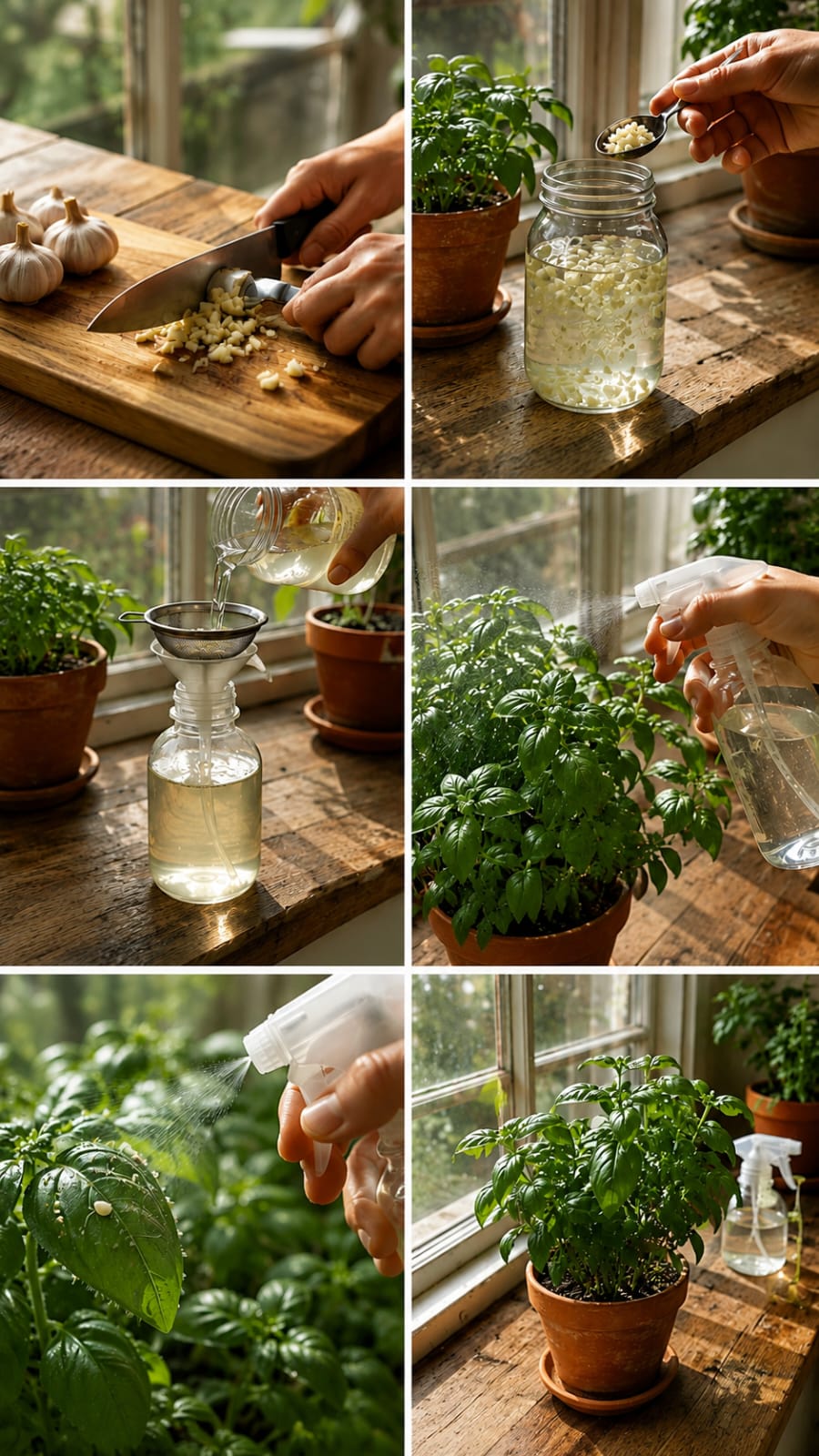
The image shows a step-by-step method for making a garlic spray. Fresh garlic cloves are chopped on a wooden board, placed into a jar of water, strained into a spray bottle, and then sprayed gently over a green potted plant. The final plant looks fresh, full, and healthy on a bright windowsill. This kind of method is popular because garlic has a strong smell that many gardeners believe can help discourage some soft-bodied pests and reduce pest pressure when used carefully.
Garlic spray is not magic, and it is not a complete replacement for proper plant care. It will not fix root rot, poor light, overwatering, bad soil, or severe infestations by itself. But when made correctly and used gently, garlic water spray can become part of a natural plant-care routine. It may help discourage some insects, freshen leaf care, and support a cleaner growing environment around herbs and houseplants.
This complete guide explains how to make garlic spray safely, how to use it on basil and indoor plants, when to avoid it, how often to apply it, how to test it before spraying the whole plant, how to prevent leaf burn, how to combine it with better watering and light habits, and how to keep indoor herbs lush, green, and healthy.
What Is Garlic Spray for Plants?
Garlic spray is a homemade plant spray made by soaking chopped or crushed garlic in water, then straining the liquid and spraying it lightly on plant leaves. Some gardeners use garlic spray because garlic contains sulfur compounds and has a strong scent. This strong scent may help discourage certain pests from settling on leaves.
The spray is usually used as a mild pest-prevention tool, not as a powerful chemical pesticide. It works best when problems are small, when the plant is healthy, and when the spray is used as part of a complete care routine.
Why Gardeners Use Garlic Spray
Many gardeners prefer homemade sprays because they are easy to make, low-cost, and made from kitchen ingredients. Garlic is easy to find, and a small amount can make enough spray for several plants. It is especially popular for herbs because many people want to avoid strong synthetic sprays around edible plants.
Possible Benefits
- May help discourage aphids
- May help reduce pest pressure on herbs
- May make leaves less attractive to some insects
- Easy to make at home
- Low-cost and simple
- Useful as part of a prevention routine
- Can be used on basil, mint, parsley, and many houseplants after testing
- Helps gardeners inspect plants more often
The biggest benefit is not only the garlic itself. The routine encourages you to check leaves closely, clean plants, spot pests early, and act before a small issue becomes a major infestation.
Important Safety Note
Garlic spray can be too strong if made incorrectly. Strong garlic water can irritate leaves, especially on delicate plants, young seedlings, stressed plants, or plants sitting in strong sun. Always dilute the spray, strain it well, test it on a small leaf area first, and avoid spraying during hot direct sunlight.
Do not use garlic spray on plants that are already wilting badly, sunburned, newly repotted, or suffering from root rot. A stressed plant may react poorly to any spray.
Simple Garlic Spray Recipe
Ingredients
- 3 to 4 fresh garlic cloves
- 2 cups clean water
- Clean glass jar
- Fine strainer or cloth
- Clean spray bottle
- Optional: 1 extra cup water for dilution
Instructions
- Peel the garlic cloves.
- Chop the cloves into small pieces.
- Place the chopped garlic into a clean jar.
- Add 2 cups of clean water.
- Let the garlic soak for 12 to 24 hours.
- Strain the liquid very well.
- Pour the strained liquid into a spray bottle.
- Dilute with extra water if the smell is very strong.
- Shake gently before use.
- Use the spray within 24 hours for best freshness.
Do not leave garlic water sitting for many days. It can ferment, smell unpleasant, and become less suitable for indoor plant care.
Gentle Garlic Spray for Basil
Basil has soft leaves, so it needs a gentle spray. Do not use a strong garlic mixture on basil. A diluted version is safer.
Basil-Safe Dilution
- 1 part strained garlic water
- 2 parts clean water
For example, mix 1 cup garlic water with 2 cups clean water. Spray lightly, not heavily. Basil leaves can spot or burn if coated too strongly.
How to Apply Garlic Spray Correctly
- Test one or two leaves first.
- Wait 24 hours.
- If there is no damage, spray the rest of the plant lightly.
- Spray the top and underside of leaves.
- Avoid soaking flowers.
- Avoid spraying the soil heavily.
- Spray in the morning or evening.
- Keep the plant out of direct sun until leaves dry.
- Repeat only if needed.
The underside of leaves is important because many pests hide there. Aphids, mites, and whiteflies often gather under leaves or near soft new growth.
How Often Should You Use Garlic Spray?
For prevention, use garlic spray once every 7 to 14 days only when needed. For a mild pest issue, you can use it every 3 to 5 days for 2 or 3 applications, then stop and check the plant.
Do not spray every day. Too much garlic spray can stress leaves, especially indoors where airflow is limited.
When Not to Use Garlic Spray
- Do not spray during hot direct sun.
- Do not spray very young seedlings without testing.
- Do not spray plants with severe wilting.
- Do not spray newly repotted plants.
- Do not spray plants with root rot.
- Do not spray fuzzy-leaved plants heavily.
- Do not use old fermented garlic water.
- Do not use on edible herbs right before harvesting.
- Do not spray if leaves showed damage after testing.
Can Garlic Spray Kill Pests?
Garlic spray may help discourage or repel some pests, but it is not always enough to kill an established infestation. If a plant is covered with pests, you may need a stronger strategy such as rinsing the plant, pruning damaged growth, using insecticidal soap, changing soil care, and isolating the plant.
Garlic spray works best as an early-response or prevention tool. It is most useful when pest numbers are low.
Common Pests Garlic Spray May Help Discourage
- Aphids
- Whiteflies
- Spider mites
- Some small leaf-chewing insects
- Some flies around herbs
- Soft-bodied pests on tender growth
For fungus gnats, garlic spray on leaves is not enough because the problem is usually in the soil. Fungus gnats need soil moisture control, sticky traps, and sometimes treatment of the soil surface.
How to Check Plants Before Spraying
Before using any spray, inspect the plant. This helps you understand the real problem. Many plant issues look like pest damage but are actually caused by watering, light, or nutrient stress.
Check These Areas
- Undersides of leaves
- New leaf tips
- Stem joints
- Soil surface
- Drainage holes
- Leaf edges
- Yellow or spotted leaves
- Sticky residue on leaves
If you see insects, take action quickly. Small infestations are much easier to manage.
Garlic Spray for Basil Plants
Basil is a favorite herb for kitchens, windowsills, and indoor gardens. It grows quickly when it has warmth, light, and regular harvesting. But basil also attracts pests because its leaves are soft and tender.
Garlic spray can be used on basil, but it must be mild. Always rinse edible leaves well before using them in food. Do not spray right before harvest. It is better to spray after harvesting, then wait before picking more leaves.
Best Basil Care for Strong Growth
- Give 6 or more hours of bright light
- Use a pot with drainage holes
- Keep soil lightly moist, not soggy
- Pinch tips often to encourage bushy growth
- Remove flowers if you want more leaves
- Harvest regularly
- Keep good airflow around the plant
- Check for aphids often
Why Basil Gets Pests Indoors
Indoor basil can attract pests when airflow is poor, light is weak, soil stays too wet, or the plant is crowded. Soft new leaves are especially attractive to aphids and whiteflies. A stressed basil plant is easier for pests to attack.
Improving the growing conditions is just as important as spraying. A strong plant resists problems better.
Garlic Spray for Houseplants
Garlic spray can also be tested on many common houseplants. Use it carefully and avoid heavy spraying on delicate leaves.
Plants That May Tolerate Gentle Garlic Spray After Testing
- Pothos
- Snake plant
- Peace lily
- Monstera
- Philodendron
- Spider plant
- ZZ plant
- Rubber plant
- Basil and many herbs
Plants to Be Extra Careful With
- African violets
- Fuzzy-leaved begonias
- Calatheas
- Ferns
- Young seedlings
- Orchids in bloom
- Plants already sunburned or stressed
Delicate plants can react badly to strong homemade sprays. Always test first.
How to Test Garlic Spray
- Choose one lower leaf.
- Spray a small area lightly.
- Let the leaf dry away from direct sun.
- Wait 24 hours.
- Check for spots, curling, yellowing, or burning.
- If the leaf looks fine, spray the plant lightly.
This small test can save the whole plant from damage.
Should You Add Soap?
Some homemade pest sprays include a tiny amount of mild liquid soap. Soap can help the spray spread on leaves and may help with soft-bodied pests. However, soap can also burn leaves if too strong. For indoor basil and herbs, it is safer to start with garlic water only.
If you choose to add soap, use only 1 or 2 drops of mild unscented liquid soap per spray bottle. Test first. Do not use dish soap with degreasing chemicals, bleach, fragrance, or antibacterial additives on delicate plants.
Should You Add Oil?
It is better not to add oil to garlic spray for indoor herbs unless you know exactly what you are doing. Oil can coat leaves, block airflow, attract dust, and increase the risk of leaf burn under light. For basil, a simple diluted garlic water spray is safer.
How Long Can You Store Garlic Spray?
Use garlic spray within 24 hours if possible. If you must store it, keep it in the refrigerator for no more than 2 to 3 days. Throw it away if it smells fermented, sour, rotten, or strange.
Fresh spray is best. Old organic sprays can grow microbes and smell unpleasant indoors.
Will Garlic Spray Make the Room Smell?
Yes, garlic spray can have a strong smell. The smell usually fades after the leaves dry, but it may linger for a short time. Use it in a well-ventilated room. Open a window if possible.
Do not spray heavily right before guests arrive or before sleeping in the room. A light spray is enough.
How to Avoid Leaf Burn
- Dilute the garlic water
- Test one leaf first
- Spray in the morning
- Keep out of hot direct sun
- Do not spray daily
- Do not use strong fermented liquid
- Avoid spraying stressed plants
- Rinse leaves if damage appears
What to Do If Leaves React Badly
If leaves curl, yellow, spot, or burn after spraying, stop using garlic spray. Rinse the plant gently with plain water. Move it away from strong sun and allow it to recover. Do not fertilize immediately after spray damage.
Damaged leaves may not return to normal, but new growth can be healthy if the plant recovers.
Garlic Spray and Edible Herbs
Because basil and other herbs are eaten, be careful. Garlic spray is made from food ingredients, but that does not mean you should eat sprayed leaves without washing them. Always rinse herbs well before using them in recipes.
Do not spray right before harvesting. Spray after trimming, wait a few days, then harvest clean new leaves.
Best Time of Day to Spray
Morning is best. Leaves have time to dry during the day, and the plant is less likely to sit wet overnight. Evening can work if the room has good airflow, but avoid leaving leaves wet all night.
Never spray during hot direct sunlight because wet leaves can burn or spot.
Complete Indoor Pest Routine
Garlic spray works better when combined with good plant hygiene.
- Inspect plants weekly.
- Remove badly damaged leaves.
- Wipe dusty leaves.
- Isolate pest-affected plants.
- Spray with diluted garlic water after testing.
- Improve airflow.
- Avoid overwatering.
- Use sticky traps for flying pests.
- Repeat treatment only if needed.
- Monitor new growth.
Why Healthy Plants Resist Pests Better
Pests often attack weak plants first. A basil plant in poor light with soggy soil is easier for pests to damage. A strong plant with bright light, balanced moisture, and regular pruning can recover faster and grow new leaves.
Spray is only one layer of protection. Plant health is the foundation.
Watering Basil Indoors
Basil likes consistent moisture, but it does not like sitting in water. Water when the top of the soil begins to dry. Use a pot with drainage holes. Empty any saucer water after watering.
Signs Basil Needs Water
- Leaves droop slightly
- Top soil feels dry
- Pot feels lighter
- Leaves look dull
Signs Basil Is Overwatered
- Yellow lower leaves
- Wet soil for many days
- Soft stems
- Fungus gnats
- Root rot smell
Light for Basil Indoors
Basil needs stronger light than many houseplants. A bright window is important. If the plant stretches, becomes pale, or drops leaves, it may need more light.
Good Basil Light
- Sunny windowsill
- Bright east or south-facing window
- Grow light for 10 to 14 hours daily
- Warm bright kitchen counter
Without enough light, basil becomes weak and more vulnerable to pests.
How to Prune Basil for Bushier Growth
Pruning basil helps it grow fuller. Do not just pick single leaves from the bottom. Instead, pinch the stem above a pair of leaves. This encourages the plant to branch.
- Find a healthy stem.
- Look for a pair of leaves.
- Cut just above that pair.
- Use the top cutting in food or root it in water.
- Repeat often to keep the plant bushy.
Garlic Spray for Aphids
Aphids are small soft insects that gather on new growth. They may be green, black, yellow, or gray. They suck sap from leaves and can cause curling, sticky residue, and weak growth.
Aphid Control Steps
- Rinse the plant gently with water.
- Wipe clusters off with fingers or cloth.
- Prune heavily infested tips.
- Apply diluted garlic spray after testing.
- Repeat every few days if needed.
- Check new growth daily.
Garlic Spray for Whiteflies
Whiteflies are tiny white flying insects that lift off when the plant is disturbed. They hide under leaves and multiply quickly.
Whitefly Control Steps
- Isolate the plant.
- Use yellow sticky traps.
- Spray undersides of leaves lightly.
- Repeat treatment as needed.
- Improve airflow.
- Remove badly infested leaves.
Continue to Page 2
Continue to page 2 for more details about this article and the key points many readers miss on the first page.