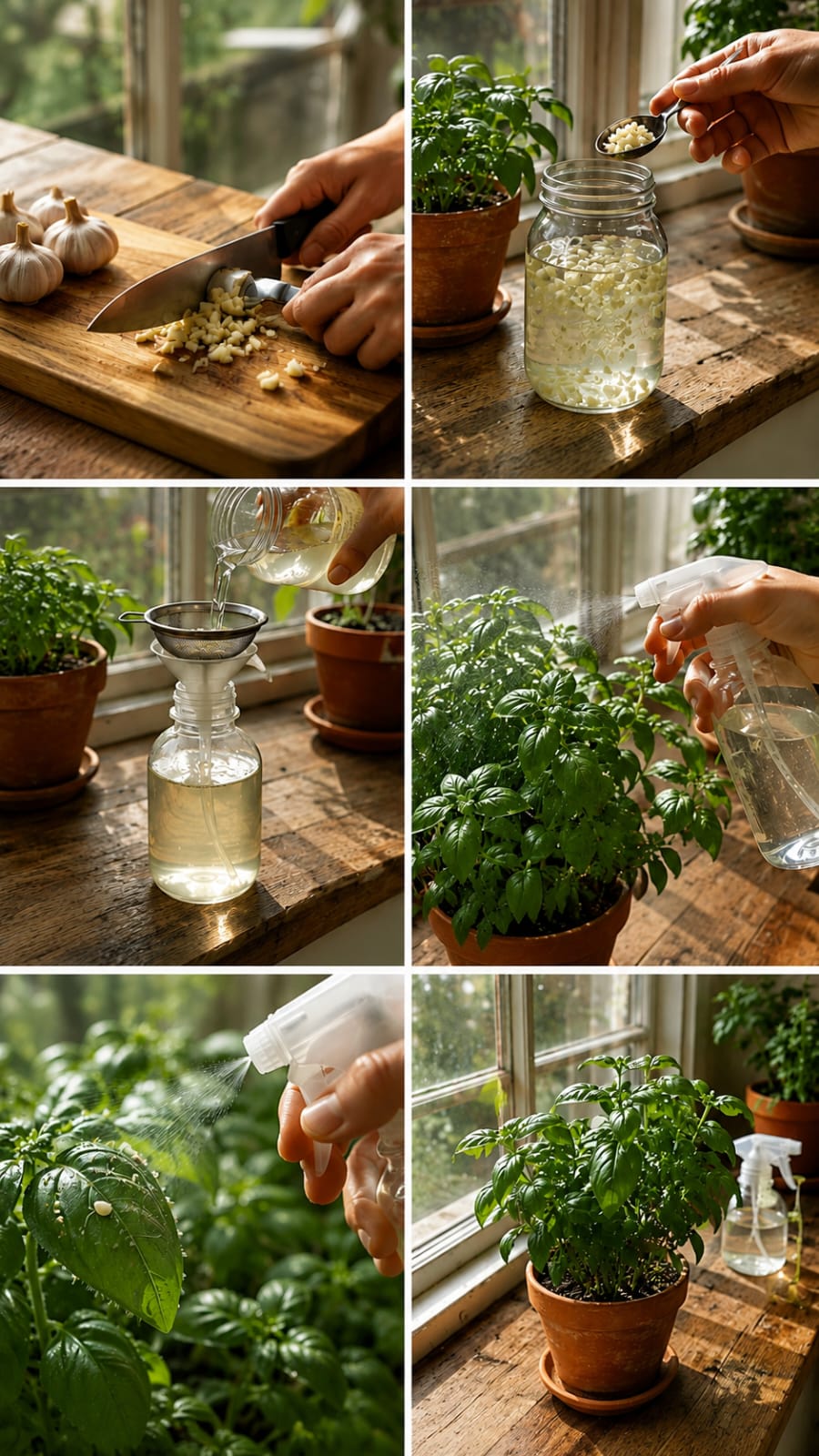
Garlic Spray for Spider Mites
Spider mites are tiny pests that can cause speckled leaves and fine webbing. They love dry indoor air. Garlic spray may help discourage them, but humidity and leaf cleaning are also important.
Spider Mite Care
- Rinse leaves gently
- Increase humidity moderately
- Wipe leaves often
- Isolate affected plants
- Use insecticidal soap for severe cases
- Spray garlic water only after testing
Garlic Spray and Fungus Gnats
Fungus gnats usually come from wet soil. Garlic leaf spray will not solve the root cause. To manage fungus gnats, let the top layer of soil dry more, use sticky traps, improve drainage, and avoid overwatering.
Fungus Gnat Prevention
- Do not keep soil constantly wet
- Use pots with drainage
- Remove dead leaves from soil
- Use sticky traps
- Improve airflow
- Water from the bottom sometimes
Cleaning Leaves After Spraying
If garlic residue builds up, wipe large leaves with a damp cloth. For basil, you can rinse lightly before harvest. Keeping leaves clean prevents sticky buildup and keeps the plant looking fresh.
Can Garlic Spray Be Used Outdoors?
Yes, garlic spray can be used outdoors on some garden plants, but the same rules apply. Test first, spray in the morning or evening, avoid hot sun, and do not overuse. Rain may wash it away, so it may need reapplication after heavy rain.
Best Plants for a Sunny Indoor Herb Corner
- Basil
- Mint
- Parsley
- Oregano
- Thyme
- Chives
- Rosemary
- Cilantro
Each herb has different needs, but most enjoy good light and proper airflow.
How to Keep Indoor Herbs Healthy
- Use pots with drainage holes.
- Give strong bright light.
- Harvest regularly.
- Do not crowd plants too tightly.
- Use fresh potting mix.
- Water according to each herb’s needs.
- Check leaves weekly.
- Use gentle sprays only when needed.
Common Mistakes With Garlic Spray
- Using too much garlic
- Not diluting the spray
- Spraying in direct sun
- Spraying every day
- Using old fermented liquid
- Not straining the mixture
- Spraying delicate plants without testing
- Expecting it to fix root problems
- Spraying edible herbs right before harvest
- Ignoring the real cause of plant stress
Simple Garlic Spray Routine
- Chop 3 to 4 garlic cloves.
- Soak in 2 cups water for 12 to 24 hours.
- Strain very well.
- Dilute for delicate herbs.
- Pour into a clean spray bottle.
- Test on one leaf.
- Wait 24 hours.
- Spray lightly if no damage appears.
- Repeat only when needed.
- Store briefly or discard leftovers.
Frequently Asked Questions
Is garlic spray safe for basil?
Yes, if it is mild, diluted, strained, and tested first. Do not use strong garlic spray on basil leaves.
How often can I spray basil with garlic water?
Use it only when needed. For prevention, once every 7 to 14 days is enough. Do not spray daily.
Can I eat basil after spraying garlic water?
Yes, but rinse the leaves well before eating. It is better to spray after harvesting, not right before.
Does garlic spray kill aphids?
It may help discourage aphids and reduce small infestations, but heavy infestations may need rinsing, pruning, and insecticidal soap.
Can garlic spray burn leaves?
Yes, if too strong or used in direct sun. Always dilute and test first.
Can I store garlic spray?
Use it fresh within 24 hours if possible. Store in the refrigerator only briefly and discard if it smells fermented.
Should I add soap?
Start without soap. If needed, add only 1 or 2 drops of mild unscented soap per bottle and test first.
Can I spray the soil?
Light overspray is fine, but do not soak the soil with garlic liquid. Too much organic liquid can smell or attract problems indoors.
Final Thoughts
Garlic spray is a simple homemade plant-care method that can help support a cleaner, more natural pest-prevention routine for basil, herbs, and many houseplants. The process is easy: chop fresh garlic, soak it in water, strain it well, dilute it, test it, and spray lightly on the leaves. Used correctly, it may help discourage some pests and encourage you to inspect your plants more often.
But garlic spray is not a miracle cure. It cannot replace bright light, healthy soil, correct watering, good airflow, and regular pruning. It cannot fix root rot or severe pest infestations alone. The best results come when garlic spray is used gently as one small part of a complete indoor plant-care routine.
For basil and other soft herbs, keep the spray mild. Test first. Avoid direct sun. Rinse edible leaves before use. Keep the plant in strong light and harvest regularly. With steady care, your indoor herbs can stay fresh, green, fragrant, and beautiful on the windowsill.