Bird’s Nest Snake Plant is one of the most beautiful compact houseplants for small indoor spaces. Its short rosette shape, thick patterned leaves, and elegant green form make it perfect for tables, shelves, desks, windowsills, bedrooms, offices, and living room displays. Unlike tall snake plants that grow like upright swords, Bird’s Nest Snake Plant grows in a low rounded shape. This makes it ideal for decorative bowls, small ceramic pots, glass containers, and tabletop arrangements.
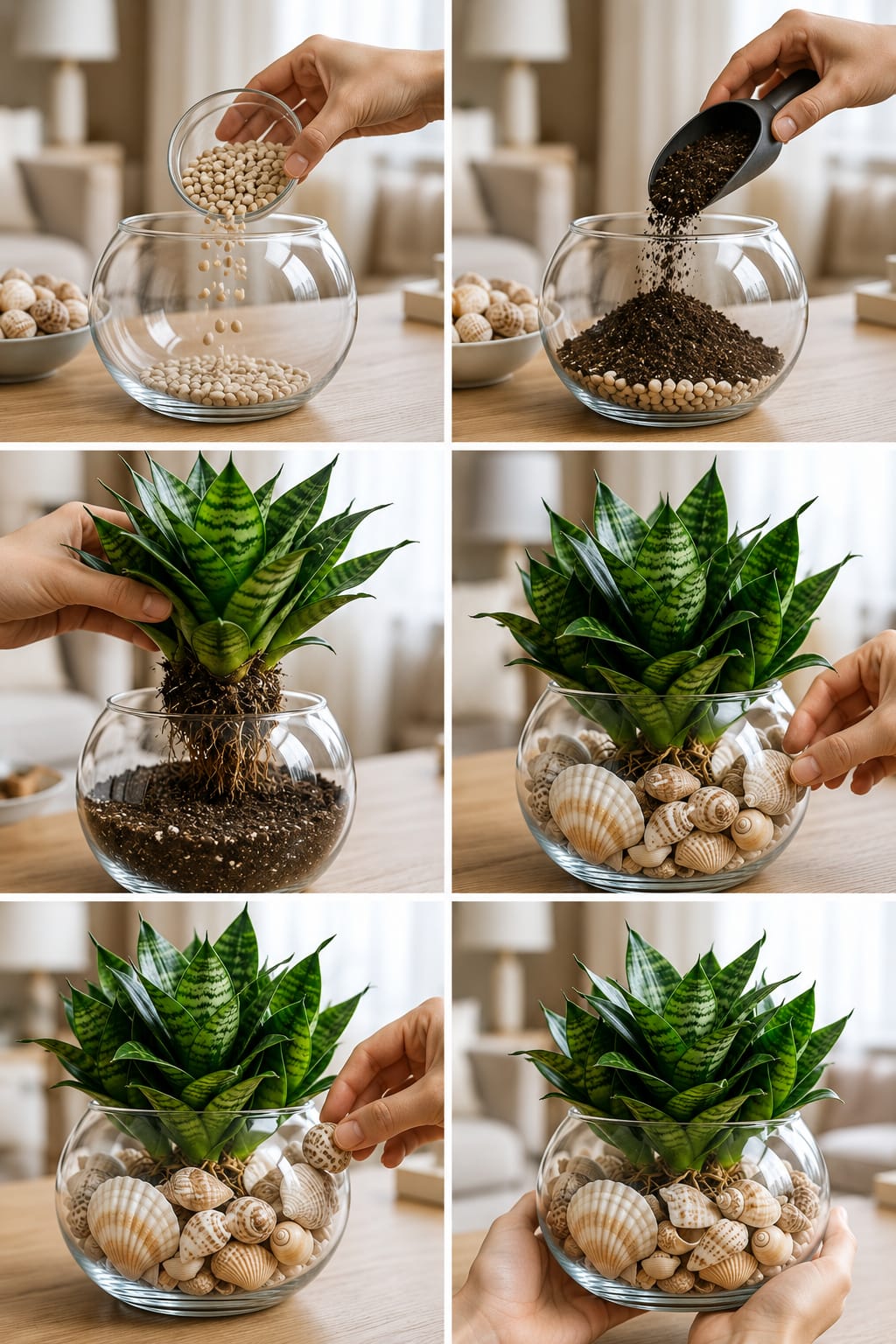
The image shows a stylish tabletop display made with a Bird’s Nest Snake Plant placed inside a clear glass fishbowl vase. The plant sits above dark potting mix, and the outside of the root area is decorated with natural sea shells. The finished design looks clean, coastal, modern, and artistic. It combines houseplant beauty with beach-inspired decor, making the plant look like a living centerpiece.
This kind of display is attractive, but it must be made carefully. A glass fishbowl usually has no drainage hole, and snake plants do not like soggy soil. If water collects at the bottom, roots can rot. The key is to build the bowl in layers, use a fast-draining mix, water lightly, and never let the container stay wet. With the right method, you can enjoy the look of a glass bowl display while keeping the plant healthy.
This complete guide explains how to create a Bird’s Nest Snake Plant fishbowl garden, how to use shells safely, what soil to choose, how to water without drainage, how to keep the leaves strong, how to avoid root rot, how to style the display indoors, and how to care for the plant long term.
What Is Bird’s Nest Snake Plant?
Bird’s Nest Snake Plant is a compact type of snake plant often known as Sansevieria Hahnii or Dracaena trifasciata Hahnii. It grows in a tight rosette shape that looks like a small green nest. The leaves are thick, pointed, and patterned with darker green bands. Some varieties have yellow edges, silver tones, or deep green leaf centers.
This plant is popular because it stays small, grows slowly, and does not need frequent watering. It is perfect for beginners, apartment dwellers, busy plant owners, and anyone who wants an elegant low-maintenance indoor plant.
Why It Looks Beautiful in a Fishbowl Vase
A glass fishbowl vase makes the plant look like a miniature indoor garden. The round glass shape softens the sharp leaves, while the shells add natural texture. The clear sides let you see the layers inside the arrangement, which makes the display feel more decorative than a normal pot.
This style works especially well for coastal decor, boho decor, modern neutral homes, bright bathrooms, beach-themed rooms, and cozy plant corners. It can also make a beautiful handmade gift.
Important Warning About Glass Bowls
Most glass fishbowls do not have drainage holes. This is the biggest risk. Snake plants can tolerate dry soil, but they cannot tolerate constantly wet roots. If you water too much, the bottom of the bowl can trap moisture and cause root rot.
Because of this, the display should be treated as a decorative no-drainage planter. Water must be controlled carefully. Use very small amounts and only when the soil is fully dry.
What You Need
- 1 healthy Bird’s Nest Snake Plant
- 1 clear glass fishbowl vase
- Small pebbles or LECA balls for the bottom layer
- Fast-draining cactus or succulent soil
- Perlite or pumice
- Natural clean sea shells
- Small scoop or spoon
- Soft cloth
- Optional activated charcoal
- Small watering cup
Step 1: Choose a Healthy Plant
Start with a healthy Bird’s Nest Snake Plant. The leaves should be firm, upright, and richly colored. Avoid plants with mushy bases, yellowing leaves, black spots, or a sour smell from the soil. A weak plant will struggle more in a glass bowl because drainage is limited.
Signs of a Healthy Plant
- Firm thick leaves
- No mushy base
- No black rot near the crown
- No strong bad smell
- Roots are firm and light-colored
- Leaves stand naturally in a rosette shape
Step 2: Pick the Right Glass Bowl
Choose a bowl that is wide enough for the plant roots and the shell decoration. A bowl that is too small will crowd the plant and make watering difficult. A bowl that is too deep can hold too much soil and moisture.
The best bowl is wide, shallow to medium depth, and stable on the table. The opening should be large enough so air can move around the soil surface. Avoid very narrow-necked glass containers because they trap humidity and make rot more likely.
Step 3: Clean the Bowl
Wash the glass bowl before planting. Use warm water and mild soap, then rinse very well. Dry it completely with a clean cloth. A clean bowl looks better and reduces the chance of mold or bacteria building up inside.
If the bowl was used before, clean it carefully. Do not plant in a dirty container.
Step 4: Add a Drainage-Style Bottom Layer
Because the bowl does not have a drainage hole, add a bottom layer of small pebbles or LECA balls. This layer does not replace real drainage, but it can create a small space where extra water sits away from the roots for a short time.
Add about 1 to 2 inches of pebbles at the bottom. Do not make the layer too thick or the roots will have less room.
Step 5: Add Optional Activated Charcoal
A thin layer of activated charcoal can help reduce odor in closed or semi-closed containers. It is optional, but useful for no-drainage displays. Use only a thin sprinkle over the pebbles.
Do not add too much charcoal. The main focus should still be fast-draining soil and careful watering.
Step 6: Prepare the Soil Mix
Bird’s Nest Snake Plant needs soil that drains quickly. Regular potting soil alone often holds too much water. For a glass bowl, the soil should be even more airy and gritty.
Best Soil Mix
- 2 parts cactus or succulent mix
- 1 part perlite
- 1 part pumice or coarse sand
- A small amount of orchid bark, optional
This mix allows air to reach the roots and helps the soil dry faster. A fast-drying mix is very important when using a container without drainage.
Step 7: Add Soil Over the Pebbles
Place a layer of soil over the pebble layer. Add enough soil so the plant will sit at the correct height. The crown of the plant should sit above the soil line, not buried deeply.
Do not press the soil down too hard. Snake plant roots need air. Lightly settle the soil with your fingers.
Step 8: Place the Plant in the Bowl
Remove the Bird’s Nest Snake Plant from its nursery pot. Gently loosen some old soil from the roots. Place the plant in the center of the bowl. Hold it upright while adding soil around the roots.
Keep the plant stable, but do not bury the lower leaves. The base must stay dry and airy. If soil covers the crown, rot can start.
Step 9: Add More Soil Carefully
Add soil around the root ball until the plant stands firmly. Use a spoon if needed. Tap the bowl gently to settle the soil. Do not compact it heavily.
Leave some space near the glass edge for shells. The shells should sit mostly as decoration around the top and sides, not pressed tightly against the plant crown.
Step 10: Add Natural Sea Shells
Place clean dry shells around the plant. Use different shapes and sizes for a natural look. Larger shells can sit near the front of the bowl, while smaller shells can fill gaps.
Do not cover the entire soil surface with a thick sealed shell layer. The soil still needs airflow. Leave some small open spaces so moisture can escape.
Step 11: Water Very Lightly
After planting, water lightly only if the soil is dry. Use a small amount of water around the soil, not directly into the center of the plant. Since there is no drainage hole, less is safer.
A good rule is to use only a few tablespoons of water at first. Watch the bottom of the bowl. If water collects in the pebble layer, do not water again until everything is completely dry.
How to Water a Snake Plant in a Glass Bowl
Watering is the most important part of this display. In a normal pot with drainage, extra water escapes. In a glass bowl, it stays trapped. This means you must water much less than usual.
Watering Rules
- Water only when the soil is completely dry.
- Use small amounts of water.
- Avoid watering the center crown.
- Do not let water sit around roots.
- Watch the bottom layer through the glass.
- Wait longer in winter.
How Often Should You Water?
There is no exact schedule. In a bright warm room, you may water every 3 to 5 weeks. In a cooler room or during winter, you may water every 6 to 8 weeks or even less. Always check the soil first.
If you are unsure, wait. Bird’s Nest Snake Plant handles dry soil better than wet soil.
Signs the Plant Needs Water
- Soil is fully dry
- Leaves look slightly wrinkled
- Pot feels very light if lifted carefully
- Leaf edges curl slightly
- Plant has not been watered for several weeks
Signs of Overwatering
- Yellow leaves
- Mushy base
- Soft lower leaves
- Bad smell from the bowl
- Condensation inside the glass
- Water sitting at the bottom
- Black or brown soft roots
If you see these signs, stop watering immediately. Remove the plant from the bowl if the base becomes soft.
Best Light for Bird’s Nest Snake Plant
Bird’s Nest Snake Plant grows best in bright indirect light. It can tolerate lower light, but it grows slower and may lose some color intensity. Bright indirect light keeps the rosette compact and healthy.
Best Locations
- Near an east-facing window
- Near a bright north-facing window
- A few feet from a south-facing window
- On a bright table with filtered light
- Near a window with sheer curtains
Avoid Harsh Direct Sun
Strong afternoon sun can heat the glass bowl and burn the leaves. Glass can also intensify heat around the roots. Keep the display away from hot direct sunlight, especially in summer.
Best Temperature
This plant likes normal indoor warmth. Keep it away from cold drafts, open winter windows, air conditioners, heaters, and fireplaces.
- Best range: 60 to 80°F
- Best range: 16 to 27°C
- Avoid frost
- Avoid sudden cold air
- Avoid hot dry vents
Humidity Needs
Bird’s Nest Snake Plant does not need high humidity. Average indoor humidity is usually fine. In fact, too much humidity inside a glass bowl can increase rot risk. Keep the bowl in a room with gentle airflow.
Should You Mist This Display?
No. Do not mist a snake plant in a glass bowl. Misting adds moisture to a setup that already has limited drainage. Water can collect between leaves and around the crown. This can encourage rot.
If leaves are dusty, wipe them with a soft dry or slightly damp cloth instead.
How to Clean the Leaves
Clean leaves look glossy and absorb light better. Use a soft cloth and wipe each leaf gently from base to tip. Avoid soaking the plant.
- Hold one leaf gently.
- Wipe with a soft cloth.
- Use plain water only if needed.
- Dry the leaf with another cloth.
- Do not leave water sitting in the rosette.
How to Keep the Shells Clean
Shells can collect dust over time. Remove a few shells at a time and wipe them with a dry cloth. If they become dirty, rinse and dry them fully before placing them back.
Never return wet shells to the bowl. Extra moisture can encourage mold.
Can Shells Harm the Soil?
Natural shells are mostly calcium carbonate. Over time, they may slightly affect the soil if they break down, especially in very wet conditions. Since snake plants prefer dry conditions and the shells are mostly decorative, this is usually not a major issue if watering is light.
Do not crush large amounts of shells into the soil. Keep them as decoration on the surface.
Should You Fertilize?
Bird’s Nest Snake Plant grows slowly and does not need much fertilizer. In a glass bowl, fertilizer should be used carefully because salts can build up without drainage.
Safe Fertilizer Routine
- Use cactus fertilizer or balanced houseplant fertilizer
- Dilute to quarter strength
- Feed only once or twice during spring and summer
- Do not fertilize in winter
- Do not fertilize a stressed plant
Too much fertilizer can burn roots and cause brown tips.
Can You Use Homemade Fertilizers?
It is better to avoid homemade liquids in a no-drainage glass bowl. Banana peel water, rice water, coffee water, or compost tea can turn sour if trapped in the soil. They may also attract fungus gnats or create odor.
For this kind of display, plain water and very light fertilizer are safer.
Root Rot Prevention
Root rot is the biggest risk in glass bowl planting. Prevent it by keeping the plant dry, using gritty soil, and watering sparingly.
Root Rot Prevention Tips
- Use fast-draining soil
- Add a pebble base layer
- Water lightly
- Keep the crown dry
- Give bright indirect light
- Avoid closed containers
- Do not mist
- Watch for water at the bottom
Continue to Page 2
Continue to page 2 for more details about this article and the key points many readers miss on the first page.