African violets are small, elegant, and full of charm. Their soft fuzzy leaves, compact shape, and bright purple, pink, white, blue, or double flowers make them one of the most loved indoor flowering plants. They look beautiful on windowsills, shelves, kitchen counters, bedroom tables, office desks, and cozy plant corners. Even one healthy African violet can make a room feel softer, warmer, and more colorful.
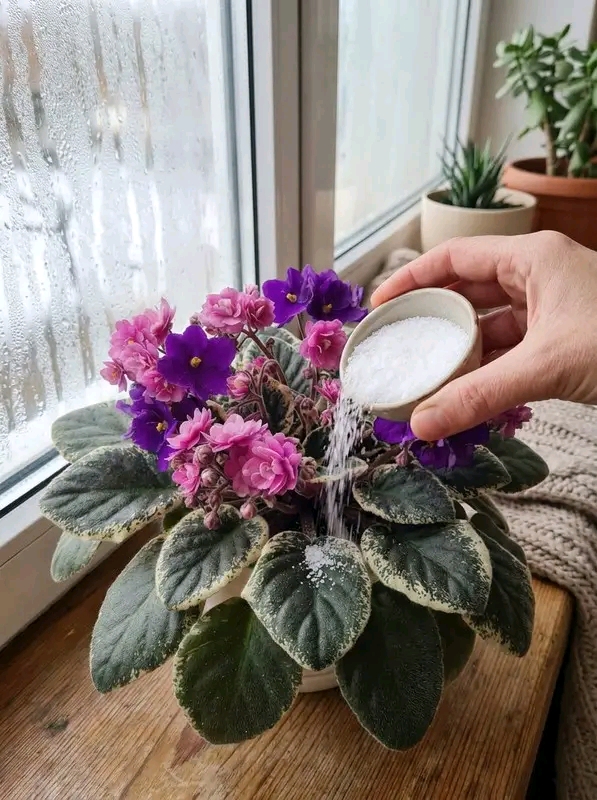
The image shows a blooming African violet near a bright window, with a hand adding a white powder-like material around the plant. This kind of plant-care idea is popular online because many gardeners want an easy trick to make African violets grow lush leaves and bloom again and again. But African violets are delicate plants. Their leaves are fuzzy, their crowns are sensitive, and they do not like heavy, wet, or harsh treatments. A powder, fertilizer, or homemade ingredient must be used carefully, or it can damage the leaves and roots.
The real secret to beautiful African violets is not one magic powder. It is gentle care. These plants need bright indirect light, light soil, careful watering, moderate humidity, warm temperatures, and weak regular feeding. When these needs are met, African violets can bloom for many months and produce thick, healthy leaves.
What Makes African Violets Special?
African violets are different from many other houseplants. Their leaves are covered with tiny soft hairs, giving them a velvety texture. Their flowers rise from the center of the plant and can appear in many colors. Some varieties have single flowers, while others have ruffled, double, star-shaped, or bi-color blooms.
They stay compact, which makes them perfect for small spaces. They do not need a huge pot. In fact, they bloom better when slightly snug in their container. This makes them ideal for indoor gardeners who want color without needing a large plant stand or garden room.
Important Warning About White Powder on African Violets
Never pour random white powder directly onto African violet leaves or into the crown. The crown is the central growing point of the plant. If powder, water, or fertilizer collects there, it can cause rot, burning, or fungal problems.
If the white powder is fertilizer, it should be made for houseplants and applied according to the label. If it is sugar, salt, baking soda, laundry powder, medicine, or an unknown ingredient, do not use it. African violets are sensitive, and random powders can harm them quickly.
The Safest Feeding Method
The safest way to feed African violets is with a fertilizer made specifically for African violets or a balanced houseplant fertilizer diluted weakly. These plants prefer gentle, consistent feeding rather than strong doses.
- Use African violet fertilizer if available.
- Dilute liquid fertilizer to half or quarter strength.
- Feed during active growth and blooming.
- Do not fertilize dry soil.
- Do not pour fertilizer onto leaves.
- Do not let fertilizer collect in the crown.
Best Light for African Violets
Light is one of the biggest keys to African violet blooms. They need bright indirect light. Too little light leads to few flowers and weak leaves. Too much direct sun can burn the fuzzy leaves.
Good Light Locations
- Bright east-facing window
- North-facing window with strong natural light
- A few feet from a south-facing window with sheer curtains
- Under a grow light
- Bright kitchen windowsill without hot direct sun
If the plant has healthy leaves but no flowers, it may need more light. If the leaves look pale, scorched, or crispy, it may be getting too much direct sun.
Signs Your African Violet Needs More Light
- No blooms for months
- Leaves stretch upward
- Long leaf stems
- Small weak flowers
- Dark leaves with slow growth
- Plant leans toward the window
Signs of Too Much Light
- Yellow patches on leaves
- Brown dry spots
- Leaves curl downward
- Flowers fade quickly
- Plant looks dry even after watering
Using Grow Lights
African violets grow very well under grow lights. This is helpful if your home does not have enough natural light. Place the grow light above the plant, not too close. The plant should receive steady light without heat damage.
A common routine is 10 to 12 hours of light per day. Give the plant darkness at night. Plants need a rest period too.
Best Pot for African Violets
African violets prefer small pots. A pot that is too large can hold too much wet soil and reduce blooming. A good rule is to choose a pot about one-third the width of the leaf spread.
For example, if the plant spreads about 9 inches wide, a 3-inch pot may be enough. Mature plants often grow well in 4-inch pots.
Best Pot Features
- Drainage holes
- Small size
- Not too deep
- Lightweight plastic or ceramic
- Clean saucer
- Optional self-watering African violet pot
Best Soil for African Violets
African violets need light, airy soil. Heavy garden soil is not safe for them. Dense soil holds too much water and can suffocate the roots.
Simple African Violet Soil Mix
- 2 parts African violet potting mix
- 1 part perlite
- 1 part peat moss or coco coir
This creates a soft, light mix that holds moisture without becoming soggy. Roots need both moisture and air.
How to Water African Violets
Watering is where many African violet problems begin. These plants like evenly moist soil, but they hate soggy roots. They also do not like cold water on their fuzzy leaves.
The best method is bottom watering. Place the pot in a saucer of room-temperature water. Let the plant absorb water through the drainage holes for about 20 to 30 minutes. Then remove the pot and empty extra water.
Bottom Watering Steps
- Fill a shallow saucer with room-temperature water.
- Place the pot in the saucer.
- Let the soil absorb water for 20 to 30 minutes.
- Check that the top soil feels lightly moist.
- Remove the pot from the saucer.
- Throw away extra water.
Can You Water From the Top?
Yes, but be careful. Pour water slowly onto the soil only. Avoid splashing the leaves and crown. Use room-temperature water. Cold water can leave pale spots on African violet leaves.
When to Water
Water when the top of the soil feels slightly dry. Do not let the plant become bone dry for too long, but do not keep it constantly wet either.
Signs It Needs Water
- Top soil feels dry
- Leaves feel slightly softer
- Pot feels light
- Flowers droop gently
Signs of Overwatering
- Yellow leaves
- Mushy crown
- Wet soil for many days
- Brown soft stems
- Root rot smell
- Plant wilts even though soil is wet
Why Leaves Get Spots
African violet leaves can develop spots when cold water touches them, when sun hits wet leaves, or when fertilizer lands on the leaf surface. Because the leaves are fuzzy, moisture stays on them longer than on smooth leaves.
To prevent spots, water from the bottom or water carefully at the soil level. Keep the leaves dry.
Humidity for African Violets
African violets enjoy moderate humidity. Dry air can cause flowers to fade faster and leaf edges to dry. But very wet air with poor airflow can cause fungal problems.
Good Humidity Tips
- Group plants together
- Use a pebble tray
- Keep away from heaters
- Use a humidifier nearby
- Do not mist the leaves directly
Do not mist African violet leaves. Their fuzzy texture holds water, which can lead to spots or rot.
Temperature Needs
African violets like warm, stable indoor temperatures. They do not like cold drafts or sudden temperature changes.
- Best range: 65 to 75°F
- Best range: 18 to 24°C
- Avoid cold windows in winter
- Avoid hot heater air
- Avoid air conditioner drafts
How to Feed African Violets for Blooms
For steady blooms, feed gently. African violets are not heavy feeders, but they do bloom better with regular weak nutrition.
Feeding Routine
- Use African violet fertilizer.
- Dilute weakly.
- Feed every 2 to 4 weeks during active growth.
- Reduce feeding if growth slows.
- Flush soil occasionally with plain water.
Too much fertilizer can cause salt buildup, brown leaf edges, weak roots, or fewer blooms. Gentle feeding is better than strong feeding.
Can You Use Powder Fertilizer?
You can use powder fertilizer only if it is made for plants and dissolved or applied according to the label. Do not sprinkle dry fertilizer directly onto the crown or leaves. If dry fertilizer touches wet leaves, it can burn them.
If you use a powder fertilizer, mix it with water first and apply carefully to the soil. Follow the dose exactly, or use less than recommended for safety.
Should You Use Baking Soda?
No. Baking soda is not a good bloom booster for African violets. It can change soil chemistry and may damage roots. Do not sprinkle baking soda on the plant.
Should You Use Sugar?
No. Sugar does not feed plants the way fertilizer does. It can attract insects, mold, and soil problems. Do not add sugar to African violet pots.
Should You Use Epsom Salt?
Epsom salt contains magnesium sulfate. Some gardeners use it in very diluted amounts for plants, but African violets do not need it unless there is a real magnesium deficiency. Too much can harm the soil balance.
Use a complete African violet fertilizer instead of guessing with Epsom salt.
How to Encourage More Blooms
Blooming depends on light, maturity, nutrition, pot size, and plant health. A healthy African violet can bloom many times indoors if conditions are steady.
- Give bright indirect light.
- Use a small pot.
- Water with room-temperature water.
- Keep leaves dry.
- Feed weakly with African violet fertilizer.
- Remove old blooms.
- Keep warm temperatures.
- Avoid overwatering.
- Use airy soil.
- Give the plant stable care.
Removing Old Flowers
Old flowers should be removed when they fade. This keeps the plant clean and encourages new buds. Pinch or cut the flower stem near the base. Be gentle because African violet stems can break easily.
Removing Damaged Leaves
Remove old, yellow, or damaged leaves from the outer ring. African violets grow from the center, so older leaves are usually at the bottom or outside.
How to Remove Leaves
- Hold the leaf stem close to the base.
- Move it gently side to side.
- Snap or cut it cleanly.
- Do not tear the crown.
- Remove fallen plant material from the soil.
Cleaning African Violet Leaves
Do not wipe African violet leaves with a wet cloth like smooth-leaved plants. Their fuzzy leaves can be damaged by rubbing. Use a soft dry brush instead.
Safe Cleaning Method
- Use a soft paintbrush.
- Brush dust gently from leaves.
- Support the leaf if needed.
- Do not scrub.
- Do not use leaf shine.
- Do not spray heavily with water.
How to Repot African Violets
African violets should be repotted about once or twice a year to refresh the soil. They do not always need a bigger pot. Often, they just need fresh soil in the same size pot.
Repotting Steps
- Remove the plant gently from the pot.
- Shake away old compact soil.
- Trim damaged roots if needed.
- Place fresh African violet mix in the pot.
- Set the plant at the correct height.
- Keep the crown above the soil.
- Fill around the roots gently.
- Water lightly from the bottom.
What Is a Neck on African Violets?
As African violets age, lower leaves are removed and the stem can become exposed. This exposed stem is often called a neck. If the neck becomes long, the plant may look old or unstable.
During repotting, you can plant the violet slightly deeper so the neck is covered with fresh soil, but the crown must stay above the soil surface. Do not bury the center.
Best Pot Size
African violets bloom best when slightly snug. A pot that is too large can cause root stress and fewer flowers. Most standard African violets do well in 3 to 4 inch pots.
Mini African violets need even smaller pots. Large trailing varieties may need wider containers.
Propagating African Violets From Leaves
African violets are easy to propagate from leaf cuttings. This is a fun way to make more plants from one healthy mother plant.
Leaf Propagation Steps
- Choose a healthy mature leaf.
- Cut the stem with clean scissors.
- Leave about 1 inch of stem.
- Place the stem in moist African violet mix.
- Cover lightly with a clear bag for humidity.
- Keep in bright indirect light.
- Wait for baby plants to appear.
- Separate babies when they are large enough.
Be patient. New babies can take several weeks to appear.
Can You Propagate in Water?
Yes. Place the leaf stem in a small glass of water while keeping the leaf above the water. Roots will form first, then baby plants may appear. Once roots are strong, plant in African violet mix.
Common Problems
No Flowers
The plant may need more bright indirect light, gentle fertilizer, or a smaller pot. Low light is the most common reason.
Yellow Leaves
Yellow leaves can come from overwatering, old age, too much fertilizer, poor light, or root issues.
Brown Leaf Edges
Brown edges may come from fertilizer buildup, dry air, underwatering, or salt accumulation.
Mushy Crown
A mushy crown is serious. It usually means water sat in the center or the plant was overwatered.
White Powdery Leaves
White powder on leaves may be dust, fertilizer residue, or powdery mildew. Do not ignore it. Improve airflow and avoid wet leaves.
Root Rot Rescue
If the plant wilts while the soil is wet, check the roots. Healthy roots are light and firm. Rotten roots are dark, mushy, and may smell bad.
- Remove the plant from the pot.
- Remove wet soil.
- Cut away rotten roots.
- Check the crown for softness.
- Repot in fresh African violet mix.
- Use a small pot with drainage.
- Water carefully from the bottom.
If the crown is rotten, save healthy leaves for propagation.
Pests on African Violets
African violets can get pests, especially when airflow is poor or plants are crowded.
Common Pests
- Mealybugs
- Aphids
- Thrips
- Cyclamen mites
- Fungus gnats
- Spider mites
Pest Signs
- Sticky leaves
- Distorted new growth
- Tiny insects in flowers
- White cottony spots
- Small flies around soil
- Flowers turning brown too quickly
Simple Pest Care
- Isolate the plant.
- Remove badly affected flowers.
- Use a soft brush or cotton swab for visible pests.
- Use a product labeled safe for African violets if needed.
- Improve airflow.
- Avoid keeping the soil too wet.
Best Indoor Styling Ideas
African violets look beautiful in small decorative pots. Their flowers add color without taking up much space.
- Place on a bright windowsill.
- Group several colors together.
- Use ceramic pots in soft colors.
- Place on a small plant tray.
- Style near books and candles.
- Use in a kitchen window garden.
- Place in a bedroom corner with filtered light.
- Display on a plant shelf under grow lights.
Seasonal African Violet Care
Spring
Spring is a great time for fresh growth, repotting, and regular feeding. Increase light gently if needed.
Summer
Protect from hot direct sun. Water carefully and keep the room warm but not overheated.
Fall
Continue bright light. If natural light drops, use a grow light to keep blooming strong.
Winter
Keep away from cold windows. Use room-temperature water. Reduce watering if the soil dries slower.
Continue to Page 2
Continue to page 2 for more details about this article and the key points many readers miss on the first page.