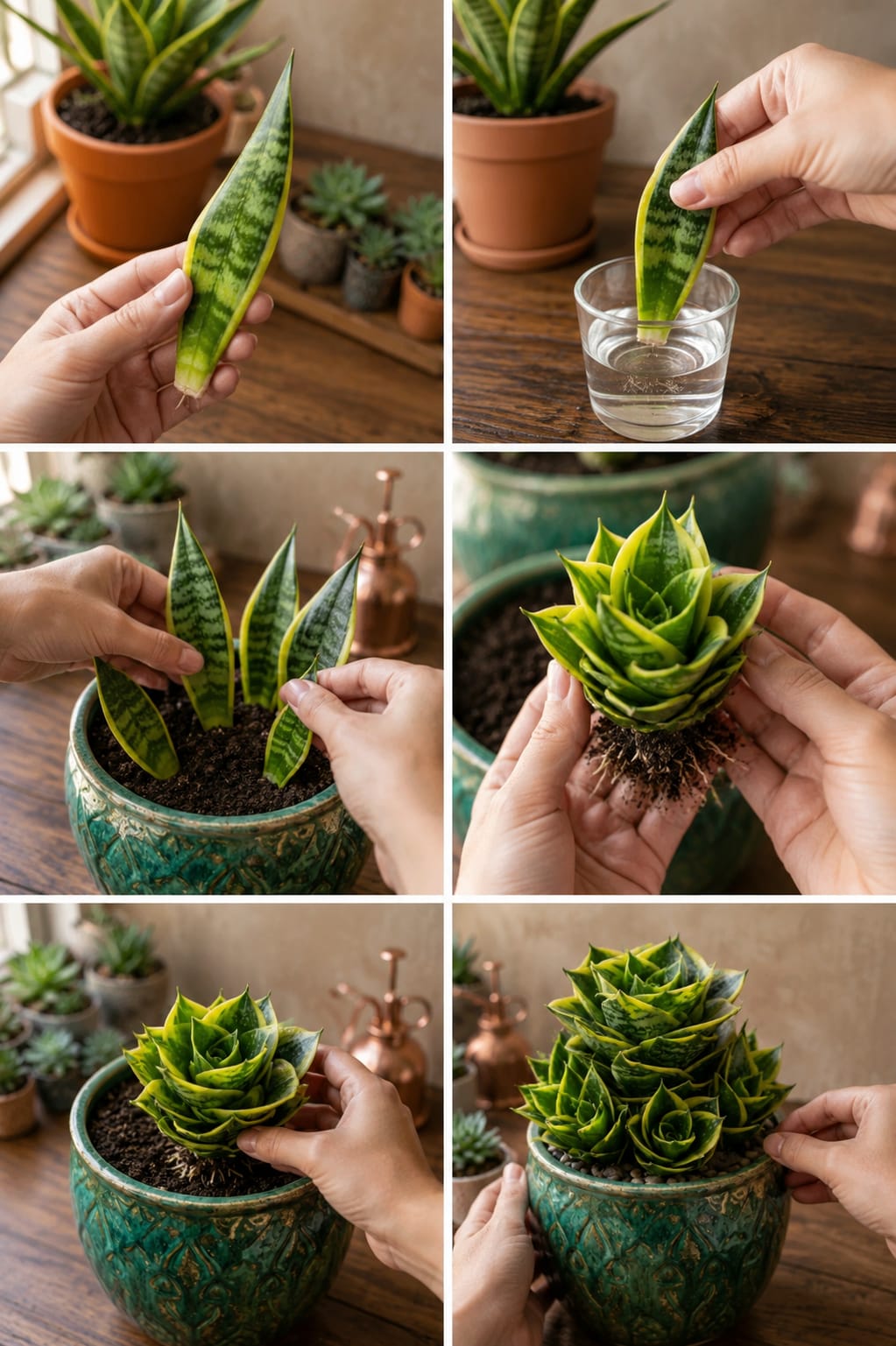
Snake plants are already loved for their upright leaves, bold green patterns, yellow edges, and easy indoor care. They are strong, sculptural, and perfect for modern homes. But when a snake plant is grown in a rosette shape, it becomes even more eye-catching. Instead of growing tall like swords, the leaves form a compact spiral that looks similar to a green rose. This rose-like shape can turn a simple snake plant into a living centerpiece.
The image shows a beautiful step-by-step rosette snake plant idea. A healthy snake plant leaf is used for propagation, placed in water, then planted into soil. Over time, compact rosette-style growth appears, creating a rounded plant that resembles layered rose petals. The final display looks lush, elegant, and decorative in a beautiful ceramic pot.
This look is often created with compact snake plant varieties such as Bird’s Nest Snake Plant, also called Sansevieria Hahnii or Dracaena trifasciata Hahnii. These naturally grow in rosette form. You can also create a fuller rosette display by planting several compact pups close together in one pot. The key is patience, the right variety, proper light, careful watering, and healthy roots.
What Is a Rosette Snake Plant?
A rosette snake plant is a compact snake plant that grows in a circular pattern from the center. The leaves overlap slightly, creating a layered shape that looks like a rose. Unlike tall snake plants, rosette varieties stay shorter and wider.
The most popular type for this look is Bird’s Nest Snake Plant. Its leaves form a natural cup or nest shape, making it perfect for decorative bowls, ceramic pots, tabletops, and small indoor plant displays.
Best Snake Plant Varieties for a Rosette Shape
- Sansevieria Hahnii
- Bird’s Nest Snake Plant
- Golden Hahnii
- Silver Hahnii
- Jade Hahnii
- Compact snake plant pups
If your goal is a true rose-like shape, choose a compact rosette variety instead of forcing a tall snake plant to grow short. Tall snake plants naturally grow upright, while Hahnii types naturally grow like small green roses.
Important Note About Leaf Cuttings
Snake plants can be propagated from leaf cuttings, but variegated varieties may not always keep their yellow edges when grown from leaf pieces. If you want the same yellow border and same rosette look, division from pups is usually better than leaf propagation.
Leaf propagation is still useful, but it takes time. Snake plants grow slowly, and new pups may take months to appear.
What You Need
Healthy snake plant leaf or pup
Clean scissors or knife
Small glass of water
Fast-draining cactus or succulent soil
Small pot with drainage holes
Decorative ceramic pot, optional
Small stones or top dressing, optional
Bright indirect light
Patience
Step 1: Choose a Healthy Snake Plant
Start with a strong, healthy plant. The leaves should be firm, upright, and free from mushy spots. Avoid using leaves that are yellow, soft, wrinkled, or damaged near the base. A healthy mother plant gives you a better chance of successful propagation.
Signs of a Healthy Snake Plant
- Firm thick leaves
- Strong green pattern
- No mushy base
- No black spots
- No bad smell from soil
- Healthy roots or pups
Step 2: Take a Leaf Cutting or Pup
You can start in two ways. The easiest way is to remove a small pup from the mother plant. A pup is a baby snake plant growing beside the main plant. This is the best method if you want the new plant to keep the same color and shape.
You can also use a leaf cutting. Cut a healthy leaf near the base with clean scissors. Let the cut end dry for 1 to 2 days before placing it in water or soil. This drying time helps prevent rot.
Step 3: Root the Cutting in Water
Place the bottom end of the cutting in a small glass of clean water. Only the lower part should touch the water. Keep the leaf upright and place the glass in bright indirect light.
- Use clean room-temperature water.
- Keep only the base in water.
- Change the water every 5 to 7 days.
- Keep away from direct hot sun.
- Wait for roots to form.
Snake plant cuttings can take several weeks or months to root. Do not rush the process.
Step 4: Prepare a Wide Decorative Pot
A rosette snake plant looks best in a wide pot, not a deep oversized pot. The pot should have drainage holes. Snake plants hate wet soil, so drainage is very important.
Best Pot Features
- Drainage holes
- Wide shape
- Not too deep
- Heavy enough to stay stable
- Decorative but practical
A green, terracotta, white, black, or ceramic pot can make the rosette shape look even more elegant.
Step 5: Use Fast-Draining Soil
Snake plants are drought-tolerant and need airy soil. Regular potting soil can hold too much moisture. Use a cactus or succulent mix with extra drainage materials.
Simple Snake Plant Soil Mix
- 2 parts cactus mix
- 1 part perlite
- 1 part pumice or coarse sand
- A small amount of orchid bark, optional
This mix keeps the roots healthy and prevents soggy soil.
Step 6: Plant the Rooted Cutting or Pup
Once roots are visible, plant the cutting or pup in soil. Place it upright and gently firm the soil around the base. Do not bury the leaves too deeply. The crown should stay above the soil line.
If you are using several pups, plant them close enough to create a rosette display, but not so tight that airflow is blocked. The leaves need room to grow outward.
Step 7: Arrange the Leaves Like a Rose
To create the rose-like look, place smaller pups near the front and larger rosettes in the center or back. Rotate each plant slightly so the leaves overlap naturally. Do not force leaves to bend or twist. Let the natural rosette shape do the work.
You can gently adjust the plant position while planting, but avoid pulling or bending leaves harshly.
Step 8: Add Decorative Stones
A thin layer of small stones or gravel on the soil surface can make the pot look clean and finished. It also gives the display a polished indoor decor style.
Use only a thin layer. Do not pack stones too tightly because the soil still needs airflow. Avoid heavy top dressing if your home is humid or if you tend to overwater.
Step 9: Place in Bright Indirect Light
Light is very important for compact rosette growth. Too little light can make the leaves stretch and lose their tight shape. Bright indirect light helps the plant stay firm, colorful, and compact.
Best Locations
- Near an east-facing window
- A few feet from a south-facing window
- Near a bright west-facing window with filtered light
- On a bright shelf
- Under a grow light
Step 10: Water Carefully
Snake plants prefer dry conditions. Water only when the soil is completely dry. If the pot is decorative and wide, check the soil with your finger before watering.
Watering Rules
- Water only when soil is dry
- Use a pot with drainage
- Do not let water sit in the saucer
- Water less in winter
- Avoid watering the center crown
Too much water is the fastest way to ruin a snake plant rosette.
How to Keep the Rosette Shape Compact
The rosette shape depends on variety, light, and growth habit. You cannot force every snake plant to become a rose shape, but you can encourage compact growth with good care.
- Choose Bird’s Nest varieties.
- Give bright indirect light.
- Use a snug pot.
- Avoid overwatering.
- Rotate the pot weekly.
- Remove weak outer leaves.
- Plant several pups together.
Why Bright Light Matters
In low light, snake plants may survive, but they often grow slowly and stretch toward the light. A rosette plant can become loose and uneven. Bright indirect light helps the leaves grow shorter, stronger, and more layered.
Can You Force a Tall Snake Plant Into a Rosette?
Not really. Tall snake plants naturally grow upright. You can arrange smaller leaves in a pot, but the plant’s natural genetics decide its shape. For a real rosette, use a compact variety like Hahnii.
How Long Does It Take?
Snake plants grow slowly. A leaf cutting may take several months to grow roots and even longer to produce pups. A divided rosette pup will look decorative much faster. For the quickest result, buy or separate small Bird’s Nest Snake Plant pups and arrange them together.
Best Fertilizer for Rosette Snake Plants
Snake plants do not need heavy feeding. Too much fertilizer can cause weak growth or root burn. Feed lightly during spring and summer only.
Feeding Routine
- Use cactus fertilizer or balanced houseplant fertilizer.
- Dilute to half strength.
- Feed once in spring.
- Feed once in summer.
- Do not feed in winter.
- Do not fertilize a stressed plant.
Common Problems
Leaves Turning Yellow
This usually means overwatering, poor drainage, or root stress. Check the soil and roots.
Leaves Becoming Soft
Soft leaves often mean rot. Remove the plant from the pot and inspect the roots.
Rosette Opening Too Much
This can happen in low light. Move the plant to brighter indirect light.
Brown Tips
Brown tips may come from underwatering, fertilizer burn, dry air, or inconsistent care.
No New Growth
Snake plants grow slowly. Make sure the plant has warmth, bright light, and healthy roots.
Root Rot Rescue
- Remove the plant from the pot.
- Shake away wet soil.
- Cut off black or mushy roots.
- Let the plant dry for a day.
- Repot in dry cactus mix.
- Wait several days before watering.
- Move to bright indirect light.
How to Propagate Rosette Pups by Division
Division is the best method for keeping the same rosette shape and variegation.
- Remove the mother plant from the pot.
- Find small pups growing beside it.
- Separate pups with roots attached.
- Use a clean knife if needed.
- Let cut areas dry for a few hours.
- Plant each pup in dry cactus mix.
- Water lightly after several days.
How to Make the Display Look Like Roses
- Use several compact rosettes in one wide pot.
- Place the largest rosette in the center.
- Add smaller rosettes around it.
- Turn each rosette slightly for a layered look.
- Use decorative stones to finish the design.
- Keep the pot clean and simple.
Best Decor Ideas
A rosette snake plant looks beautiful in many interior styles. Its shape is artistic but still natural.
- Use a green ceramic pot for a rich garden look.
- Use terracotta for a rustic style.
- Use white ceramic for modern decor.
- Place on a wooden table.
- Style with small succulents nearby.
- Use as a centerpiece on a coffee table.
- Place near warm natural light.
Weekly Care Routine
- Check if the soil is dry.
- Look for yellow or soft leaves.
- Rotate the pot slightly.
- Dust the leaves if needed.
- Check that the rosette is not sitting wet.
Monthly Care Routine
Inspect roots if growth looks weak.
Remove dead outer leaves.
Check for pests.
Review light conditions.
Clean the pot and top dressing.
Continue to Page 2
Continue to page 2 for more details about this article and the key points many readers miss on the first page.