Purple Oxalis is one of the most eye-catching indoor plants you can grow. Its deep purple triangular leaves look like butterflies, and its soft pink or pale lavender flowers rise above the foliage like tiny stars. This plant is often called Purple Shamrock, False Shamrock, or Oxalis triangularis. It is loved because it looks delicate, colorful, and magical, yet it is easier to grow than many people think.
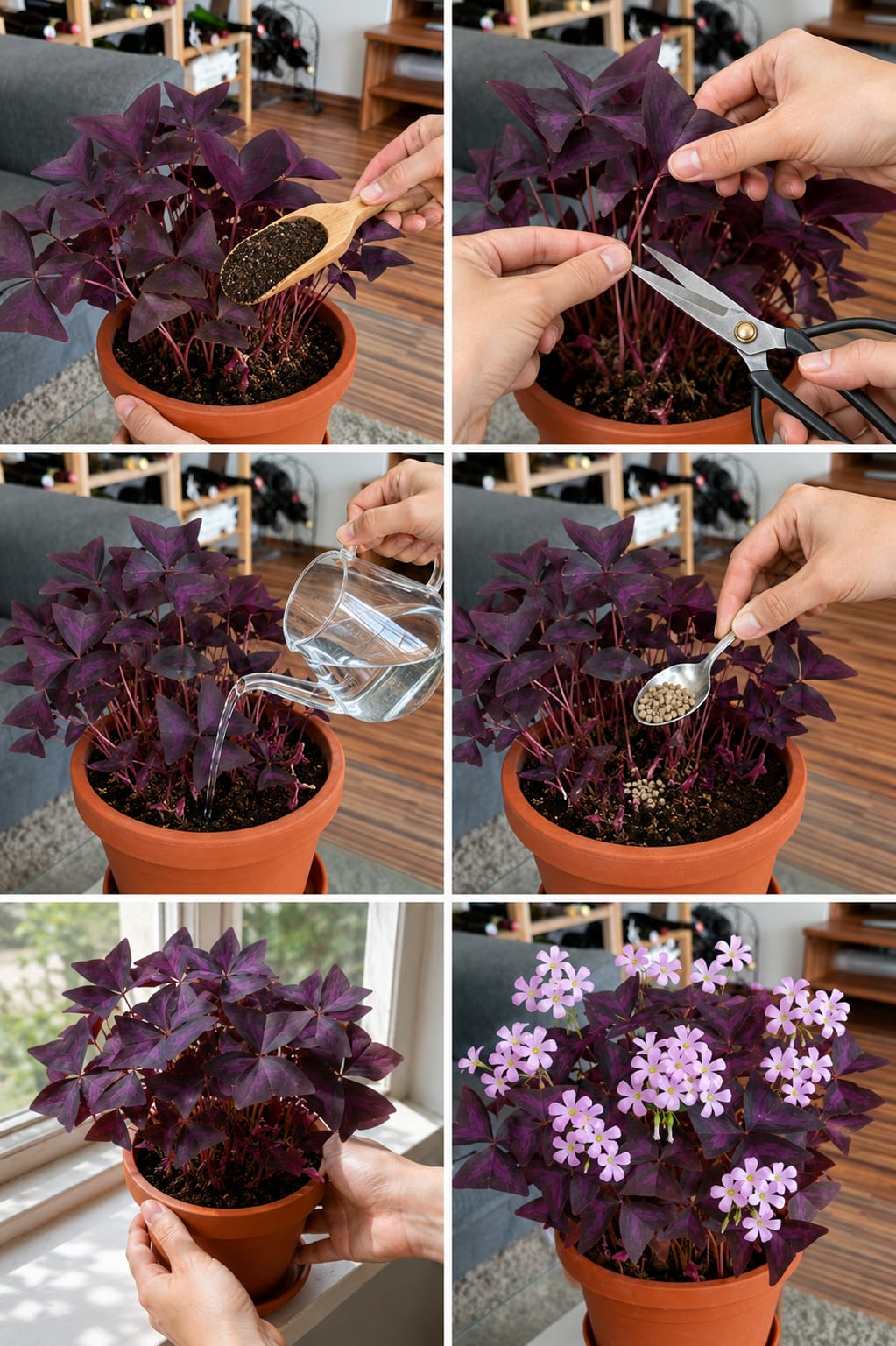
The image shows a healthy purple oxalis in a terracotta pot. A hand adds soil, trims stems, waters the plant, adds small fertilizer pellets, moves it to bright light, and finally the plant becomes full of pink flowers. This is a great visual example of the care routine purple oxalis needs: light pruning, proper watering, gentle feeding, and bright indirect light.
But purple oxalis has one special habit that confuses many beginners. It can go dormant. The leaves may droop, fade, or die back, and many people think the plant is dead. In many cases, the bulbs are still alive under the soil. With the right care, the plant can return with fresh purple leaves and new blooms.
What Is Purple Oxalis?
Purple Oxalis is a bulb-like houseplant that grows from small underground rhizomes. These rhizomes store energy and allow the plant to rest when conditions are not ideal. The plant produces triangular leaves in groups of three, giving it a butterfly-like or shamrock-like appearance.
The leaves open in bright light and close at night or during stress. This movement makes the plant feel alive and expressive. Its flowers are usually pale pink, lavender, or white, and they appear on thin stems above the leaves.
Why Purple Oxalis Is So Popular
Beautiful deep purple leaves
Soft pink flowers
Compact indoor size
Interesting leaf movement
Easy to grow in pots
Can recover after dormancy
Looks stunning on windowsills
Perfect for bright indoor decor
Important Care Note
Purple oxalis is beautiful, but it is also sensitive to overwatering. The rhizomes can rot if the soil stays wet for too long. It also needs bright light to keep its rich purple color and produce flowers. Weak light often leads to stretched stems, fewer blooms, and dull leaves.
Best Light for Purple Oxalis
Light is the most important factor for strong purple leaves and flowers. Purple oxalis grows best in bright indirect light. It can also enjoy gentle morning sun, but harsh afternoon sun may burn the leaves.
Best Indoor Locations
- East-facing window
- Bright north-facing window
- A few feet from a south-facing window
- West-facing window with sheer curtains
- Bright plant shelf with a grow light
If the plant is not blooming, the first thing to check is light. More bright indirect light often encourages better flowering.
Signs Your Oxalis Needs More Light
Long weak stems
Leaves leaning toward the window
Fewer flowers
Dull purple color
Slow growth
Leaves staying small
Signs of Too Much Sun
Crispy leaf edges
Faded purple leaves
Brown dry patches
Wilting during hot afternoons
Soil drying too quickly
How to Water Purple Oxalis
Purple oxalis likes evenly moist soil during active growth, but it does not like soggy soil. Water when the top inch of soil feels dry. Always use a pot with drainage holes so extra water can escape.
Simple Watering Rule
Touch the soil. If the top inch feels dry, water. If it still feels moist, wait.
Correct Watering Steps
- Check the top inch of soil.
- Water slowly around the soil surface.
- Let water drain from the bottom.
- Empty the saucer after watering.
- Do not let the pot sit in water.
Signs Your Oxalis Needs Water
- Leaves droop during the day
- Soil feels dry
- Pot feels light
- Leaf stems look weak
- Leaves close more than usual
Signs of Overwatering
- Yellowing leaves
- Mushy stems
- Wet soil for many days
- Sour smell from the pot
- Rhizomes becoming soft
- Leaves collapsing suddenly
Best Soil for Purple Oxalis
Use light, well-draining soil. Heavy garden soil can hold too much water and cause root or rhizome rot. A good indoor potting mix with added perlite works well.
Simple Soil Mix
- 2 parts indoor potting mix
- 1 part perlite
- 1 part coco coir or peat moss
- A small amount of compost, optional
The soil should hold some moisture but still drain quickly.
Best Pot for Purple Oxalis
A terracotta pot is a great choice because it allows the soil to dry more evenly. Plastic pots also work, but you must water carefully. The pot should have drainage holes.
Good Pot Features
- Drainage holes
- Not too large
- Wide enough for rhizomes to spread
- Stable base
- Clean saucer
A pot that is too large can hold too much wet soil around the rhizomes. Choose a pot only slightly bigger than the root area.
How to Feed Purple Oxalis
Purple oxalis benefits from gentle feeding during active growth. In the image, small fertilizer pellets are added to the soil. This can be safe if they are proper slow-release plant fertilizer pellets and used lightly.
Do not overfeed. Too much fertilizer can burn roots, weaken stems, or cause leaf damage.
Safe Feeding Routine
- Use balanced houseplant fertilizer
- Dilute liquid fertilizer to half strength
- Feed every 4 to 6 weeks during active growth
- Use slow-release pellets only according to the label
- Do not fertilize during dormancy
- Do not fertilize a stressed plant
Important Warning About Fertilizer Pellets
Only use fertilizer pellets made for plants. Do not use random pills, salt, sugar, baking soda, medicine, or unknown pellets. Purple oxalis grows from rhizomes, and strong ingredients can damage them quickly.
How to Encourage More Flowers
Flowers appear when the plant has enough energy. The best bloom boosters are bright light, healthy rhizomes, correct watering, and gentle fertilizer.
- Place the plant in bright indirect light.
- Allow gentle morning sun if possible.
- Water when the top inch dries.
- Use well-draining soil.
- Feed lightly during active growth.
- Remove dead leaves and faded flowers.
- Keep the plant warm.
- Respect dormancy if it happens.
Pruning Purple Oxalis
Pruning helps the plant stay tidy. Remove old, yellow, weak, or damaged stems at the base. This allows fresh growth to look cleaner and fuller.
How to Prune
- Use clean scissors.
- Find yellow or dead stems.
- Cut them close to the soil.
- Remove faded flower stems.
- Do not pull hard from the rhizomes.
Why Purple Oxalis Leaves Close
Purple oxalis leaves naturally close at night. They may also close during stress, heat, strong sun, dryness, or sudden environmental changes. This is normal, but if the plant stays closed all day, check light, water, and temperature.
Dormancy in Purple Oxalis
Dormancy is normal for oxalis. The plant may suddenly look tired. Leaves may turn yellow, collapse, or dry. This does not always mean the plant is dead. The rhizomes may simply need rest.
Signs of Dormancy
- Many leaves fading at once
- Stems weakening
- Fewer flowers
- Plant stops growing
- Leaves die back even with care
What to Do During Dormancy
- Stop fertilizing.
- Reduce watering.
- Remove dead leaves.
- Keep the pot in a cool dry place.
- Let the rhizomes rest for 4 to 8 weeks.
- Resume watering when new growth appears.
Do not throw the plant away too quickly. Many oxalis plants return beautifully after rest.
How to Repot Purple Oxalis
Repot when the pot becomes crowded or the soil is old. Spring is a good time to repot, especially when new growth begins.
- Remove the plant gently from the pot.
- Shake away old soil.
- Check the rhizomes.
- Remove soft or rotten pieces.
- Add fresh well-draining soil to a clean pot.
- Place the rhizomes under the soil surface.
- Water lightly.
- Move to bright indirect light.
How to Propagate Purple Oxalis
The easiest way to propagate purple oxalis is by dividing the rhizomes. Each healthy rhizome can grow into a new plant.
Propagation Steps
- Remove the plant from the pot.
- Find small rhizomes in the soil.
- Separate them gently.
- Plant them in fresh soil.
- Cover lightly with soil.
- Water lightly.
- Keep warm and bright.
Temperature Needs
Purple oxalis prefers normal indoor warmth. It does not like freezing temperatures or hot dry air.
- Best range: 60 to 75°F
- Best range: 16 to 24°C
- Avoid cold drafts
- Avoid heaters blowing directly
- Avoid extreme afternoon heat
Humidity Needs
Average home humidity is usually fine. If the air is very dry, leaf edges may become crispy. Increase humidity gently, but do not keep the soil wet.
Humidity Tips
- Group plants together
- Use a pebble tray
- Keep away from heaters
- Use a humidifier nearby
Common Problems
Leaves Drooping
This can happen from underwatering, overwatering, heat, low light, or natural night movement. Check the soil before watering.
Leaves Turning Green
Purple leaves may lose color in weak light. Move the plant to brighter indirect light.
No Flowers
The plant may need more light, gentle fertilizer, or a rest period after dormancy.
Yellow Leaves
Yellow leaves can come from overwatering, old growth, dormancy, or poor drainage.
Weak Stems
Weak stems usually mean low light or overwatering.
Pests on Purple Oxalis
Purple oxalis can attract pests, especially indoors when airflow is low.
- Aphids
- Spider mites
- Fungus gnats
- Whiteflies
- Mealybugs
Pest Care
- Isolate the plant.
- Rinse leaves gently if needed.
- Remove badly affected stems.
- Use insecticidal soap if needed.
- Let soil dry properly to reduce gnats.
- Check new growth weekly.
How to Style Purple Oxalis Indoors
Purple oxalis is naturally decorative. Its rich color looks beautiful with terracotta, white ceramic, black pots, brass accents, and wooden furniture.
- Place on a bright windowsill
- Use a terracotta pot for warm contrast
- Style near green houseplants
- Place on a coffee table with bright light
- Use as a colorful shelf plant
- Group with pink or white flowers
Weekly Care Routine
Check soil moisture.
Remove dead stems.
Look for pests.
Rotate the pot slightly.
Check light direction.
Empty saucer water.
Continue to Page 2
Continue to page 2 for more details about this article and the key points many readers miss on the first page.