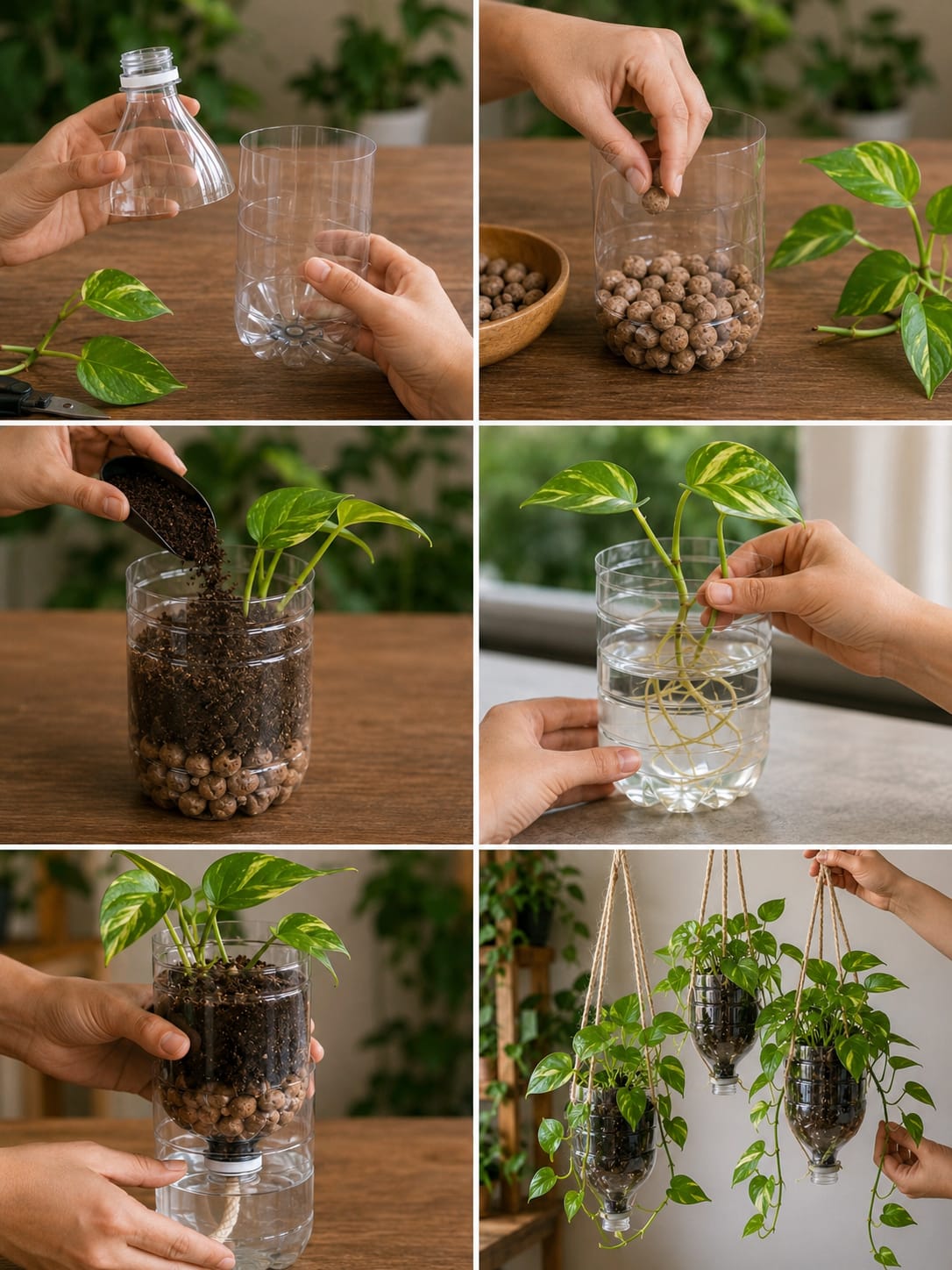
Pothos is one of the easiest and most beautiful indoor plants to grow. It has glossy green leaves, heart-shaped vines, fast growth, and a forgiving nature that makes it perfect for beginners. It can grow in soil, water, hanging baskets, jars, wall planters, and even recycled plastic bottles. If you want a creative indoor plant project that looks stylish and saves space, a pothos hanging bottle garden is a perfect idea.
The image shows a simple step-by-step method for turning plastic bottles into hanging pothos planters. The bottle is cut, filled with pebbles, layered with soil, planted with pothos cuttings, and turned into a hanging display with trailing vines. This project is affordable, decorative, and sustainable. It gives old plastic bottles a new purpose and creates a fresh green corner inside your home.
The best part is that pothos roots easily. You can start with cuttings in water, then move them into a bottle planter once roots grow. You can also plant rooted cuttings directly into a soil-filled bottle. With the right drainage, light, and watering routine, your recycled bottle garden can become full, lush, and beautiful.
What Is a Pothos Bottle Garden?
A pothos bottle garden is a small planter made from a recycled plastic bottle. The bottle can be used upright, upside down, or hanging with string. Inside the bottle, you can add a drainage layer, soil, and pothos cuttings. The vines then grow over the sides and trail down naturally.
This style is popular because it is simple, low-cost, and perfect for small spaces. It works well in apartments, kitchens, balconies, bedrooms, offices, plant corners, and sunny windows.
Why Pothos Is Perfect for This Project
It roots easily in water
It grows well indoors
It tolerates different light levels
It trails beautifully
It does not need frequent care
It looks lush in hanging displays
It can grow from small cuttings
It is beginner-friendly
Important Safety Note
Pothos is toxic if eaten by pets or children. Keep hanging bottle planters out of reach of cats, dogs, and small children. Also, make sure the bottle is secure before hanging it. A wet planter can become heavy, so use strong string, rope, or hooks.
What You Need
Clean plastic bottle
Sharp scissors or craft knife
Small pebbles or LECA balls
Indoor potting mix
Perlite, optional
Rooted pothos cuttings
Strong rope, twine, or macrame cord
Water
Small scoop
Optional activated charcoal
Step 1: Choose a Clean Plastic Bottle
Start with a clean plastic bottle. A clear bottle works well because you can see the layers, roots, and soil moisture. A 1-liter or 2-liter bottle is usually a good size. Smaller bottles can work for tiny cuttings, but they dry faster and may need more frequent checking.
Wash the bottle well and remove any sticky labels. Let it dry before cutting.
Step 2: Cut the Bottle
Use scissors or a craft knife to cut the bottle carefully. You can cut it in different ways depending on the design you want.
Easy Upright Bottle Planter
Cut the top part off and use the bottom section as a planter. This is simple and stable.
Self-Watering Style
Cut the bottle in half, flip the top part upside down, and place it into the bottom section. Add a wick through the bottle neck so water can move upward into the soil.
Hanging Planter Style
Make small holes near the top edge and attach rope or twine for hanging.
Step 3: Add Drainage Holes
If you are using the bottle as a normal soil planter, add small drainage holes at the bottom. This is very important because pothos does not like soggy soil. Water trapped at the bottom can cause root rot.
If you are making a self-watering bottle planter, do not fill the water reservoir too high. The soil should not sit constantly soaked.
Step 4: Add Pebbles or LECA
Add a layer of small pebbles or LECA balls at the bottom of the bottle. This helps create space at the base and gives the planter a clean layered look. It can also help keep soil from compacting near the bottom.
Do not rely on pebbles alone to prevent overwatering. Proper drainage and careful watering are still necessary.
Step 5: Add Optional Charcoal
A thin layer of activated charcoal can help reduce odor in enclosed or semi-enclosed bottle planters. This is optional, but helpful if the planter has limited airflow.
Use only a small amount. Too much is not needed.
Step 6: Add Light Potting Mix
Pothos grows best in light, airy soil. Regular indoor potting mix works, but adding perlite makes it better for bottle planters.
Simple Pothos Soil Mix
- 2 parts indoor potting mix
- 1 part perlite
- A small amount of coco coir, optional
- A small amount of orchid bark, optional
This mix holds enough moisture but still lets air reach the roots.
Step 7: Prepare Pothos Cuttings
Choose healthy pothos cuttings with at least one node. The node is the small bump on the stem where roots grow. A cutting without a node will not root properly.
Good Cutting Features
- Healthy green leaves
- Firm stem
- At least one node
- No mushy areas
- No pests
- No yellowing or rotting leaves
Step 8: Root Cuttings in Water
You can root pothos cuttings in water before planting them in the bottle. Place the nodes under water and keep the leaves above water. Put the glass in bright indirect light.
- Cut below a node.
- Remove lower leaves.
- Place the node in water.
- Change water every few days.
- Wait until roots are 2 to 3 inches long.
- Move rooted cuttings into soil.
Step 9: Plant the Cuttings
Make small holes in the soil with your finger or a stick. Place the rooted cuttings into the holes and cover the roots gently with soil. Press lightly so the stems stand upright.
Plant several cuttings together if you want a fuller look. One cutting will grow, but several cuttings make the bottle planter look lush much faster.
Step 10: Water Lightly
After planting, water lightly until the soil is evenly moist. Do not flood the bottle. If it has drainage holes, let extra water drain out. If it is a self-watering planter, keep the reservoir low and do not let the soil stay soaked.
Step 11: Hang the Planter Safely
Use strong rope, twine, macrame cord, or plant hanger hooks. Make sure the bottle is balanced before hanging it. Wet soil adds weight, so test the hanger carefully.
Safe Hanging Tips
- Use strong cord
- Make even holes on both sides
- Tie secure knots
- Hang from a strong hook
- Keep away from pets
- Do not hang above electronics
- Check the hanger monthly
Best Light for Pothos Bottle Gardens
Pothos grows best in bright indirect light. It can tolerate lower light, but growth will be slower and variegated leaves may lose some color.
Best Locations
- Near an east-facing window
- Near a bright north-facing window
- A few feet from a south-facing window
- Bright kitchen shelf
- Bathroom with natural light
- Hanging near a balcony door
Signs Your Pothos Needs More Light
- Small new leaves
- Long spaces between leaves
- Weak vines
- Less variegation
- Slow growth
Signs of Too Much Sun
- Yellow burned patches
- Brown crispy spots
- Leaves curling from heat
- Soil drying too fast
- Faded leaves
How to Water a Bottle Pothos Planter
Watering depends on the bottle design. Clear plastic makes it easier to see moisture, but do not water only because the top looks dry. Check the soil with your finger if possible.
Normal Bottle Planter
Water when the top inch of soil feels dry. Let extra water drain out.
Self-Watering Bottle Planter
Add water to the bottom reservoir, but keep the water level below the soil. The wick should bring moisture up slowly. Refill only when the reservoir is low and the soil begins to dry.
Signs Your Pothos Needs Water
- Leaves droop slightly
- Soil feels dry
- Leaves curl inward
- Planter feels light
Signs of Overwatering
- Yellow leaves
- Wet soil for many days
- Soft stems
- Bad smell
- Brown mushy roots
- Fungus gnats
How to Keep the Bottle Garden Lush
A pothos bottle garden becomes fuller when you prune and replant cuttings. Each time a vine gets long, trim it and root the cut piece. Then plant it back into the bottle or make another planter.
- Trim long vines above a node.
- Place cuttings in water.
- Wait for roots.
- Plant rooted cuttings back into the bottle.
- Repeat until the planter looks full.
Fertilizer for Pothos Bottle Gardens
Pothos does not need heavy fertilizer. In a small bottle planter, too much fertilizer can build up quickly. Use a weak balanced liquid fertilizer during active growth.
Safe Feeding Routine
- Use balanced houseplant fertilizer
- Dilute to half strength
- Feed once every 6 to 8 weeks in spring and summer
- Do not fertilize in winter if growth slows
- Do not fertilize stressed plants
Pruning Pothos Vines
Pruning keeps pothos full and prevents the plant from becoming long and thin. Cut just above a node. New growth can branch from the cut area.
When to Prune
- Vines are too long
- Plant looks thin
- Leaves are yellow
- You want more cuttings
- You want a bushier shape
How to Train the Vines
Pothos vines naturally trail down. You can let them hang freely or guide them around a shelf, wall, or hanging frame. Use soft clips or twine. Do not tie stems too tightly.
Common Problems
Yellow Leaves
Yellow leaves often mean overwatering, low light, old leaves, or root stress. Check the soil first.
Brown Tips
Brown tips can come from underwatering, low humidity, fertilizer buildup, or inconsistent watering.
Leggy Growth
Leggy vines usually mean the plant needs more light or pruning.
Root Rot
Root rot happens when soil stays too wet. Remove rotten roots and repot in fresh airy soil.
Leaves Losing Variegation
Variegated pothos needs bright indirect light. Low light can make leaves turn more green.
Root Rot Rescue
- Remove the plant from the bottle.
- Wash away wet soil.
- Cut off mushy roots.
- Keep firm healthy roots.
- Clean the bottle.
- Add fresh pebbles and soil.
- Replant healthy cuttings.
- Water lightly.
Pests on Pothos
Pothos can attract pests if the plant is stressed or crowded.
- Mealybugs
- Spider mites
- Scale
- Fungus gnats
- Aphids
Pest Care
Isolate the plant.
Wipe leaves with a damp cloth.
Remove visible pests.
Use insecticidal soap if needed.
Let soil dry properly.
Repeat treatment weekly until pests are gone.
Continue to Page 2
Continue to page 2 for more details about this article and the key points many readers miss on the first page.