Fuchsia plants are loved for their beautiful hanging flowers, soft green leaves, and bright pink, purple, red, or white blooms. Their flowers look like little dancing bells, which makes them perfect for windowsills, balconies, patios, hanging baskets, and indoor plant corners with bright filtered light. When a fuchsia is healthy, it can bloom heavily and create a stunning colorful display.
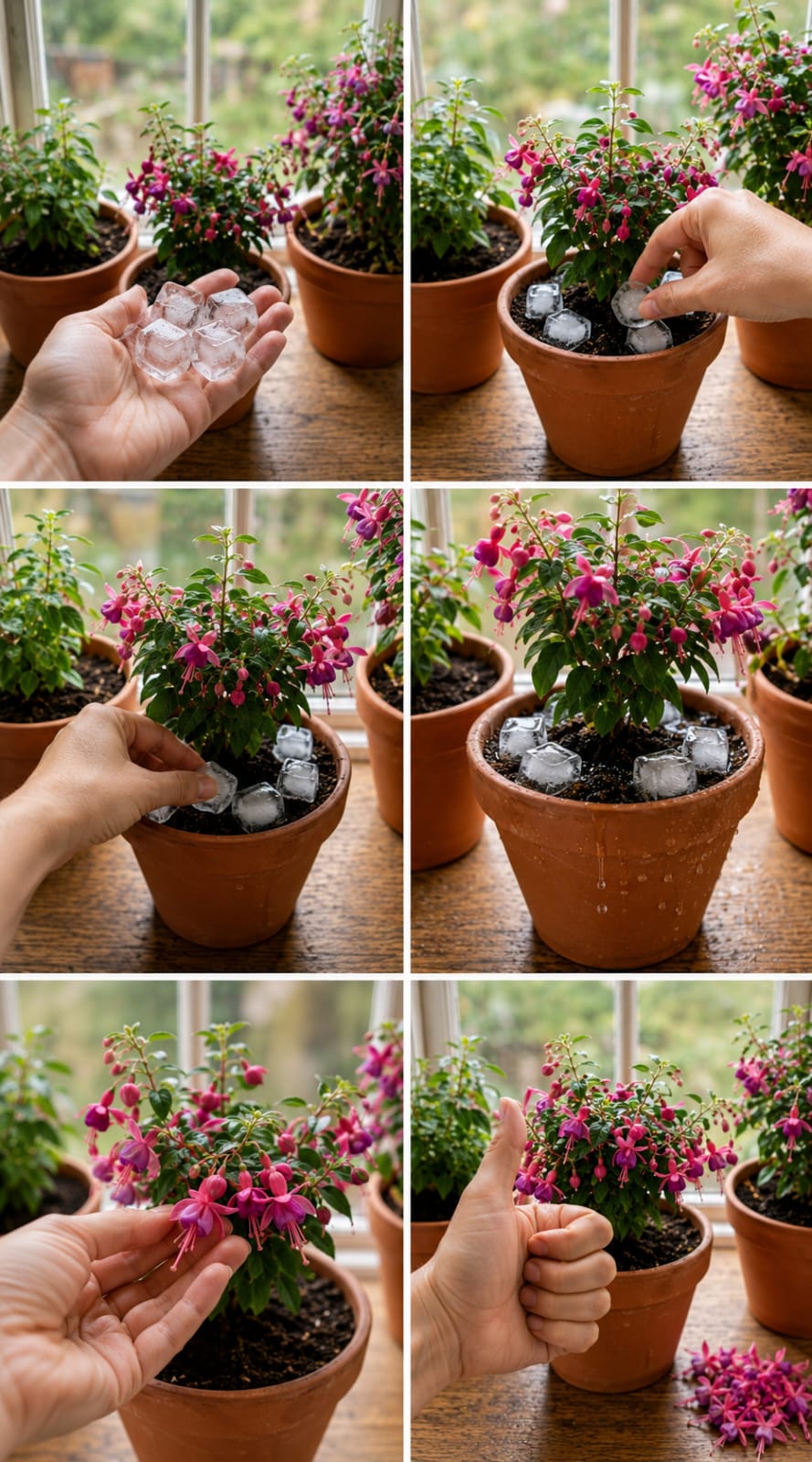
The image shows a small fuchsia plant in a terracotta pot with ice cubes placed on the soil. The idea looks simple and attractive because ice cubes melt slowly and give water to the plant little by little. Many people use this trick for houseplants because it seems easy and controlled. But fuchsia plants are sensitive to temperature changes, and ice can shock the roots if used too often or placed too close to the stem.
The safest way to grow fuchsia is not by relying on ice every day. The real secret is bright indirect light, evenly moist soil, cool temperatures, gentle feeding, regular pruning, and good drainage. If you want to use ice cubes, use them carefully and only as an occasional slow-watering method, not as a main care routine.
What Is a Fuchsia Plant?
Fuchsia is a flowering plant known for its colorful hanging blooms. Some types grow upright, while others trail beautifully from baskets and containers. The flowers often have two-tone colors, such as pink and purple, red and white, or magenta and violet.
Fuchsias like cool, bright, and slightly humid conditions. They do not enjoy hot dry air, harsh direct sun, or completely dry soil. This makes them different from succulents and drought-tolerant plants.
Why Fuchsias Are So Popular
They produce bright colorful flowers.
They grow well in pots and baskets.
They look beautiful near windows.
They can bloom for a long season.
They attract attention with their bell-shaped flowers.
They work well indoors, on patios, and balconies.
They can be pruned into a bushy shape.
Can You Water Fuchsia With Ice Cubes?
You can use ice cubes occasionally, but it is not the best regular watering method for fuchsia. Ice is very cold, and fuchsia roots prefer room-temperature water. If ice sits directly against the stem or root zone, it can chill the roots and stress the plant.
If you choose to use ice cubes, place only a few around the outer edge of the pot, away from the main stem. Let them melt slowly. Do not cover the whole soil surface with ice. Do not use ice on a weak, recently repotted, or heat-stressed plant.
Important Warning About Ice Cubes
Ice cubes should not replace proper watering. They can melt unevenly and may not soak the entire root ball. A fuchsia needs evenly moist soil, not small cold patches of water. Too much ice can also cool the soil suddenly, which may slow root activity.
Avoid Ice Cubes If:
The plant is already wilting badly.
The soil is very dry and pulled away from the pot.
The plant was recently repotted.
The weather is cold.
The plant is indoors in a cool room.
The roots are weak or damaged.
The pot is very small.
Safe Ice Cube Method
If you still want to use the ice cube trick, use it gently.
Check the soil first.
Use only 2 to 4 small ice cubes for a small pot.
Place them near the outer edge of the soil.
Keep ice away from the main stem.
Let the cubes melt naturally.
Check the soil after melting.
Do not repeat daily.
For most situations, room-temperature water is safer and better.
Best Way to Water Fuchsia
Fuchsia plants like soil that stays lightly moist but not soggy. Water when the top layer of soil begins to feel dry. Do not let the plant dry out completely for too long, especially when it is blooming.
Correct Watering Steps
Touch the top inch of soil.
If it feels slightly dry, water slowly.
Use room-temperature water.
Water around the soil, not over the flowers.
Let water drain from the bottom.
Empty the saucer after watering.
Signs Your Fuchsia Needs Water
- Leaves droop slightly.
- Soil feels dry on top.
- Pot feels lighter than usual.
- Flowers begin to wilt.
- Leaves lose their fresh look.
Signs of Overwatering
- Yellow leaves
- Wet soil for many days
- Soft stems
- Drooping even when soil is wet
- Bad smell from soil
- Root rot
- Fungus gnats
Best Light for Fuchsia
Fuchsias love bright light, but they usually do not like harsh hot sun. Gentle morning sun is often fine. Strong afternoon sun can burn leaves and dry flowers quickly.
Best Locations
Bright east-facing window
Bright north-facing window
Patio with morning sun and afternoon shade
Balcony with filtered light
Hanging basket under partial shade
Indoor plant shelf with grow light
Signs Your Fuchsia Needs More Light
- Few flowers
- Long weak stems
- Pale leaves
- Slow growth
- Plant leaning toward the window
Signs of Too Much Sun
- Crispy leaf edges
- Faded flowers
- Brown dry spots
- Wilting during afternoon
- Soil drying too quickly
Best Soil for Fuchsia
Fuchsia needs rich but well-draining soil. The soil should hold moisture without becoming heavy or muddy.
Simple Soil Mix
- 2 parts high-quality potting mix
- 1 part perlite
- 1 part coco coir or peat moss
- A small amount of compost, optional
This mix helps the roots stay moist but also gives them air.
Best Pot for Fuchsia
A terracotta pot is good because it allows some airflow, but it can dry faster. Plastic pots hold moisture longer. Both can work if the pot has drainage holes.
Good Pot Features
- Drainage holes
- Not too small
- Not too deep
- Stable saucer
- Enough space for roots
Never keep fuchsia in a pot without drainage. Wet soil can quickly damage roots.
How to Encourage More Blooms
Fuchsia blooms best when it has bright filtered light, steady moisture, cool temperatures, and regular feeding. Removing old flowers also helps the plant keep producing new buds.
- Give bright indirect light.
- Protect from hot afternoon sun.
- Keep soil lightly moist.
- Feed during active growth.
- Pinch stems for bushier growth.
- Remove faded flowers.
- Keep the plant cool.
- Avoid drying the root ball completely.
Fertilizer for Fuchsia
Fuchsia is a flowering plant, so it benefits from gentle regular feeding during the growing season. Use a balanced liquid fertilizer or a bloom fertilizer diluted to half strength.
Safe Feeding Routine
- Feed every 2 to 4 weeks in spring and summer.
- Use half-strength fertilizer.
- Water before feeding if the soil is dry.
- Do not fertilize a stressed plant.
- Reduce feeding in fall.
- Stop feeding during winter rest.
Pruning Fuchsia for Bushy Growth
Pruning helps fuchsia grow fuller and produce more flowering stems. Pinch the tips of young stems to encourage branching.
How to Prune
- Use clean scissors.
- Remove dead or weak stems.
- Pinch growing tips above a leaf node.
- Cut back leggy stems.
- Remove faded flowers.
- Shape the plant lightly and often.
Deadheading Fuchsia Flowers
Deadheading means removing old flowers. This keeps the plant tidy and encourages new blooms. Remove faded flowers and the small seed pod behind them if one forms.
Temperature Needs
Fuchsias prefer cool to mild temperatures. They struggle in extreme heat. If your plant wilts in summer even when watered, heat may be the problem.
- Best range: 60 to 75°F
- Best range: 16 to 24°C
- Protect from intense heat
- Protect from frost
- Avoid hot dry vents
Humidity Needs
Fuchsia likes moderate humidity. Dry air can cause flower drop and crispy leaves. Indoors, keep the plant away from heaters and dry airflow.
Humidity Tips
- Group plants together.
- Use a pebble tray.
- Use a humidifier nearby.
- Keep away from heaters.
- Avoid wetting flowers heavily.
Why Fuchsia Drops Flowers
Flower drop is common when the plant is stressed.
- Too much heat
- Dry soil
- Low light
- Sudden movement
- Overwatering
- Lack of nutrients
- Cold shock
Why Leaves Turn Yellow
- Overwatering
- Underwatering
- Low nutrients
- Poor drainage
- Too much sun
- Old leaves aging
- Root problems
Root Rot Rescue
If your fuchsia is drooping while the soil is wet, check the roots. Root rot can happen when soil stays soggy.
- Remove the plant from the pot.
- Shake away wet soil.
- Cut off black or mushy roots.
- Keep firm healthy roots.
- Repot in fresh well-draining soil.
- Use a pot with drainage.
- Water lightly after repotting.
- Keep in bright shade while recovering.
Pests on Fuchsia
Fuchsia can attract pests, especially outdoors or near open windows.
- Aphids
- Whiteflies
- Spider mites
- Mealybugs
- Thrips
- Fungus gnats
Pest Care
- Isolate the plant.
- Rinse pests gently from leaves.
- Remove badly affected stems.
- Use insecticidal soap if needed.
- Repeat weekly until pests are gone.
- Improve airflow.
Can Fuchsia Grow Indoors?
Yes, but it needs bright light and cool conditions. A warm dark room will not keep fuchsia blooming well. Indoors, place it near a bright window and protect it from heat.
Can Fuchsia Grow Outdoors?
Yes. Fuchsia grows beautifully outdoors in mild weather, especially in partial shade. It is perfect for balconies, porches, patios, and hanging baskets. Protect it from frost and extreme heat.
Winter Care for Fuchsia
Some fuchsias rest in winter. Growth may slow, and blooms may stop. Reduce watering and stop feeding during the rest period. Keep the plant in a cool bright place if possible.
Winter Tips
- Water less often.
- Stop fertilizing.
- Keep away from freezing temperatures.
- Trim dead growth.
- Resume feeding in spring.
How to Propagate Fuchsia
Fuchsia is easy to propagate from stem cuttings.
- Cut a healthy non-flowering stem.
- Remove lower leaves.
- Place the cutting in water or moist soil.
- Keep in bright indirect light.
- Keep moisture steady.
- Wait for roots.
- Plant in a small pot.
Best Styling Ideas
- Place on a bright windowsill.
- Grow in terracotta pots.
- Use in hanging baskets.
- Group several colors together.
- Place on a balcony shelf.
- Use as a kitchen window flower plant.
- Pair with green trailing plants.
Weekly Care Routine
- Check soil moisture.
- Remove faded flowers.
- Look for pests.
- Rotate the pot slightly.
- Check for heat stress.
- Empty saucer water.
Monthly Care Routine
- Feed lightly during active growth.
- Trim leggy stems.
- Check roots if growth is weak.
- Refresh top soil if needed.
- Clean old leaves from the pot.
- Review light conditions.
Continue to Page 2
Continue to page 2 for more details about this article and the key points many readers miss on the first page.