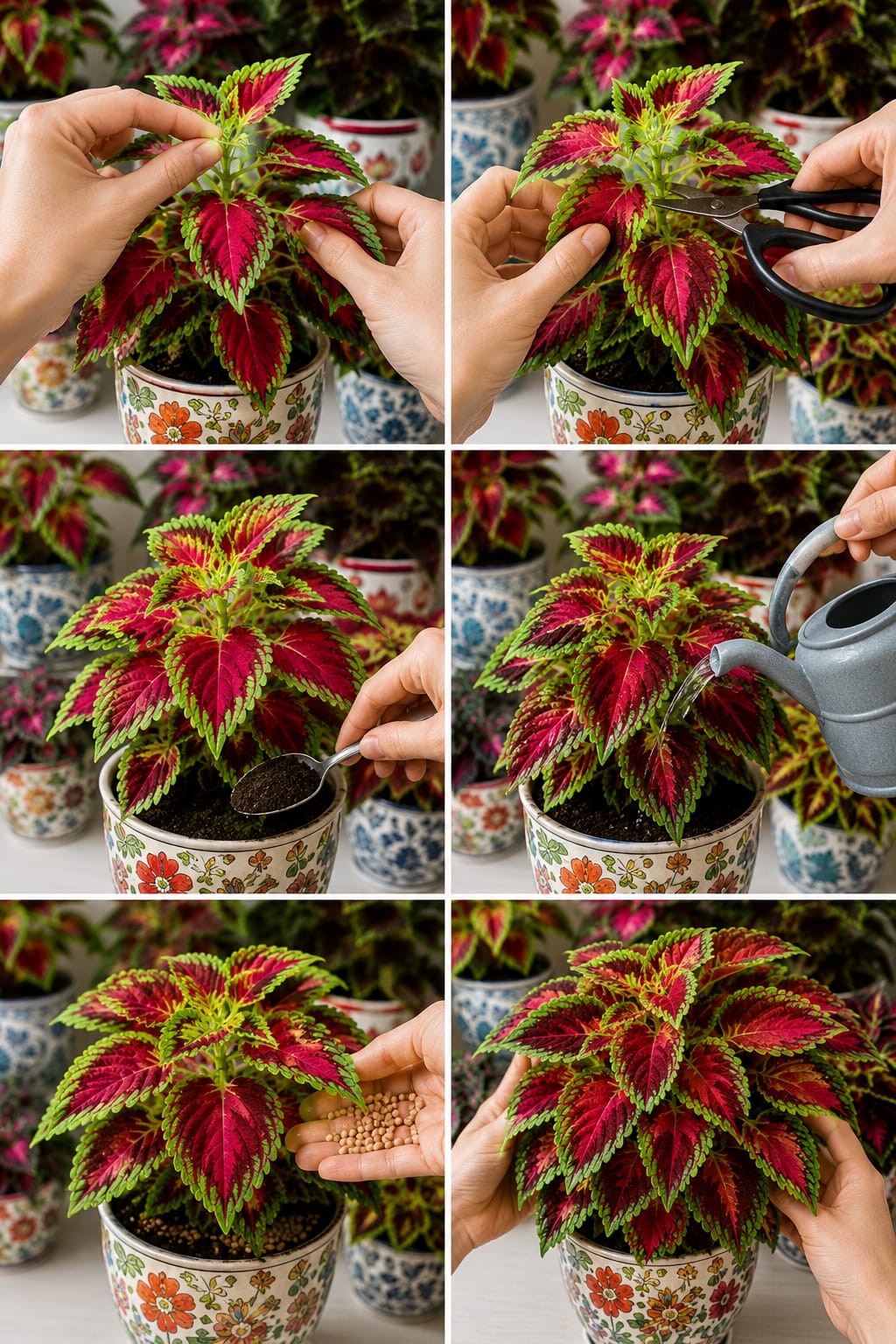
Coleus is one of the most colorful foliage plants you can grow at home. Its leaves can look painted with deep burgundy, pink, red, lime green, cream, purple, copper, and golden edges. Unlike many flowering plants, coleus does not need big blooms to look beautiful. The leaves are the main show, and when the plant is healthy, it can brighten a windowsill, balcony, patio, kitchen corner, or indoor plant shelf instantly.
Many gardeners love coleus because it grows fast, responds well to pruning, and can become full and bushy with simple care. A small plant can turn into a lush mound of colorful leaves when it receives enough light, steady moisture, gentle feeding, and regular pinching. It is also easy to propagate from cuttings, making it a perfect plant for beginners who want quick results.
The real secret to a beautiful coleus is balance. Coleus wants bright light, but not harsh burning sun. It likes moist soil, but not soggy roots. It benefits from fertilizer, but too much can cause weak growth. It likes pruning, but harsh cutting at the wrong time can stress it. When you understand these basics, coleus becomes one of the easiest plants to grow indoors and outdoors.
What Is Coleus?
Coleus is a colorful foliage plant grown mostly for its leaves. It belongs to the mint family, which explains why it grows quickly and branches easily when pinched. Depending on the variety, coleus leaves can be small, large, smooth, ruffled, pointed, rounded, or deeply serrated.
Some coleus plants grow upright and tall, while others stay compact and bushy. There are also trailing varieties that look beautiful in hanging baskets and mixed containers. The wide range of colors makes coleus a favorite for decorative pots, porch planters, garden borders, patio displays, and indoor plant styling.
Why Coleus Is So Popular
It has stunning colorful leaves.
It grows quickly in pots.
It is easy to prune and shape.
It can grow indoors or outdoors.
It looks beautiful in decorative containers.
It is easy to propagate from cuttings.
It adds color without needing flowers.
It works well in bright rooms, patios, and balconies.
Best Light for Coleus
Light is the most important factor for strong coleus color. Coleus needs bright light to keep its leaves vivid. If it gets too little light, the colors may fade, stems may stretch, and the plant may look thin. If it gets too much harsh sun, the leaves may scorch, curl, or become crispy.
Indoors, place coleus near a bright window. Outdoors, give it morning sun and afternoon shade, especially in hot climates. Some modern coleus varieties tolerate more sun, but most still look best with filtered light during the hottest part of the day.
Best Indoor Locations
Bright east-facing window
South-facing window with sheer curtain
West-facing window with filtered afternoon light
Bright kitchen windowsill
Plant shelf with grow light
Sunroom with indirect light
Signs Your Coleus Needs More Light
Colors look dull or faded.
Stems become long and weak.
Leaves become smaller.
The plant leans toward the window.
New growth looks pale green instead of colorful.
Signs of Too Much Sun
- Brown crispy spots on leaves
- Leaf edges drying
- Leaves curling downward
- Colors looking washed out
- Plant wilting during hot afternoons
How to Water Coleus Correctly
Coleus likes evenly moist soil. It does not like to dry out completely, especially during warm weather. At the same time, it does not like soggy soil. The best routine is to water when the top inch of soil begins to feel dry.
Use room-temperature water and pour slowly around the soil. Let extra water drain from the bottom of the pot. If the plant sits in a saucer, empty the saucer after watering. Standing water can cause root rot.
Simple Watering Rule
Touch the soil with your finger. If the top inch feels dry, water. If it still feels moist, wait.
Signs Coleus Needs Water
- Leaves droop slightly.
- Soil feels dry on top.
- Pot feels light.
- Leaf edges look soft or tired.
- Plant perks up after watering.
Signs of Overwatering
- Yellow leaves
- Soft stems
- Wet soil for many days
- Bad smell from soil
- Fungus gnats
- Leaves dropping even when soil is wet
Best Soil for Coleus
Coleus grows best in rich, light, well-draining soil. It needs moisture, but the roots also need air. Heavy garden soil can become compact in containers and may hold too much water.
Simple Coleus Soil Mix
- 2 parts high-quality potting mix
- 1 part perlite
- 1 part coco coir or peat moss
- A small amount of compost, optional
This mix holds enough moisture for lush leaves while allowing extra water to drain away.
Best Pot for Coleus
A coleus pot must have drainage holes. This is very important. Coleus drinks more water than many succulents, but roots can still rot if water stays trapped.
Good Pot Features
- Drainage holes
- Wide enough for branching growth
- Stable base
- Clean saucer
- Not too small for fast growth
Terracotta pots dry faster, which can be helpful if you overwater. Plastic and glazed ceramic pots hold moisture longer, which can help in hot rooms or outdoor patios.
How to Make Coleus Bushy
The easiest way to make coleus bushy is to pinch the growing tips. Coleus naturally wants to grow upward. When you pinch or cut the top, the plant responds by producing side branches. More side branches mean more leaves and a fuller shape.
Pinching Steps
- Find the top growing tip of a stem.
- Use clean fingers or scissors.
- Pinch just above a pair of leaves.
- Repeat on tall stems.
- Wait for new side shoots to grow.
Pinching regularly keeps coleus compact and lush. If you never pinch it, the plant may become tall, thin, and leggy.
Pruning Coleus
Pruning is different from pinching. Pinching removes soft new tips. Pruning removes longer stems, weak growth, damaged leaves, or old branches. Coleus handles pruning well when it is healthy and actively growing.
When to Prune
- The plant looks leggy.
- Stems are too tall.
- Leaves are damaged.
- The plant needs shaping.
- You want cuttings for propagation.
How to Prune
- Use clean sharp scissors.
- Cut above a leaf node.
- Remove weak stems first.
- Keep the shape balanced.
- Do not remove all leaves at once.
Should You Remove Coleus Flowers?
Coleus can produce flower spikes. The flowers are usually small and not as showy as the leaves. Many gardeners remove the flower spikes because flowering can make the plant focus less on foliage growth.
If you want a fuller leafy plant, pinch off flower spikes as soon as they appear. If you like the flowers, you can leave some, but the plant may become less compact over time.
Fertilizer for Coleus
Coleus grows quickly, so it benefits from gentle feeding during active growth. Use a balanced liquid fertilizer diluted to half strength. Too much fertilizer can cause weak, soft growth, so do not overdo it.
Safe Feeding Routine
- Feed every 3 to 4 weeks in spring and summer.
- Use half-strength balanced fertilizer.
- Water before feeding if soil is dry.
- Reduce feeding in fall.
- Stop feeding in winter if growth slows.
Can You Use Slow-Release Fertilizer Pellets?
Yes, slow-release fertilizer pellets can be used if they are made for houseplants or container plants. Use only the amount recommended on the label. Do not add random pellets, pills, salts, sugar, or unknown powders to the soil.
When using slow-release fertilizer, apply it lightly and keep it away from direct contact with the stems. Water normally after application.
Temperature Needs
Coleus loves warmth. It does not tolerate frost. If grown outdoors, bring it inside before cold weather arrives. Indoors, keep it away from cold windows, air conditioners, and drafts.
- Best temperature: 65 to 80°F
- Best temperature: 18 to 27°C
- Avoid frost
- Avoid cold drafts
- Avoid very hot dry air from heaters
Humidity for Coleus
Coleus enjoys moderate humidity. In very dry air, leaf edges may crisp and the plant may need water more often. Indoors, humidity can be improved with simple methods.
Humidity Tips
- Group plants together.
- Use a pebble tray.
- Place a humidifier nearby.
- Keep away from heaters.
- Avoid placing near hot vents.
How to Propagate Coleus
Coleus is one of the easiest plants to propagate. Stem cuttings root quickly in water or soil. This is a great way to make more plants or save a favorite variety before winter.
Water Propagation Steps
- Cut a healthy stem below a node.
- Remove the lower leaves.
- Place the stem in a glass of water.
- Keep leaves above water.
- Place in bright indirect light.
- Change water every few days.
- Plant in soil when roots are 1 to 2 inches long.
Soil Propagation Steps
- Take a healthy stem cutting.
- Remove lower leaves.
- Place the stem in moist potting mix.
- Keep soil lightly moist.
- Place in bright indirect light.
- Wait for new growth.
How to Keep Coleus Color Bright
The color of coleus depends on variety, light, nutrients, and plant health. If the color fades, the plant may need brighter light. If leaves scorch, the light may be too harsh.
Color Care Tips
- Give bright filtered light.
- Avoid deep shade.
- Protect from harsh afternoon sun.
- Feed lightly during growth.
- Prune often for fresh colorful leaves.
- Remove old faded leaves.
Growing Coleus Indoors
Coleus can grow indoors if it gets enough light. A bright windowsill is best. If your home is dark, use a grow light. Rotate the pot weekly so the plant stays even and does not lean.
Indoor coleus may need pruning more often because it can stretch toward light. Keep it near the brightest safe spot available.
Growing Coleus Outdoors
Outdoors, coleus is beautiful in containers, borders, porch planters, and mixed displays. It prefers warm weather and protection from frost. In hot regions, give afternoon shade. In cooler mild weather, it can handle more sun.
Common Coleus Problems
Leggy Growth
Leggy growth usually means low light or lack of pruning. Move the plant to brighter indirect light and pinch the tips.
Yellow Leaves
Yellow leaves can come from overwatering, underwatering, low nutrients, cold stress, or old leaf aging.
Brown Crispy Edges
Brown edges may come from dry soil, low humidity, too much sun, or fertilizer burn.
Leaves Losing Color
Faded color often means weak light. Move the plant to a brighter spot with filtered light.
Drooping Leaves
Drooping can mean the plant is thirsty, overheated, or overwatered. Check the soil before watering.
Root Rot Rescue
If coleus droops while the soil is wet, check the roots. Root rot happens when soil stays soggy for too long.
Remove the plant from the pot.
Shake away wet soil.
Cut off black or mushy roots.
Keep firm healthy roots.
Repot in fresh well-draining soil.
Use a pot with drainage holes.
Water lightly after repotting.
Keep in bright indirect light while recovering.
Continue to Page 2
Continue to page 2 for more details about this article and the key points many readers miss on the first page.