What to Do If Water Collects at the Bottom
If you accidentally add too much water and you can see water sitting at the bottom, tilt the bowl carefully and drain out as much as possible. If the soil is soaked, remove the plant and let it dry before repotting.
Do not leave water sitting there for days.
How to Fix a Mushy Snake Plant
- Remove the plant from the bowl.
- Shake away wet soil.
- Cut off mushy roots and leaves.
- Let healthy parts dry for 1 to 2 days.
- Repot in fresh dry gritty soil.
- Use less water going forward.
If the whole base is rotten, you may need to save healthy leaf cuttings or pups.
Propagating Bird’s Nest Snake Plant
Bird’s Nest Snake Plant can be propagated by division or leaf cuttings. Division is the best method if you want the new plant to look like the parent.
Division Method
- Remove the plant from the pot.
- Find separate rosettes or pups.
- Separate them with roots attached.
- Plant each section in gritty soil.
- Water lightly after a few days.
Leaf Cutting Method
- Cut a healthy leaf section.
- Let the cut end dry for 1 to 2 days.
- Place the bottom end in soil or water.
- Wait for roots and new growth.
Leaf cuttings may not always keep the exact variegation of the parent plant. Division is more reliable.
Best Rooms for This Display
- Living room coffee table
- Bedroom dresser
- Home office desk
- Entryway console
- Bright bathroom shelf
- Dining room centerpiece
- Coastal decor corner
- Plant shelf display
Styling Ideas
This glass bowl shell display already has a coastal look, but you can style it in different ways depending on your home.
- Use white shells for a clean beach style.
- Use mixed shells for a natural coastal look.
- Place on a wooden tray for warmth.
- Pair with candles and linen decor.
- Add small river stones for texture.
- Use a clear glass bowl for modern style.
- Place near neutral furniture.
- Keep the area uncluttered so the plant stands out.
How to Make It Look Expensive
Use fewer shells but choose larger attractive ones for the front. Keep the glass spotless. Wipe fingerprints from the bowl. Use clean layers and avoid messy soil against the glass. A simple, balanced arrangement looks more elegant than an overcrowded one.
Weekly Care Routine
- Check if the soil is dry.
- Look for condensation inside the glass.
- Inspect the base for softness.
- Dust the leaves if needed.
- Check shells for moisture or mold.
- Keep the bowl in bright indirect light.
Monthly Care Routine
- Remove and clean dusty shells.
- Wipe the glass bowl.
- Check root and soil moisture.
- Rotate the bowl slightly for even light.
- Inspect for pests.
- Remove dead leaves if any appear.
Common Pests
Bird’s Nest Snake Plant is usually pest-resistant, but pests can still appear. Check between the leaves and near the soil surface.
- Mealybugs
- Spider mites
- Scale insects
- Fungus gnats
Pest Care
- Isolate the plant.
- Wipe pests with a cotton swab.
- Use insecticidal soap if needed.
- Let the soil dry well.
- Remove any decaying organic matter.
Common Mistakes to Avoid
- Using a closed glass container
- Watering too often
- Using heavy potting soil
- Soaking the shells
- Burying the plant crown
- Keeping water in the bottom layer
- Placing in hot direct sun
- Misting the leaves
- Using homemade liquid fertilizers
- Ignoring soft yellow leaves
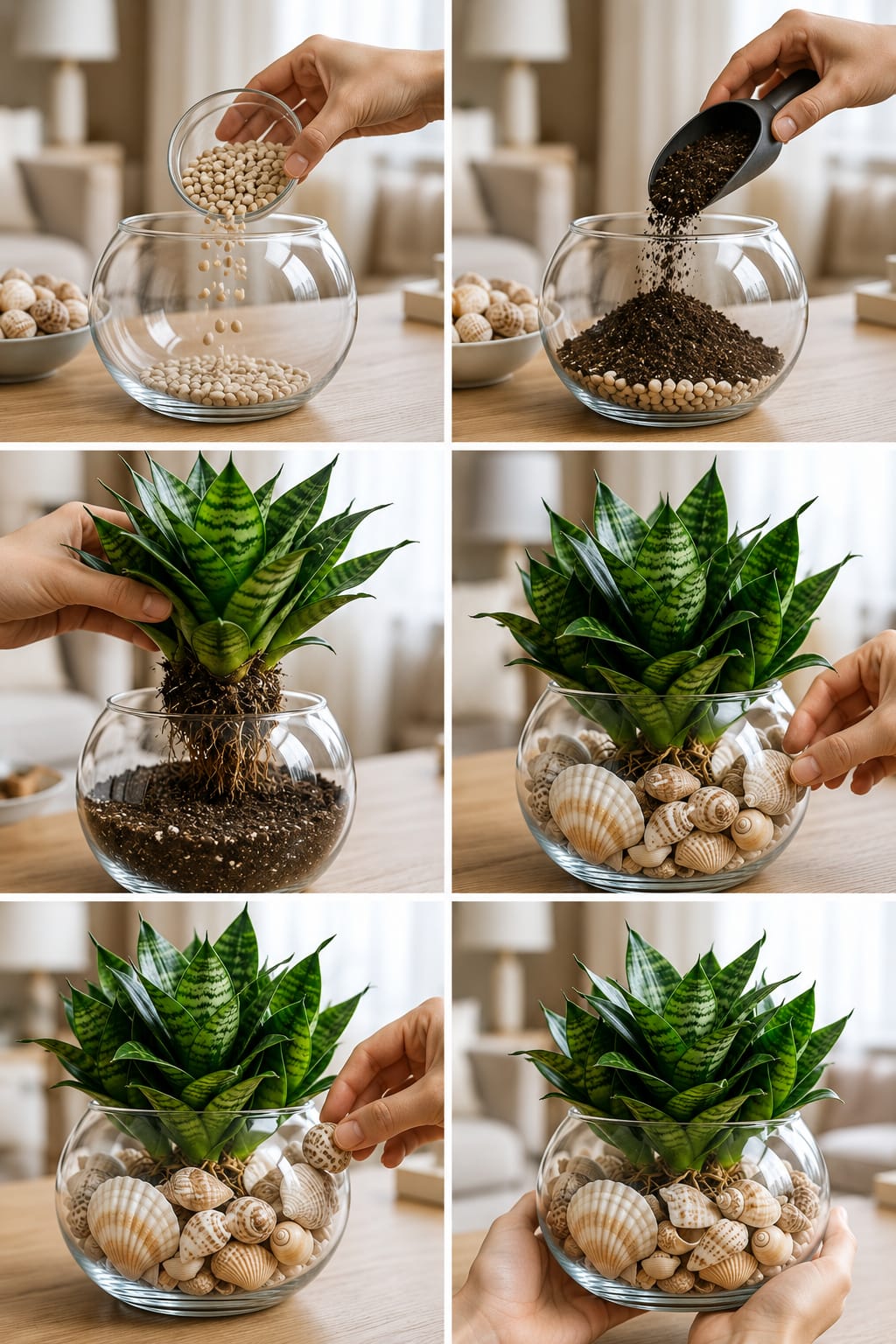
Simple 6-Step Display Summary
- Add pebbles or LECA to the bottom of a clean glass bowl.
- Add a thin charcoal layer if desired.
- Fill with gritty cactus soil.
- Place the Bird’s Nest Snake Plant in the center.
- Decorate around the plant with clean dry shells.
- Water very lightly only when the soil is fully dry.
Frequently Asked Questions
Can snake plants grow in a glass fishbowl?
Yes, but only with careful watering. A fishbowl usually has no drainage, so the soil must stay mostly dry and airy.
Are shells safe for snake plants?
Clean dry shells are safe as decoration. Do not crush large amounts into the soil, and do not keep them wet.
How often should I water this display?
Only when the soil is completely dry. This may be every few weeks or less, depending on your room.
Should I mist the plant?
No. Misting can increase rot risk in a glass bowl. Wipe dusty leaves instead.
What soil should I use?
Use a gritty cactus or succulent mix with extra perlite, pumice, or coarse sand.
Does the bowl need drainage?
Drainage is always better. If the bowl has no drainage, water very lightly and watch for trapped moisture.
Can I keep it in direct sun?
Avoid hot direct sun. Glass can heat up and damage roots or burn leaves. Bright indirect light is best.
Why are the leaves turning yellow?
Yellow leaves often mean overwatering, poor drainage, or root stress. Check for wet soil and mushy roots.
Final Thoughts
A Bird’s Nest Snake Plant fishbowl garden with shells is a beautiful way to turn a small houseplant into a decorative indoor centerpiece. The round glass bowl, natural shells, and compact green rosette create a fresh coastal look that works in many rooms.
The key to success is careful care. Because a glass fishbowl usually has no drainage, you must use gritty soil, keep the crown dry, water very lightly, and allow the soil to dry completely between waterings. The shells should be decorative, clean, and dry. The plant should receive bright indirect light and gentle airflow.
With the right setup, this display can stay elegant and healthy for a long time. It is simple, stylish, and perfect for anyone who loves low-maintenance indoor plants with a creative decorative touch.