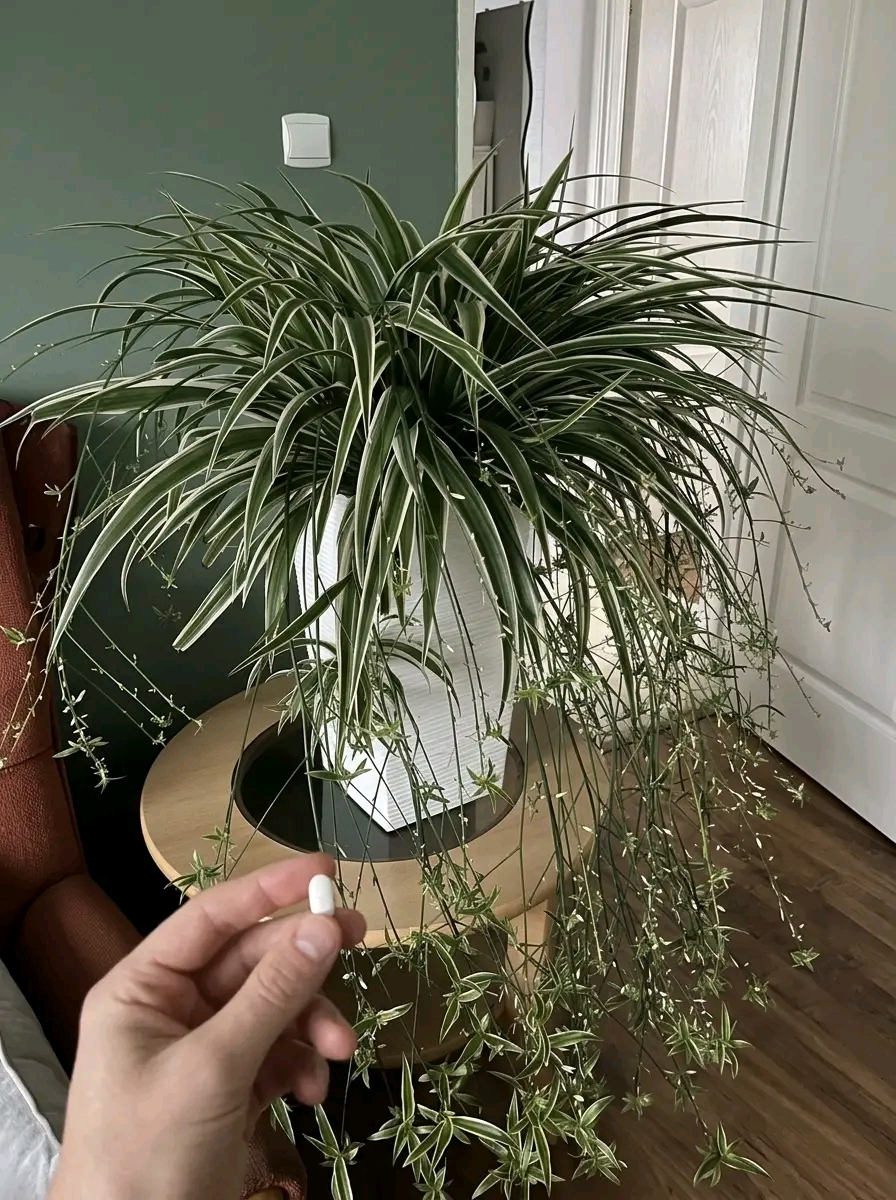
Spider plants are some of the most popular indoor plants in the world. They are loved for their long arching leaves, fresh green and white stripes, easy-growing nature, and beautiful hanging baby plants. When a spider plant is healthy, it can look like a green fountain. The leaves flow outward from the center, and long runners hang down with small plantlets at the ends. This makes the plant perfect for hanging baskets, shelves, plant stands, bright windows, living rooms, bedrooms, offices, and cozy indoor corners.
The image shows a large spider plant with many long runners and baby plantlets hanging from the mother plant. A hand is holding a small white tablet near the plant. This kind of image often suggests a simple “white pill trick” that makes spider plants grow fuller and produce more babies. Many home gardeners are curious about this because spider plants can sometimes stop producing runners, grow thin leaves, or look tired after months indoors.
The important truth is this: a white tablet can help only if it is the right type of plant fertilizer tablet and used correctly. It should never be a random medicine pill, cleaning tablet, bleach tablet, aspirin, painkiller, or human supplement unless a qualified gardening source specifically recommends it for plants. Spider plants do not need medicine. They need bright indirect light, correct watering, healthy roots, a good potting mix, and gentle feeding. A slow-release houseplant fertilizer tablet can support growth, but it must be used carefully.
This guide explains how to use a white plant fertilizer tablet safely, how to make spider plants fuller, how to encourage long runners and baby plantlets, how to water properly, how to avoid brown tips, how to repot, how to propagate babies, and how to keep your spider plant looking lush and healthy all year.
What Is the White Pill in the Image?
The safest way to understand the white pill in the image is as a slow-release houseplant fertilizer tablet. These tablets are made for plants and slowly release nutrients into the soil over time. They are different from human pills, laundry tablets, cleaning tablets, or chemical tablets. Only a product labeled for houseplants should be used in a plant pot.
A proper plant fertilizer tablet may contain nitrogen, phosphorus, potassium, and small amounts of micronutrients. These nutrients can support leaf growth, root strength, and general plant health. But fertilizer works only when the plant already has good light, proper watering, and healthy roots.
Important Safety Warning
Do not place random pills into your spider plant pot. Human medicine, vitamins, cleaning tablets, dishwasher tablets, bleach tablets, and unknown white powders can damage roots, poison the soil, harm pets, and create unsafe residue. Use only fertilizer tablets made for plants.
Can a White Fertilizer Tablet Make Spider Plants Produce Babies?
A fertilizer tablet can support growth, but it cannot force babies by itself. Spider plants usually produce runners and baby plantlets when they are mature, slightly root-bound, well-lit, and healthy. If the plant is too young, too dark, overwatered, or recently repotted into a huge pot, it may not produce many babies even with fertilizer.
The best “baby plant” formula is bright indirect light, moderate watering, a slightly snug pot, and light feeding during active growth. Fertilizer is only one part of the routine.
The Real Secret to a Fuller Spider Plant
- Bright indirect light
- A pot with drainage holes
- Light, well-draining soil
- Watering when the top inch begins to dry
- Gentle fertilizer during spring and summer
- A slightly snug root system
- Removal of dead or brown leaves
- Clean leaves with good airflow
- Propagation of baby plants for fuller pots
- No overwatering or heavy feeding
Why Spider Plants Grow Runners
Spider plant runners are long stems that grow from the mother plant. At the ends of these runners, small white flowers may appear first. Later, baby spider plants form. These babies can stay attached for decoration or be removed and rooted to make new plants.
A mature spider plant produces runners when it has enough energy. Light is a major factor. A spider plant in a dark corner may stay alive but produce fewer runners. A plant in bright indirect light usually grows stronger and has a better chance of making babies.
Best Time to Use a Fertilizer Tablet
The best time to fertilize a spider plant is during active growth. This usually means spring and summer. During these seasons, the plant uses more energy to grow leaves, roots, runners, and babies.
In fall and winter, growth slows. The plant needs less fertilizer. Feeding too much during slow growth can cause salt buildup, brown tips, and root stress.
How to Use a White Fertilizer Tablet Safely
- Read the product label first.
- Make sure it is made for houseplants.
- Use only the amount recommended for the pot size.
- Place the tablet into the soil, not on the leaves.
- Keep it away from the crown of the plant.
- Water normally after applying if the label says so.
- Do not add extra fertilizer at the same time.
- Watch the plant for brown tips or yellow leaves.
More fertilizer does not mean faster growth. Too much can burn roots. Use less rather than more if you are unsure.
Where to Place the Tablet
Place the tablet near the outer edge of the pot, a little under the soil surface. Do not press it directly against the base of the plant. The crown of the spider plant should stay clean and dry.
If the tablet sits too close to the roots in one concentrated spot, it may cause root burn. Spread feeding gently and follow the package instructions.
How Often Should You Use Fertilizer Tablets?
This depends on the product. Some tablets last one month, while others last several months. Always follow the label. In general, spider plants do not need heavy feeding. Feeding lightly during spring and summer is enough for most indoor plants.
Simple Feeding Schedule
- Spring: light feeding
- Summer: light feeding
- Fall: reduce feeding
- Winter: avoid feeding unless actively growing
If your spider plant has brown tips, flush the soil with plain water and reduce fertilizer.
Best Light for Spider Plants
Spider plants grow best in bright indirect light. They can tolerate medium light, but they become fuller and produce more runners when the room is brighter. Avoid harsh direct sun because it can scorch the leaves.
Good Light Locations
- Near an east-facing window
- Near a bright north-facing window
- A few feet from a south-facing window with sheer curtains
- On a shelf near filtered light
- In a bright bathroom
- Under a grow light in darker homes
Signs Your Spider Plant Needs More Light
- Thin weak leaves
- Slow growth
- No runners or babies
- Leaves losing bright variegation
- Plant leaning toward the window
- Long floppy growth
Signs of Too Much Direct Sun
- Brown scorched patches
- Dry crispy leaf tips
- Faded leaf color
- Leaves curling from heat
- Soil drying too quickly
How to Water Spider Plants Correctly
Spider plants like evenly moist soil, but they do not like staying soggy. Water when the top inch of soil feels dry. Pour water slowly until it drains from the bottom. Empty the saucer after watering.
Do not water every day. Spider plants have thick fleshy roots that store moisture. Overwatering can cause root rot.
Signs Your Spider Plant Needs Water
- Top inch of soil feels dry
- Leaves look slightly dull
- Leaf tips curl inward
- Pot feels lighter
- Soil pulls slightly from the pot edge
Signs of Overwatering
- Yellow leaves
- Soft mushy base
- Wet soil for many days
- Sour smell from the pot
- Fungus gnats
- Brown soft roots
- Plant drooping while soil is wet
Why Spider Plants Get Brown Tips
Brown tips are very common on spider plants. They may come from hard water, fluoride, fertilizer buildup, dry air, inconsistent watering, or too much direct sun. Brown tips do not always mean the plant is dying, but they show that something needs adjustment.
How to Reduce Brown Tips
- Use filtered water or rainwater
- Avoid over-fertilizing
- Flush soil with plain water occasionally
- Keep away from hot sun
- Water consistently
- Trim damaged tips neatly
- Avoid dry heater air
Best Water for Spider Plants
Spider plants can be sensitive to minerals and chemicals in tap water. If your plant gets brown tips often, try filtered water, rainwater, or distilled water. Letting tap water sit overnight may help with chlorine, but it does not remove all minerals.
Best Soil for Spider Plants
Spider plants need a light potting mix that holds some moisture but drains well. Heavy compact soil can cause root problems. A good mix allows air to reach the thick roots.
Simple Spider Plant Soil Mix
- 2 parts indoor potting mix
- 1 part perlite
- 1 part coco coir or peat moss
- A small amount of orchid bark, optional
This mix keeps moisture available without staying soggy for too long.
Best Pot for Spider Plants
Use a pot with drainage holes. Spider plants can grow well in plastic, ceramic, terracotta, or hanging baskets, but drainage is essential. A hanging basket is especially beautiful because the runners and babies can hang freely.
Spider plants often produce more runners when slightly root-bound. Do not repot into a huge pot too quickly. A pot that is too large holds too much wet soil and may reduce baby production.
Should Spider Plants Be Root-Bound?
Spider plants often enjoy being a little snug in the pot. A slightly root-bound plant may produce more runners. But extremely crowded roots can dry too quickly and stress the plant.
Signs It Is Too Root-Bound
- Roots growing out of drainage holes
- Plant dries out very fast
- Water runs through immediately
- Growth slows
- Pot becomes distorted
- Plant lifts itself from the pot
How to Repot a Spider Plant
- Choose a pot 1 to 2 inches larger.
- Make sure it has drainage holes.
- Prepare fresh well-draining soil.
- Remove the plant gently from the old pot.
- Loosen crowded roots slightly.
- Place in the new pot at the same depth.
- Fill around the roots with soil.
- Water thoroughly and let drain.
- Keep in bright indirect light.
Do not fertilize heavily right after repotting. Let the roots settle first.
How to Make a Spider Plant Fuller
A fuller spider plant comes from strong light, healthy roots, and new growth from the center. You can also plant rooted babies around the mother plant to create a thicker pot.
Fuller Plant Tips
- Move to brighter indirect light
- Water correctly
- Feed lightly during active growth
- Trim dead leaves
- Propagate babies and replant them
- Rotate the pot weekly
- Repot only when needed
- Use a hanging basket for better shape
How to Encourage More Spider Plant Babies
Spider plant babies grow on long runners. To encourage them, keep the plant mature, bright, and slightly snug in its pot.
- Give bright indirect light.
- Do not overwater.
- Use light fertilizer in spring and summer.
- Keep the pot slightly snug.
- Avoid constant repotting.
- Let runners stay on the plant.
- Keep the plant warm.
- Reduce stress from dry air or poor water.
Should You Cut Off the Babies?
You can leave the babies attached if you like the hanging look. You can also cut them off and propagate them. Leaving too many babies on a weak plant may use energy, so remove some if the mother plant looks tired.
How to Propagate Spider Plant Babies in Water
- Choose a baby with small root bumps.
- Cut it from the runner with clean scissors.
- Place the base in a small jar of water.
- Keep leaves above water.
- Place in bright indirect light.
- Change water every few days.
- Plant in soil when roots are 1 to 2 inches long.
How to Propagate Spider Plant Babies in Soil
- Fill a small pot with moist potting mix.
- Place the baby on the soil surface.
- Press roots or root bumps gently into the soil.
- Keep slightly moist until rooted.
- Place in bright indirect light.
- After rooting, water normally.
You can root babies while still attached to the mother plant. Place a small pot under a baby, pin it to the soil, and cut the runner after it roots.
Can You Use a White Tablet in Water?
Only dissolve a fertilizer tablet in water if the product label says it is meant to dissolve. Some slow-release tablets are designed to sit in soil and release nutrients slowly. Dissolving them may make the solution too strong.
Always follow the package directions. When in doubt, use a diluted liquid houseplant fertilizer instead.
Can You Use Aspirin on Spider Plants?
Some online tricks mention aspirin for plants, but it is not necessary for spider plant care. It can be risky if used too often or too strong. For a healthy spider plant, use proper houseplant fertilizer, good light, and correct watering instead.
Can You Use Vitamin Pills?
No. Human vitamin pills are not made for houseplant soil. They may contain fillers, sugars, coatings, minerals, or additives that can harm roots or attract mold. Use plant fertilizer only.
Can You Use Calcium Tablets?
Calcium tablets are not a good general solution for spider plants. They can affect soil chemistry and may not dissolve properly. If your plant needs nutrients, use balanced plant fertilizer.
Can You Use Eggshell Powder?
Eggshell powder breaks down slowly and is not a quick fertilizer. It may add calcium over time, but spider plants do not usually need eggshell powder. Too much powder can build up in small pots. Use composted materials or balanced fertilizer instead.
How to Clean Spider Plant Leaves
Spider plant leaves are narrow and many, so dust can collect between them. Clean leaves help the plant absorb light and look fresh.
Cleaning Steps
- Use a soft damp cloth.
- Wipe leaves gently from base to tip.
- Remove dead leaves from the center.
- Use clean scissors for damaged tips.
- Let leaves dry in good airflow.
Do not use oily leaf shine. Spider plant leaves look best when naturally clean.
How to Trim Brown Tips
You can trim brown tips for appearance. Use clean scissors and follow the natural shape of the leaf. Do not cut into too much healthy green tissue.
Trimming makes the plant look cleaner, but it does not solve the cause. Fix water quality, fertilizer, light, or humidity if brown tips keep returning.
Temperature for Spider Plants
Spider plants prefer normal indoor temperatures. They like warmth but do not like freezing cold or extreme heat. Keep them away from cold drafts, heaters, fireplaces, and air conditioners.
Good Temperature Range
- 60 to 80°F
- 16 to 27°C
- Stable indoor conditions
- No frost
- No hot dry vents
Humidity for Spider Plants
Spider plants can handle average indoor humidity, but they look better with moderate humidity. Very dry air can contribute to brown tips.
Humidity Tips
- Group plants together
- Use a pebble tray
- Keep away from heaters
- Use a humidifier in dry homes
- Place in a bright bathroom if enough light is available
Pests on Spider Plants
Spider plants are usually tough, but they can get pests. Stressed plants are more likely to attract insects.
Common Pests
- Spider mites
- Mealybugs
- Aphids
- Scale
- Fungus gnats
Pest Signs
- Sticky leaves
- White cottony spots
- Tiny webbing
- Small flies near soil
- Yellow speckled leaves
- Weak new growth
Simple Pest Treatment
- Isolate the plant.
- Rinse leaves gently.
- Wipe pests with a damp cloth.
- Use insecticidal soap if needed.
- Repeat weekly until pests disappear.
- Let soil dry properly between waterings.
Root Rot Rescue
If your spider plant has root rot, fertilizer tablets will not help. Root rot needs fresh soil and root care.
- Remove the plant from the pot.
- Shake away wet soil.
- Cut off black or mushy roots.
- Keep firm white roots.
- Repot in fresh well-draining soil.
- Use a pot with drainage holes.
- Water lightly at first.
- Keep in bright indirect light.
Seasonal Spider Plant Care
Spring
Spring is the best time for new growth, repotting, propagation, and light feeding. This is a good time to use a proper plant fertilizer tablet if needed.
Summer
Growth is active. Keep the plant in bright indirect light, water when the top inch dries, and watch for babies.
Fall
Growth slows. Reduce fertilizer and water less often if the soil dries more slowly.
Winter
Water carefully. Avoid cold drafts and stop feeding unless the plant is actively growing under bright light.
Continue to Page 2
Continue to page 2 for more details about this article and the key points many readers miss on the first page.