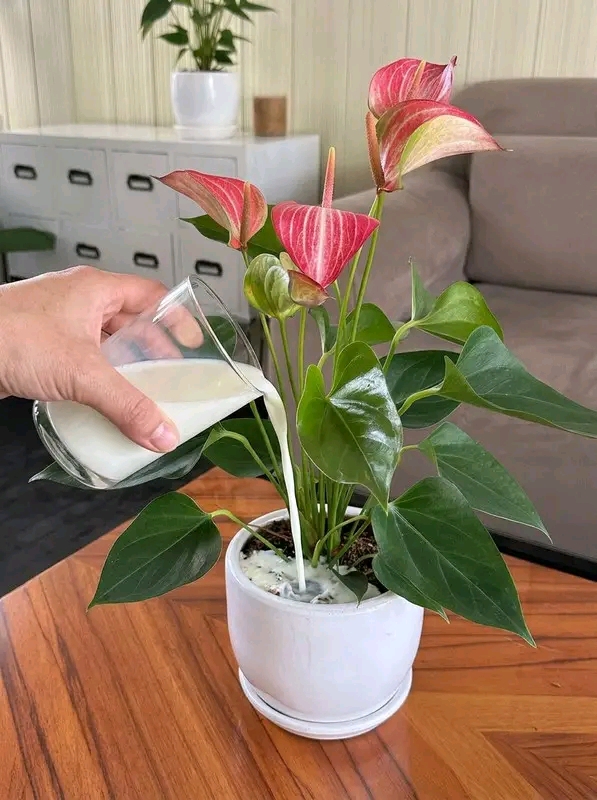
Anthuriums are some of the most elegant tropical houseplants you can grow indoors. Their glossy heart-shaped leaves, upright stems, and bright waxy spathes make them look luxurious even in a simple pot. A healthy anthurium can bring color to a living room, bedroom, office, or bright indoor corner for many months. The pink flowers in the image are especially beautiful because they add a soft tropical look while the deep green leaves keep the plant full and fresh.
The image shows an anthurium in a white pot while a white liquid that looks like milk is being poured into the soil. This type of plant image often suggests a homemade bloom trick, a natural fertilizer, or a secret liquid that makes anthuriums produce more flowers. Milk looks gentle and rich, so many people assume it can feed plants. But indoor potted plants are sensitive, and milk should be used with extreme caution. It is not a reliable fertilizer for anthuriums, and pouring it directly into the pot can create problems if it is strong, frequent, or left to sour in the soil.
The safest truth is simple. Anthuriums do not need milk to bloom. They need bright indirect light, warm stable temperatures, airy soil, correct watering, moderate humidity, and gentle balanced feeding. A small amount of very diluted milk water may not instantly kill a plant, but it can spoil in the soil, attract fungus gnats, cause odor, encourage mold, and disturb the root environment. For anthuriums, clean care is better than kitchen experiments.
Understanding Anthuriums
Anthuriums are tropical plants from warm humid regions. The colorful part many people call the flower is actually a spathe. The true flowers are tiny and sit on the central spike, called the spadix. This is why anthurium blooms look smooth, shiny, and heart-shaped rather than soft like rose petals. The spathes can last a long time when the plant is healthy, which makes anthuriums popular as decorative houseplants.
The plant in the image has pink spathes with pale veining and glossy green leaves. This tells us the plant is already mature enough to bloom. When an anthurium is happy, it can produce new leaves and new flowers throughout the year, especially in warm bright indoor conditions. However, if the roots are stressed, the plant may stop blooming, produce smaller leaves, or develop yellow and brown edges.
Anthuriums are not plants that enjoy heavy wet soil. Their roots need oxygen. Many anthuriums naturally grow with roots exposed to air or in loose organic material. In a pot, they need a mix that drains well and does not become compact. This is one of the biggest secrets to keeping an anthurium alive and blooming. The roots must stay lightly moist, but never suffocated.
What the White Liquid in the Image Suggests
The white liquid in the image looks like milk or a milk-water mixture. Many online plant tricks suggest using milk for shiny leaves, stronger roots, calcium, or more flowers. Milk contains some nutrients, but that does not mean it works well as a fertilizer in indoor pots. Plants cannot use milk the same way people do. Before any nutrients become available, the milk must break down, and during that process it can spoil.
When milk breaks down in potting soil, it can smell bad. It can attract insects. It can create a film on the soil. It can encourage mold growth. It can also make the soil stay wet longer, which is dangerous for anthurium roots. In a small indoor pot, there is not enough soil volume or outdoor airflow to process spoiled organic liquid safely.
This is why milk should not be used as a regular watering method. If someone wants to experiment with milk water, it must be extremely diluted and used rarely, but even then, there are better choices. A balanced houseplant fertilizer is cleaner, safer, and more predictable. Anthuriums need balanced nutrients, not random food residues in the soil.
Can Milk Make Anthuriums Bloom?
Milk does not directly make anthuriums bloom. Blooming depends mostly on light, plant maturity, healthy roots, humidity, temperature, and gentle nutrition. If an anthurium is not blooming, the first thing to check is light. A plant kept in a dark corner may survive, but it will not produce many flowers. Anthuriums need bright indirect light to build enough energy for blooms.
Fertilizer can support blooming, but it should be proper fertilizer. Milk does not provide a balanced ratio of nutrients in a form that the plant can use cleanly. It may add organic material, but it may also create root stress. Root stress reduces blooming. A plant with sour soil or fungus gnats will spend its energy surviving rather than producing flowers.
If your anthurium is already blooming like the plant in the image, avoid risky experiments. A blooming plant needs stability. Sudden changes in watering, feeding, soil moisture, or root chemistry can cause flowers to fade faster or leaves to yellow. The best way to keep blooms lasting is steady care.
Best Light for Anthurium Blooms
Bright indirect light is one of the most important parts of anthurium care. Anthuriums need enough light to grow glossy leaves and colorful spathes. They do not like harsh direct sun, especially hot afternoon sun through glass. Strong sun can burn leaves and fade blooms. Low light, however, causes weak growth and fewer flowers.
A bright room near a window is ideal. An east-facing window often works very well because it gives gentle morning sun. A north-facing window can work if the room is bright. A south or west-facing window may need a sheer curtain or some distance from the glass. The goal is strong brightness without leaf burn.
If your anthurium grows many leaves but no flowers, it may need more light. If the leaves are pale, scorched, or crispy, the light may be too strong. When the light is right, the plant grows firm leaves, holds blooms longer, and produces new flower stems more often.
Watering Anthuriums Correctly
Anthuriums like soil that is lightly moist, not soggy. Water when the top part of the soil begins to dry. Do not water every day. Do not water just because the surface looks slightly dry if the lower soil is still wet. The roots need both moisture and air.
When watering, use room-temperature water and pour it evenly around the soil. Let extra water drain from the bottom of the pot. Empty the saucer after watering. If the pot has no drainage hole, the plant is at much higher risk of root rot. A decorative pot can be used, but the plant should sit inside a draining inner pot.
Milk or milky water should not replace normal watering. If poured heavily, it can make the soil wet and sticky. If used too often, it can sour. Plain water is safer. If your tap water is very hard, filtered water or rainwater can be gentler for anthuriums.
Why Overwatering Is Dangerous
Overwatering is one of the main reasons anthuriums decline indoors. When the soil stays wet for too long, the roots lose oxygen. Damaged roots cannot absorb water properly, so the plant may droop even though the soil is wet. Leaves may turn yellow, brown edges may appear, and flowers may stop forming.
Adding milk to already wet soil makes the risk worse. The liquid adds moisture and organic material. If the soil is dense, this can create a sour environment. Fungus gnats may appear because they love damp organic soil. Mold may grow on the surface. Once root rot begins, the plant can decline quickly.
If your anthurium is drooping and the soil is wet, do not add more liquid. Remove the plant from the pot and inspect the roots. Healthy roots should be firm. Rotten roots are soft, dark, and may smell bad. Trim damaged roots and repot into fresh airy soil if needed.
Best Soil for Anthuriums
Anthuriums need an airy potting mix. A regular dense potting soil can hold too much water if used alone. A better mix includes orchid bark, perlite, coco chips, coarse peat or coco coir, and a little quality potting mix. The goal is to create a loose structure that holds light moisture but allows oxygen around the roots.
The soil should not feel like mud after watering. It should drain quickly and remain airy. If the mix becomes compact, the roots suffer. If water sits on the surface or the pot stays wet for many days, the soil is too heavy or the pot is too large.
Repotting into the right mix can improve anthurium health more than any homemade liquid. A plant with healthy roots and fresh airy soil is much more likely to bloom than a plant sitting in old wet soil with milk residue.
Choosing the Right Pot
The pot in the image is white and simple, which looks beautiful with pink flowers and green leaves. But the most important part is drainage. A pot should have drainage holes. If it does not, water collects at the bottom and creates root problems.
Anthuriums do not need huge pots. A pot that is too large holds too much soil around the roots, and that soil stays wet longer. Choose a pot only slightly larger than the root ball. A snug but not cramped pot helps moisture dry more evenly.
If you use a decorative cover pot, remove the inner pot when watering. Let it drain fully before placing it back. This prevents hidden standing water, which is one of the easiest ways to damage anthurium roots.
Feeding Anthuriums Safely
Anthuriums benefit from gentle feeding during active growth. A balanced liquid houseplant fertilizer diluted to half strength or quarter strength is usually safer than full strength. Feed lightly during spring and summer, or whenever the plant is actively producing new leaves and flowers in warm bright conditions.
Do not fertilize dry soil. Fertilizer on dry roots can burn them. Water lightly first if needed, then feed with diluted fertilizer. Do not fertilize a sick plant, a newly repotted plant, or a plant with root rot. Feeding should support healthy growth, not force a weak plant to perform.
Milk is not a proper fertilizer. It may contain some calcium and other compounds, but it is not balanced for houseplants and can spoil. If your goal is stronger blooms, use proper fertilizer and better light rather than milk.
Humidity and Temperature
Anthuriums enjoy moderate to high humidity. Dry indoor air can cause brown leaf edges, curled leaves, and shorter-lasting blooms. A humidifier can help, especially in winter when indoor heating dries the air. Grouping plants together can also raise humidity slightly.
Warm temperatures are best. Anthuriums dislike cold drafts, sudden temperature changes, and cold windows. Keep the plant away from air conditioners, heaters, and doors that open to cold air. A stable room temperature helps the plant grow steadily and hold flowers longer.
If the room is dry and cold, the plant may slow down. In that situation, reduce watering slightly because the soil will dry more slowly. A plant that is not growing fast does not need frequent feeding.
Cleaning Anthurium Leaves
Anthurium leaves look best when they are clean and glossy. Dust can dull the leaves and reduce the plant’s ability to use light. Wipe leaves gently with a soft damp cloth. Support the leaf while wiping so the stem does not bend.
Do not use milk to shine the leaves. This is another common trick, but it can leave residue and attract dust or pests. Plain water on a cloth is enough. If the leaves are very dirty, use a mild plant-safe soap solution and wipe again with clean water.
Clean leaves also help you notice pests early. Check the underside of leaves, stems, and flower bases while cleaning.
Common Anthurium Problems
Yellow leaves often mean overwatering, low light, old soil, or root stress. If one old lower leaf turns yellow, it may be normal aging. If many leaves yellow at once, check the roots and soil. Wet soil with yellow leaves is a warning sign.
Brown leaf edges can come from dry air, inconsistent watering, fertilizer burn, hard water, or root stress. If browning appears after using milk or homemade liquids, stop using them and flush or repot the plant if the soil smells sour.
Drooping leaves can mean dryness, but they can also mean root rot. Always check soil moisture before watering. If the soil is dry, water normally. If the soil is wet, do not add more water. Inspect the root zone.
Why Anthurium Flowers Turn Green or Brown
Anthurium spathes naturally age. A pink spathe may slowly fade, turn greenish, become dull, or dry at the edges. This does not always mean something is wrong. Old blooms eventually finish their cycle. When a bloom is spent, cut the flower stem near the base with clean scissors.
If flowers turn brown quickly, the plant may be stressed by dry air, direct sun, underwatering, overwatering, or sudden changes. Strong homemade liquids can also stress the plant. During bloom, keep care steady and gentle.
Removing old blooms helps the plant focus energy on new leaves and future flowers. Do not pull flower stems by hand because this can damage the crown.
Continue to Page 2
Continue to page 2 for more details about this article and the key points many readers miss on the first page.