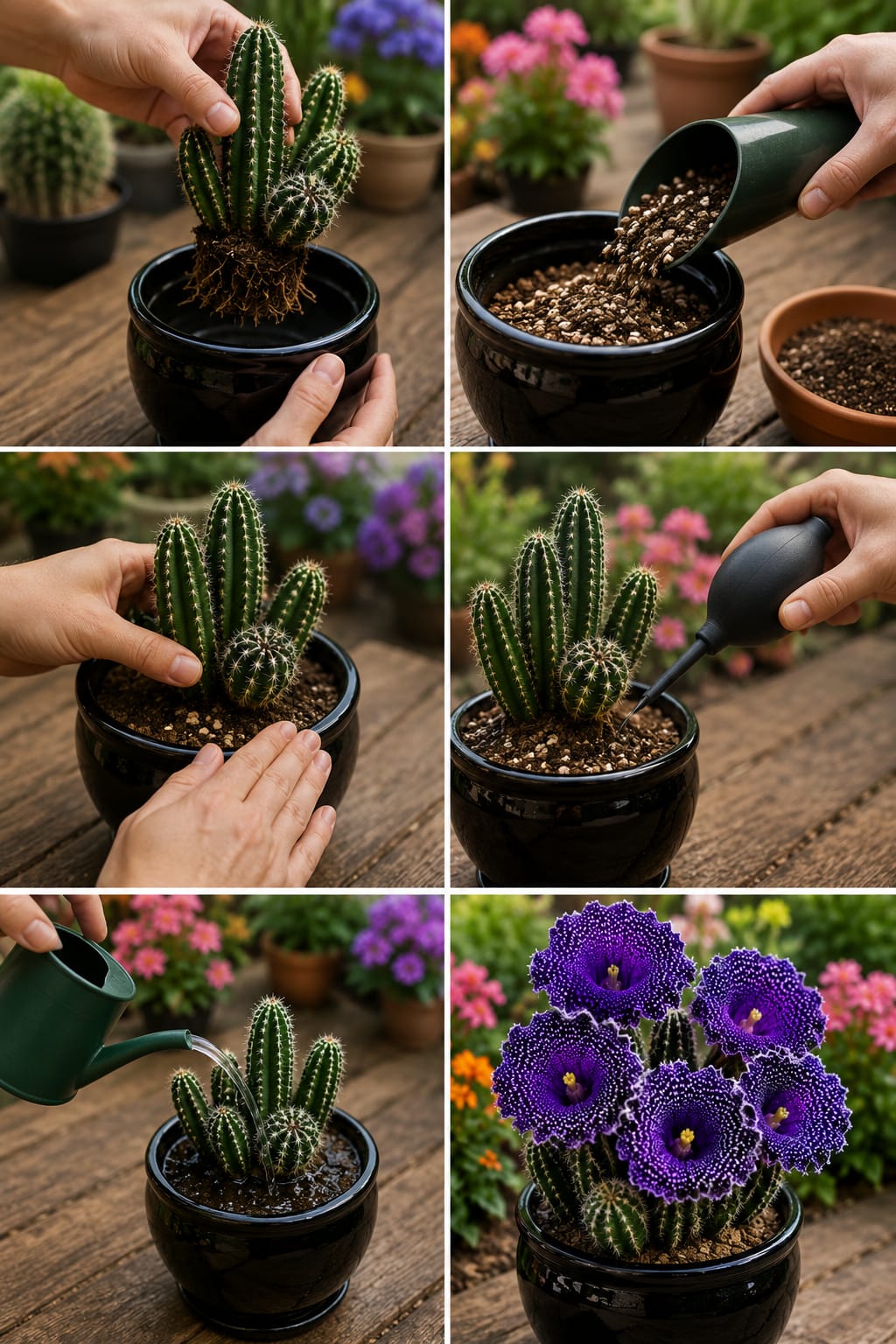
Cactus plants are some of the most fascinating houseplants and patio plants because they can look strong, sculptural, and simple for most of the year, then suddenly surprise you with flowers that look almost unreal. A healthy cactus can sit quietly in a pot with ribbed green stems, sharp spines, and slow steady growth, then produce bright flowers when the conditions are right. The image shows a small cluster cactus being placed in a black pot, surrounded with gritty soil, settled carefully, watered, and finally shown with dramatic purple blooms. It gives the feeling of a simple method that turns a plain cactus into a flowering showpiece.
The most important thing to understand is that cactus flowers do not appear because of one quick trick. A cactus blooms when it has enough maturity, light, root health, seasonal rhythm, and the right balance between water and dryness. Many cactus plants can survive in poor care for a long time, but survival is not the same as flowering. To bloom well, the plant needs strong light, a fast-draining soil mix, a pot that does not trap water, careful watering, and a rest period that tells the plant it is time to prepare for flowers.
The process in the image shows several useful care ideas, but one part needs caution. The watering panel shows a lot of water sitting on top of the soil. Cactus plants should be watered deeply when needed, but they should never stay in soggy soil. A cactus pot should drain quickly. If water pools on the surface or the soil stays wet for days, the roots can rot. A cactus can handle dryness much better than constant moisture. Good cactus care is not about watering often. It is about watering correctly and then allowing the soil to dry fully.
Understanding Cactus Growth
Cacti are adapted to dry environments where water arrives in short periods and then disappears. Their thick stems store moisture. Their spines help protect them and reduce water loss. Their roots are often designed to take up water quickly when rain comes, then survive through dry spells. This means a cactus in a pot needs a growing style that copies this rhythm. It should receive water, drain well, dry out, and then rest before the next watering.
The cactus in the image appears to be a clumping columnar type with several upright stems. These kinds of cacti can look beautiful in decorative pots because they create height and texture. When healthy, the stems should be firm, green, and upright. If a cactus becomes soft, wrinkled, yellow, black, or mushy near the base, something is wrong. The most dangerous problem is usually rot from too much moisture.
Cactus flowers are usually produced by plants that have enough stored energy. Energy comes from light. This is why a cactus kept in a dark room may stay alive but rarely bloom. A cactus needs strong bright light for many hours. Indoors, that usually means the brightest window you have. Outdoors, many cacti enjoy direct sun, but they should be introduced gradually to avoid sunburn.
Choosing the Right Pot
The black pot in the image gives the cactus a bold and elegant look. Dark pots can make green stems and colorful flowers stand out beautifully. But the color of the pot is less important than drainage. A cactus pot must have drainage holes. Without drainage, water collects at the bottom, and the roots can rot even if the top looks dry.
A cactus does not need a huge pot. A pot that is too large holds too much soil, and extra soil holds extra moisture. This creates a wet root zone that the cactus cannot use quickly. Choose a pot only slightly larger than the root ball. A snug pot is often safer than an oversized pot. If the cactus is top-heavy, choose a heavier pot rather than a much larger one.
Terracotta pots are excellent for cactus plants because they allow moisture to evaporate through the sides. Ceramic pots can also work if they drain well. Plastic pots stay wet longer, so watering must be more careful. A glossy black ceramic pot like the one in the image can be used, but the soil must be gritty and the drainage must be reliable.
Best Soil for Cactus Plants
Cactus soil should be gritty, loose, and fast-draining. The image shows a textured mix with small particles, which is the right idea. A regular potting soil used alone is usually too rich and moisture-holding for cactus roots. It can stay wet too long, especially indoors. A better mix includes cactus soil, pumice, perlite, coarse sand, small lava rock, or fine gravel.
The goal is not to make the soil completely dry and lifeless. The goal is to create a mix that lets water move through quickly while still giving roots a little moisture after watering. The roots should never sit in mud. If you water and the soil remains wet for many days, the mix is too heavy or the pot is too large.
When repotting cactus, avoid burying the base too deeply. The plant should sit at the same level it was growing before. Soil pressed against the lower stem can hold moisture and lead to rot. A thin layer of decorative gravel on top can look attractive, but it should not trap moisture or hide wet soil. If you use top dressing, keep it light and make sure the soil still dries properly.
Repotting the Cactus Safely
The first panel shows the cactus being held above the pot with roots exposed. Repotting is a good time to inspect the root system. Healthy cactus roots are usually firm and dry-looking, not slimy. They may be fine and tan, white, or light brown. Rotten roots are soft, dark, mushy, or smelly. If you find rotten roots, trim them away with clean tools and allow the plant to dry before repotting.
Because cactus spines can hurt, handle the plant carefully. Thick gloves, folded newspaper, cardboard, or tongs can help. Avoid squeezing the stems too hard. When placing the cactus into the pot, support the root ball and position the plant upright. Add soil around the roots and gently settle it. Do not compact the mix heavily. Roots need air.
After repotting, it is often best to wait several days before watering, especially if roots were damaged. This gives small root wounds time to dry and reduces rot risk. The image shows watering soon after planting, which can be fine if the roots are undamaged and the soil is very dry, but waiting is usually safer for freshly handled cactus plants.
Watering Cactus the Right Way
Watering is where many cactus problems begin. A cactus should not be watered in tiny sips every day. It should be watered thoroughly when the soil is dry, then allowed to dry completely before the next watering. When you water, the water should move through the pot and drain out. After watering, the saucer should be emptied.
The image shows water pooling around the cactus. This should not happen for long. If water sits on the surface, the soil may be too compact or the pot may not drain well. A good cactus mix should accept water and release the extra. The plant should never remain in standing water.
Indoors, cactus plants often need less water than people expect. In bright warm conditions, watering may be needed every couple of weeks during active growth. In winter or low light, watering may be needed only rarely. Always check the soil rather than following a fixed schedule. If the soil is still moist, wait.
Light for Cactus Blooms
Light is the biggest factor for flowering. A cactus needs strong light to build the energy required for blooms. Indoors, place it in the brightest window possible. A south-facing window is often best in many homes. East or west windows can also work depending on brightness. A north-facing window is often too dim for flowering unless supplemented with a grow light.
If a cactus is moved outdoors, introduce it to direct sun gradually. A plant that has been indoors can sunburn if suddenly placed in intense outdoor light. Sunburn appears as pale, yellow, tan, or brown patches that do not heal. Gradual adjustment helps the plant build tolerance.
A cactus that is not getting enough light may stretch toward the window. The growth may become thin, pale, or weak. This is called etiolation. A stretched cactus is not likely to flower well. Strong compact growth is a sign that the plant is receiving better light.
Temperature and Seasonal Rest
Many cactus plants bloom better when they experience a seasonal rest period. This often means cooler temperatures, less water, and bright light during winter. The rest period tells the plant to slow down and prepare for future growth and flowering. Without a rest period, some cactus plants continue weak growth but do not bloom.
A cool bright room can be excellent during winter. The plant should be protected from freezing temperatures, but it does not need warm humid conditions like tropical plants. Keep it away from heaters that dry it too aggressively or make temperatures swing. Stable cool brightness is ideal for many blooming cacti.
During the rest period, water very little. The plant is not growing much, so it does not use much moisture. Too much winter water is a common cause of rot. When spring returns and light increases, watering can gradually increase again.
Feeding Cactus Plants
Cactus plants do not need heavy fertilizer. Too much feeding can cause weak growth and salt buildup. During the growing season, a diluted cactus fertilizer or balanced houseplant fertilizer at low strength can be used occasionally. Feeding should happen only when the plant is actively growing and receiving enough light.
Do not fertilize a cactus in winter rest. Do not fertilize a newly repotted cactus right away. Do not fertilize a plant with root rot. Fertilizer supports growth, but it does not repair damaged roots. A healthy cactus with good light and correct watering will benefit more from gentle seasonal feeding than from strong doses.
If you want flowers, choose care that builds long-term strength. Strong light, dry rest, and correct watering matter more than fertilizer. A plant that is pushed with too much nitrogen may grow green tissue but not flower well.
Encouraging Cactus Flowers
To encourage flowers, the cactus must first be mature enough. Young plants may not bloom no matter how well they are cared for. Once mature, the plant needs high light, healthy roots, proper watering, and a seasonal signal. Many cacti bloom after a period of cooler, drier rest followed by warmer bright conditions.
Do not try to force blooms with excess water. This can rot the roots. Do not keep changing locations every few days. Cacti respond slowly. Give the plant a stable bright place and allow it time to build energy. Flower buds may appear only during a specific season depending on the species.
The purple flowers in the image look very dramatic and decorative. Real cactus flowers vary widely by species. Some are large and bright, some are small and delicate, some last one day, and others last longer. Even if your cactus blooms only briefly, it is a sign that the plant has stored enough energy and received the right conditions.
Continue to Page 2
Continue to page 2 for more details about this article and the key points many readers miss on the first page.