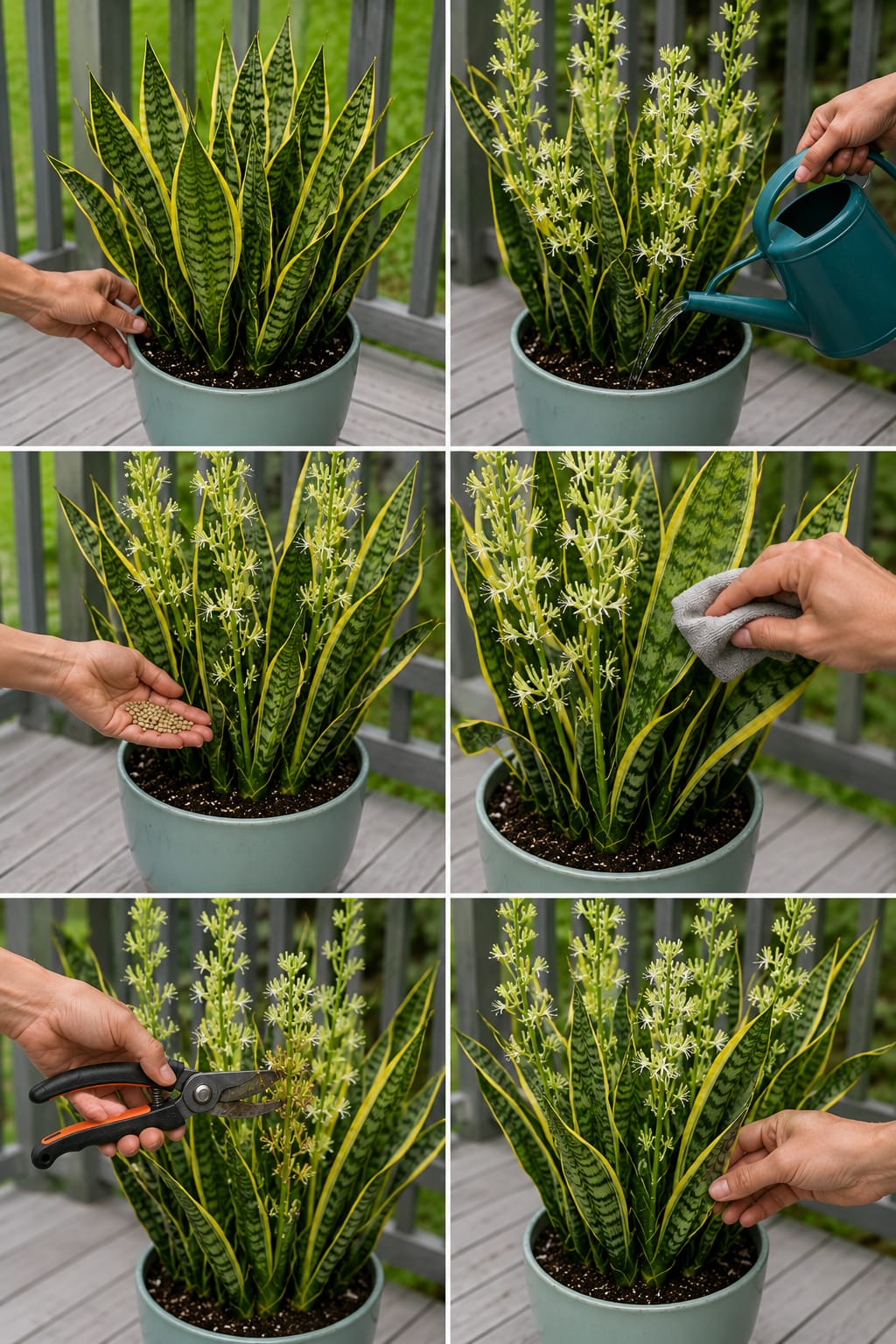
Snake plant is one of the most reliable indoor plants for people who want bold upright leaves, easy maintenance, and a clean modern look that works in many home and office spaces. Its sword-shaped foliage, dark green patterned surface, yellow-edged variegation, and strong vertical structure make it a favorite for living room styling, bedroom decor, home office plant care, balcony plant displays, modern apartment interiors, premium ceramic planters, commercial interior landscaping, and polished property presentation. When the plant is healthy, it looks architectural, tidy, and elegant without needing constant attention.
Many people know snake plant as a tough foliage plant, but it can sometimes produce flower stalks when it is mature and growing under the right conditions. The flowers are usually pale, delicate, and lightly fragrant. They rise on tall stems between the leaves and can surprise plant owners because snake plants are not usually bought for blooms. A flowering snake plant can be exciting, but it should still be handled carefully. The appearance of flowers does not mean the plant suddenly needs heavy watering, strong fertilizer, or aggressive pruning.
Snake plant flowers are often linked with maturity, strong roots, bright indirect light, slight root restriction, and stable care. They may appear after a long period of healthy growth, especially when the plant is somewhat comfortable but not overly pampered. However, blooming should not be forced with harsh treatments. Snake plants are still dry-loving plants with succulent-like leaves, and they can suffer if the soil becomes soggy or if too much fertilizer is added around the roots.
This guide explains how to care for a snake plant when it blooms, how to water it safely, how to clean the leaves, how to use gentle feeding without damaging the roots, when to trim the flower stalks, what mistakes to avoid, and how to keep the plant suitable for indoor plant styling, balcony decor, modern apartment design, luxury home staging, commercial interior landscaping, and premium plant presentation.
Quick Answer
A blooming snake plant should be cared for gently. It needs bright indirect light, a pot with drainage holes, a fast-draining cactus and succulent mix, careful watering only when the soil dries, and light feeding during active growth. The flower stalks can be left until they fade, then trimmed with clean scissors near the base. The leaves can be wiped with a soft cloth to remove dust and keep the plant looking polished. Do not overwater, overfertilize, mist heavily, or repot aggressively while the plant is blooming. Flowers are a sign that the plant is mature and stable, but the real foundation of care remains healthy roots, dry-friendly soil, good light, and a clean indoor routine.
What Plant This Is
The plant is a snake plant, also known as Sansevieria or Dracaena trifasciata. It is easy to recognize because of its tall, firm, upright leaves with yellow edges and green patterned centers. The leaves are thick and water-storing, which allows the plant to tolerate dry conditions better than many tropical houseplants. This makes snake plant one of the most popular choices for beginners, busy homeowners, office spaces, and low-maintenance indoor plant collections.
The flowering stems are different from the leaves. They usually grow as thinner upright stalks that carry clusters of small pale flowers. The flowers may look delicate compared with the strong leaves, and they can create an unusual contrast. The plant may bloom indoors when it is mature, somewhat root-bound, and receiving enough light. Blooming is not guaranteed every year, and some snake plants may never bloom indoors while still remaining perfectly healthy.
Snake plant is valued mainly for foliage and structure. The flowers are a bonus. The plant should not be judged only by whether it blooms. A non-blooming snake plant can still be healthy, decorative, and thriving. The most important signs of health are firm leaves, stable color, no mushy bases, no bad soil smell, and a root system that is not sitting in water.
Why Snake Plants Bloom
Snake plants may bloom when they are mature and growing in stable conditions. Indoor blooming often happens when the plant receives good bright indirect light and has had time to fill its pot. Slight root restriction may encourage blooming in some cases, but this does not mean the plant should be neglected or stressed severely. A plant can flower when it has enough stored energy and the right environmental signals.
Blooming can also happen after the plant has been kept in a consistent routine for a long time. Snake plants do not like constant changes. They often do best when they are placed in a bright spot, watered carefully, and left to grow without frequent disturbance. A stable plant may eventually produce a flower stalk from the base.
It is important not to confuse blooming with a sign that the plant needs extra treatment. The plant does not suddenly require daily watering or strong fertilizer because flowers appear. In fact, overreacting can cause problems. A blooming snake plant should continue receiving the same careful care that allowed it to reach that stage.
What Blooming Should Not Be Misunderstood As
Blooming should not be misunderstood as a signal to overwater. Snake plant roots still need dry periods. Watering too often during flowering can cause root rot, soft leaf bases, yellowing, and bad smell from the pot. The plant may be flowering above the soil while root problems begin below the surface if moisture is not controlled.
Blooming should not be misunderstood as proof that strong fertilizer is needed. A light feeding during active growth can support the plant, but heavy fertilizer can damage roots and create salt buildup. Snake plants are slow feeders. They do not need the same level of nutrition as fast-growing tropical plants or heavy-flowering outdoor plants.
Blooming should also not be misunderstood as a reason to repot immediately. If the plant is stable and flowering, it is usually better to wait until the bloom cycle finishes before any major root disturbance. Repotting while the plant is blooming can cause stress and may lead to flower drop or slower recovery. If the plant is healthy, allow it to finish blooming first.
How to Water a Blooming Snake Plant
Watering should remain controlled. The soil should be checked before water is added. If the potting mix still feels damp below the surface, the plant should not be watered. If the soil has dried properly and the pot feels lighter, the plant can be watered thoroughly. Water should move through the soil and drain from the bottom of the pot.
The plant should never sit in standing water. If there is a saucer below the pot, extra water should be emptied after watering. If the plant is inside a decorative cachepot, hidden water should be checked and removed. A blooming snake plant may look strong, but the roots can still rot if water collects at the bottom.
Water should be applied to the soil rather than poured over the leaves or flower stalks. The crown area, where the leaves emerge from the soil, should stay as dry and clean as possible. Water trapped between leaves can increase the risk of rot, especially in cool or low-airflow conditions. A narrow-spout watering can gives better control and helps protect the crown.
How Much Light Supports Blooming
Bright indirect light is one of the most important factors for a healthy snake plant and possible blooming. Snake plants can survive in lower light, but they usually grow slower and may be less likely to bloom. A bright window with filtered light, a balcony with shade, or a room with strong indirect brightness can support better growth.
Direct harsh sun should be introduced carefully. Snake plant leaves can tolerate some sun if they are acclimated gradually, but sudden intense sunlight may cause scorch marks, especially on leaves that grew indoors. Morning sun or filtered light is usually safer than hot afternoon sun. If the plant is placed outside on a balcony or patio, it should be protected from sudden heat stress.
Good light also helps the soil dry at a healthier pace. A plant in bright conditions uses water more actively than one in a dim corner. This can reduce the risk of long-lasting wet soil. However, bright light does not mean the plant should be watered constantly. The soil should still guide the watering routine.
Best Soil Mix for a Blooming Snake Plant
A blooming snake plant needs the same dry-friendly soil as a non-blooming one. A cactus and succulent potting mix is a good base. It can be improved with perlite, pumice, coarse grit, or orchid bark to increase drainage and airflow. The soil should not feel dense, muddy, or heavy after watering.
Snake plant roots need oxygen. If the soil is compacted, the roots may struggle even if the top of the plant looks healthy. A breathable mix allows water to pass through and gives the root system a safe dry-down period. This is especially important in decorative pots that may hold moisture longer.
Garden soil should not be used alone in a container. It can compact, stay wet, and bring pests indoors. Heavy compost-rich mixes can also be risky because they may hold too much moisture. A blooming snake plant does not need rich wet soil. It needs stable drainage and a clean root environment.
Choosing the Right Pot
A snake plant pot should have drainage holes. This is one of the most important parts of long-term care. Without drainage, water can collect at the bottom and damage roots. A decorative planter can still be used, but the inner pot should drain properly, and extra water should not remain trapped inside.
The pot should be stable because flowering stalks can add height and weight to the plant display. A pot that is too light may tip if the leaves are tall and the flower stalks lean. A ceramic, terracotta, or sturdy plastic pot can work well if drainage is managed correctly. A slightly snug pot may be fine for snake plant because the plant does not mind some root restriction.
A pot that is too large can cause moisture problems. Extra soil around the roots may stay wet for too long. When repotting is needed, it is usually safer to choose a pot only slightly larger than the current one. The goal is to give the plant room without surrounding it with excessive wet soil.
Feeding During Blooming
Feeding should be light and controlled. A cactus and succulent fertilizer or diluted balanced houseplant fertilizer can be used during active growth if the plant is healthy. It should be applied at a reduced strength. Strong fertilizer is not necessary and may burn roots or cause brown leaf tips.
If the plant is already blooming, it is usually better not to suddenly change the feeding routine. If the plant has not been fertilized for a long time and it looks healthy, a very mild feeding can be used during the growing season. If it is winter, low light, or the soil is damp, feeding should be delayed.
Homemade fertilizers should be used carefully. Organic scraps, strong teas, coffee grounds, and thick liquids can attract pests and create odor. A blooming snake plant should remain clean, especially if it is used as an indoor decorative feature. A measured fertilizer is safer than random homemade feeding.
Using Small Fertilizer Pellets Safely
Small fertilizer pellets may be used around a snake plant if they are made for houseplants or succulents and applied according to the label. They should not be piled heavily in one spot or placed directly against the leaf bases. A light, evenly distributed amount is safer than a thick handful. The pellets should stay on the soil surface or be mixed lightly into the top layer depending on the product instructions.
Pellets should not touch the crown. Fertilizer sitting against the base of the leaves can trap moisture or create concentrated nutrient contact. This may damage the plant. The safest placement is around the outer soil surface, away from the central leaf cluster.
After adding pellets, the plant should be watered only when the soil is ready. Do not water just because fertilizer was added. If the soil is damp, wait. If the plant needs water, water slowly and allow drainage. Overwatering after feeding can create root stress and nutrient buildup.
Cleaning the Leaves
Snake plant leaves should be kept clean because dust can dull their appearance and reduce the polished indoor look. A soft cloth can be used to wipe the leaves gently. This is especially useful when the plant is displayed in a living room, office, balcony, or property staging space where the leaves are clearly visible.
Cleaning should be gentle around flower stalks. The flowers can be delicate, and the stalks may bend if handled roughly. The leaves can be wiped from base to tip while supporting them lightly with the other hand. Avoid using heavy leaf shine products because they can leave residue and may clog the leaf surface.
If the plant is outside on a balcony, dust, pollen, rain splash, and outdoor debris may collect on the leaves. Regular wiping keeps the plant looking fresh. It also gives the owner a chance to inspect for pests, spots, soft bases, and other early warning signs.
Should the Flowers Be Misted?
Snake plant flowers do not need misting. The plant does not require high humidity to bloom, and wet flowers can become sticky or messy. The leaves also do not need frequent misting. Snake plants are adapted to drier conditions and usually do better with dry leaf surfaces and careful root watering.
If the air is very dry, the plant usually still tolerates it well. A humidifier is not normally needed for snake plant in the same way it may be useful for tropical plants. The focus should remain on soil moisture, light, and airflow rather than spraying water on the foliage.
Keeping the flowers and leaves dry also reduces the risk of fungal issues. If water accidentally splashes onto the blooms or crown, the plant should be placed where it can dry quickly. A clean, dry surface is better for long-term health and decorative quality.
When to Trim the Flower Stalks
The flower stalks can be left on the plant while they are fresh and attractive. They may add a delicate decorative effect and sometimes have a light fragrance. Once the flowers fade, dry, brown, or become messy, the stalks can be removed. This keeps the plant looking clean and prevents old bloom stems from reducing the polished display.
Trimming should be done with clean scissors or pruning shears. The cut should be made near the base of the flower stalk without damaging the leaves or crown. Tools should be cleaned before use, especially if they have been used on other plants. Clean tools reduce the risk of spreading disease.
Removing a faded flower stalk will not harm the plant. It simply tidies the display. The plant may or may not bloom again later. Future blooming depends on maturity, light, root conditions, and overall care. The plant should continue to be maintained for healthy foliage even after the flowers are gone.
Possible Damage If Bloom Care Is Done Incorrectly
A blooming snake plant can be damaged if it is watered too often, fertilized too strongly, repotted suddenly, or placed in harsh direct sun without adjustment. The flowers may make the plant seem like it needs more care, but the opposite is often true. The plant needs steady, simple care rather than dramatic changes.
Overwatering is the most common risk. Soft leaf bases, yellowing leaves, sour soil smell, and unstable growth can all result from wet roots. If the soil is heavy and wet, the plant may begin rotting even while the flowers still look attractive. Root health should always be checked through watering habits and soil condition.
Too much fertilizer can also cause problems. Brown leaf tips, salt crust on soil, weak growth, or root irritation may occur if feeding is excessive. Fertilizer should support the plant, not force it. Snake plants respond best to light feeding and long periods of stability.
Warning Signs to Watch For
A blooming snake plant should be watched for soft leaf bases, yellow leaves, mushy roots, bad soil smell, fungus gnats, browning flower stalks, wilting flowers, dry crispy leaf tips, or soil that stays wet for many days. These signs suggest that the care routine may need adjustment. Some flower fading is normal, but root and leaf problems should not be ignored.
If the flower stalk turns brown after blooming, that is usually normal. It can be trimmed. If the leaves turn yellow or soft at the base, that is more serious. It may indicate overwatering or root rot. The plant should be checked quickly before the problem spreads.
If fungus gnats appear, the soil may be staying too damp or contain too much organic material. The plant should be allowed to dry properly, and any wet debris should be removed from the soil surface. Sticky traps can help monitor pests, but correcting moisture is the main solution.
Common Mistakes
One common mistake is watering more because flowers appear. Snake plants do not need extra water just because they are blooming. The soil should still dry before watering. Another mistake is applying heavy bloom fertilizer. Strong feeding can damage the roots and will not guarantee more flowers.
Another mistake is cutting the flower stalk too early because it looks unusual. If the stalk is fresh, it can be left until it naturally fades. However, old dry stalks should be removed to keep the display clean. A tidy plant looks better and reduces clutter around the leaf bases.
Repotting during bloom is also a common mistake. If the plant is not in emergency condition, repotting can wait until after flowering. Disturbing the roots during bloom may stress the plant. A stable routine is safer than unnecessary changes.
What to Do After the Flowers Fade
After the flowers fade, the stalk can be trimmed near the base. The plant should then return to normal foliage care. This means bright indirect light, careful watering, and occasional light feeding during active growth. The plant should not be pushed to bloom again immediately. Snake plants do not usually bloom on command.
The soil surface can be cleaned after trimming. Any fallen flower parts should be removed so they do not decompose in the pot. Old flower debris can attract pests or create mold if the soil is damp. A clean pot surface supports both plant health and decorative value.
The plant can be inspected for root crowding after the bloom cycle. If the plant is extremely root-bound, unstable, or drying too fast, repotting may be considered. If it is healthy and stable, it can remain in the same pot. Snake plants often prefer not to be disturbed too often.
Repotting a Mature Snake Plant
A mature snake plant may eventually need repotting when roots fill the pot, the container cracks, the plant becomes unstable, or the soil becomes old and compacted. Repotting should be done carefully because the leaves and root clumps can be firm and heavy. A dry plant is often easier to repot than a freshly watered one because the soil holds together less heavily.
The new pot should have drainage holes and should be only slightly larger than the old pot. A fresh cactus and succulent mix with added perlite or pumice can support healthier roots. The plant should be placed at the same depth as before. The leaf bases should not be buried deeply.
After repotting, watering should be conservative. If roots were disturbed, the plant may need time before normal watering resumes. Bright indirect light and a stable location help it settle. Fertilizer should usually wait until the plant shows stable growth again.
Balcony and Outdoor Care
Snake plants can be grown on balconies, patios, and covered outdoor spaces when temperatures are warm and conditions are suitable. They should be protected from cold, heavy rain, and sudden harsh sun. A balcony with bright filtered light can be excellent, but a pot exposed to constant rain may become too wet.
Outdoor air can help the plant grow stronger, but outdoor conditions also bring dust, pests, wind, and changing temperatures. The leaves should be checked regularly. Flowering stalks may attract interest from insects, which is normal, but pests such as scale, mealybugs, and fungus gnats should be monitored.
If the plant is moved from indoors to outdoors, it should be acclimated gradually. Sudden sun exposure can scorch leaves. A few hours of gentle light at first is safer. The plant should be moved back indoors before temperatures become too cold.
Indoor Decor Value
A blooming snake plant has strong decorative value because it combines architectural foliage with rare delicate flowers. The tall leaves create a clean vertical shape, while the flower stalks add softness. This contrast can make the plant look special in living rooms, bedrooms, home offices, balconies, entryways, modern apartments, and luxury interiors.
The planter affects the style. A gray or green ceramic pot can create a calm natural look. A white planter makes the yellow leaf edges stand out. A black container gives a modern dramatic effect. A terracotta pot creates a warmer garden feel. The best pot is one that matches the room while still allowing drainage.
The plant looks best when the leaves are clean, the soil surface is tidy, and old flower stalks are removed after fading. A blooming snake plant can be a beautiful focal point, but it should not look messy. Clean presentation is part of premium indoor plant care.
Continue to Page 2
Continue to page 2 for more details about this article and the key points many readers miss on the first page.