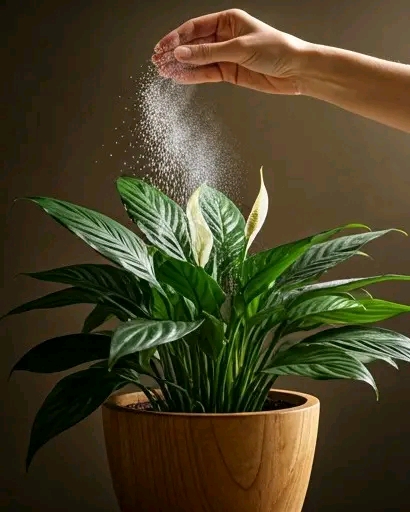
Peace lily is one of the most elegant indoor plants for homeowners who want glossy green leaves, graceful white blooms, soft tropical texture, and a calm decorative display that fits beautifully inside living rooms, bedrooms, home offices, apartments, bright windowsills, entryways, modern plant corners, commercial interiors, luxury home staging, and premium indoor plant displays. Its deep green foliage and clean white spathes create a peaceful look that feels fresh, expensive, and timeless, especially when the plant is placed in a warm wooden planter, a neutral ceramic pot, or a textured decorative container.
Many plant lovers become curious when they see a light white powder being sprinkled around a peace lily. The method is often presented as a simple houseplant hack for stronger leaves, cleaner growth, and better blooming. The powder may be many different things, such as diatomaceous earth, crushed eggshell powder, powdered fertilizer, Epsom salt, baking soda, cornstarch, or another homemade plant-care ingredient. Because many white powders look similar, this type of trick must be handled carefully. Some powders can help in very specific situations, while others can damage leaves, burn roots, change soil balance, attract moisture problems, or leave an unattractive residue on the foliage.
The safest way to understand this method is to treat it as an optional support step, not a miracle bloom booster. A peace lily does not produce lush leaves and white flowers because of one dramatic powder. It grows well when the root zone is healthy, the soil is lightly moist but not soggy, the pot drains properly, the light is bright but indirect, the leaves are clean, and feeding is gentle during active growth. If those basics are missing, a powder sprinkled from above will not fix the plant. In some cases, it can make the problem worse.
Understanding Peace Lily Health First
Peace lily, also known as Spathiphyllum, grows from a central crown and produces broad glossy leaves on upright stems. The white part that most people call the flower is a spathe, while the small central spike is the spadix. A healthy plant may bloom when it receives enough bright indirect light, steady moisture, and gentle nutrition. A stressed plant may droop, yellow, develop brown tips, grow smaller leaves, or stop blooming completely.
Before adding any powder to a peace lily, the plant’s condition should be checked. If the leaves are firm, green, and glossy, the plant may only need normal care. If the leaves are yellowing, drooping, or browning, the issue is usually connected to watering, light, roots, soil quality, humidity, or fertilizer buildup. A white powder should never be used before understanding what the plant actually needs.
Peace lilies are sensitive to overwatering and chemical buildup. Their roots like moisture, but they also need oxygen. Soil that stays wet for too long can suffocate the roots and cause rot. Too much fertilizer can burn the roots and create brown leaf tips. Powdery treatments that collect on the soil surface can sometimes hide moisture problems or create residue that makes care harder to manage.
What the White Powder Might Be
The white powder may be diatomaceous earth. This is sometimes used on dry soil surfaces to help with crawling insects and fungus gnats. It works only when dry and should be used carefully because the dust can irritate the lungs if inhaled. It is not a fertilizer and it does not force blooms. If the soil is wet, diatomaceous earth loses much of its effect and may simply become a damp powdery layer.
The powder may be crushed eggshell powder. Eggshells contain calcium carbonate, but they break down slowly in potting soil. They do not act like instant fertilizer and they do not immediately create blooms. A tiny amount may not harm a healthy plant, but a thick layer can look messy and may not solve any real problem. Peace lilies usually need balanced care more than extra calcium.
The powder may be Epsom salt, which is magnesium sulfate. Epsom salt can supply magnesium and sulfur in small amounts, but it is not a complete fertilizer. It should not be sprinkled heavily onto leaves or soil. Too much can create mineral buildup and brown tips. If used at all, it is usually safer dissolved weakly in water and applied rarely, not dusted heavily over foliage.
The powder may be baking soda or cornstarch, both of which should be used with caution. Baking soda can disturb leaf and soil surfaces and may burn sensitive foliage if used too strongly. Cornstarch can hold moisture and may encourage mold when it becomes damp. Neither should be treated as a general peace lily growth booster.
The powder may also be a powdered fertilizer. If so, the label matters. Some fertilizers must be dissolved in water before use. Sprinkling concentrated fertilizer directly onto leaves or near the crown can burn the plant. Peace lilies prefer weak, controlled feeding, not heavy dry fertilizer around the base.
Why Powder on Leaves Can Be Risky
Peace lily leaves are broad, glossy, and naturally beautiful when clean. Dusting powder directly over the leaves can block light, leave marks, and reduce the polished look of the plant. If the powder absorbs moisture, it can cling to the leaf surface and create spots. Some powders may also irritate leaf tissue, especially if the plant sits near bright light after application.
Leaves are not designed to be coated with kitchen powders or concentrated minerals. A light residue may seem harmless, but repeated use can make the plant look dull and stressed. Peace lilies use their leaves to absorb light and support growth. Clean leaves are more useful than coated leaves. If powder lands on the foliage, it is usually best to wipe the leaves gently with a damp cloth after the treatment has served its purpose, unless the powder is part of a specific pest-control method and the plant is being monitored carefully.
For indoor decor, powdery leaves reduce the elegant appearance of the plant. A peace lily looks luxurious because of its deep green shine and clean white blooms. A white dusty coating may make the plant look neglected rather than healthy. Premium indoor plant styling depends on clean foliage, tidy soil, and a balanced care routine.
Why Powder Around the Crown Needs Caution
The crown is the central area where the stems emerge from the soil. This area should stay clean and airy. If powder collects heavily around the crown and becomes wet, it may trap moisture. Trapped moisture around a peace lily crown can increase the risk of rot, especially if the plant is already in a damp potting mix.
Any powder used near the soil should be applied lightly and kept away from the tight base of the stems. It should not be poured into the center of the plant or packed around the crown. A peace lily needs airflow at the base. A thick layer of powder can hide the soil condition and make it harder to see whether the plant is too wet, too dry, or developing mold.
If the plant is being treated for pests, the first step should still be diagnosis. Fungus gnats usually indicate soil staying too wet. A powder may reduce surface pests temporarily, but the deeper fix is better watering, improved drainage, and a soil surface that dries properly. Treating symptoms without correcting the cause usually leads to repeated problems.
Best Light for Peace Lily Blooms
Bright indirect light is one of the most important factors for peace lily blooming. Many people keep peace lilies in low light because the plant can survive there. However, survival is different from strong blooming. A peace lily in a dark corner may stay green for a long time, but it may not produce many white spathes.
For better blooms, place the plant near a bright window with filtered light. A sheer curtain can soften direct sun and protect the leaves from scorching. Harsh afternoon sun can burn the foliage, but gentle morning brightness or bright indirect light can help the plant build energy. If the plant has not bloomed in a long time, improving light is usually more effective than adding powder.
A peace lily styled near a bright window can become a beautiful focal point. The glossy leaves catch soft light, and the white blooms stand out against the dark foliage. This creates a calm, premium indoor display without needing risky treatments.
Watering Peace Lily Correctly
Peace lilies like soil that stays lightly moist, but they do not like soggy conditions. Water when the top layer begins to dry and the pot feels slightly lighter. When watering, water thoroughly and allow excess water to drain from the bottom. Empty the saucer afterward. This simple habit protects the roots from standing water.
If powder has been added to the soil surface, watering should be done carefully. Some powders can dissolve and move into the soil. Others can clump. If a powder is not meant for soil application, watering can make it more harmful. This is why identifying the powder matters before using it.
A peace lily that droops may need water, but drooping can also happen when roots are damaged by overwatering. If the soil is dry and the plant droops, watering may help quickly. If the soil is wet and the plant droops, the roots may be struggling. In that situation, do not add powder or fertilizer. Check drainage and root health first.
Healthy Soil for Peace Lily
A good peace lily mix should hold some moisture while still allowing air to reach the roots. Indoor potting soil can be improved with perlite, fine bark, coco coir, or other airy materials. The soil should not become dense, muddy, or sour-smelling. Heavy garden soil is not ideal for indoor peace lilies because it can compact and hold too much water.
If the soil is old, compacted, or slow to dry, sprinkling powder on top will not fix it. Repotting into fresh airy mix may be the better solution. A healthy root zone supports stronger leaves and more blooms. A poor root zone leads to drooping, yellowing, and weak growth no matter what is added on top.
When repotting, choose a pot with drainage holes. Decorative outer pots are fine, but the inner pot should drain. A peace lily in a beautiful pot without drainage may look stylish at first, but root problems can develop quietly. Practical care must support the decorative look.
Feeding Peace Lily Safely
Peace lilies prefer gentle feeding. During spring and summer, a diluted balanced houseplant fertilizer can support growth and blooming. Strong feeding can cause brown tips and root burn. If the plant is in low light, it needs even less fertilizer because it is growing more slowly.
Powdered fertilizer should only be used according to its label. Do not guess. Do not sprinkle concentrated fertilizer over leaves or into the crown. If fertilizer grains touch wet leaves, they can burn the tissue. If too much fertilizer collects in the soil, salts can build up and damage roots.
If the plant already receives fertilizer, avoid adding extra powders such as Epsom salt or other mineral products without a clear reason. More nutrients do not always mean better growth. Balance matters more than quantity.
Using Powder for Pest Control
If the white powder is being used for pest control, the pest should be identified first. Fungus gnats, mealybugs, spider mites, thrips, and scale all require different responses. A powder on the soil surface may help with some crawling pests, but it will not solve insects living under leaves or inside leaf joints.
For fungus gnats, the most important correction is moisture control. Let the top soil dry more between watering, improve drainage, and avoid organic residue on the soil surface. Diatomaceous earth may help only when dry. If it becomes wet, it should be refreshed or removed according to the situation.
For leaf pests, wiping leaves, showering the plant gently, isolating the plant, and using a labeled houseplant-safe treatment may be more useful. Powder dusted from above is not a precise treatment for many leaf pests. It can make the plant messy without reaching the insects effectively.
Cleaning Peace Lily Leaves
Peace lily leaves should be wiped regularly with a soft damp cloth. Clean leaves absorb light better and look more elegant. Dust, powder, water spots, and fertilizer residue can make the plant look dull. Supporting each leaf with one hand while wiping with the other helps prevent tearing.
Avoid oily leaf shine products. They may create a temporary glossy look, but they can attract dust and leave residue. Plain water is usually enough. If powder has landed on the leaves, wipe gently until the natural shine returns. Do not scrub aggressively because peace lily leaves can bruise.
Old yellow leaves and faded blooms should be removed with clean scissors. This keeps the plant looking fresh and directs attention to the healthy foliage. A groomed peace lily always looks more premium than one covered in residue or old damaged growth.
Humidity and Indoor Conditions
Peace lilies appreciate moderate humidity. Dry indoor air can contribute to brown tips, especially during winter or in rooms with heating. A humidifier, grouped plants, or a pebble tray can help, but leaves should not remain wet all day. Moisture plus powder residue can create spotting or fungal issues.
The plant should be kept away from cold drafts, air-conditioning vents, and heating registers. Sudden temperature changes can stress the leaves and reduce blooming. Stable warmth supports healthier growth. A peace lily displayed near a window should be protected from cold glass in winter and harsh sun in summer.
Good airflow matters. A plant in stagnant damp air is more likely to develop mold or pest problems. If any powder is used on the soil, airflow helps the surface dry properly. A clean, stable environment reduces the need for repeated treatments.
Indoor Decor and Styling Ideas
A peace lily looks beautiful in natural wood, white ceramic, stone-textured, woven, or neutral decorative planters. A wooden pot or warm-toned planter can create a cozy natural look, while white ceramic gives a cleaner modern style. The plant works well in living rooms, bedrooms, home offices, reading corners, and entryways because its shape is soft but structured.
For a luxury indoor display, place the peace lily where its leaves can catch filtered light. The white blooms should rise above the foliage and create contrast. Keep the soil surface tidy and avoid heavy visible powder. A clean surface looks more refined than a messy layer of product.
In commercial interiors, staged homes, wellness spaces, and office corners, peace lilies are valued because they look calm and elegant. In these settings, plant care should be discreet. Visible dust, odors, mold, or powdery residue can reduce the premium effect. Professional-looking plant care is clean, balanced, and controlled.
Continue to Page 2
Continue to page 2 for more details about this article and the key points many readers miss on the first page.