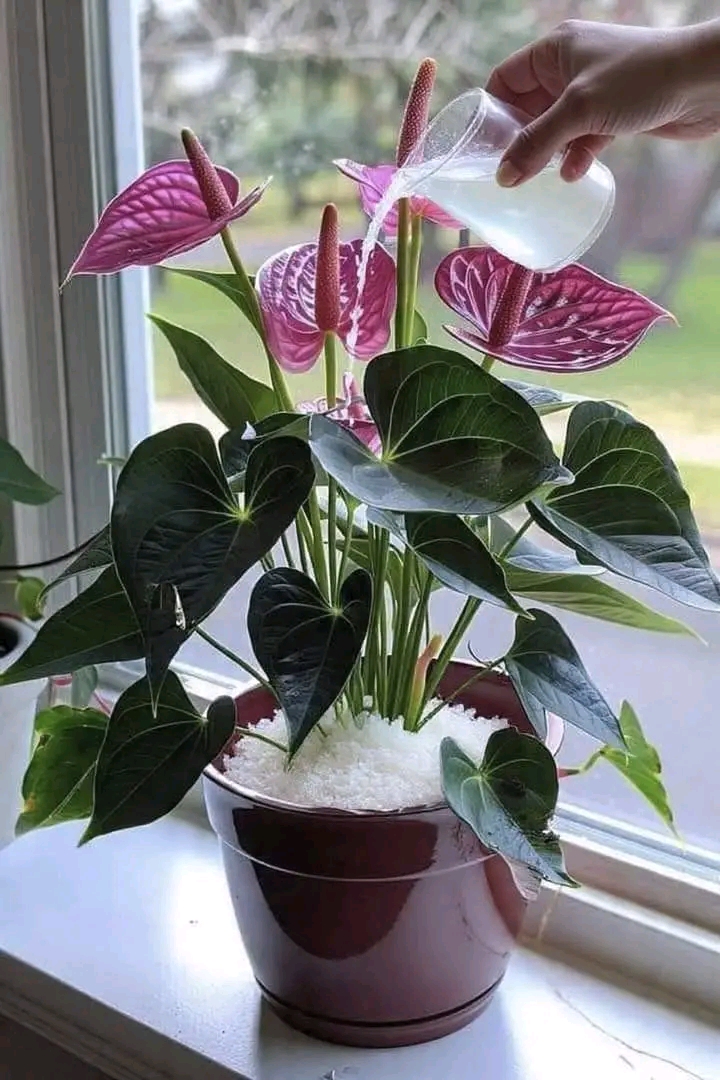
Anthurium is one of the most dramatic indoor plants for homeowners who want glossy heart-shaped leaves, colorful spathes, upright tropical stems, and a polished decorative display that fits beautifully in living rooms, bedrooms, bright kitchens, home offices, apartments, sunny windowsills, plant shelves, entry corners, commercial interiors, luxury home staging, and premium indoor plant styling. Its red, pink, purple, white, coral, and green spathes can look almost sculptural, especially when the leaves are dark, shiny, and clean. A healthy anthurium near a bright window can easily become the focal point of a room.
Many plant lovers become curious when they see a white powder spread across the soil surface of an anthurium while clear water is poured over it. This method is often described as a simple trick for stronger roots, brighter leaves, bigger blooms, cleaner soil, and a more elegant display. The white powder may be perlite, crushed eggshell powder, Epsom salt, baking soda, rice powder, slow-release fertilizer, diatomaceous earth, or another household or garden material. Because many white powders look similar, the ingredient must be identified before it is used. Anthuriums are sensitive tropical plants, and the wrong powder can burn roots, change soil chemistry, trap moisture, or damage the plant.
The safest way to understand this method is to treat it as an optional support step, not a guaranteed bloom booster. Anthuriums do not produce glossy leaves and colorful spathes because of one layer of powder. They grow well when their roots receive oxygen, their potting mix drains well, their light is bright but indirect, their watering is balanced, their humidity is moderate, and their feeding is gentle during active growth. If the plant is weak, yellowing, drooping, or not blooming, the first step is not powder. The first step is checking the roots, potting mix, light, drainage, and watering routine.
Understanding Anthurium Roots Before Adding White Powder
Anthuriums naturally prefer an airy root zone. They are tropical plants, but they do not like heavy, muddy soil. Their roots need moisture and oxygen at the same time. This is why anthuriums often grow better in a chunky aroid-style mix that includes orchid bark, perlite, coco chips, charcoal, and a small amount of light potting mix. When roots are trapped in dense soil, the plant may decline even if the leaves still look attractive for a while.
A healthy anthurium should have firm stems, glossy leaves, and new growth that opens cleanly. If the plant has yellow leaves, soft stems, drooping growth, black roots, sour-smelling soil, or fungus gnats, the root zone may already be stressed. Adding powder and water to a stressed pot can make things worse, especially if the powder dissolves into a strong mineral concentration or forms a wet crust on the soil surface.
The root zone should stay clean, breathable, and lightly moist. A white powder should never be piled thickly against the crown where the stems emerge. The crown is a sensitive area. If moisture and powder collect there, the base of the plant can become too wet and rot may develop.
What the White Powder Might Be
The white powder may be perlite. Perlite is a lightweight volcanic material used to improve drainage and airflow in potting mix. It is useful when mixed into the soil, but a thick layer on top does not feed the plant or force blooms. Perlite is generally safer than many household powders, but it should not be confused with fertilizer.
The powder may be crushed eggshell powder. Eggshell powder contains calcium carbonate, but it breaks down slowly. It does not create instant growth or immediate blooms. If used too heavily, it can sit on the soil surface and become messy. It may also alter soil balance over time if repeatedly added.
The powder may be Epsom salt. Epsom salt contains magnesium sulfate, but it is not complete fertilizer. Too much can create salt buildup and root stress. Anthuriums do not need dry Epsom salt sprinkled heavily on the soil surface. If magnesium is needed, it should be used carefully and rarely, preferably in a very diluted form.
The powder may be baking soda. Baking soda should not be used as a regular anthurium soil treatment. It is alkaline and contains sodium. Repeated use can disturb soil pH, contribute to salt buildup, and stress roots. Anthuriums generally prefer a slightly acidic to neutral environment, not a strong alkaline treatment.
The powder may be slow-release fertilizer. If so, the label matters. Slow-release fertilizer can be useful when applied correctly, but too much near the crown or roots can burn the plant. It should be used according to instructions, not guessed by appearance.
Why Pouring Water Over Powder Can Be Risky
When water is poured over powder, the powder may dissolve and move into the root zone. If the powder is mild and plant-safe, this may not cause immediate problems. If the powder is strong, salty, alkaline, or unknown, the roots may be exposed to a concentrated solution. Anthurium roots are sensitive and can react with yellowing, browning, drooping, or root damage.
Some powders clump when wet. A clumped layer can block airflow at the soil surface and hold moisture around the crown. This is not ideal for anthuriums. They need moisture, but they also need oxygen. A wet crust can encourage fungus gnats, mold, and sour soil.
Watering should always be done with drainage in mind. If the pot does not have drainage holes, pouring water over any powder is especially risky. The liquid may collect at the bottom and remain around the roots. A decorative pot should never trap water around an anthurium’s root system.
Why the Crown Must Stay Clean
The crown is the base where the stems emerge from the soil. This area should remain clean and open. A thick white powder layer around the stems may look like a treatment, but it can trap moisture. Anthurium stems should not sit in wet powder or heavy residue.
If powder touches the stems or lower leaves, remove it gently. If water splashes powder onto the leaves, wipe it away with plain water. Anthurium leaves and spathes look best when glossy and clean. White residue can make them look dusty or neglected.
A clean crown also helps with inspection. When the base is visible, it is easier to spot pests, rot, new growth, or moisture problems. Covering the soil surface too heavily can hide early warning signs.
Best Light for Anthurium Blooms
Bright indirect light is one of the most important factors for anthurium blooming. A plant kept in low light may survive, but it may produce fewer colorful spathes. A bright window with filtered light is usually ideal. Direct harsh sun can scorch leaves, especially through hot glass.
If the plant has healthy leaves but few blooms, improve light before adding powder. Move it gradually closer to a bright window or use a sheer curtain to filter strong rays. The plant should receive enough brightness to build energy without burning.
Light also affects watering. A plant in brighter light uses water more quickly than one in a dim corner. If an anthurium sits in low light and is watered heavily over powder, the soil may stay wet too long. Better light helps the plant grow and helps the potting mix dry more evenly.
Watering Anthuriums Correctly
Anthuriums like consistent moisture, but they do not like soggy roots. Water when the top part of the potting mix begins to dry. Water thoroughly and allow the excess to drain away. Empty the saucer after watering. The plant should never sit in standing water.
When powder is present, watering should be done more carefully. If the ingredient is unknown, remove it before watering. If the powder is confirmed as safe, use only a thin amount and avoid repeated heavy applications. Plain water should remain the main watering method.
Do not water on a strict calendar without checking the mix. The plant’s needs change with season, temperature, light, pot size, and potting mix. A pot near a warm bright window may dry faster than one in a cool shaded room.
Best Potting Mix for Anthuriums
A good anthurium mix should be chunky, airy, and quick-draining while still holding light moisture. Orchid bark, perlite, coco chips, charcoal, and a small amount of potting soil can create a breathable mix. This type of structure supports healthy roots much better than a dense, muddy soil.
If the current potting mix is compacted, powder on top will not fix it. Repotting into fresh airy mix is often the better solution. Old compacted soil can stay wet too long, reduce oxygen, and cause roots to decline. A healthy root system is the real foundation of strong leaves and blooms.
The pot must have drainage holes. A beautiful pot without drainage may look elegant, but it creates hidden risk. If you want a decorative look, place a draining nursery pot inside a decorative cover pot and remove it for watering.
Using Perlite Safely
If the white material is perlite, it is best used as part of the potting mix rather than as a thick surface layer. Perlite improves aeration and drainage when mixed through the root zone. It does not feed the plant, but it can help create a healthier structure.
A small amount on top is usually not dangerous, but it should not be mistaken for fertilizer. If the plant needs nutrients, perlite will not provide them. If the plant needs drainage, mixing perlite into the soil during repotting is more effective than sprinkling it on the surface.
Perlite dust can be irritating if inhaled, so it should be handled gently and dampened lightly during mixing. Do not create clouds of dust indoors.
Using Eggshell Powder Safely
If the white powder is eggshell powder, it should be clean, dry, and finely ground. Eggshell breaks down slowly, so it is not an instant bloom booster. It may contribute calcium over time, but only in small amounts and under the right soil conditions.
A thick layer of eggshell powder can make the pot look messy and may combine with moisture on the surface. If used, apply very lightly and keep it away from the crown. Do not use eggshell powder repeatedly without understanding the soil needs.
For most indoor anthuriums, balanced fertilizer and proper potting mix are more useful than eggshell powder. Calcium deficiency is not usually solved by dumping kitchen powder on the soil.
Using Epsom Salt Safely
If the white powder is Epsom salt, caution is important. Epsom salt is not a general fertilizer. It supplies magnesium and sulfur, but it does not provide a complete nutrient profile. Too much can create salt buildup in the pot.
Dry Epsom salt should not be piled on the soil surface. If it is used at all, it should be heavily diluted in water and applied rarely. Even then, it should only be considered if there is a reason to suspect magnesium deficiency.
If the plant already receives balanced fertilizer, extra Epsom salt may be unnecessary. More minerals do not always mean better growth. In a small pot, excess minerals can quickly become a root problem.
Why Baking Soda Should Be Avoided
If the white powder is baking soda, it is better to avoid using it on anthurium soil. Baking soda is alkaline and contains sodium. Anthuriums do not need sodium as a nutrient. Repeated sodium buildup can stress roots and contribute to brown tips or poor growth.
Baking soda water is sometimes promoted for certain garden problems, but that does not make it safe as a houseplant soil treatment. Indoor pots are small systems, and residues do not disappear quickly. Adding alkaline powder to an anthurium can disturb the root environment.
If baking soda has already been used, stop immediately. If the pot drains well, water thoroughly with plain water to help move residue out. If the soil begins to smell, crust, or the plant declines, repotting into fresh airy mix may be safer.
Feeding Anthuriums the Right Way
Anthuriums benefit from gentle feeding during active growth. A diluted balanced houseplant fertilizer or orchid-style fertilizer can support leaves and spathes. Strong feeding is not needed. Too much fertilizer can burn roots and cause brown leaf edges.
If a slow-release fertilizer is used, it should be applied according to the label and kept away from direct contact with the crown. A few granules used correctly can be helpful. A thick layer poured over the soil is risky.
Do not fertilize a stressed anthurium. If the plant has wet soil, yellow leaves, root rot, or poor drainage, fertilizer can make the problem worse. Fix the root zone first, then feed lightly once the plant is growing again.
Continue to Page 2
Continue to page 2 for more details about this article and the key points many readers miss on the first page.