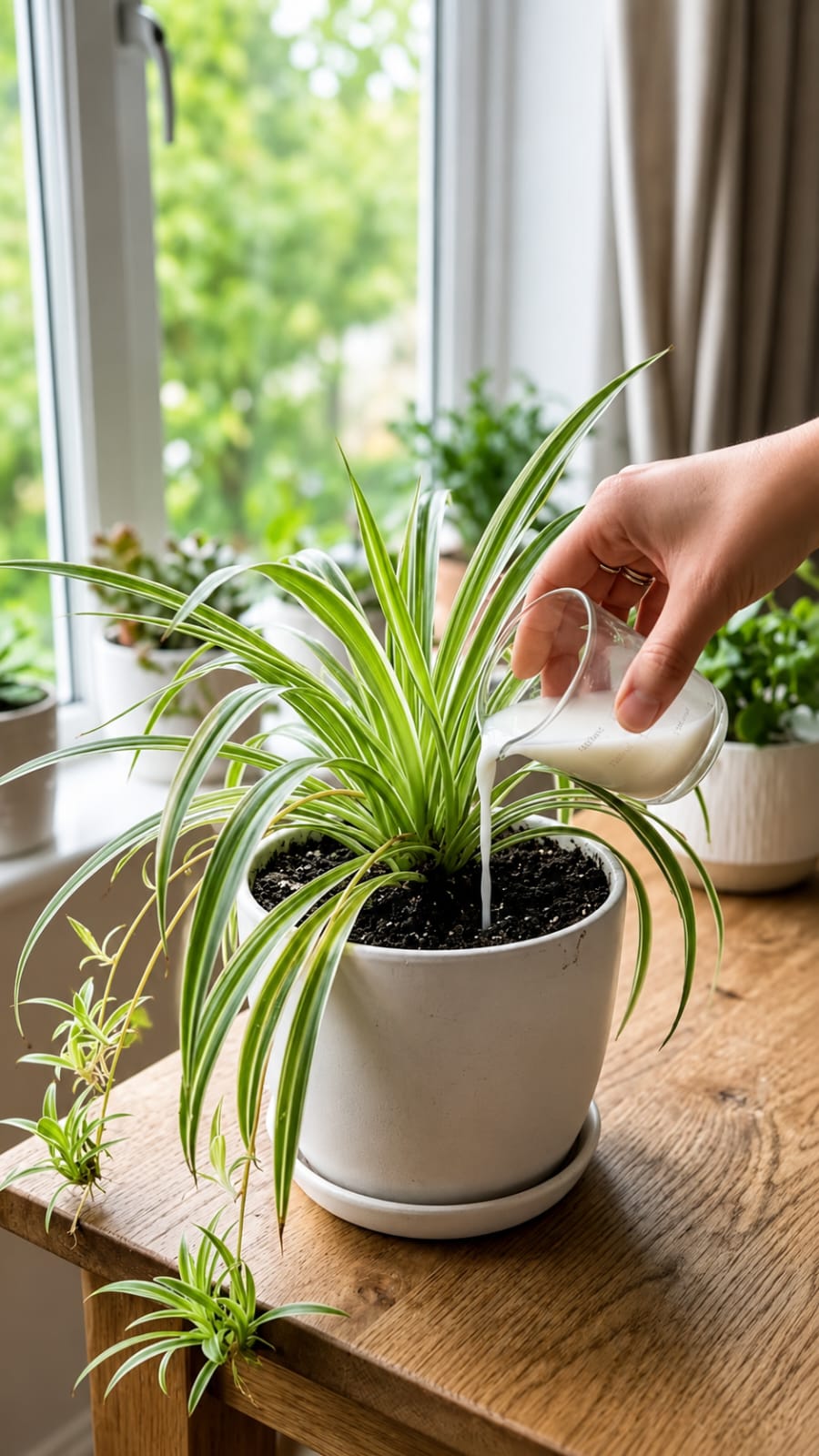
Spider plant is one of the most cheerful indoor plants for homeowners who want arching striped leaves, easy care, fast growth, baby plantlets, and a fresh decorative display that fits beautifully in living rooms, bedrooms, kitchens, bathrooms, home offices, apartments, bright windowsills, hanging baskets, plant shelves, commercial interiors, luxury home staging, and premium indoor plant styling. Its long green-and-white leaves bring movement to a room, while the small baby spiderettes create a soft cascading effect that makes the plant look lively and full.
Many plant lovers become curious when they see milk being poured into spider plant soil. This method is often described as a homemade trick for stronger leaves, brighter variegation, better roots, and faster baby plant growth. Milk looks natural and gentle because it is familiar, white, and often associated with calcium. However, spider plants are houseplants growing in a small pot, not garden soil with wide-open microbial activity. Milk can spoil, smell sour, attract fungus gnats, leave residue, and disturb the root zone if it is used carelessly.
The safest way to understand milk for spider plants is to treat it as a risky homemade experiment, not a necessary care routine. A spider plant does not become fuller because of one pour of milk. It grows best when it receives bright indirect light, balanced watering, a pot with drainage holes, airy soil, moderate humidity, clean leaves, and gentle feeding during active growth. If the plant has brown tips, weak leaves, pale color, or few babies, the first solution is not milk. The first solution is checking water quality, light level, soil moisture, drainage, root crowding, and fertilizer buildup.
Why People Think Milk Helps Spider Plants
Milk is often promoted in plant-care content because it contains calcium and other nutrients. That makes it sound like a simple natural fertilizer. The problem is that nutrients inside milk are not the same as measured plant fertilizer. In a pot, milk does not behave like a clean nutrient solution. It is an organic food liquid that can break down, sour, and leave residue in the soil.
Some people use heavily diluted milk as a leaf spray for certain outdoor plant issues, but that does not mean it should be poured into indoor spider plant soil. Outdoor gardens have more airflow, sunlight, microbial diversity, and soil volume. A small indoor pot has limited space. Anything that spoils inside that pot can affect the roots quickly.
Spider plants are also not heavy feeders. They usually need light, moisture balance, and occasional weak fertilizer more than homemade kitchen liquids. If a spider plant is already healthy, milk is unnecessary. If it is stressed, milk can make the stress worse.
Why Milk Can Be Risky in Spider Plant Soil
Milk can sour in the potting mix. When it breaks down, it may create an unpleasant smell. This is especially likely if the soil stays damp, the room is warm, or the pot has poor drainage. A sour-smelling pot is not just unpleasant for the home; it can also signal an unhealthy root environment.
Milk residue can attract fungus gnats. Fungus gnats are small flies that often appear when soil stays moist and contains decaying organic material. Their larvae live in damp soil and can become annoying around indoor plant collections. Pouring milk into soil can make the surface more attractive to them, especially if the pot is watered too often.
Milk can also create a film or residue on the soil surface. This may make it harder for air to move naturally through the top of the mix. Spider plant roots need oxygen. A sticky or sour layer is not a good replacement for clean, breathable soil.
Should You Ever Use Milk on Spider Plants?
For most homeowners, the safest answer is no. Spider plants do not need milk. They can grow beautifully with plain water, bright indirect light, proper drainage, and occasional diluted houseplant fertilizer. Milk adds more risk than benefit, especially indoors.
If someone still wants to test milk, it should never be used straight. Straight milk is too rich and can spoil quickly. Even diluted milk should be used rarely, in a very weak mixture, and only on a healthy plant in a draining pot. It should never be poured into wet soil or used repeatedly as a routine.
The better choice is to avoid milk entirely and use a balanced fertilizer designed for houseplants. This gives the plant nutrients in a cleaner and more predictable form. Spider plants respond well to simple, measured care.
Best Light for Fuller Spider Plant Growth
Bright indirect light is one of the most important factors for a full spider plant. A plant kept in low light may survive, but it often grows slower, produces fewer babies, and loses some of its vibrant appearance. Variegated spider plants need enough brightness to keep their stripes clean and attractive.
A bright window with filtered light is ideal. Morning sun can be helpful, but harsh afternoon sun may scorch the leaves. If the plant receives strong direct light through glass, the leaf tips or edges may brown. A sheer curtain can soften the light while still giving the plant the brightness it needs.
If the spider plant looks thin or weak, improve light before adding any fertilizer or homemade mixture. Better light often creates more visible improvement than any soil tonic. Growth comes from energy, and light is the plant’s main energy source.
Watering Spider Plants the Right Way
Spider plants like evenly moist soil, but they do not like soggy roots. Water when the top part of the soil begins to dry. Water thoroughly until excess drains from the bottom, then empty the saucer. The plant should not sit in standing water.
If the soil is already wet, do not add milk, fertilizer, or any other liquid. Extra moisture can suffocate the roots. A spider plant can droop from thirst, but it can also droop from root stress caused by wet soil. Always check the soil before watering.
Water quality matters. Spider plants can be sensitive to minerals, fluoride, and salts in some tap water. If the plant has persistent brown tips, try filtered water, rainwater, or water left out overnight. This simple change may help more than milk.
Why Brown Tips Happen
Brown tips are one of the most common spider plant problems. They can be caused by dry air, inconsistent watering, mineral-heavy tap water, fertilizer buildup, low humidity, too much direct sun, or root stress. Brown tips do not always mean the plant needs more food.
If only a few tips are brown, trim them with clean scissors and adjust the care routine. Cut along the natural shape of the leaf so the plant still looks neat. If many tips turn brown at once, look more closely at water quality, soil moisture, and fertilizer use.
Milk does not solve brown tips. In fact, if milk causes residue or root stress, it may make the plant look worse. A cleaner watering routine is usually the better solution.
Best Soil for Spider Plants
Spider plants grow well in a light, well-draining indoor potting mix. The soil should hold moisture but not stay muddy. A regular houseplant mix can work if it is airy. Adding perlite, fine bark, or coco coir can improve structure and drainage.
If the soil is old, compacted, or sour-smelling, repotting is better than adding milk. Old soil can collect fertilizer salts and stay wet unevenly. Fresh mix gives the roots a cleaner start.
A pot with drainage holes is essential. A decorative pot without drainage can trap water at the bottom. If you want a stylish cover pot, keep the spider plant in a draining inner pot and remove it for watering.
Feeding Spider Plants Safely
Spider plants are moderate to light feeders. During spring and summer, a diluted balanced houseplant fertilizer can support fuller growth and baby plant production. The fertilizer should be weak. Too much can cause brown tips and salt buildup.
Do not fertilize a plant that is already stressed by wet soil, root rot, or low light. Fertilizer supports healthy growth, but it does not rescue damaged roots. Correct the care conditions first.
Milk should not replace fertilizer. A proper houseplant fertilizer is cleaner, more balanced, and easier to control. If the goal is fuller foliage, gentle feeding during active growth is safer than pouring dairy into the soil.
How to Encourage Spider Plant Babies
Spider plants often produce baby plantlets when they are mature, healthy, and receiving enough light. A plant in bright indirect light is more likely to send out long stems with small white flowers and baby spiderettes. Low light can reduce baby production.
A slightly snug pot may also encourage babies, but the plant should not be severely root-bound. If the roots are packed tightly and the plant dries too quickly, repotting into a slightly larger pot may help. Choose only one size bigger so the soil does not stay wet too long.
Consistent care is the best baby booster. Bright light, correct watering, and gentle feeding can support natural baby growth. Milk is not needed for this process.
Cleaning Spider Plant Leaves
Spider plant leaves can collect dust, especially in bright rooms near windows. Dust makes the plant look dull and may reduce light absorption. Because the leaves are narrow and numerous, a gentle rinse can be easier than wiping each leaf.
If rinsing the plant, let the pot drain well afterward. Do not leave water sitting in the saucer. If the plant is too large to rinse, use a soft damp cloth to wipe the leaves gently.
If milk splashes onto the leaves, wipe it away immediately with plain water. Milk residue can dry into a film, smell sour, and attract dust. Clean leaves create a fresher and more elegant display.
What to Do If Milk Was Already Used
If a small amount of diluted milk was used once and the plant still looks healthy, stop using it and return to plain water. Let the soil dry to the proper level before watering again. Watch for odor, mold, fungus gnats, yellowing leaves, or drooping.
If straight milk or a large amount was poured into the pot, the safest step may be to flush the soil with plain water only if the pot drains well. Let the water run through and drain fully. Then allow the pot to dry properly. Do not keep flushing repeatedly because too much water can also stress the roots.
If the soil smells sour or gnats appear, repotting may be better. Remove the plant gently, shake away old contaminated soil, inspect the roots, trim any rotten roots with clean scissors, and repot into fresh airy mix.
When Milk Should Be Avoided Completely
Milk should be avoided if the spider plant has damp soil, fungus gnats, mold, sour smell, yellowing leaves, root rot, poor drainage, or a pot without drainage holes. These conditions already create risk. Adding milk can make them worse.
Milk should also be avoided in low-light rooms, cold rooms, and winter conditions. The plant uses water more slowly when growth slows. Organic liquid can sit in the pot longer and spoil.
Do not mix milk with sugar, honey, lemon juice, vinegar, baking soda, coffee, oil, or other household ingredients. Mixed kitchen treatments can create unpredictable soil problems and should not be used on indoor spider plants.
Better Alternatives to Milk
If the goal is fuller leaves, improve bright indirect light. If the goal is better growth, use a weak balanced fertilizer during active growth. If the goal is fewer brown tips, improve water quality and avoid overfeeding. If the goal is more babies, let the plant mature in good light.
If the plant looks tired, check whether it is root-bound. Spider plants can fill pots quickly with thick roots. A plant that dries too fast may need a slightly larger pot and fresh mix. A plant that stays wet too long may need a lighter soil blend.
If the leaves are dusty, clean them with plain water. If the air is dry, increase humidity slightly. These basic steps are safer and more effective than milk.
Indoor Decor and Styling Ideas
Spider plants are perfect for soft indoor styling because their arching leaves create movement and brightness. A white ceramic pot creates a clean modern look. A terracotta pot adds warmth. A hanging basket creates a classic cascading display. A woven planter gives a relaxed natural feel.
Place the plant near bright filtered light where the leaves can arch freely. A windowsill, kitchen shelf, bathroom ledge, home office desk, plant stand, or hanging hook can work beautifully. Spider plants also pair well with pothos, ferns, peace lilies, snake plants, and small succulents.
For a premium display, keep the soil surface clean, trim brown tips, remove dead leaves, and avoid visible residue. A spider plant should look fresh and airy. Sour milk soil or white crust does not create a luxury plant look.
Continue to Page 2
Continue to page 2 for more details about this article and the key points many readers miss on the first page.