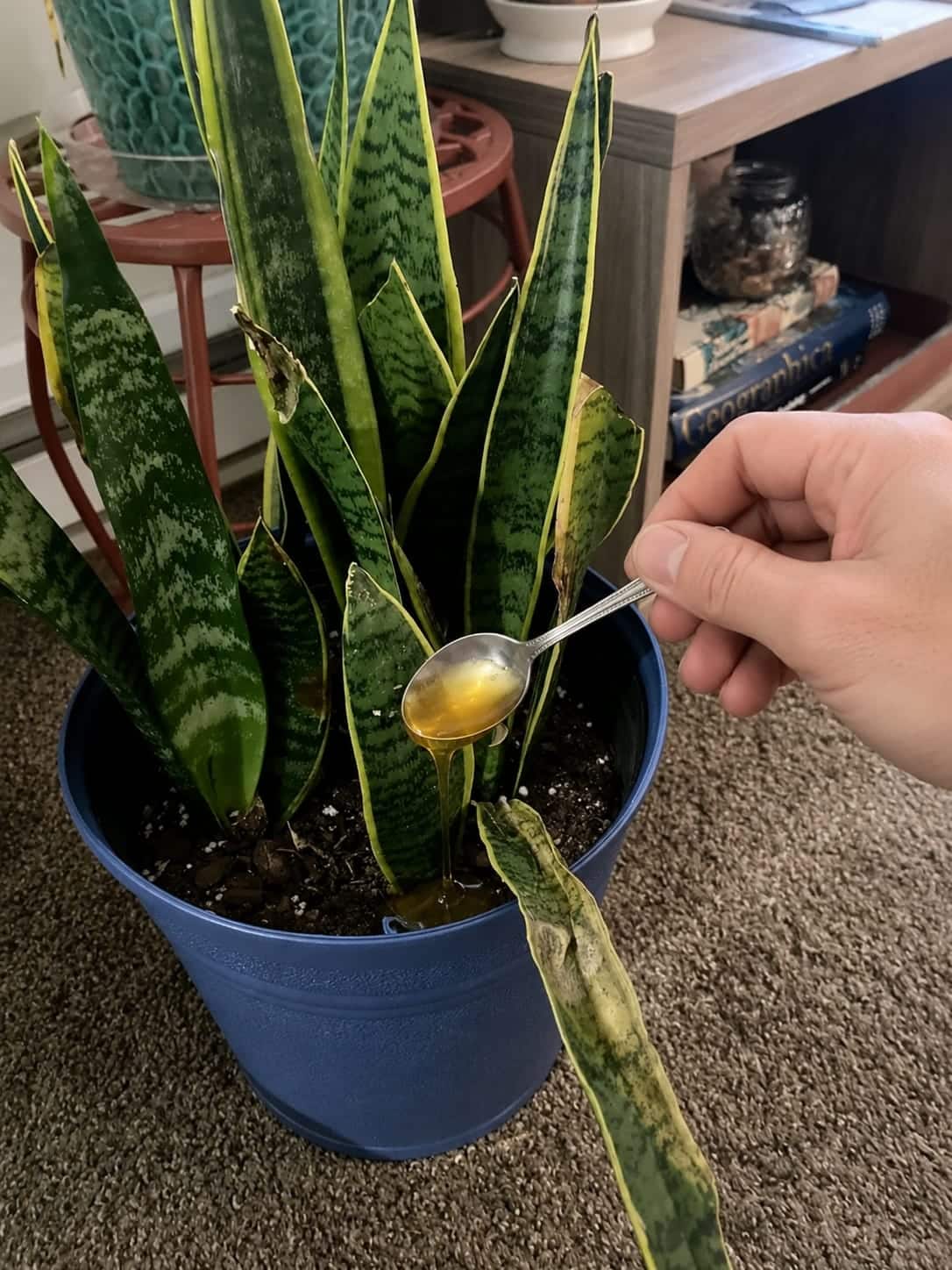
Snake plant is one of the most reliable indoor plants for homeowners who want upright leaves, bold green patterning, yellow-edged variegation, easy care, and a clean decorative display for living rooms, bedrooms, apartments, home offices, entry corners, bright kitchens, plant shelves, commercial interiors, luxury home staging, and premium indoor plant styling. It is known for being tough, drought-tolerant, and forgiving, but even a strong snake plant can decline when the roots stay wet, the soil becomes compacted, the pot has poor drainage, or sticky homemade mixtures are added too often.
Many plant lovers become curious when they see a spoonful of golden sticky liquid being placed near a snake plant that has brown, torn, yellowing, or damaged leaves. This type of mixture is often described online as a homemade rescue tonic for root revival, stronger pups, greener leaves, and faster recovery. The sticky amber liquid may be honey water, sugar water, syrup, molasses water, banana peel liquid, compost tea, diluted fertilizer, or another homemade mixture. Because these liquids can look similar, the ingredient matters. Snake plants are dry-leaning plants with underground rhizomes, and they can be harmed by sugary, sticky, fermented, or overly rich liquids in the soil.
The safest way to understand this method is to treat any sticky amber mixture as a risky experiment, not a reliable snake plant rescue treatment. A damaged snake plant does not heal because honey or syrup is poured near the base. It recovers when the real cause is corrected. The most important steps are checking root health, removing rotten tissue, improving drainage, using fast-draining soil, watering only when the mix dries, giving bright indirect light, and keeping the leaves clean and dry. If the plant has brown damaged leaves and weak sections, the first question is not which tonic to add, but why the plant became stressed in the first place.
Why Snake Plants Get Brown, Weak, or Damaged Leaves
Brown or damaged snake plant leaves can happen for several reasons. The most common cause is overwatering, especially when the plant is in dense soil or a pot without good drainage. Snake plants store water in their leaves and underground rhizomes. They do not need constant moisture. When the soil stays wet, the roots may suffocate and rot, and the leaves may begin to yellow, soften, wrinkle, collapse, or develop brown damaged areas.
Another common cause is physical damage. Snake plant leaves are firm but they can split, tear, or scar if they are bent, rubbed, knocked over, trimmed incorrectly, or pressed against furniture. Once a leaf is torn or scarred, that section will not turn green again. The plant may continue growing, but the damaged tissue remains visible unless the leaf is removed.
Brown tips can also appear from inconsistent watering, mineral-heavy water, fertilizer buildup, cold drafts, harsh sun, low humidity, or old stress. A sticky amber mixture will not reverse these marks. The goal is to prevent new damage by improving the growing conditions.
Why Sticky Amber Liquids Can Be Risky
Sticky liquids are especially risky in indoor plant pots because they can leave residue in the soil. Honey, syrup, sugar water, molasses, and sweet homemade mixtures may seem natural, but they are not balanced plant fertilizer. They can feed microbes, attract fungus gnats, encourage mold, and create a sour smell if the soil stays damp.
Snake plants prefer a clean, airy, dry-leaning root zone. Their rhizomes need oxygen and dry-down time. Sticky liquid does the opposite when used heavily. It can coat soil particles, keep the surface damp, and create a place where pests and mold thrive.
Natural does not always mean safe. Honey is useful in some human routines, but that does not mean it belongs in snake plant soil. Indoor pots are small environments. Anything added to them can stay concentrated around the roots.
What the Golden Mixture Might Be
If the amber liquid is honey water, it should be avoided as a routine snake plant treatment. Honey contains sugars that can attract pests and create sticky residue. It does not provide the clean, balanced nutrition snake plants need. If the plant is already stressed, honey water can make soil problems worse.
If the liquid is molasses water, the same caution applies. Molasses is sometimes used in outdoor soil systems, but indoor snake plant pots do not have the same soil volume, airflow, or microbial balance as outdoor beds. In a small container, it can sour or attract gnats.
If the liquid is banana peel water or compost tea, it may contain some organic material, but it can also ferment. If it smells sour, alcoholic, or rotten, it should not be used. If it is thick, cloudy, or sticky, it is not ideal for snake plant rhizomes.
If the liquid is diluted fertilizer, it should be measured carefully. Snake plants are light feeders. Strong fertilizer can burn roots and worsen brown tips. A weak cactus or balanced houseplant fertilizer during active growth is safer than unknown amber liquid.
Why Damaged Snake Plants Need Diagnosis First
A snake plant with damaged leaves needs careful inspection. Look at the soil first. If the soil is wet, dense, compacted, or sour-smelling, the plant may be struggling with root stress. Look at the base of the leaves. If the bases are soft, mushy, or dark, root or rhizome rot may be present. Look at the pot. If there are no drainage holes, trapped water may be damaging the plant.
If the soil is very dry and the leaves are wrinkled but firm, the plant may need water. If the soil is wet and the leaves are soft, more water or tonic is the wrong response. These two situations can look similar from above, but they require opposite care.
Before adding anything, identify the actual problem. A sticky tonic can hide the symptoms for a moment, but it does not solve root rot, compacted soil, or poor light.
Best Soil for Recovering Snake Plants
A recovering snake plant needs fast-draining soil. A cactus or succulent mix is a good base. It can be improved with perlite, pumice, coarse sand, lava rock, or small bark pieces. The mix should drain quickly and allow oxygen to reach the roots and rhizomes.
If the current soil is heavy, dark, muddy, or slow to dry, repotting is usually more helpful than adding a tonic. Old soil can hold too much moisture and suffocate roots. Fresh airy soil gives the plant a better chance to recover.
Do not add sticky liquids, food scraps, heavy compost layers, thick powders, or sweet mixtures to the new soil. Keep the root zone clean and simple. A recovering plant needs less stress, not more ingredients.
Why Drainage Holes Are Essential
Drainage holes are one of the most important parts of snake plant care. They allow extra water to leave the pot. Without drainage, moisture collects at the bottom, where roots can rot even when the surface looks dry.
A decorative pot can still be used, but the snake plant should sit in a draining inner pot. Water the plant separately, allow all excess to drain, and then return it to the decorative container. This keeps the display attractive while protecting the roots.
No homemade mixture can make up for poor drainage. If a pot traps water, the plant will remain at risk no matter what tonic is added.
How to Water a Damaged Snake Plant
A damaged snake plant should be watered carefully. Wait until the soil dries well before watering. Check deeper than the surface with a wooden skewer or your finger. If the lower soil is still damp, wait longer.
When the plant truly needs water, use room-temperature water and water evenly until excess drains out. Then let the pot dry again. This deep-and-dry rhythm is safer than frequent small sips or spoonfuls of homemade liquid.
Do not pour sticky liquids around damaged leaves or soft bases. If the plant is recovering from root stress, plain water is usually best. Keep the routine simple until the plant stabilizes.
What to Do With Damaged Leaves
Brown, torn, or mushy leaf sections will not turn green again. If a leaf is only slightly damaged and still firm, it can stay on the plant. It will continue helping with photosynthesis. If a leaf is badly damaged, soft, collapsing, or rotting at the base, it should be removed with clean scissors or a clean knife.
Cut damaged leaves close to the soil line if the entire leaf is affected. If only the tip is dry, you can trim the tip following the natural shape of the leaf. Do not remove too many healthy leaves at once. The plant still needs foliage to produce energy.
After trimming, keep the plant dry for a short period so cut areas are not exposed to excess moisture. Avoid pouring any tonic over fresh cuts.
How to Check for Root Rot
If the plant has soft leaves, yellowing bases, or a sour soil smell, remove it gently from the pot and inspect the roots and rhizomes. Healthy rhizomes should feel firm. Roots may be pale, tan, or slightly orange depending on conditions. Rotten roots are usually mushy, dark, hollow, or foul-smelling.
Remove rotten parts with clean tools. Keep only firm healthy sections. Let cut areas dry and callus before repotting into fresh dry succulent mix. Do not water immediately if the plant was heavily trimmed. Give it time to settle.
Root rot cannot be cured by honey, syrup, or amber liquid. Rotten tissue must be removed, and the plant must be placed in a healthier environment.
Can Honey Help Plant Wounds?
Some people use honey on plant cuttings or wounds because it is sticky and natural. However, for snake plants, honey is not necessary and can create problems if it reaches the soil. It may attract pests and leave residue. A clean dry cut and good airflow are usually safer.
If a leaf or rhizome is cut, the most important step is allowing the cut to dry and callus. Snake plant cuttings often need time before they are placed in soil. Moist sticky substances can interfere with that dry healing process.
Clean tools, dry conditions, and fresh soil are better than sugary coatings. The plant’s own tissue can seal when given the right conditions.
Best Light for Recovery
Bright indirect light helps a damaged snake plant recover. Light gives the plant energy to grow new roots and leaves. A dark corner may slow recovery and keep soil wet longer. However, harsh direct sun can stress damaged leaves and create more brown patches.
Place the plant near a bright window with filtered light. Morning sun can be helpful if the plant is acclimated. Avoid strong afternoon sun through hot glass, especially while the plant is recovering.
If the plant was previously in low light, move it gradually. Sudden light changes can cause stress. Stable bright indirect light is the best recovery condition.
Feeding During Recovery
Do not fertilize a snake plant that is actively struggling with root rot, wet soil, or soft leaves. Fertilizer supports healthy growth, but it does not rescue damaged roots. Feeding a stressed plant can make the problem worse.
Once the plant is stable and producing firm new growth, a weak cactus or balanced houseplant fertilizer can be used during spring or summer. Use a low dose. Snake plants are light feeders and do not need frequent fertilizer.
A sticky amber mixture should not be used as fertilizer. If nutrition is needed, use a measured product with clear instructions. Guessing can lead to root burn or salt buildup.
How to Prevent Fungus Gnats
Fungus gnats are attracted to damp soil and decomposing organic material. Sticky liquids, sweet mixtures, and wet soil can make the problem worse. If gnats appear, stop using homemade tonics immediately and let the soil dry more between waterings.
Remove any visible residue from the soil surface. Replace the top layer if it smells sour or looks moldy. Use sticky traps to monitor adult gnats. If the problem continues, consider a targeted gnat treatment that is safe for houseplants.
The best prevention is a fast-draining mix, careful watering, and a clean soil surface. Snake plants should not have damp sugary soil.
Continue to Page 2
Continue to page 2 for more details about this article and the key points many readers miss on the first page.