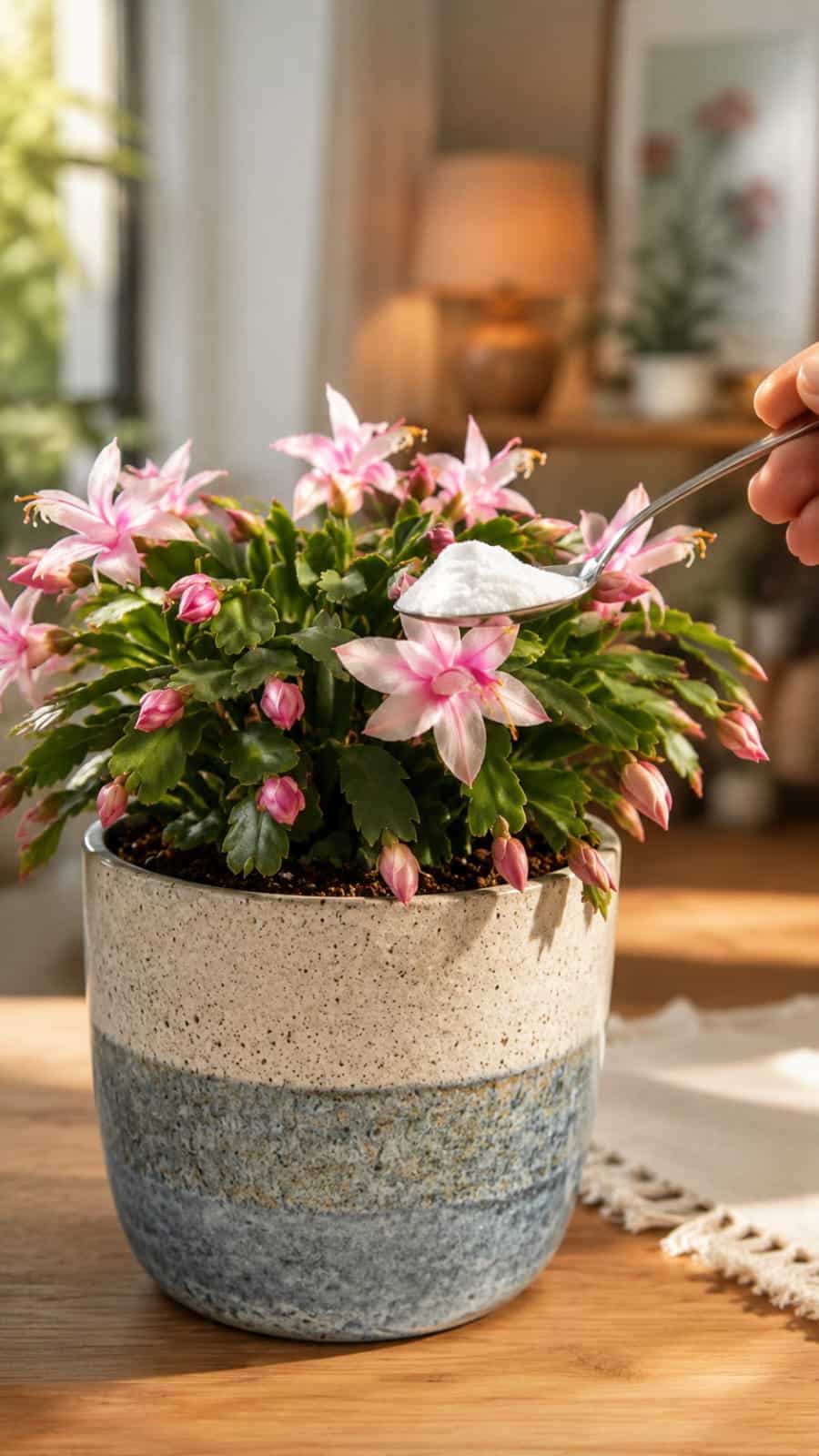
Christmas cactus is one of the most loved indoor flowering plants for homeowners who want soft green segmented stems, colorful seasonal blooms, long-lasting beauty, and a warm decorative display that fits beautifully in living rooms, bedrooms, apartments, home offices, dining tables, bright kitchens, plant shelves, cozy windowsills, commercial interiors, luxury home staging, and premium indoor plant styling. Unlike many plants that are grown mostly for foliage, Christmas cactus becomes especially exciting when its buds begin to swell and open into pink, red, white, coral, purple, or peach flowers during the cooler months.
Many plant lovers become curious when they see a spoonful of white powder being added around a blooming Christmas cactus. This type of powder is often described online as a simple secret for more flowers, stronger roots, healthier green segments, brighter buds, and a fuller holiday display. The white powder may be baking soda, Epsom salt, crushed eggshells, perlite, powdered fertilizer, diatomaceous earth, limestone, cornstarch, sugar, or another homemade amendment. Because many white powders look similar, the exact ingredient matters. A Christmas cactus is not a tough desert cactus that can handle any dry mineral sprinkled around its base. It is a tropical forest cactus with sensitive roots, and the wrong powder can stress the plant, damage roots, create salt buildup, disturb soil balance, or cause bud drop.
The safest way to understand this method is to treat any white powder as a targeted material that should only be used when you know exactly what it is and why the plant needs it. A Christmas cactus does not bloom heavily because a random white powder is placed on the soil. It blooms best when it has bright indirect light, a well-draining but moisture-retentive potting mix, a pot with drainage holes, stable watering, gentle feeding during active growth, cooler nights before bloom season, and a period of longer darkness before buds form. If the plant is already full of buds and flowers, the best care is gentle and consistent. Heavy powder treatments during blooming can do more harm than good.
Why Christmas Cactus Care Is Different From Desert Cactus Care
Christmas cactus is often misunderstood because of the word cactus. Many people imagine desert cactus care, dry sandy soil, and long periods without water. However, Christmas cactus is a tropical forest cactus. It naturally grows in environments where filtered light, humidity, organic debris, and airflow are common. Its roots are not designed to sit in heavy wet soil, but they also do not want to be treated exactly like a dry desert cactus.
This plant prefers a balanced routine. The soil should become lightly dry between waterings, but it should not stay bone dry for long periods during active growth or bud formation. The roots need oxygen, so drainage and soil structure matter. The segmented stems hold some moisture, but they can wrinkle if the plant becomes too dry or soften if the roots become too wet.
Because Christmas cactus has this balanced moisture need, powders can create problems if they change how the soil surface behaves. Some powders clump when wet. Some dissolve into salts. Some create crust. Some attract pests. Some are harmless only when mixed properly into soil. A beautiful flowering plant does not need random additions. It needs a stable root zone.
What the White Powder Might Be
The white powder may be baking soda. Baking soda is often shown in home-care tips, but it is not a safe routine soil amendment for Christmas cactus. It contains sodium and can disturb the soil environment. Sodium buildup can stress roots and may contribute to weak growth or bud problems. Baking soda is not a bloom booster.
The powder may be Epsom salt. Epsom salt contains magnesium and sulfur, but it should not be used randomly or heavily. Magnesium can be useful only when there is a real deficiency, and most Christmas cactus problems are not caused by magnesium deficiency. Too much Epsom salt can create salt buildup and root stress.
The powder may be crushed eggshells. Eggshell powder is often promoted as a natural calcium source, but it breaks down slowly and does not create quick flowers. It may sit on the soil surface for a long time and create a chalky look. Christmas cactus does not usually need eggshell powder to bloom.
The powder may be perlite. Perlite is one of the safer white materials because it helps soil drainage and airflow when mixed into potting mix. However, perlite is most helpful during repotting, not as a heavy spoonful on top of the soil.
The powder may be powdered fertilizer. If so, the amount matters greatly. Christmas cactus can be fed gently, but concentrated fertilizer can burn roots. A plant in bud or bloom should not receive strong feeding. A weak liquid fertilizer during active growth is usually safer than dry powder placed directly on the soil.
Why Baking Soda Should Be Avoided
Baking soda may look harmless because it is common in kitchens, but Christmas cactus soil is not the right place for it. Baking soda can change the chemical balance of the potting mix and add sodium around the roots. Many indoor plants, including Christmas cactus, do not appreciate sodium buildup.
If a plant is struggling to bloom, baking soda will not solve the real cause. Poor blooming is usually connected to light rhythm, temperature, plant maturity, root health, watering, or feeding schedule. A spoonful of baking soda cannot replace the cooler nights and longer dark periods that help Christmas cactus set buds.
If baking soda has already been added, it is best not to water it deeper into the pot. Remove as much as possible from the soil surface and return to normal care. If a large amount was used and the plant begins to wilt, drop buds, or show stress, repotting after bloom season may be needed.
Why Epsom Salt Is Not a Miracle Bloom Powder
Epsom salt is often described as a quick fix for greener plants and better flowers. In reality, it is only useful when the plant needs magnesium. Most Christmas cactus plants grown in reasonable potting mix and fed occasionally do not need extra magnesium. Adding Epsom salt without a reason can increase salt buildup in the pot.
Salt buildup can damage roots and make water harder for the plant to absorb. This may lead to limp segments, dull growth, dry edges, or bud drop. A plant that looks like it needs more food may actually need cleaner soil, better watering, or less fertilizer.
If Epsom salt is ever used, it should be highly diluted and rare. It should not be poured as a mound of dry powder onto the soil. For most plants, a balanced fertilizer used weakly during the growing season is safer and more complete.
Can Eggshell Powder Help Christmas Cactus?
Eggshell powder is popular because it sounds natural. It contains calcium carbonate, but it breaks down slowly. Inside an indoor pot, it may not become available to the plant in any meaningful way for a long time. It can also create a pale layer on the soil surface, especially if used heavily.
Christmas cactus does not usually fail to bloom because it lacks eggshell calcium. It usually fails to bloom because it does not receive the right seasonal signals. It may need brighter indirect light during growth, slightly cooler nights before flowering, and longer darkness in the weeks before bud formation.
Small amounts of very finely ground eggshell may not harm every plant, but it is not necessary. If the goal is healthy growth and reliable blooms, focus on soil quality, watering rhythm, and seasonal light instead.
When Perlite Is Actually Useful
Perlite is one of the few white materials that can truly help a Christmas cactus when used properly. It creates air pockets in the potting mix and helps excess water move through the soil. This is useful because Christmas cactus roots need moisture and oxygen at the same time.
Perlite should be mixed into the soil during repotting. A good Christmas cactus mix can include indoor potting soil, perlite, fine orchid bark, and coco coir. The result should feel light and airy while still holding some moisture. A heavy layer of perlite or powder on the surface does not change compacted soil around the lower roots.
If the current soil is old, dense, sour-smelling, or slow to dry, repotting into a fresh airy mix after blooming is a better solution than adding powder to the top.
Why Powder Treatments Can Cause Bud Drop
Christmas cactus can be sensitive while it is forming buds and flowers. Bud drop can happen when the plant is moved suddenly, exposed to drafts, watered inconsistently, overwatered, underwatered, overfertilized, or placed in changing temperatures. Adding strong powder during this stage can become another stress.
If the plant is already covered in buds, avoid experimenting. Do not add random powders, strong fertilizers, or homemade mixtures. Keep the plant in stable bright indirect light, water carefully, and avoid moving it repeatedly. This gives the buds the best chance to open.
Once the bloom cycle is finished, you can review the soil and decide if repotting or gentle feeding is needed. Blooming season is not the best time for heavy soil changes.
Best Soil for Christmas Cactus
Christmas cactus grows best in a soil mix that is airy, lightly moisture-retentive, and well-draining. It should not be planted in heavy garden soil. It should also not be grown in extremely dry sand alone. A balanced indoor mix with added perlite and fine bark is often better.
The soil should allow water to move through while keeping enough moisture for the roots. If water sits on the surface for a long time, the mix is too dense. If the soil dries instantly and the plant wrinkles often, the mix may be too loose or the pot may be too small.
Old soil can break down over time. When that happens, it becomes compacted and holds too much water. A Christmas cactus that has been in the same pot for several years may benefit from repotting after it finishes blooming. Fresh soil can improve root health more than any white powder.
Drainage Holes Are Essential
A Christmas cactus pot should have drainage holes. This is one of the most important rules for keeping the roots healthy. When water enters the pot, excess moisture must be able to escape. A decorative pot without drainage can trap water at the bottom and cause hidden root rot.
If the plant is in a beautiful ceramic container, make sure it drains. If it does not, use a draining nursery pot inside the decorative pot. Water the plant, allow it to drain fully, then place it back inside the outer pot. Always empty the saucer after watering.
No powder can replace drainage. If the pot traps moisture, the roots remain at risk no matter what is sprinkled on top.
Watering Christmas Cactus Correctly
Christmas cactus prefers a careful watering rhythm. During active growth and bud formation, water when the top part of the soil begins to dry. Do not allow the plant to stay soggy, but do not let it repeatedly collapse from dryness either. Consistency is important.
Water thoroughly until excess drains from the bottom. Then let the soil partially dry before watering again. Use room-temperature water. Cold water can shock the roots, especially during cooler months.
If powder has been added to the soil surface, water can dissolve or move it deeper into the pot. If the powder is unknown, remove it before watering. Plain water and stable moisture are safer than pushing random materials into the root zone.
Best Light for More Blooms
Christmas cactus needs bright indirect light for healthy growth and strong bloom potential. Too much direct sun can redden or scorch the segments. Too little light can produce weak growth and fewer buds. A bright window with filtered light is ideal.
During the weeks before bloom season, Christmas cactus often needs longer nights and shorter days to set buds. This means it may not bloom well if it receives bright artificial light late every evening. A room that becomes naturally darker at night can help the plant receive the signal it needs.
If a Christmas cactus does not bloom, do not immediately add powder. First review light, night darkness, temperature, and plant maturity. These factors are more important than soil tricks.
Temperature and Seasonal Rhythm
Christmas cactus often blooms better when it experiences cooler nights before flowering. It does not need freezing conditions. It simply benefits from a stable cool period and longer darkness. Sudden cold drafts, however, can damage the plant and cause buds to drop.
Keep the plant away from heating vents, fireplaces, air conditioners, and drafty doors. A stable room with bright indirect light is better than a location where temperatures change dramatically throughout the day.
Once buds are visible, avoid moving the plant from one room to another. Stability helps the buds continue developing. Sudden changes can interrupt the bloom cycle.
Feeding Christmas Cactus Safely
Christmas cactus benefits from gentle feeding during active growth, usually after blooming through spring and summer. A balanced houseplant fertilizer diluted to a weak strength is usually enough. Strong feeding is unnecessary and can damage the roots.
Reduce or stop feeding as the plant moves into the bloom-setting period. The goal is not to force growth with heavy fertilizer. The goal is to let the plant follow its seasonal rhythm. Too much fertilizer during the wrong phase can interfere with blooming or cause stress.
If the white powder is fertilizer, follow the label carefully. Do not apply a spoonful directly to the soil unless the product is designed for that exact use. Concentrated fertilizer can burn roots and damage buds.
What to Do With Old Flowers and Buds
Christmas cactus flowers naturally fade after blooming. Spent blooms can be removed gently to keep the plant tidy. Do not pull hard on healthy segments. If a flower drops naturally, simply clean it from the soil surface so it does not decay in the pot.
Old flowers left on the soil can attract fungus gnats or mold, especially if the soil stays damp. A clean surface helps the plant look better and prevents small problems from building up.
Do not fertilize heavily immediately because flowers fade. Let the plant rest after blooming. Then begin normal care as new growth appears.
How to Keep the Plant Fuller
Fuller Christmas cactus growth comes from healthy roots, proper light, and light pruning after the bloom cycle. After flowering, you can pinch or trim segments to encourage branching. More branches can lead to a fuller plant and potentially more blooming points in future seasons.
Do not prune heavily while buds are forming. Do not remove too much green growth at once. The plant needs its segments to store energy and support future flowers.
Removed healthy segments can be propagated. Let them dry briefly, then place them in a lightly moist airy mix. Over time, these cuttings can become new plants or be added to a pot for a fuller display.
Humidity and Airflow
Christmas cactus appreciates average to moderate indoor humidity. Very dry air can cause buds to dry, segments to wrinkle, or flowers to age quickly. A room with moderate humidity is usually comfortable for the plant.
However, humidity should not mean stagnant wet soil. Good airflow helps prevent mold and root issues. Do not crowd the plant tightly between heavy curtains or against cold glass. Give the stems room to breathe.
If the air is very dry, a humidifier or plant grouping can help. Avoid misting heavily over open flowers or buds because water sitting in crevices can create spotting or decay.
When White Powder Should Be Avoided Completely
White powder should be avoided if you do not know exactly what it is. It should also be avoided if the plant is full of buds, the soil is wet, the pot lacks drainage, fungus gnats are present, mold is visible, the plant is limp, or the soil smells sour. These signs suggest the root zone may already be stressed.
It should also be avoided in winter or during flowering unless the material is known and necessary. Blooming plants should not be disturbed with strong amendments. Gentle care is safer.
Do not use baking soda, table salt, sugar, flour, cornstarch, heavy Epsom salt, strong fertilizer powder, scented household powder, or unknown kitchen powder in Christmas cactus soil. If it is not made for plants, keep it away from the pot.
Continue to Page 2
Continue to page 2 for more details about this article and the key points many readers miss on the first page.