Snake plants are among the most popular houseplants because they are bold, architectural, and easy to care for. Their tall, patterned leaves look beautiful in living rooms, bedrooms, offices, and entryways. They are also a good option for beginners because they tolerate missed watering better than many other indoor plants.
But even a hardy snake plant can develop problems. Leaves may become soft, curl inward, lean to one side, turn yellow, or develop brown patches. In most cases, the cause is not a lack of homemade remedies. It is usually overwatering, poor drainage, low light, cold temperatures, or compacted soil.
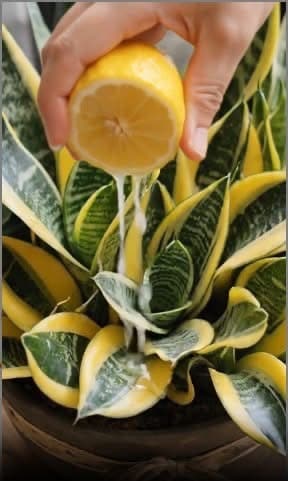
Images online sometimes show lemon juice being squeezed directly onto snake plant leaves or into the pot. This is not a good idea. Lemon juice is acidic and can damage leaves, irritate roots, and upset the soil balance. The best way to help a snake plant grow well is with bright indirect light, careful watering, breathable soil, and a light application of proper houseplant fertilizer only during active growth.
What Makes Snake Plants Special?
Snake plants, often called Sansevieria or Dracaena trifasciata, are known for their upright sword-shaped leaves. Their leaves can be dark green, striped, silver-green, or edged in yellow depending on the variety.
They grow from thick underground stems called rhizomes, which store water. This is why snake plants can go longer between waterings than many leafy tropical plants. Their ability to store water is helpful, but it also means they are very sensitive to constantly wet soil.
Snake plants grow slowly indoors, especially in lower light. Slow growth is normal and does not automatically mean the plant is unhealthy. Healthy snake plants usually have firm leaves, clear patterns, and a stable upright shape.
Why You Should Not Use Lemon Juice on a Snake Plant
Lemon juice may seem like a natural plant treatment, but it is not a safe fertilizer or regular care product for snake plants. It contains acids that can burn or mark leaves when exposed to light.
When lemon juice is poured into the soil, it may make the soil too acidic for the plant’s roots. It can also disrupt the potting mix and create unnecessary stress for an already sensitive plant.
Lemon juice does not provide the balanced nutrients that a plant needs for long-term growth. It cannot fix root rot, weak light, pest problems, compacted soil, or overwatering.
If your snake plant leaves are dusty, clean them gently with a soft cloth and plain water. Do not rub lemon, oils, milk, coffee, or other kitchen products onto the leaves.
The Best Light for a Snake Plant
Snake plants can tolerate lower light, but they grow best in bright indirect light. Place the pot near a window where it receives plenty of daylight without intense direct sun for many hours.
A few hours of gentle morning sun can be fine, especially for a snake plant that has been gradually adjusted to brighter conditions. Strong hot afternoon sun, however, can scorch the leaves and fade their patterns.
In low light, snake plants usually grow more slowly and need less water. If the plant is kept in a dark corner, do not try to compensate by adding extra fertilizer. Instead, move it closer to a bright room or use a grow light.
Rotate the pot every few weeks. This helps the leaves grow evenly and prevents the plant from leaning strongly toward one direction.
The Most Important Rule: Do Not Overwater
Overwatering is the most common reason snake plants fail indoors. Their roots and rhizomes can rot when the soil stays wet too long.
Before watering, insert a finger a few inches into the potting mix. If the soil still feels damp, wait. A snake plant should dry out deeply between waterings.
In many homes, watering every two to four weeks is enough during spring and summer. In winter, the plant may need water only once every four to six weeks, depending on the temperature and light level.
Always adjust the schedule based on the actual soil, not the calendar. A plant in strong light may dry faster, while a plant in a cool, dark room may stay damp for much longer.
When it is time to water, use room-temperature water and soak the soil slowly until a little water runs from the drainage holes. Let the pot drain completely and empty the saucer.
Choose the Right Pot and Soil
A pot with drainage holes is essential for a snake plant. Decorative pots without holes can be used as outer covers, but the plant should remain in an inner nursery pot that drains.
Choose a pot only slightly larger than the root ball. A very large pot holds extra soil and moisture around the roots, increasing the risk of rot.
Terracotta pots are especially useful because they allow moisture to evaporate more quickly than plastic pots. They can help prevent soil from staying wet for too long.
Use a loose, fast-draining potting mix. A cactus or succulent mix is a good choice. You can also make a simple blend with regular indoor potting soil, perlite, and orchid bark.
Avoid dense garden soil or a heavy potting mix that becomes muddy after watering. Snake plant roots need air around them.
How to Water Your Snake Plant Correctly
Water the soil, not the center of the leaf cluster. If water repeatedly sits inside the crown, it can cause rot.
Pour water slowly around the outer edge of the pot. Allow the soil to absorb it gradually. Stop once a small amount begins to drain from the bottom.
If your plant is in a saucer, discard the excess water after it has drained. Never let the roots sit in standing water.
If you are unsure whether to water, wait a few more days. Snake plants handle mild dryness much better than soggy soil.
Fertilizing a Snake Plant Safely
Snake plants are light feeders. They do not need frequent fertilizer, and using too much can damage the roots.
Use a balanced liquid houseplant fertilizer or a fertilizer designed for succulents. Dilute it according to the label, or use half strength for a cautious approach.
Feed your snake plant once in spring and once in summer if it is actively growing in bright indirect light. Do not fertilize in winter or when the plant is stressed.
Never use fertilizer on completely dry soil. Water lightly first if the potting mix is dry, then apply the diluted fertilizer solution.
Avoid food scraps, banana peel water, coffee grounds, lemon juice, milk, eggshell water, garlic, and unknown powders. These do not provide controlled nutrition for a potted snake plant and may encourage pests or root problems.
Common Snake Plant Problems
Soft or Mushy Leaves
Soft, mushy leaves are often a sign of overwatering or root rot. Stop watering immediately and check the soil. If it is wet and smells sour, remove the plant from the pot.
Inspect the roots and rhizomes. Healthy roots are firm and light-colored. Cut away soft, black, or brown rotten sections using clean scissors. Let the healthy parts air dry briefly, then repot in fresh dry succulent soil.
Yellow Leaves
Yellow leaves can be caused by too much water, poor drainage, cold stress, or an aging leaf. Check whether the pot has drainage holes and whether the soil is remaining damp for too long.
Remove fully yellow leaves near the soil line with clean scissors. Improve the watering routine and move the plant away from cold windows or drafts.
Brown Tips
Brown tips can happen because of inconsistent watering, dry air, fertilizer buildup, or physical damage. They do not always mean the plant is seriously ill.
Trim only the dry brown section with clean scissors, following the natural pointed shape of the leaf. Avoid cutting too much green tissue.
Leaning or Falling Leaves
Leaning leaves may indicate uneven light, loose soil, a crowded root system, or a top-heavy plant. Rotate the pot toward the light and check whether it needs repotting.
If the plant is very tall and crowded, divide it during repotting. Each healthy section should have leaves, rhizomes, and roots.
Wrinkled Leaves
Wrinkled leaves can indicate the plant has been dry for too long. Check whether the soil is extremely dry and whether the roots are healthy. Water slowly and deeply, then return to a balanced routine.
How to Repot a Snake Plant
Repot snake plants every two to three years, or when the roots and rhizomes have filled the pot. Signs include roots growing from drainage holes, a cracked pot, crowded leaves, or soil that dries unusually fast.
Choose a pot one or two inches wider than the previous one. Use fresh, fast-draining soil.
Gently remove the plant from the old pot. Shake away only the loose old soil and inspect the roots. Remove rotten roots if needed, but keep healthy roots intact.
Place the plant at the same depth in the new pot. Add soil around the roots and press it lightly. Wait a few days before watering if the roots were disturbed or trimmed.
How to Propagate Snake Plants
Snake plants can be propagated by division or leaf cuttings. Division is the quickest method if you want a new plant that looks like the original.
During repotting, gently separate a clump of leaves with its own rhizome and roots. Plant it in a small pot with fast-draining soil.
Leaf cuttings are another option. Cut a healthy leaf into sections a few inches long. Allow the cut ends to dry for a day or two, then place the sections in moist, well-draining soil.
Be patient. Rooting and new growth can take several weeks or months. Yellow-edged varieties may not keep their yellow borders when propagated from leaf cuttings, so division is best for preserving the original appearance.
Best Places to Display a Snake Plant
Snake plants look beautiful near a bright living-room window, beside a sofa, or on a floor stand. Their vertical leaves add height and structure to a room.
A tall snake plant works very well in an entryway because it creates a clean, welcoming look without taking up much floor space.
Smaller varieties look great on a desk, bookshelf, bathroom shelf with natural light, or bedside table. Choose a pot that matches your decor, such as white ceramic, terracotta, black stoneware, or a woven basket cover.
Keep the plant away from cold drafts, heaters, and air-conditioning vents. Sudden temperature changes can stress the leaves.
Is a Snake Plant Safe Around Pets?
Snake plants can be irritating if chewed by cats or dogs. Keep them out of reach of pets and young children.
If you think a pet has eaten part of a snake plant, contact a veterinarian for advice. Choose a pet-safe plant instead if your pet regularly chews leaves.
Frequently Asked Questions
Can I water a snake plant with lemon water?
No. Lemon water is not recommended. The acidity can stress the roots and may damage the leaves. Use plain water and a suitable diluted houseplant fertilizer when needed.
How often should I water my snake plant?
Water only when the soil has dried deeply. This is often every two to four weeks in warmer months and less often in winter, but always check the soil first.
Does a snake plant need direct sunlight?
No. Bright indirect light is ideal. It can tolerate lower light, but it may grow more slowly.
Why is my snake plant not growing?
Snake plants grow slowly, especially indoors. Check that it has enough indirect light, proper drainage, and is not being overwatered. Fertilize lightly only during active growth.
Can I use a pot without drainage holes?
It is not recommended. A pot with drainage holes makes it much easier to prevent root rot. If you use a decorative outer pot, keep the plant in a draining inner pot.
Final Thoughts
Snake plants are easy to care for when you avoid the most common mistakes. Do not use lemon juice, homemade liquids, or food scraps on the leaves or in the soil. Instead, provide bright indirect light, fast-draining soil, a pot with drainage holes, and water only after the soil has dried well.
A simple care routine will keep the leaves strong, upright, and beautifully patterned. With patience and steady care, your snake plant can remain an elegant part of your indoor space for many years.